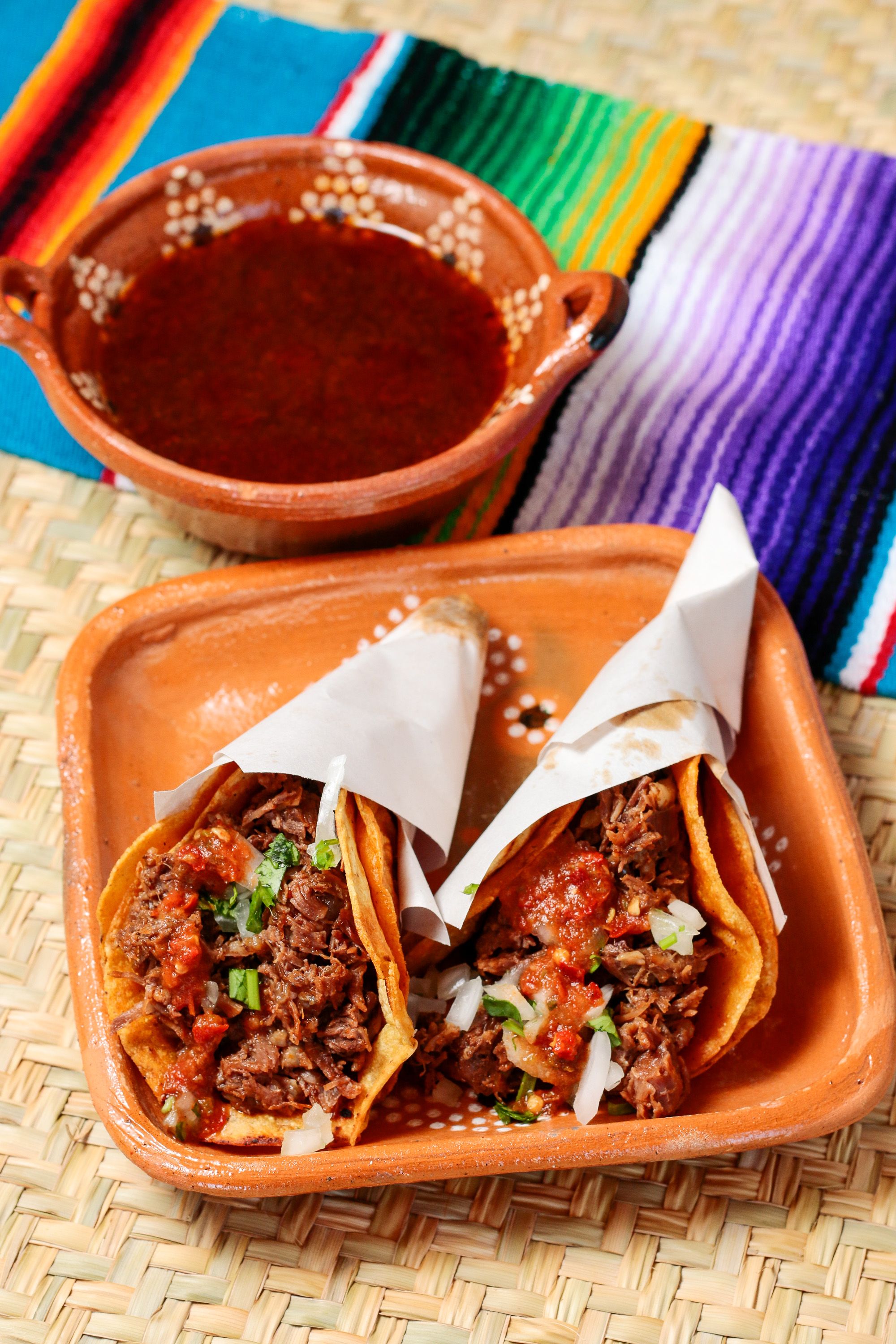
Photo: Sergio Arreola / Pexels
The diets react (see scores below)
Common Ingredients
- goat
- guajillo chiles
- ancho chiles
- tomato
- garlic
- cumin
- oregano
- bay leaf
- onion
- cinnamon
Specific recipes may vary.
Incompatible with 3 of 11 diets
Diet Ratings
Birria made with goat is fundamentally a protein-rich, slow-braised dish with keto-compatible macros from the meat itself. However, the chile-based sauce introduces a moderate carb load: guajillo and ancho chiles each contain roughly 8-14g net carbs per dried chile, and tomatoes add additional sugars. A typical birria preparation may use 4-6 dried chiles plus tomato, pushing the sauce into moderate-carb territory. Consumed in reasonable portions with emphasis on the meat and limited sauce, it can fit within daily limits. The spices (cumin, oregano, cinnamon, bay leaf) and aromatics (garlic, onion) are fine in cooking quantities. This is not a clean keto approve, but a mindful portion of the meat with controlled sauce intake can remain within the 20-50g net carb window.
Strict keto practitioners argue that dried chiles are a concentrated carb source and the chile-tomato broth should be treated as a high-carb condiment, recommending that only the braised meat itself be consumed while largely discarding the sauce. Conversely, lazy keto or moderate-carb keto adherents accept traditional birria as sufficiently low-carb relative to other Mexican mains, treating a full serving as compliant.
Birria is a traditional Mexican stew with goat as its primary protein. Goat is an animal product and therefore strictly incompatible with a vegan diet. All remaining ingredients — guajillo chiles, ancho chiles, tomato, garlic, cumin, oregano, bay leaf, onion, and cinnamon — are fully plant-based, but the dish is defined by and built around its meat component. There is no ambiguity here: this dish contains animal flesh and cannot be considered vegan in its traditional form. A vegan adaptation could be made by substituting the goat with jackfruit, mushrooms, or other plant-based proteins using the same chile-based broth.
Birria in this traditional form is an excellent paleo dish. Goat is an unprocessed, ancestral protein highly consistent with hunter-gatherer diets. All remaining ingredients — guajillo and ancho chiles, tomato, garlic, onion, and the spices (cumin, oregano, bay leaf, cinnamon) — are whole, unprocessed plant foods, herbs, and spices with clear paleo credentials. There are no grains, legumes, dairy, refined sugars, seed oils, or processed additives present. The dish is essentially a slow-braised meat stew built entirely from whole foods, making it a near-ideal paleo meal. The one minor practical note is that commercial preparations may add salt, but the ingredient list as provided contains no added salt, keeping it fully compliant.
Birria is a slow-braised goat dish with an otherwise Mediterranean-friendly ingredient profile: tomatoes, garlic, onion, and aromatic spices are all consistent with Mediterranean cooking principles. However, goat is a red meat, which the Mediterranean diet restricts to a few times per month. The dish contains no refined grains, added sugars, or heavily processed ingredients, and goat is a lean red meat compared to beef or lamb. This elevates it above a clear 'avoid,' but its red meat base prevents it from being a regular staple.
Some Mediterranean diet authorities, particularly those referencing traditional Greek and Middle Eastern practices, acknowledge that goat is a lean, pastoral red meat consumed occasionally in rural Mediterranean communities (e.g., during festivals), and may grant it slightly more latitude than beef or pork. From this perspective, a lean goat stew eaten infrequently could be considered broadly compatible with the diet's spirit.
Birria is a traditional Mexican stew built around goat meat, which is itself carnivore-compatible, but the dish is heavily laden with plant-based ingredients that make it incompatible with the carnivore diet. The recipe includes guajillo chiles, ancho chiles, tomato, garlic, onion, cumin, oregano, bay leaf, and cinnamon — all plant-derived foods that are explicitly excluded from the carnivore diet. The chile-tomato broth that defines birria is essentially a plant-based sauce. While the goat protein base is acceptable, the dish as a whole cannot be considered carnivore due to the overwhelming presence of vegetables, spices, and plant aromatics. A carnivore adaptation would require stripping all plant ingredients and cooking the goat in water or bone broth with salt only.
Birria made with goat, guajillo chiles, ancho chiles, tomato, garlic, cumin, oregano, bay leaf, onion, and cinnamon is fully Whole30 compliant. Every ingredient is a whole, unprocessed food — a protein (goat), vegetables/aromatics (tomato, garlic, onion), dried chiles (a natural spice/flavor ingredient), and herbs and spices (cumin, oregano, bay leaf, cinnamon). None of the listed ingredients fall into any excluded category. This is a traditional, whole-food preparation that aligns perfectly with the spirit of the Whole30 program.
Birria as traditionally prepared contains multiple high-FODMAP ingredients that make it unsuitable during the elimination phase. Garlic is one of the highest-FODMAP foods (high in fructans even in small amounts) and is a core flavoring ingredient used in significant quantities. Onion is similarly high in fructans and used extensively in the braising liquid. These two ingredients alone are enough to classify the dish as high-FODMAP. Additionally, traditional oregano (especially Mexican oregano) can contain fructans at culinary doses, and the cumulative FODMAP load from the spice blend is a concern. The goat meat itself is FODMAP-free, as are the guajillo and ancho chiles at moderate servings, tomato (at standard portions), cumin, bay leaf, and cinnamon. However, the presence of garlic and onion as structural flavor components — not incidental garnishes — means the dish cannot be made safe without fundamentally altering the recipe. Even if garlic-infused oil were substituted, the onion would still render it high-FODMAP.
Birria made with goat meat and the listed ingredients presents a mixed DASH profile. The base ingredients — tomatoes, guajillo and ancho chiles, onion, garlic, and spices — are all DASH-friendly, providing potassium, fiber, antioxidants, and flavor without added sodium. Goat meat is a lean red meat that is lower in saturated fat than beef or lamb and comparable to chicken, making it more acceptable under DASH than typical red meats. However, DASH guidelines still recommend limiting red meat in general, and traditional birria preparation often involves added salt (not listed but virtually universal in practice) which can push sodium into problematic ranges. Additionally, goat is technically a red meat, and DASH explicitly advises limiting red meat consumption. The dish as listed — without added salt, lard, or high-sodium broth — would score higher, but as commonly consumed in restaurant or traditional settings, sodium additions and fatty braising cuts (shoulder, shank) increase saturated fat and sodium content. The spice blend and vegetable base are genuinely DASH-supportive elements.
NIH DASH guidelines categorize all red meats as foods to limit regardless of fat content. However, updated clinical interpretations note that goat (chevon) has a saturated fat profile (approximately 0.9g per 3oz cooked) closer to skinless chicken than to beef, leading some DASH-oriented dietitians to treat lean goat similarly to poultry when consumed in moderate portions (≤6oz/day total lean meat).
Birria is a slow-braised meat dish with a rich, complex flavor profile derived from dried chiles, tomatoes, and aromatic spices. From a Zone perspective, the protein base (goat) is lean, with a macronutrient profile similar to lamb but generally lower in fat, making it a reasonable protein block source. The carbohydrate components — guajillo and ancho chiles, tomato, onion, and garlic — are all low-glycemic, anti-inflammatory, and polyphenol-rich, which aligns well with Zone principles. The dish is naturally lower in carbs and contains no added refined sugars or high-glycemic starches. The main Zone challenge is fat content: goat can carry moderate saturated fat depending on the cut, and traditional birria is often prepared with fatty cuts and skin-on meat, which elevates saturated fat beyond what the Zone ideally recommends. Without added oils or fatty accompaniments (consommé can trap rendered fat), a lean-cut birria is manageable. The dish scores reasonably well as a protein-forward, low-glycemic main, but requires careful cut selection and portion control to balance the protein-to-fat ratio properly. Served without tortillas, rice, or other high-glycemic carbs, it pairs well with a side of vegetables to complete a Zone-balanced plate.
Some Zone practitioners may rate this higher (closer to 7-8) if lean goat cuts are used and visible fat is trimmed, as the overall ingredient list is strongly anti-inflammatory and polyphenol-rich — aligning with Sears' later anti-inflammatory dietary emphasis. Others may caution more strongly if traditional fatty cuts are used, pushing saturated fat content well above the Zone's 30% fat ceiling and skewing it toward omega-6-heavy animal fat.
Birria presents a genuinely mixed anti-inflammatory profile. On the positive side, the spice and aromatics foundation is excellent: guajillo and ancho chiles are rich in carotenoids (beta-carotene, capsanthin) and vitamin C; garlic contains allicin and quercetin with well-documented anti-inflammatory activity; cumin, oregano, cinnamon, and bay leaf all contribute polyphenols and have demonstrated anti-inflammatory properties in research; tomato provides lycopene; and onion adds quercetin. This spice profile alone is a strong anti-inflammatory asset. The problem is the primary protein: goat is a red meat, and anti-inflammatory guidelines consistently recommend limiting red meat. That said, goat is one of the leaner red meats — lower in total fat and saturated fat than beef or lamb — which somewhat softens the concern. It also lacks the processed-meat additives (nitrates, preservatives) that make processed red meat particularly problematic. The cooking method (slow-braised) doesn't add inflammatory fats. The dish contains no refined carbohydrates, added sugars, seed oils, or artificial additives. Overall, the dish is better than most red-meat-based preparations due to its exceptional spice profile and lean protein source, but the red meat base keeps it from an 'approve' rating. Acceptable as an occasional dish rather than a dietary staple.
Some anti-inflammatory practitioners, particularly those following Dr. Weil's more flexible pyramid approach, might argue that the cumulative anti-inflammatory power of the chiles, garlic, cumin, oregano, and cinnamon meaningfully offsets the red meat concern, especially given goat's relatively lean profile — nudging this toward an approve for occasional consumption. Conversely, stricter anti-inflammatory and autoimmune-focused protocols (such as AIP) would flag not only the red meat but also the nightshade-adjacent chiles and spices as potential irritants for sensitive individuals.
Birria made with goat is a protein-rich, flavorful stew that has genuine strengths for GLP-1 patients but carries meaningful caveats. Goat is actually one of the leaner red meats — leaner than beef or lamb — providing solid protein (~25-27g per 3oz cooked) with relatively moderate saturated fat compared to other braised red meat dishes. The broth-based preparation is a significant plus: slow-braised in a tomato-chile liquid rather than fried or pan-seared in added fat, making it easier to digest than dry-heat fatty preparations. Tomatoes, onion, and garlic contribute modest fiber and micronutrients. However, traditional birria is a fatty cut preparation — goat shoulder or leg with bone-in cuts are standard, and braising renders significant fat into the broth. The consommé (braising liquid) can be grease-heavy depending on preparation. Guajillo and ancho chiles are mild-to-moderate heat and generally well-tolerated, but cumulative spice load may trigger reflux or nausea in GLP-1 patients with GI sensitivity. Cumin and oregano are fine. This dish is not fried, not high-sugar, and not ultra-processed — those are meaningful positives. The main concerns are fat content from the braised goat (especially if served with fatty consommé) and mild spice load. Skimming fat from the broth and choosing leaner cuts would improve the rating substantially. Served in a small portion focused on the meat and broth rather than tortillas or cheese toppings, this can be a reasonable GLP-1 meal.
Some GLP-1-focused dietitians would rate goat birria more favorably than other braised red meats, citing goat's lower saturated fat profile and the high protein density of the dish relative to calories — particularly when served as a broth-heavy stew rather than loaded into fried tortillas. Others maintain caution around all braised fatty-cut red meat preparations regardless of species, citing the difficulty of controlling fat content in restaurant or traditional home preparation and the risk of GI discomfort from a rich, spiced broth in patients with slowed gastric emptying.
*See how scores were generated at our methodology page.
Nutritional profile
Six traits that cut across every diet.
Fiber & Plants
How much whole-plant food and fiber it delivers.
Healthy Fats
The quality of its fats (unsaturated, omega-3).
Whole / Unprocessed
How close it is to its natural, unprocessed form.
Gut Gentle
How easy it is on digestion (low FODMAP, few irritants).
Low Glycemic
How little it spikes your blood sugar.
Protein Density
How much protein it packs per calorie.
Controversy Index
Higher controversy = more disagreement between diets.
Diet-Specific Tips
 Keto — 6/10
View tips
- Goat meat is high-protein, low-carb, and keto-compatible
- Dried guajillo and ancho chiles contribute 8-14g net carbs each and are a meaningful carb source
- Tomato adds sugars to the braising liquid
- Garlic and onion in cooking quantities add minimal carbs
- Spices (cumin, oregano, cinnamon) are keto-neutral
- Portion control of sauce vs. meat is the key variable
- No grains, added sugars, or starchy vegetables in the base recipe
 Paleo — 9/10
View tips
- Goat is an unprocessed, ancestral protein — fully paleo approved
- Guajillo and ancho chiles are whole dried peppers with no additives
- Tomato, garlic, and onion are standard paleo vegetables
- Cumin, oregano, bay leaf, and cinnamon are all paleo-approved spices
- No grains, legumes, dairy, seed oils, or refined sugar present
- No added salt listed — though real-world preparation often includes it
- Traditional slow-braising method aligns well with whole-food paleo philosophy
 Mediterranean — 4/10
View tips
- Goat is a red meat, restricted to a few times per month in Mediterranean guidelines
- Goat is relatively lean compared to other red meats, reducing saturated fat concerns
- Tomatoes, onions, garlic, and spices are strongly Mediterranean-compatible ingredients
- No refined grains, added sugars, or processed ingredients present
- Occasional consumption of lean goat has some precedent in traditional Mediterranean regional diets
- Not a Mediterranean dish by origin, but ingredient quality is largely whole and unprocessed
 Whole30 — 9/10
View tips
- Goat is a compliant animal protein
- Guajillo and ancho chiles are whole dried peppers — compliant spice/flavoring ingredients
- All aromatics (garlic, onion, tomato) are compliant vegetables
- Cumin, oregano, bay leaf, and cinnamon are compliant spices
- No grains, legumes, dairy, added sugar, or other excluded ingredients
- Traditional preparation is a whole-food braise with no problematic additives
 DASH — 5/10
View tips
- Goat is a lean red meat — lower in saturated fat than beef/lamb but still classified as red meat under DASH
- DASH recommends limiting red meat; goat is borderline acceptable in small portions
- Guajillo and ancho chiles, tomato, onion, garlic provide potassium, fiber, and antioxidants — all DASH-positive
- Spices (cumin, oregano, cinnamon, bay leaf) add flavor without sodium — supports DASH sodium reduction goals
- Traditional preparation typically adds significant salt; sodium content as served can be high
- No lard, added oils, or full-fat dairy in listed ingredients — favorable
- Portion size is critical; a small serving of lean goat birria is more DASH-compatible than a large one
 Zone — 6/10
View tips
- Goat is a lean protein when trimmed, comparable to lamb but lower in fat — a reasonable Zone protein block
- Dried chiles (guajillo, ancho), tomatoes, onion, and garlic are low-glycemic, polyphenol-rich carbohydrate sources favored in Zone
- Spices (cumin, oregano, cinnamon, bay leaf) are anti-inflammatory and contribute negligible macros
- Traditional preparation may use fatty cuts or bone-in meat, elevating saturated fat beyond Zone ideals
- No refined carbohydrates, sugars, or high-glycemic ingredients in the base recipe
- Needs to be paired with low-glycemic vegetables (not tortillas or rice) to complete a Zone-balanced meal
- Consommé may contain significant rendered animal fat — requires skimming for strict Zone compliance
 Anti-Inflammatory — 5/10
View tips
- Goat is a red meat — anti-inflammatory guidelines recommend limiting red meat consumption
- Goat is leaner and lower in saturated fat than beef or lamb, reducing (but not eliminating) the red meat concern
- Guajillo and ancho chiles are rich in carotenoids and vitamin C with anti-inflammatory properties
- Garlic provides allicin and quercetin — strong anti-inflammatory compounds
- Cumin, oregano, cinnamon, and bay leaf contribute meaningful polyphenol and anti-inflammatory activity
- Tomato adds lycopene; onion adds quercetin
- No refined carbohydrates, added sugars, seed oils, or artificial additives
- Slow-braised preparation adds no inflammatory fats
 GLP-1 Friendly — 5/10
View tips
- Goat is leaner than beef or lamb but still a moderate saturated fat source depending on cut
- Broth-based braising is easier to digest than fried or high-fat dry-heat preparations
- High protein content (~25-27g per 3oz) supports GLP-1 protein priority
- Fat rendered into braising liquid (consommé) can be significant — portion and preparation matter
- Mild-to-moderate chile spice (guajillo, ancho) generally tolerated but may worsen reflux in sensitive GLP-1 patients
- No refined grains, added sugar, or ultra-processed ingredients in the base dish
- Rating assumes traditional stewed preparation — birria tacos with fried tortillas dipped in consommé would score lower (4 or below)
- Small portion of meat plus broth is more GLP-1 friendly than large servings