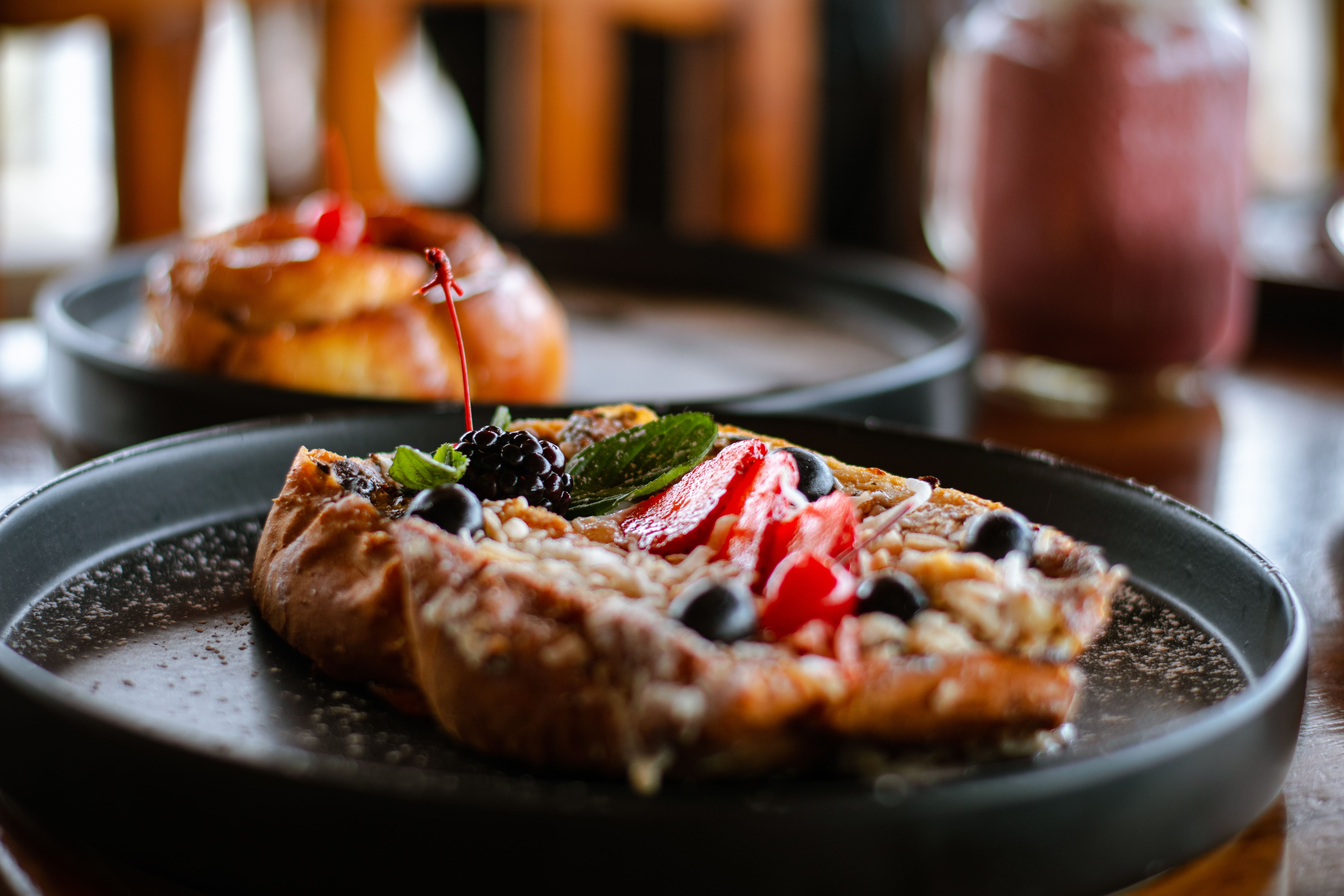
Photo: César O'neill / Pexels
The diets react (see scores below)
Common Ingredients
- bolillo
- piloncillo
- cinnamon
- clove
- raisins
- peanuts
- queso fresco
- butter
Specific recipes may vary.
Incompatible with 9 of 11 diets
Diet Ratings
Capirotada is a traditional Mexican bread pudding that is fundamentally incompatible with ketogenic eating. The base ingredient, bolillo (white bread), is a high-carb grain product. Piloncillo is unrefined cane sugar — pure carbohydrates. Raisins are concentrated sugar and high in net carbs. Cinnamon and cloves are negligible, and while peanuts, queso fresco, and butter have some keto-friendly qualities, they are completely overwhelmed by the dominant carb-heavy and sugar-heavy components. A single serving would likely contain 60–100g+ of net carbs, far exceeding the entire daily keto allowance. There is no realistic portion size or modification that would make this dish compatible with ketosis without fundamentally changing what it is.
Capirotada as listed contains two clear animal-derived ingredients: queso fresco (a fresh dairy cheese) and butter (a dairy fat). Both are definitively non-vegan, making this dish incompatible with a vegan diet in its traditional form. The remaining ingredients — bolillo bread, piloncillo, cinnamon, clove, raisins, and peanuts — are all plant-based and would be perfectly vegan. A vegan adaptation could substitute the queso fresco with a plant-based cheese and replace the butter with vegan margarine or coconut oil, preserving the dish's character while making it compliant.
Capirotada is a traditional Mexican bread pudding that is fundamentally incompatible with the paleo diet. The dish is built on bolillo, a wheat-flour bread roll, which is a grain product and a clear paleo violation. Queso fresco is a dairy cheese, also excluded. Butter is a dairy product excluded under strict paleo guidelines. Peanuts are legumes, not nuts, and are explicitly off the paleo list. While piloncillo (unrefined cane sugar) is less processed than white sugar, it is still refined sugar. Cinnamon, cloves, and raisins are paleo-friendly, but they cannot redeem a dish whose core components — grain bread, dairy cheese, dairy butter, and legumes — are all paleo exclusions. This dish has multiple fundamental violations stacked together, making it one of the clearest avoid verdicts possible.
Capirotada is a Mexican bread pudding featuring bolillo (refined white bread), piloncillo (concentrated added sugar), butter (saturated fat), and queso fresco (dairy). While it contains some redeeming elements like raisins, peanuts, cinnamon, and cloves, the dish is fundamentally a dessert/sweet snack built on a refined grain base soaked in sugar syrup with butter. This directly contradicts core Mediterranean principles: refined grains are discouraged, added sugars are minimized, and butter is not the preferred fat. The sugar load from piloncillo alone disqualifies it from regular consumption within a Mediterranean framework.
Some Mediterranean-leaning interpreters might note that peanuts, raisins, cinnamon, and cloves are plant-based, nutrient-containing ingredients that appear in traditional Mediterranean sweets (e.g., Greek or Levantine pastries also use nuts and dried fruit). Occasional indulgence in whole-ingredient-based sweets is not entirely foreign to Mediterranean eating culture, which does permit moderate dessert consumption at celebrations.
Capirotada is a Mexican bread pudding that is almost entirely plant-based and grain-based. The primary ingredient is bolillo (wheat bread), which is a grain — completely excluded on carnivore. Piloncillo (unrefined cane sugar) and raisins are sugars and fruit, both forbidden. Cinnamon and clove are plant spices, peanuts are legumes, and cinnamon/cloves/raisins/peanuts are all plant-derived. The only marginally carnivore-compatible ingredients are butter (a dairy fat, caution-level) and queso fresco (a dairy product, caution-level), but these are minor components in an overwhelmingly plant-and-grain-based dish. There is no meaningful animal protein present. This dish has virtually no redeeming carnivore qualities.
Capirotada contains multiple excluded ingredients that make it incompatible with Whole30. Bolillo is a wheat-based bread roll (grains excluded), queso fresco is dairy (excluded), and butter is regular dairy butter (excluded — only ghee/clarified butter is allowed). Additionally, even if all ingredients were compliant, capirotada is a bread pudding-style dish, which falls squarely into the 'no recreating baked goods' rule that Whole30 prohibits. Piloncillo (unrefined sugar) is also an added sugar, which is excluded. Peanuts are legumes and also excluded. This dish fails on nearly every major exclusion category simultaneously.
Capirotada contains multiple high-FODMAP ingredients that make it unsuitable during the elimination phase. Bolillo is a wheat-based bread, which is high in fructans — a primary FODMAP concern. Raisins are high-FODMAP due to excess fructose and fructans even in small amounts (Monash rates dried fruit as high-FODMAP at typical serving sizes). Queso fresco is a fresh, soft cheese with significant lactose content, making it high-FODMAP. Peanuts are borderline — low-FODMAP at ~32 small peanuts but the cumulative FODMAP load in this dish is already high before considering them. Piloncillo (unrefined cane sugar), cinnamon, clove, and butter are low-FODMAP. However, the combination of wheat bread, raisins, and queso fresco means this dish would be high-FODMAP at any realistic serving size during elimination.
Some practitioners note that small portions of queso fresco may be tolerated by individuals sensitive primarily to lactose rather than other FODMAPs, and that wheat bread quantity varies by recipe — but Monash University clearly flags wheat-based breads and dried fruit as high-FODMAP during elimination, making a 'caution' rating impractical here given the dish's typical composition.
Capirotada is a traditional Mexican bread pudding with a complex nutritional profile under DASH guidelines. The bolillo (refined white bread) lacks the fiber of whole grains emphasized by DASH. Piloncillo (unrefined cane sugar) contributes significant added sugar, which DASH limits. Butter adds saturated fat, a restricted nutrient under DASH. On the positive side, raisins provide potassium and some fiber, peanuts offer heart-healthy unsaturated fats and magnesium, cinnamon and cloves are benign, and queso fresco is relatively lower in sodium than many aged cheeses. However, the overall dish is a sweet, refined-carbohydrate-heavy dessert/snack with added sugar and saturated fat — not a core DASH food. It could be consumed occasionally in small portions but does not align with DASH's emphasis on whole grains, low added sugar, and limited saturated fat.
NIH DASH guidelines explicitly limit added sugars and refined grains, placing capirotada outside the core eating plan. However, some DASH-oriented clinicians note that small portions within an overall DASH-compliant diet can accommodate occasional traditional sweets, particularly given the contribution of peanuts (healthy fats, magnesium) and raisins (potassium, fiber), which partially offset the less favorable ingredients.
Capirotada is a Mexican bread pudding whose Zone profile is extremely problematic across nearly every macronutrient dimension. The base is bolillo (white bread) — a high-glycemic refined carbohydrate that Sears explicitly categorizes as unfavorable. Piloncillo (unrefined cane sugar) is essentially pure sugar syrup, one of the most anti-Zone ingredients possible. Raisins are specifically called out by Sears as an unfavorable carbohydrate due to their concentrated sugar content and high glycemic load. Butter contributes saturated fat rather than the preferred monounsaturated fat. The dish has virtually no lean protein (queso fresco provides minimal protein with significant saturated fat), no low-glycemic vegetables, and is dominated by high-glycemic carbohydrates and sugar. The glycemic load of a typical serving would be enormous, producing exactly the insulin spike Sears' framework is designed to prevent. While peanuts offer some monounsaturated fat and modest protein, they are far too minor an ingredient to rescue the macronutrient ratio. There is no realistic portion size that would bring this dish into Zone compliance — even a very small serving would be carbohydrate-dominated with the wrong type of carbs and inadequate lean protein to balance it. This is one of the rare cases where 'avoid' is clearly warranted.
Capirotada is a traditional Mexican bread pudding with a mixed inflammatory profile. On the positive side, it contains several genuinely anti-inflammatory ingredients: cinnamon and cloves are potent anti-inflammatory spices rich in polyphenols and antioxidants, raisins provide polyphenols and fiber, and peanuts offer some monounsaturated fats and resveratrol. However, the dish is built on a base of refined white bread (bolillo), which is a refined carbohydrate with a high glycemic index that can spike blood sugar and promote inflammation. Piloncillo is an unrefined whole cane sugar that retains some minerals and is marginally better than refined sugar, but it's still a significant source of added sugar, which is pro-inflammatory in quantity. Butter contributes saturated fat, which is on the 'limit' list. Queso fresco is a full-fat dairy cheese, also in the limit category. Together, the refined carbohydrate load, added sugar content, saturated fat from butter and cheese, and overall dessert-style caloric density place this firmly in the caution zone. The beneficial spices, raisins, and peanuts are not sufficient to offset the dominant pro-inflammatory elements. This dish can be enjoyed occasionally but is not aligned with regular anti-inflammatory eating.
Capirotada is a traditional Mexican bread pudding built on a foundation that conflicts with nearly every GLP-1 dietary priority. The base is bolillo (refined white bread), soaked in a piloncillo (raw cane sugar) syrup spiced with cinnamon and clove — meaning the dominant macronutrient profile is refined carbohydrate plus added sugar, with minimal protein and minimal fiber. Butter adds saturated fat. Queso fresco contributes a small amount of protein but also fat and sodium. Peanuts offer some protein and unsaturated fat but are calorie-dense and easy to overeat. Raisins add concentrated sugar. The dish is served in a sweet, syrup-saturated format that is essentially empty calories from a GLP-1 perspective: high glycemic load, low protein density, low fiber relative to calorie content, and high in added sugar. The soft, soaked bread texture, while easy to chew, still represents a refined-grain, sugar-heavy base that will spike blood sugar without contributing meaningful satiety through protein or fiber. For a patient eating significantly fewer calories daily, this dish displaces nutritionally critical foods. As a snack category item with no primary protein source identified, it offers no redeeming GLP-1-priority nutrients in meaningful quantities.
*See how scores were generated at our methodology page.
Nutritional profile
Six traits that cut across every diet.
Fiber & Plants
How much whole-plant food and fiber it delivers.
Healthy Fats
The quality of its fats (unsaturated, omega-3).
Whole / Unprocessed
How close it is to its natural, unprocessed form.
Gut Gentle
How easy it is on digestion (low FODMAP, few irritants).
Low Glycemic
How little it spikes your blood sugar.
Protein Density
How much protein it packs per calorie.
Controversy Index
Higher controversy = more disagreement between diets.
Diet-Specific Tips
 DASH — 4/10
View tips
- Piloncillo adds significant added sugar, which DASH limits
- Bolillo is refined white bread, not the whole grain DASH recommends
- Butter contributes saturated fat, a restricted nutrient under DASH
- Raisins provide potassium and fiber, supporting DASH nutrient targets
- Peanuts offer magnesium and heart-healthy unsaturated fats
- Queso fresco is relatively low-sodium compared to aged cheeses
- Overall dish is calorie-dense and sweet, requiring strict portion control on DASH
 Anti-Inflammatory — 4/10
View tips
- Refined white bread (bolillo) — high glycemic refined carbohydrate, pro-inflammatory
- Piloncillo — significant added sugar content, though less refined than white sugar
- Butter — saturated fat, on the 'limit' list in anti-inflammatory frameworks
- Queso fresco — full-fat dairy, moderate inflammatory concern
- Cinnamon and cloves — potent anti-inflammatory spices with polyphenols and antioxidants
- Raisins — provide polyphenols and fiber, modest benefit
- Peanuts — monounsaturated fats and resveratrol, mild anti-inflammatory benefit
- Overall: high sugar and refined carb load dominates the beneficial spice and fruit contributions