Photo: Israel Albornoz / Pexels
Mexican
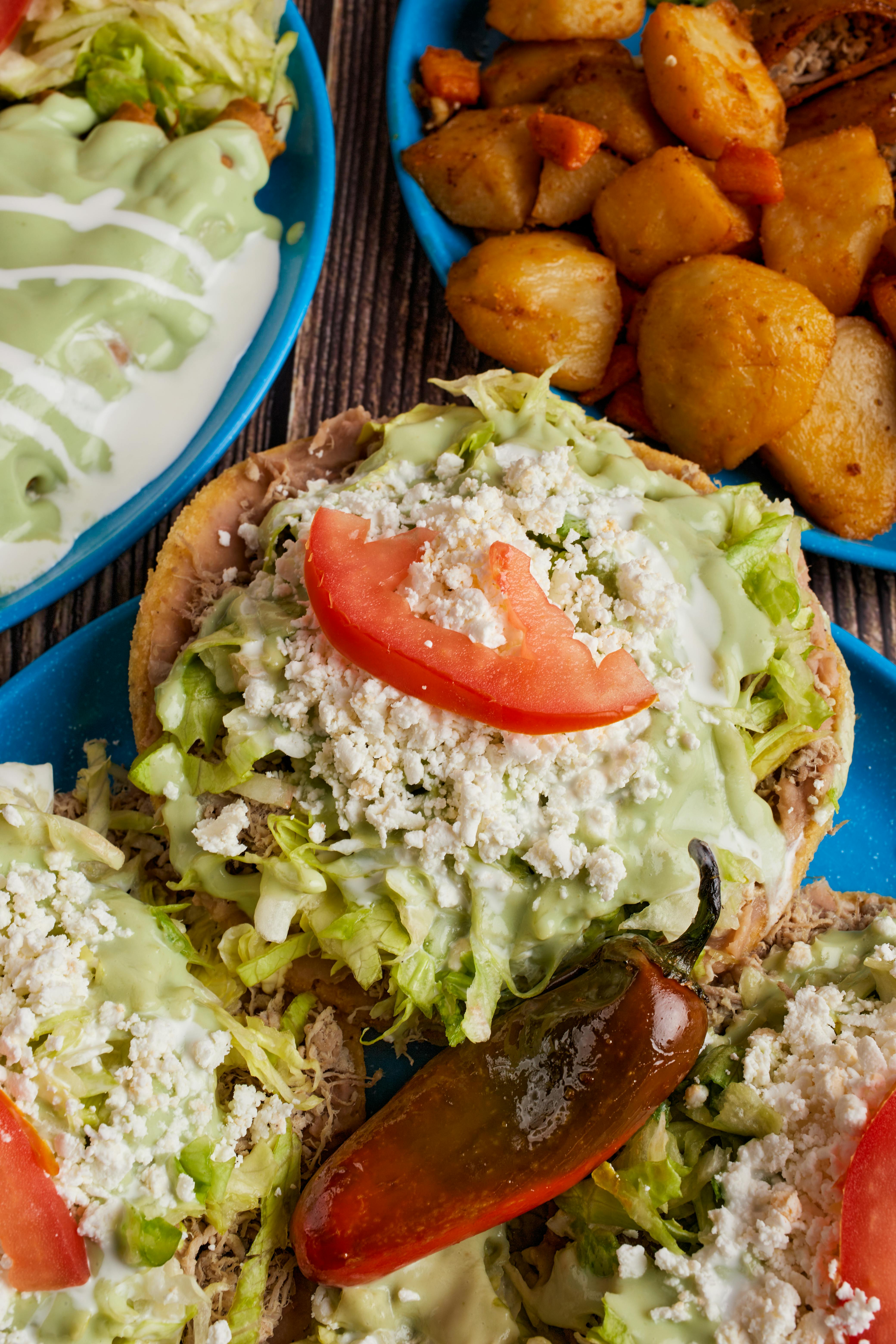
Chalupas Poblanas
The diets react (see scores below)
Common Ingredients
- masa
- salsa verde
- salsa roja
- pork
- onion
- lard
- queso fresco
Specific recipes may vary.
Incompatible with 9 of 11 diets
Diet Ratings
Chalupas Poblanas are built on a masa (corn dough) base, which is the primary disqualifying ingredient for keto. Masa is made from nixtamalized corn and is extremely high in net carbs — a single chalupa shell contains roughly 15-20g of net carbs, and a standard serving of multiple chalupas would far exceed the daily keto limit of 20-50g net carbs on its own. While several other ingredients are keto-friendly (lard, pork, salsa verde/roja in small amounts, onion in moderation, queso fresco), the masa shell is non-negotiable in this dish and makes it fundamentally incompatible with ketosis. This is a grain-based snack at its core.
Chalupas Poblanas contain multiple animal-derived ingredients that are strictly excluded from a vegan diet. Pork is a direct animal meat, lard is rendered pig fat, and queso fresco is a fresh dairy cheese. Any one of these alone would disqualify the dish; together they make it unambiguously non-vegan. The masa base and salsas are plant-based, but they cannot offset the presence of three distinct animal products.
Chalupas Poblanas are fundamentally incompatible with the paleo diet. The base of the dish is masa — a nixtamalized corn dough — which is a grain product and strictly excluded under all mainstream paleo frameworks. Queso fresco is a dairy product, also excluded. These two ingredients are structural to the dish, not optional additions. Lard is paleo-approved, pork is approved, onion is approved, and both salsas (verde and roja) are generally fine depending on preparation, but the disqualifying ingredients — masa and queso fresco — make this dish a clear avoid with high confidence.
Chalupas Poblanas present multiple conflicts with Mediterranean diet principles. Lard is the primary fat, directly contradicting the foundational role of extra virgin olive oil as the preferred fat source. Pork is a red meat, which Mediterranean guidelines restrict to just a few times per month. The masa base, while corn-derived and not inherently harmful, is a refined grain product when used in this form. The combination of lard, pork, and processed masa creates a dish that is high in saturated fat and misaligned with the plant-forward, olive oil-centric Mediterranean framework. The salsas and onion provide some vegetable value, and queso fresco is a moderate dairy component, but these positive elements are insufficient to offset the core incompatibilities.
Chalupas Poblanas are fundamentally incompatible with the carnivore diet. The dish is built on a masa (corn dough) base, which is a plant-derived grain product and the primary structural component. Beyond masa, it contains multiple plant-derived ingredients: salsa verde and salsa roja (made from tomatoes, tomatillos, chiles, and other vegetables), and onion. While the dish does contain carnivore-compatible elements — pork (animal protein), lard (animal fat), and queso fresco (dairy, debated but animal-derived) — these are minor components surrounded by disqualifying plant foods. The grain base alone is sufficient to classify this as an avoid.
Chalupas Poblanas contain multiple Whole30-excluded ingredients. Masa (nixtamalized corn dough) is a corn-based grain product, which is explicitly excluded from the Whole30 program. Additionally, queso fresco is a dairy cheese, also explicitly excluded. The chalupa itself is a fried corn tortilla/shell — even if masa were somehow acceptable, it forms a chip/taco-shell structure that falls squarely into the 'no recreating junk food' rule (chips, tortillas, crackers). The combination of a grain-based shell plus dairy makes this dish doubly non-compliant. Pork, lard, onion, salsa verde, and salsa roja can be Whole30-compatible on their own (assuming no added sugar or non-compliant ingredients in the salsas), but the foundational corn masa shell and queso fresco disqualify this dish entirely.
Chalupas Poblanas contain multiple high-FODMAP ingredients that make this dish problematic during the elimination phase. Onion is one of the highest-FODMAP foods (fructans) and is used as a topping/ingredient — even small amounts can be problematic. Queso fresco is a fresh soft cheese with significant lactose content, making it high-FODMAP at typical serving sizes. Salsa verde and salsa roja traditionally contain onion and garlic (both high in fructans), making commercial or restaurant versions almost certainly high-FODMAP. Masa (nixtamalized corn dough) is itself low-FODMAP, and pork is a safe protein. Lard is fat and contributes no FODMAPs. However, the combination of onion, queso fresco, and FODMAP-laden salsas makes this dish essentially unavoidable as a high-FODMAP food in its traditional preparation.
Monash University has not specifically tested chalupas poblanas as a composite dish, and the FODMAP load of the salsas depends heavily on recipe and portion. Some clinical FODMAP practitioners suggest that homemade versions with onion-free, garlic-free salsa and lactose-free cheese substituted for queso fresco could be adapted to be low-FODMAP, but the traditional dish as described here cannot be considered safe during elimination.
Chalupas Poblanas present multiple red flags from a DASH diet perspective. The dish is fried in lard, which is high in saturated fat — a category DASH explicitly limits. Pork, particularly as commonly used in this dish (carnitas-style or fatty cuts), contributes additional saturated fat. Queso fresco, while lower in sodium than aged cheeses, is still a full-fat cheese product inconsistent with DASH's emphasis on low-fat or fat-free dairy. The combination of lard-fried masa, fatty pork, and cheese creates a dish high in saturated fat and likely moderate-to-high in sodium from the salsas, meat, and cheese combined. None of the primary preparation elements align with DASH core principles — there are no whole grains, no low-fat dairy, and the primary fat source is an animal fat DASH specifically discourages. The presence of onion and salsas (vegetables/herbs) provides minimal nutritional redemption given the overall profile.
Chalupas Poblanas present several Zone Diet challenges. The masa (corn dough) base is a high-glycemic carbohydrate that Zone classifies as 'unfavorable' — corn-based products spike blood sugar and are difficult to portion into balanced blocks without over-delivering carbs. Lard is saturated fat, which the Zone Diet limits in favor of monounsaturated fats like olive oil. Queso fresco adds additional saturated fat. On the positive side, pork can serve as a lean protein source depending on the cut, and salsa verde and salsa roja contribute polyphenol-rich, low-glycemic vegetables (tomatillos, tomatoes, chilies, onion) that Zone actively encourages. The fundamental issue is the masa-to-protein ratio: traditional chalupas are carbohydrate-heavy with the masa forming the structural base, making it very difficult to achieve the 40/30/30 balance without drastically reducing portion size. As a snack, a very small chalupa (mini portion) could theoretically be portioned into a 1-block Zone snack, but the lard and saturated fat profile still push this away from Zone ideals. This is a 'caution' food that requires significant modification or very strict portion control to fit Zone principles.
Some Zone practitioners and later Sears anti-inflammatory writings suggest that traditional whole-food preparations — even those with lard and corn — are preferable to processed foods, and that small portions of traditional Mexican dishes can fit into a Zone framework given the polyphenol-rich salsas. The vegetable-based salsas with onion, tomatillo, and chili are genuinely Zone-favorable. A minimalist chalupa focused on maximizing salsa/pork toppings relative to masa could be a reasonable occasional Zone-compatible snack with careful block counting.
Chalupas Poblanas present a mixed anti-inflammatory profile. On the positive side, salsa verde and salsa roja contribute antioxidants and polyphenols from tomatoes, tomatillos, chili peppers, and onion — all anti-inflammatory staples. Onion provides quercetin, a well-studied anti-inflammatory flavonoid, and masa (nixtamalized corn) is a whole grain with decent fiber content. However, the dish has notable pro-inflammatory elements: lard is a source of saturated fat and is explicitly in the 'limit' category under anti-inflammatory guidelines. Pork, depending on the cut (typically shoulder or carnitas-style), can be moderately high in saturated fat. Queso fresco is a full-fat dairy product, also in the 'limit' category. The combination of lard and full-fat cheese in a single dish tips the saturated fat burden meaningfully. Pork itself is considered red meat under most anti-inflammatory frameworks (despite the 'other white meat' marketing), placing it in the 'limit' category. This dish is not aggressively pro-inflammatory — it lacks refined sugars, trans fats, or processed additives — but its reliance on lard and full-fat dairy as functional ingredients rather than incidental ones makes it a 'caution' rather than 'approve.'
Chalupas Poblanas present multiple serious concerns for GLP-1 patients. The masa base is fried or pan-fried in lard, making this a high-fat, fried food that directly worsens GLP-1 side effects including nausea, bloating, and reflux. Lard as a cooking fat adds significant saturated fat, which is among the worst offenders for GI distress on GLP-1 medications. Pork in this context is typically a fattier cut (carnitas-style or braised with fat), not a lean protein source. Queso fresco adds additional saturated fat with modest protein return. The masa provides refined carbohydrates with minimal fiber and negligible protein. Protein density per calorie is poor — the dish's calories are dominated by fat and refined carbs rather than protein. As a snack-category item, the portion size does not rescue the nutritional profile; even a small serving delivers a concentrated hit of fat and fried starch that slows digestion further in a gut already experiencing delayed gastric emptying. This dish hits multiple avoid triggers simultaneously: fried preparation, lard (saturated fat), fatty protein, refined grain base, and low nutrient density per calorie.
*See how scores were generated at our methodology page.
Nutritional profile
Six traits that cut across every diet.
Fiber & Plants
How much whole-plant food and fiber it delivers.
Healthy Fats
The quality of its fats (unsaturated, omega-3).
Whole / Unprocessed
How close it is to its natural, unprocessed form.
Gut Gentle
How easy it is on digestion (low FODMAP, few irritants).
Low Glycemic
How little it spikes your blood sugar.
Protein Density
How much protein it packs per calorie.
Controversy Index
Higher controversy = more disagreement between diets.
Diet-Specific Tips
 Zone — 4/10
View tips
- Masa (corn dough) is a high-glycemic, unfavorable Zone carbohydrate that disrupts 40/30/30 balance
- Lard is saturated fat — Zone strongly prefers monounsaturated fats (olive oil, avocado, almonds)
- Queso fresco adds additional saturated fat load
- Pork protein is acceptable in Zone if lean cut is used (approx. 7g per block)
- Salsa verde and salsa roja are polyphenol-rich, low-glycemic Zone-favorable ingredients
- High carb-to-protein ratio in traditional preparation makes block balancing very difficult
- As a snack category, even a small portion struggles to achieve Zone-compliant macro ratios given the masa base
 Anti-Inflammatory — 4/10
View tips
- Lard used as cooking fat — saturated fat, falls in 'limit' category for anti-inflammatory diets
- Queso fresco is full-fat dairy — also in 'limit' category
- Pork is classified as red meat in anti-inflammatory frameworks — moderate consumption advised
- Salsa verde and salsa roja contribute beneficial antioxidants, polyphenols, and capsaicin from chili peppers
- Onion provides quercetin and other anti-inflammatory flavonoids
- Masa (nixtamalized corn) is a whole grain with fiber — neutral to mildly positive
- No trans fats, refined sugars, or artificial additives present
- Overall saturated fat load from combined lard + pork + cheese is the primary concern