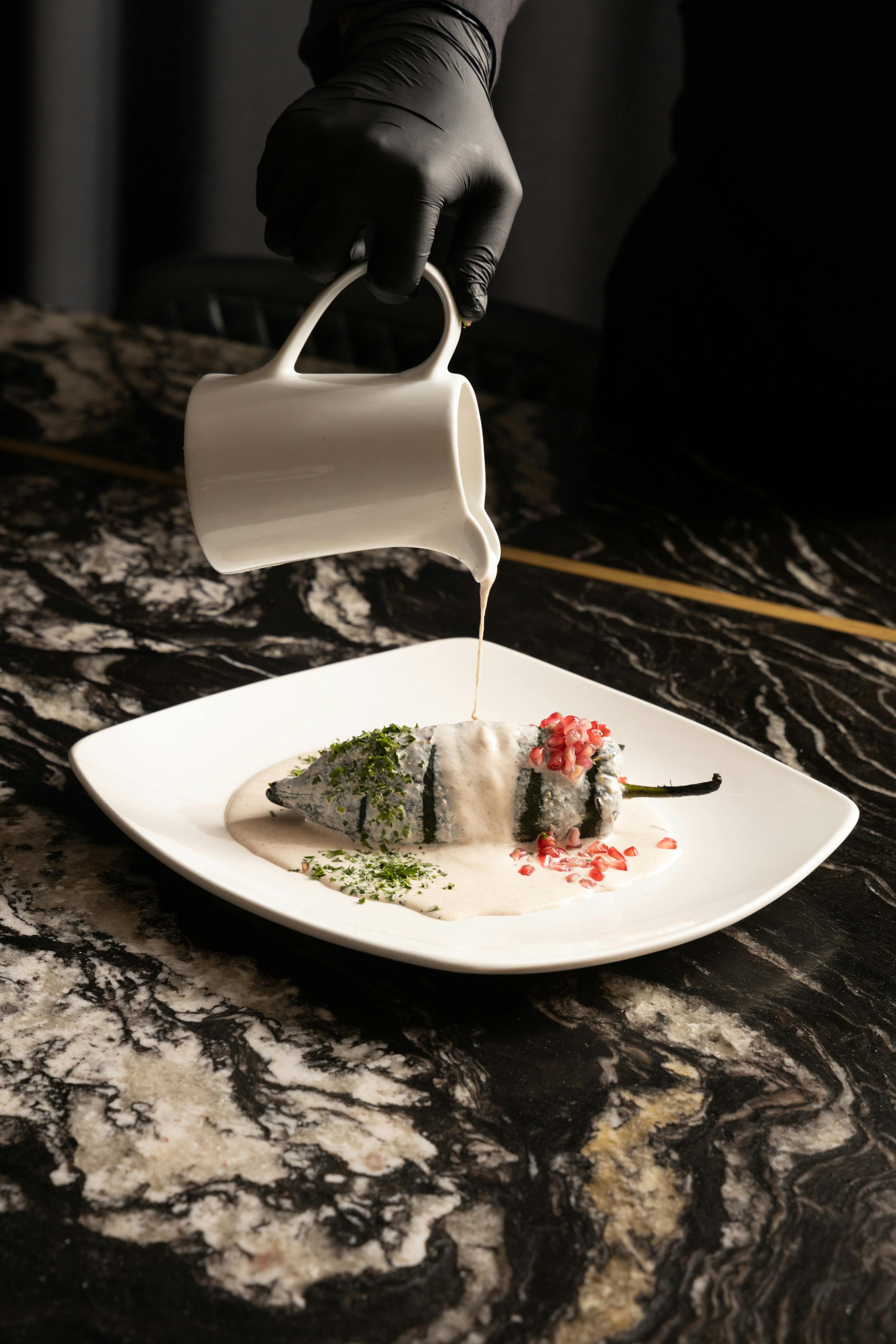
Photo: Amar Preciado / Pexels
The diets react (see scores below)
Common Ingredients
- poblano
- queso oaxaca
- eggs
- flour
- tomato
- onion
- garlic
- broth
Specific recipes may vary.
Incompatible with 6 of 11 diets
Diet Ratings
Chile Relleno in its traditional form is incompatible with keto primarily due to the flour-based egg batter coating. Flour is a grain product that adds significant net carbs per serving. A single chile relleno can contain 20-30g net carbs, largely from the flour batter and the tomato-based sauce. While several individual components are keto-friendly — poblano peppers (moderate carbs, ~4g net per pepper), queso oaxaca (high-fat cheese), and eggs — the flour coating is a dealbreaker that pushes this well over a manageable carb budget for a single dish. The tomato-onion-garlic broth sauce adds additional carbs. The dish as traditionally prepared cannot fit within a standard keto budget without fundamental recipe modification (e.g., replacing flour with almond or coconut flour).
Chile Relleno as prepared here contains multiple animal-derived ingredients that disqualify it from a vegan diet. Queso Oaxaca is a dairy cheese (animal-derived milk product), and eggs are used in the batter to coat the stuffed pepper before frying. Both are explicitly excluded under vegan rules. The broth may also be chicken or beef-based, adding a third potential animal product. The plant-based components — poblano pepper, tomato, onion, garlic, and flour — are all vegan-compliant, but they do not offset the clear animal ingredient violations.
Chile Relleno contains multiple non-paleo ingredients that make it clearly incompatible with the diet. Queso Oaxaca is a dairy-based cheese — explicitly excluded from paleo. Flour (wheat) is a grain — one of the most clearly avoided foods in paleo. The batter coating made from eggs and flour is a direct disqualifier. While the poblano pepper, eggs, tomato, onion, and garlic are all paleo-approved, and broth is generally acceptable, the two core structural ingredients (cheese and flour) are foundational non-paleo foods with clear consensus against them. This is not a gray-area dish — the primary protein itself (cheese) and the batter (flour) are both hard avoids.
Chile Relleno contains several Mediterranean-compatible elements—poblano pepper, tomato, onion, garlic, and broth align well with the plant-forward emphasis of the Mediterranean diet. However, the dish is traditionally battered in egg and flour (refined grain) and fried, then stuffed with a substantial amount of full-fat cheese (queso Oaxaca). The frying in unspecified oil (likely not olive oil) and the refined flour batter push it away from Mediterranean ideals, while eggs and dairy cheese are acceptable in moderation. The overall dish is not highly processed, but the preparation method and saturated fat load from cheese place it firmly in the 'caution' zone rather than an outright avoid, since the vegetable and egg base retain some compatibility.
Some Mediterranean diet practitioners would rate this more leniently, arguing that the core components—roasted pepper, tomato-based sauce, eggs, and fresh cheese—mirror traditional stuffed vegetable dishes common in Greek and Turkish cuisines (e.g., gemista). If baked rather than fried and prepared with olive oil, a similar dish would score closer to 6-7.
Chile Relleno is fundamentally incompatible with the carnivore diet. The dish is built almost entirely around plant-based ingredients: poblano peppers (the primary vessel), tomato, onion, and garlic in the sauce, and flour as the batter coating. While eggs and queso oaxaca are animal-derived and would be acceptable to many carnivore practitioners, they are minor supporting players in a dish whose structure, flavor, and identity are defined by plant foods. Flour (a grain product) is strictly excluded, as are all vegetables and alliums. There is no version of a traditional Chile Relleno that becomes carnivore-compliant without ceasing to be the dish entirely.
Chile Relleno contains two excluded ingredients: queso oaxaca (dairy cheese) and flour (a grain). Dairy is explicitly excluded on Whole30, with the only exception being ghee and clarified butter. Wheat flour is a grain and is explicitly excluded. Even setting aside those two ingredients, the dish as traditionally prepared uses flour as a coating/batter for frying, which would also edge into the 'no recreating junk food' territory (battered/breaded foods). The poblano, eggs, tomato, onion, garlic, and broth are all compliant, but the cheese and flour make this dish incompatible with Whole30 in its standard form.
Chile Relleno contains multiple high-FODMAP ingredients that make it unsuitable during the elimination phase. Onion and garlic are among the highest-FODMAP foods tested by Monash University — both are significant sources of fructans and must be strictly avoided during elimination. Wheat flour (used for the egg batter coating) is also high in fructans. The tomato sauce base typically uses both onion and garlic as foundational aromatics. Queso Oaxaca is a fresh, stringy cheese similar to mozzarella; while many aged cheeses are low-FODMAP, fresh cheeses can contain moderate lactose and Monash data on queso Oaxaca specifically is limited. Poblano peppers themselves are low-FODMAP, and eggs are safe. However, the combination of garlic, onion, and wheat flour creates unavoidable high-FODMAP exposure in any standard preparation of this dish. There is no realistic way to consume a traditional Chile Relleno during the elimination phase without encountering these problem ingredients.
Chile Relleno has a mixed DASH diet profile. On the positive side, the base ingredients are DASH-friendly: poblano peppers are an excellent vegetable rich in potassium, vitamin C, and fiber; tomato, onion, and garlic contribute antioxidants and micronutrients; and eggs and low-sodium broth are acceptable in moderation. However, the primary protein is queso Oaxaca, a full-fat Mexican cheese relatively high in saturated fat and sodium — both of which DASH limits. The traditional battered preparation uses eggs and flour to create a fried coating, adding significant saturated fat from frying oil and extra calories. The dish can easily exceed DASH saturated fat thresholds per serving depending on cheese quantity and frying method. The tomato-based sauce made with broth, onion, and garlic is a redeeming element. Overall, Chile Relleno is acceptable occasionally in DASH but requires meaningful portion control and ideally modification (reduced-fat cheese, oven-baked rather than fried, low-sodium broth).
NIH DASH guidelines specify low-fat dairy and limited saturated fat, which conflicts with the full-fat queso Oaxaca and fried coating central to this dish. However, some updated DASH-aligned clinicians note that emerging research (including meta-analyses in the European Journal of Nutrition) questions whether full-fat dairy cheese significantly worsens cardiovascular outcomes, and that a baked preparation with reduced cheese could bring this dish close to DASH compliance given its strong vegetable base.
Chile Relleno presents a mixed Zone profile. The poblano pepper is an excellent low-glycemic, polyphenol-rich vegetable fully in line with Zone principles. Eggs provide acceptable Zone protein, and the tomato-onion-garlic sauce adds favorable low-GI carbs. However, queso Oaxaca (a string-style full-fat cheese) is the primary protein, bringing significant saturated fat that Zone guidelines caution against — ideally protein sources are lean. The flour coating (typically a wheat flour dredge before the egg batter) introduces refined carbohydrates that spike the glycemic load, pushing this dish into 'unfavorable' carb territory. The egg white batter itself is fine, but the flour component is problematic. The fat profile is largely saturated from the cheese rather than monounsaturated. With careful portioning — limiting cheese quantity, minimizing flour coating, and pairing with additional non-starchy vegetables — this dish can be worked into a Zone meal, but it requires discipline and modification to hit the 40/30/30 target.
Some Zone practitioners and Sears' later writings (particularly his anti-inflammatory work) are more permissive about full-fat dairy and saturated fat when the overall inflammatory index of the meal is low. Poblanos are rich in polyphenols and capsaicin, which Sears has highlighted as anti-inflammatory. A practitioner following later Sears anti-inflammatory protocol might rate this more favorably if the flour is minimized and the cheese portion is controlled to ~1 oz for the Zone protein block.
Chile Relleno is a mixed profile dish from an anti-inflammatory standpoint. On the positive side, poblano peppers are antioxidant-rich vegetables containing capsaicin, vitamin C, and carotenoids with documented anti-inflammatory properties. The tomato-based salsa roja (tomato, onion, garlic, broth) is genuinely beneficial — garlic and onions contain quercetin and allicin, both anti-inflammatory compounds, and tomatoes provide lycopene. Eggs contribute choline and selenium. However, the dish has meaningful inflammatory concerns: queso oaxaca is a full-fat cheese high in saturated fat, which is categorized as a 'limit' ingredient under anti-inflammatory principles. The egg-white batter (flour + beaten eggs) introduces refined flour, a refined carbohydrate that is generally discouraged. Critically, traditional chile rellenos are pan-fried or deep-fried in oil — typically vegetable or corn oil — which adds pro-inflammatory omega-6 fats and oxidized lipids, a significant concern. If the frying oil is high-omega-6, this pushes the dish further toward 'avoid.' Overall, the dish is best described as 'caution': the vegetable base is solid and anti-inflammatory, but the full-fat cheese, refined flour batter, and frying method create a net mixed or mildly pro-inflammatory profile that warrants moderation.
Some anti-inflammatory practitioners, particularly those following nightshade-inclusive protocols like Dr. Weil's pyramid, would view this dish more favorably given its rich vegetable base (poblano, tomato, garlic, onion), framing the cheese and batter as acceptable occasional indulgences. Conversely, AIP and stricter anti-inflammatory protocols would flag not only the frying method and full-fat dairy, but also the nightshade vegetables (poblano, tomato) as potential triggers for autoimmune-sensitive individuals.
Chile Relleno presents a mixed nutritional profile for GLP-1 patients. The dish features a poblano pepper stuffed with Queso Oaxaca (a high-fat, moderate-protein melting cheese), battered in egg and flour, and fried — though the listed ingredients suggest a lighter, broth-based tomato sauce version rather than the heavily fried restaurant standard. Even in a lighter preparation, the primary protein is cheese, which delivers saturated fat alongside protein and won't approach the 15-30g lean protein target per meal without a very large portion. The egg batter adds some protein but also fat. On the positive side, poblano peppers provide fiber and vitamins, the tomato-onion-garlic broth sauce is nutrient-dense and easy to digest, and the dish is not heavily spiced in the capsaicin sense. Key concerns are the saturated fat load from Queso Oaxaca, the flour batter (refined carbs, low fiber), and the fact that traditional preparation involves frying — which significantly worsens GLP-1 side effects. If baked rather than fried and paired with a lean protein side, the score improves. As typically prepared, this is a caution food — acceptable occasionally in small portions, but not a reliable GLP-1-friendly staple.
Some GLP-1-focused dietitians may rate this more favorably if prepared baked rather than fried, arguing that the egg and cheese combination does deliver meaningful protein and that poblano peppers provide digestive-supportive fiber and antioxidants. Others would rate it more harshly given that cheese as the primary protein source brings a high saturated fat burden that can worsen nausea and reflux, and the flour batter adds refined carbohydrates with negligible nutritional value — concerns that are particularly acute in patients with slower gastric emptying.
*See how scores were generated at our methodology page.
Nutritional profile
Six traits that cut across every diet.
Fiber & Plants
How much whole-plant food and fiber it delivers.
Healthy Fats
The quality of its fats (unsaturated, omega-3).
Whole / Unprocessed
How close it is to its natural, unprocessed form.
Gut Gentle
How easy it is on digestion (low FODMAP, few irritants).
Low Glycemic
How little it spikes your blood sugar.
Protein Density
How much protein it packs per calorie.
Controversy Index
Higher controversy = more disagreement between diets.
Diet-Specific Tips
 Mediterranean — 5/10
View tips
- Poblano pepper is a nutrient-dense vegetable, compatible with Mediterranean principles
- Tomato, onion, and garlic are Mediterranean staples
- Traditional preparation involves frying in refined flour batter, increasing saturated fat and refined grain content
- Queso Oaxaca is a full-fat dairy cheese; dairy is acceptable in moderation but not in large quantities
- Eggs are an acceptable moderate-consumption food in the Mediterranean diet
- No olive oil specified; frying oil is likely not extra virgin olive oil
- Dish is not highly processed and lacks added sugars
 DASH — 4/10
View tips
- Poblano pepper is a DASH-positive vegetable high in potassium, fiber, and vitamin C
- Queso Oaxaca is a full-fat cheese with notable saturated fat and sodium content, conflicting with DASH dairy guidelines
- Traditional frying method adds saturated/unsaturated fat and calories beyond DASH limits
- Tomato-onion-garlic sauce is DASH-favorable and adds potassium and antioxidants
- Eggs contribute protein acceptably in moderation but add dietary cholesterol
- Sodium level depends heavily on broth — low-sodium broth improves DASH compatibility
- Dish can be improved for DASH compliance by baking instead of frying and using reduced-fat cheese
 Zone — 5/10
View tips
- Poblano pepper is an ideal Zone carb — low-glycemic, polyphenol-rich, favorable vegetable
- Queso Oaxaca is a full-fat cheese providing saturated fat rather than preferred monounsaturated fat
- Flour coating adds refined, high-glycemic carbohydrates — an 'unfavorable' Zone carb source
- Egg component is Zone-compatible as a lean protein contributor
- Tomato-onion-garlic sauce adds favorable low-GI carbs supporting the carb block
- Overall fat profile skews saturated, not aligned with Zone's monounsaturated fat preference
- Dish can fit Zone ratios only with strict portion control and minimized flour usage
 Anti-Inflammatory — 5/10
View tips
- Poblano peppers: anti-inflammatory antioxidants (capsaicin, vitamin C, carotenoids)
- Garlic and onion: anti-inflammatory quercetin and allicin
- Tomato: lycopene and polyphenols in the salsa base
- Queso oaxaca: full-fat dairy, high in saturated fat — 'limit' category
- Refined flour batter: pro-inflammatory refined carbohydrate
- Traditional frying in vegetable/corn oil: high omega-6, oxidized lipids
- Eggs: moderate — some anti-inflammatory nutrients but also arachidonic acid
- Nightshade vegetables may be problematic for autoimmune-sensitive individuals
 GLP-1 Friendly — 4/10
View tips
- Primary protein is cheese (Queso Oaxaca) — high saturated fat, moderate protein; does not meet lean protein priority
- Traditional preparation is fried — frying significantly worsens GLP-1 GI side effects (nausea, reflux, bloating)
- Egg batter contributes some protein but adds fat and refined flour (low fiber)
- Poblano pepper is a positive — provides fiber, vitamin C, and is easy to digest
- Tomato-onion-garlic broth sauce is nutrient-dense and GLP-1 friendly
- Protein per serving likely falls short of 15-30g target from cheese alone without large portion
- Saturated fat load from Queso Oaxaca is a concern for GLP-1 side effect management
- Baked preparation would improve score meaningfully; fried preparation pushes toward avoid