Photo: Amar Preciado / Pexels
The diets react (see scores below)
Common Ingredients
- flour
- sugar
- butter
- eggs
- yeast
- milk
- vanilla
- cinnamon
Specific recipes may vary.
Incompatible with 10 of 11 diets
Diet Ratings
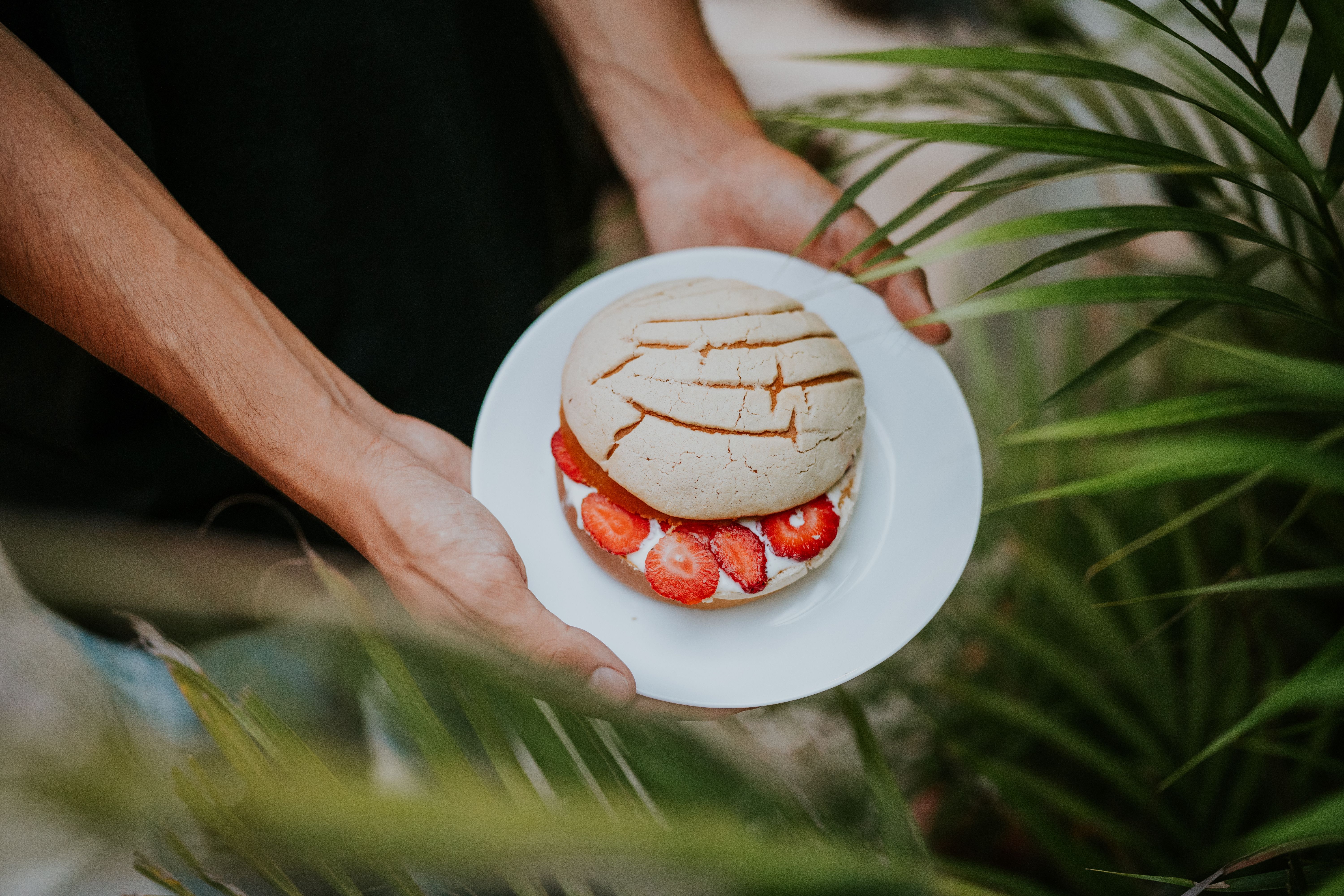
Conchas are a traditional Mexican sweet bread made primarily from wheat flour and sugar, making them completely incompatible with a ketogenic diet. A single concha typically contains 40-50g of net carbs, which can exceed an entire day's keto carb budget in one serving. The base is grain-derived flour (a zero-tolerance ingredient on keto), combined with added sugar in both the dough and the characteristic sweet topping crust. While the recipe does include butter and eggs, these do not offset the massive carbohydrate load from flour and sugar.
Conchas are traditional Mexican sweet bread rolls that contain multiple animal-derived ingredients. The listed ingredients include butter (dairy), eggs, and milk — all of which are animal products explicitly excluded from a vegan diet. These are not trace contaminants but core structural and enriching ingredients that define the texture and flavor of the bread. Vegan versions of conchas can be made using plant-based butter, flax or chia eggs, and non-dairy milk, but the traditional recipe as presented is not vegan-compatible.
Conchas are a Mexican sweet bread built almost entirely on non-paleo ingredients. Flour (wheat) is a grain and one of the most strictly prohibited foods in the paleo framework. Sugar is refined and excluded. Butter and milk are dairy products. Yeast-leavened wheat bread is the archetypal processed, agricultural-era food that the paleo diet was specifically designed to eliminate. While eggs, vanilla, and cinnamon are paleo-approved, they are minor components that cannot redeem a dish whose foundation is wheat flour and dairy. This is about as far from a hunter-gatherer food as possible.
Conchas are a Mexican sweet bread made primarily from refined white flour and sugar, with butter as the primary fat — directly contradicting Mediterranean diet principles on multiple fronts. Refined grains lack the fiber and nutrients of whole grains emphasized in the diet. Added sugar and butter (saturated fat) are among the ingredients most discouraged. While eggs and milk are acceptable in moderation, they play a supporting role here in a product that is fundamentally a refined, sugary baked good with no meaningful plant-forward nutritional value. This is essentially the opposite of what the Mediterranean diet encourages as a snack — which would be nuts, fruit, or whole grain options.
Conchas are a traditional Mexican sweet bread that is fundamentally incompatible with the carnivore diet. The dish is almost entirely plant-derived and processed: flour (grain), sugar (processed plant), yeast (fungal/plant-adjacent), vanilla (plant extract), and cinnamon (plant spice) are all strictly excluded. While butter, eggs, and milk are animal-derived ingredients, they are minor components of what is overwhelmingly a grain-based, sugary baked good. There is no meaningful animal protein as the primary ingredient, and the carbohydrate load from flour and sugar directly contradicts every tier of carnivore eating, including the most lenient versions.
Conchas are a traditional Mexican sweet bread (pan dulce) that violate multiple core Whole30 rules. The dish contains flour (a grain, excluded), sugar (added sugar, excluded), butter (dairy, excluded — only ghee/clarified butter is allowed), and milk (dairy, excluded). Additionally, conchas are the archetypal example of a baked good — bread with a sweet topping — which is explicitly prohibited under Rule 4 even if compliant ingredients could theoretically be sourced. This dish fails on both ingredient and spirit-of-the-program grounds.
Conchas are traditional Mexican sweet bread rolls made primarily with wheat flour, which is high in fructans — one of the most significant FODMAPs. A standard serving of a concha (one roll, typically 80-100g) contains a substantial amount of wheat flour, making it clearly high-FODMAP during the elimination phase. Additionally, milk contributes lactose (a disaccharide FODMAP), compounding the issue. Butter and eggs are low-FODMAP, and sugar, vanilla, cinnamon, and yeast in typical quantities are generally safe. However, the two primary problematic ingredients — wheat flour and milk — are both high-FODMAP and foundational to this recipe, making conchas unsuitable during the elimination phase at any standard serving size.
Conchas are a traditional Mexican sweet bread (pan dulce) made from refined white flour, sugar, butter, eggs, milk, and flavoring. From a DASH diet perspective, they present several concerns: they are made with refined (not whole-grain) flour, contain added sugar, and are made with butter which adds saturated fat. DASH emphasizes whole grains over refined grains, limits added sugars and sweets, and discourages saturated fat. Sodium content is relatively low from these ingredients, which is a positive. However, the refined carbohydrate load, added sugar, and butter content make this a treat food rather than a DASH staple. It is not categorically 'avoid' because sodium is low, the saturated fat content per serving is moderate rather than extreme (unlike bacon or processed meats), and DASH does allow occasional sweets in very limited amounts (5 or fewer servings per week of sweets/added sugars). A single concha consumed occasionally fits within DASH's allowance for limited sweets, but it should not be a regular snack choice. Portion control is essential.
Conchas are Mexican sweet breads made primarily from refined white flour and sugar, with butter as the fat source. This combination creates a high-glycemic, low-protein, high-saturated-fat food that fundamentally conflicts with Zone Diet principles. The carbohydrate profile is entirely from refined, high-glycemic sources — exactly what the Zone categorizes as 'unfavorable' carbs to avoid. There is no meaningful protein to balance the carb load (eggs contribute minimally in typical recipes). The fat is primarily saturated (butter) rather than monounsaturated. As a snack with no lean protein, no low-GI vegetables, and no monounsaturated fats, conchas cannot be incorporated into any Zone-balanced meal or snack without completely restructuring the eating occasion around them — and even then, the concha itself provides nothing Zone-favorable. The caloric ratio would be roughly 65-70% carbohydrates, 10-15% protein, and 20-25% fat, which is essentially the inverse of Zone targets. This is one of the clearest 'avoid' cases in Zone methodology.
Conchas are a traditional Mexican sweet bread (pan dulce) made primarily from refined white flour, added sugar, and butter — three of the most pro-inflammatory ingredients in the anti-inflammatory framework. Refined flour spikes blood glucose, driving insulin response and downstream inflammatory signaling. Added sugar directly promotes production of pro-inflammatory cytokines and advanced glycation end products (AGEs). Butter contributes saturated fat, which in excess is associated with elevated inflammatory markers. The eggs provide modest anti-inflammatory benefit (choline, selenium), and cinnamon is a genuinely anti-inflammatory spice — but both are present in quantities too small relative to the dominant pro-inflammatory ingredients to meaningfully shift the profile. There is no meaningful fiber, omega-3s, antioxidants, or polyphenols beyond the trace cinnamon. This is essentially a refined-carbohydrate, high-sugar, saturated-fat food with negligible redeeming anti-inflammatory value. Occasional consumption is a personal choice, but from a dietary framework standpoint it falls clearly in the avoid category.
Conchas are traditional Mexican sweet breads made primarily from refined flour, sugar, and butter — a combination that scores poorly across nearly every GLP-1 dietary criterion. They are high in refined carbohydrates and added sugar, contain saturated fat from butter, offer negligible protein and fiber, and are calorie-dense with very low nutrient density per calorie. The eggs and milk contribute minimal protein relative to the overall carbohydrate and fat load. For GLP-1 patients eating significantly reduced calorie volumes, conchas represent empty calories that displace the protein and fiber their bodies critically need. The high sugar content can also contribute to blood sugar spikes and increased nausea, and the buttery, dense crumb may slow gastric emptying further on top of the medication's existing effect, worsening GI side effects.
*See how scores were generated at our methodology page.
Nutritional profile
Six traits that cut across every diet.
Fiber & Plants
How much whole-plant food and fiber it delivers.
Healthy Fats
The quality of its fats (unsaturated, omega-3).
Whole / Unprocessed
How close it is to its natural, unprocessed form.
Gut Gentle
How easy it is on digestion (low FODMAP, few irritants).
Low Glycemic
How little it spikes your blood sugar.
Protein Density
How much protein it packs per calorie.
Controversy Index
Higher controversy = more disagreement between diets.
Diet-Specific Tips
 DASH — 4/10
View tips
- Refined white flour instead of whole grain — DASH emphasizes whole grains
- Added sugar contributes to DASH's limited sweets allowance (≤5 servings/week)
- Butter adds saturated fat, which DASH recommends limiting
- Low sodium content from listed ingredients is favorable
- No fiber, potassium, calcium, or magnesium density — lacks DASH nutrient profile
- Acceptable only as an occasional treat within DASH sweets allowance