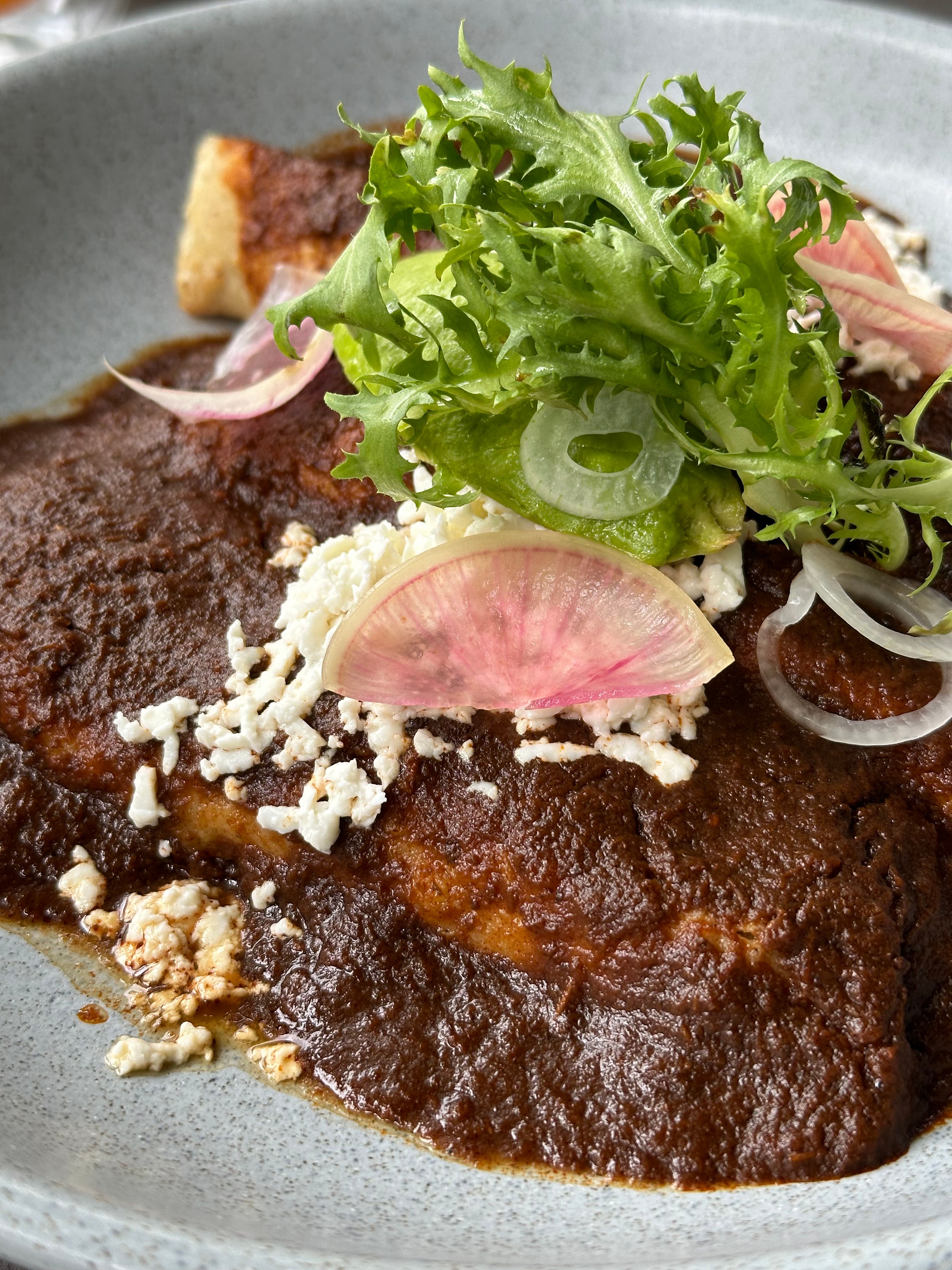
Photo: Kuiyibo Campos / Pexels
Mexican
Mole Poblano
The diets react (see scores below)
Common Ingredients
- ancho chiles
- mulato chiles
- chocolate
- sesame seeds
- almonds
- raisins
- tomato
- turkey
- cinnamon
- clove
Specific recipes may vary.
Incompatible with 4 of 11 diets
Diet Ratings
Mole Poblano is fundamentally incompatible with ketogenic diet in its traditional form. The sauce combines multiple high-carb and sugar-containing ingredients: raisins are concentrated sugar bombs (~65g net carbs per 100g), traditional Mexican chocolate adds significant sugar, dried chiles contribute moderate carbs in the volumes used, and tomatoes add additional carbs. A typical serving of mole sauce alone can contain 15-30g of net carbs, pushing most individuals over their daily limit before accounting for any other meals. The turkey protein base is keto-friendly, as are sesame seeds and almonds, but these positives are overwhelmed by the carb-heavy sauce components.
Some lazy keto or flexible keto practitioners argue that a small portion of mole with turkey (focusing on the protein and fat from nuts/seeds) could fit within a daily carb budget if no other carbs are consumed, and that eliminating raisins and swapping to 90%+ dark chocolate would make a modified version workable.
Mole Poblano as listed contains turkey as its primary protein, which is poultry — a clear animal product entirely excluded from a vegan diet. There is no ambiguity here. While the sauce components (ancho chiles, mulato chiles, chocolate, sesame seeds, almonds, raisins, tomato, cinnamon, clove) are all plant-based and could theoretically form a vegan mole sauce, the dish as presented is built around turkey and cannot be considered vegan-compatible. A vegan adaptation would require substituting the turkey with a plant-based protein such as jackfruit, seitan, or tofu, and verifying the chocolate contains no dairy.
Mole Poblano sits in a genuine gray area for paleo. The base protein (turkey) is fully paleo-approved, and several ingredients — ancho and mulato chiles, tomato, cinnamon, clove, and almonds — are unambiguously paleo. However, two ingredients create concern: chocolate (cacao) and sesame seeds. Chocolate/cacao in traditional mole is typically processed with sugar added, and even unsweetened chocolate is a processed product; dark chocolate above 70% cacao is widely accepted in the paleo community as a caution item, but sweetened chocolate is more problematic. Sesame seeds are technically seeds, but sesame oil is excluded as a seed oil — whole sesame seeds themselves are generally treated as acceptable in most paleo frameworks, though some strict interpretations flag them. Raisins are concentrated dried fruit with high sugar content, placing them in the caution zone. The dish as a whole combines multiple caution-level ingredients (chocolate, raisins) with otherwise clean paleo foods, and traditional recipes typically include added sugar and sometimes small amounts of seed-based additives. The overall profile warrants a caution rating — paleo-compatible in spirit but dependent heavily on preparation details.
Strict Cordain-school paleo would push this closer to avoid, flagging the processed chocolate and concentrated sugar from raisins as incompatible; Cordain's original framework excludes all added sugars and processed cacao products. Conversely, more permissive practitioners like Mark Sisson would likely accept a homemade version using high-percentage cacao and minimal sweetener as an occasional indulgence.
Mole Poblano is a complex dish with several Mediterranean-compatible ingredients — turkey (acceptable poultry protein, moderate consumption), tomatoes, sesame seeds, almonds, chiles, and spices like cinnamon and clove are all either staples or accepted components. However, the dish also contains chocolate (added sugar and saturated fat from cacao), raisins (concentrated sugar), and the sauce is traditionally made without olive oil (lard or vegetable oils are typical in Mexican cuisine). The overall ingredient profile is largely whole and plant-forward, but the preparation method and added sugars from chocolate and raisins place it in moderate territory. Turkey as the protein is appropriate for moderate consumption. This is a non-Mediterranean dish that happens to align partially with Mediterranean principles, but lacks the olive oil foundation and contains notable sugar and saturated fat content from the chocolate component.
Some Mediterranean diet interpreters might rate this more favorably, noting that dark chocolate in small amounts is occasionally accepted in modern Mediterranean diet frameworks, and that the dense array of nuts, seeds, spices, legumes, and vegetables mirrors the plant-forward ethos. Others would flag the absence of olive oil and the sugar load as disqualifying for regular consumption.
Mole Poblano is almost entirely incompatible with the carnivore diet. While turkey is an acceptable animal protein, it is overwhelmed by a extensive list of plant-based ingredients that form the core of the dish: ancho chiles, mulato chiles, chocolate, sesame seeds, almonds, raisins, tomato, cinnamon, and clove. Every one of these ingredients — chiles, nuts, seeds, fruit, vegetables, spices, and chocolate — is explicitly excluded from the carnivore diet. The sauce itself is a complex plant-derived preparation, making the dish fundamentally a plant-forward meal with turkey as a minor component. This is not a borderline case; the overwhelming majority of the dish's ingredients and flavor profile are disqualifying under any tier of carnivore eating.
Mole Poblano's listed ingredients are individually Whole30-compatible: dried chiles, tomato, turkey, nuts (almonds, sesame seeds), raisins, spices (cinnamon, clove), and chocolate. However, 'chocolate' is the critical variable here. Traditional mole uses Mexican chocolate (e.g., Ibarra or Abuelita brands), which typically contains added sugar, dairy, and sometimes soy lecithin — all excluded. To be compliant, one must use 100% unsweetened cacao or cocoa powder with no additives. Additionally, raisins are allowed but should have no added sugar or sulfites (though sulfites are no longer excluded per 2024 rules). The dish itself is not a 'junk food recreation' and is conceptually a whole-food stew, so it doesn't violate rule 4. The main compliance burden is careful sourcing of the chocolate. As commonly prepared with traditional Mexican chocolate, this dish would be non-compliant due to added sugar.
The official Whole30 program would approve this dish if made with 100% unsweetened cacao and compliant ingredients. However, community practitioners note that mole as commonly prepared in restaurants or with traditional chocolate brands invariably contains added sugar, making ordering or making it without careful scrutiny a practical pitfall — label-reading and ingredient substitution are essential.
Mole Poblano contains multiple high-FODMAP ingredients that make it problematic during the elimination phase. Raisins are high in excess fructose and polyols (sorbitol) even in small quantities. Almonds become high-FODMAP above approximately 10 nuts per serving (GOS). Ancho and mulato chiles in the quantities typical for mole sauce contribute meaningful fructan loads. Dark chocolate is low-FODMAP at small amounts (30g) but mole uses it in combination with other FODMAP sources, compounding the total load. Sesame seeds are low-FODMAP in typical quantities. Tomato is low-FODMAP at standard servings. Turkey is a safe protein. Cinnamon and clove are low-FODMAP as spices. However, the combination of raisins (high-FODMAP at any practical serving), cumulative chile fructan load, and almond quantities typical in mole recipes creates a dish that almost certainly exceeds FODMAP thresholds in a standard restaurant or home serving. The stacking of multiple moderate-to-high FODMAP ingredients makes this a dish to avoid during elimination.
Monash University has not specifically tested mole poblano as a composite dish, so exact FODMAP load depends heavily on recipe proportions. Some clinical FODMAP practitioners suggest that if raisins and almonds are used in very small amounts distributed across many servings, the per-serving FODMAP contribution might be manageable, but this is difficult to control outside of home preparation with careful measuring.
Mole Poblano presents a mixed DASH profile. The turkey is a lean protein explicitly encouraged by DASH guidelines. Ancho and mulato chiles, tomato, and spices (cinnamon, clove) are DASH-positive ingredients rich in potassium, fiber, and antioxidants. Almonds and sesame seeds provide healthy unsaturated fats, magnesium, and calcium consistent with DASH recommendations. However, the chocolate (typically dark or semi-sweet) adds saturated fat and sugar, and traditional mole recipes can be calorie-dense due to the combination of nuts, seeds, and chocolate. Sodium content is moderate if prepared fresh without added salt, but restaurant or pre-made versions often contain significant added sodium. Raisins contribute natural sugar, and the overall fat content from multiple high-fat ingredients (nuts, seeds, chocolate) warrants portion control. The dish is not inherently off-limits but requires mindful preparation and portioning to align with DASH principles.
NIH DASH guidelines would flag the saturated fat from chocolate and caloric density of nuts/seeds as requiring careful portion control. However, updated clinical interpretations note that the type of fat in nuts and seeds is predominantly unsaturated and cardioprotective, and dark chocolate in small amounts is increasingly viewed as acceptable in cardiovascular diets — some DASH-oriented dietitians consider a well-portioned homemade mole with fresh ingredients a reasonable DASH-compatible choice given its rich micronutrient profile.
Mole Poblano is a complex, nutritionally dense dish that has both Zone-friendly and Zone-challenging elements. Turkey is an excellent lean protein that fits perfectly into Zone protein blocks. The ancho and mulato chiles, tomato, and spices (cinnamon, clove) contribute polyphenols and anti-inflammatory compounds that Sears would appreciate. Almonds and sesame seeds provide monounsaturated and polyunsaturated fats that can serve as Zone fat blocks. However, the chocolate and raisins introduce higher-glycemic sugars and additional carbohydrates that complicate block management — raisins are explicitly listed as an 'unfavorable' carb in Sears' Zone framework due to their concentrated sugar content. Chocolate (depending on % cacao and sugar content) similarly adds glycemic load. The traditional mole sauce is also relatively calorie-dense from the nut, seed, and chocolate base, which can push fat ratios higher than the Zone's 30% target. That said, the overall dish is not processed or nutritionally empty — it contains real, whole-food ingredients. With portion control (modest sauce portion over turkey, monitoring the raisin and chocolate quantities), Mole Poblano can be incorporated into a Zone meal, likely with a side of non-starchy vegetables to balance the macros. It is not a clean Zone meal as traditionally prepared, but it is workable with awareness.
Some Zone practitioners and later Sears writings on polyphenols would view dark chocolate as a beneficial polyphenol source that supports anti-inflammatory pathways, potentially elevating this dish's Zone compatibility. The raisins, while 'unfavorable,' are used in relatively small quantities in mole sauce relative to total dish volume, so their glycemic impact per serving may be modest. A stricter classic Zone reading (Enter the Zone era) would rate this lower due to the concentrated carb sources and higher fat load from nuts and seeds.
Mole Poblano is a surprisingly anti-inflammatory dish when examined ingredient by ingredient. Ancho and mulato chiles are rich in capsaicin and carotenoids, which have documented anti-inflammatory effects. Dark chocolate (the base of authentic mole) contributes flavanols and polyphenols with well-established anti-inflammatory properties, provided cacao content is sufficient. Cinnamon and clove are both potent anti-inflammatory spices — clove in particular has among the highest ORAC values of any spice. Sesame seeds offer lignans and some omega-3s. Almonds contribute vitamin E and healthy monounsaturated fats. Tomato provides lycopene. Turkey is a lean poultry protein, firmly in the 'moderate' anti-inflammatory category. Raisins add some sugar and glycemic load, but in the quantities used in mole they are modest. The main concern is preparation-dependent: traditional mole recipes vary widely and some versions include lard or significant added fat. If prepared with olive oil or without added saturated fat, this dish rates quite well. The chocolate quality matters — traditional mole uses unsweetened or minimally sweetened Mexican chocolate, which is favorable. Overall, the dish has a genuinely impressive anti-inflammatory spice and flavonoid profile, offset slightly by raisins and the context-dependent fat used in cooking.
Some anti-inflammatory practitioners following autoimmune or nightshade-sensitive protocols would caution against tomatoes and chiles (nightshades), arguing that solanine and capsaicin compounds may aggravate inflammation in sensitive individuals (per AIP and Dr. Tom O'Bryan's framework). Additionally, traditional mole often includes lard in restaurant preparations, which would add saturated fat and shift the profile toward 'caution' — the rating here assumes a home preparation with lean turkey and no added saturated fat.
Mole Poblano is a nutritionally complex dish that sits firmly in caution territory for GLP-1 patients. The turkey base is an excellent lean protein source — high protein density, easy to digest, low saturated fat — and strongly supports GLP-1 dietary goals. The ancho and mulato chiles provide meaningful fiber and micronutrients. However, the mole sauce itself introduces significant concerns: almonds, sesame seeds, and chocolate (typically dark or semi-sweet in traditional preparation) contribute a substantial fat load per serving, including saturated fat from the chocolate. Raisins add concentrated sugar with minimal fiber benefit. The overall caloric density of the sauce is high relative to its volume, which is problematic when patients are eating small portions and need every calorie to be nutrient-dense. Spice complexity (chiles, cinnamon, clove) is generally moderate and tolerable for most GLP-1 patients, but the chile base may trigger reflux or nausea in those with heightened GI sensitivity, which is common on these medications. The dish is not fried and contains no ultra-processed ingredients, which is a meaningful positive. In small, protein-forward portions — emphasizing turkey with a modest amount of sauce — this dish can be acceptable. A large serving dominated by sauce would tip toward avoid territory.
Some GLP-1-focused dietitians would rate this more favorably, noting that the fats in mole are primarily unsaturated (from almonds and sesame seeds) and that the chocolate content per serving is modest in a traditional preparation, making the saturated fat load less concerning than it appears on paper. Others would rate it more cautiously, arguing that the high caloric density of the sauce relative to its small portion size makes it a poor fit for patients who are already struggling to meet protein and fiber targets within a reduced calorie budget.
*See how scores were generated at our methodology page.
Nutritional profile
Six traits that cut across every diet.
Fiber & Plants
How much whole-plant food and fiber it delivers.
Healthy Fats
The quality of its fats (unsaturated, omega-3).
Whole / Unprocessed
How close it is to its natural, unprocessed form.
Gut Gentle
How easy it is on digestion (low FODMAP, few irritants).
Low Glycemic
How little it spikes your blood sugar.
Protein Density
How much protein it packs per calorie.
Controversy Index
Higher controversy = more disagreement between diets.
Diet-Specific Tips
 Paleo — 5/10
View tips
- Turkey is fully paleo-approved as unprocessed poultry
- Ancho and mulato chiles, tomato, cinnamon, clove are clean paleo ingredients
- Chocolate/cacao is a caution item — paleo community generally accepts >70% dark chocolate but traditional mole uses sweetened chocolate
- Raisins are concentrated dried fruit with high sugar load, placing them in the caution zone
- Almonds are paleo-approved nuts
- Sesame seeds are generally accepted as whole seeds in most paleo frameworks
- Overall dish acceptability is highly dependent on preparation — homemade with unsweetened cacao and no added sugar is more paleo-friendly than restaurant versions
 Mediterranean — 5/10
View tips
- Turkey is an acceptable poultry protein for moderate Mediterranean consumption
- Almonds and sesame seeds are Mediterranean-approved nuts and seeds
- Tomatoes and chiles are whole plant foods aligned with Mediterranean principles
- Chocolate introduces saturated fat and added sugar, inconsistent with Mediterranean guidelines
- Raisins add concentrated sugars beyond what is encouraged
- Dish is not prepared with olive oil, lacking the foundational Mediterranean fat
- Non-Mediterranean cuisine but partially compatible ingredient profile
- Complex spice blend (cinnamon, clove) aligns with Mediterranean flavor traditions
 Whole30 — 5/10
View tips
- Traditional Mexican chocolate (e.g., Ibarra, Abuelita) contains added sugar — must use 100% unsweetened cacao or cocoa powder
- Turkey is fully Whole30-compliant as a primary protein
- Almonds, sesame seeds, and raisins are compliant with no added sugar
- Dried chiles (ancho, mulato) are compliant whole spices/vegetables
- Cinnamon and clove are compliant spices
- Dish is a savory stew — does not violate the 'no junk food recreation' rule
- Compliant version requires careful sourcing and possible recipe modification
 DASH — 5/10
View tips
- Turkey is a lean DASH-approved protein
- Chiles and tomato are DASH-positive vegetables rich in potassium and fiber
- Almonds and sesame seeds provide healthy unsaturated fats and magnesium
- Chocolate contributes saturated fat and added sugar
- High caloric density from combined nuts, seeds, and chocolate requires portion control
- Sodium varies greatly — homemade versions can be low-sodium, restaurant versions often are not
- Raisins add natural sugar, acceptable in small amounts within DASH fruit servings
 Zone — 5/10
View tips
- Turkey is a lean Zone-approved protein source
- Raisins are explicitly 'unfavorable' Zone carbs due to concentrated sugar content
- Dark chocolate contributes polyphenols but also sugar and saturated fat, creating mixed signals
- Almonds and sesame seeds provide acceptable monounsaturated/polyunsaturated fats as Zone fat blocks
- Chile peppers and tomato are Zone-favorable low-glycemic vegetables rich in polyphenols
- Overall fat load from nuts, seeds, and chocolate may push dish above Zone's 30% fat target
- Dish requires careful portion control of sauce to maintain 40/30/30 ratio
- Anti-inflammatory spices (cinnamon, clove) align with Sears' later polyphenol-focused Zone evolution
 Anti-Inflammatory — 7/10
View tips
- Ancho and mulato chiles are rich in capsaicin and carotenoids with anti-inflammatory activity
- Dark chocolate contributes flavanols and polyphenols — a key anti-inflammatory ingredient
- Cinnamon and clove are potent anti-inflammatory spices with high antioxidant values
- Turkey is a lean poultry protein consistent with anti-inflammatory dietary guidance
- Almonds provide vitamin E and monounsaturated fats
- Sesame seeds contribute lignans and minerals
- Raisins add modest glycemic load and sugar
- Tomato provides lycopene (also a nightshade — caution for autoimmune individuals)
- Score depends heavily on preparation: lard-based versions would shift toward caution
 GLP-1 Friendly — 5/10
View tips
- Turkey is a high-quality lean protein — strongly positive for GLP-1 patients
- Mole sauce is calorie-dense and fat-heavy per serving due to almonds, sesame seeds, and chocolate
- Raisins contribute concentrated sugar with limited fiber or nutritional payoff
- Chile base may trigger reflux or nausea in GLP-1 patients with heightened GI sensitivity
- Spices (cinnamon, clove) are generally tolerable at traditional mole quantities
- No frying, no ultra-processed ingredients — preparation method is a positive
- Dish is highly portion-sensitive: turkey-forward with modest sauce = acceptable; sauce-heavy serving = problematic
- Fats present are primarily unsaturated (nuts, seeds), partially mitigating fat quality concerns