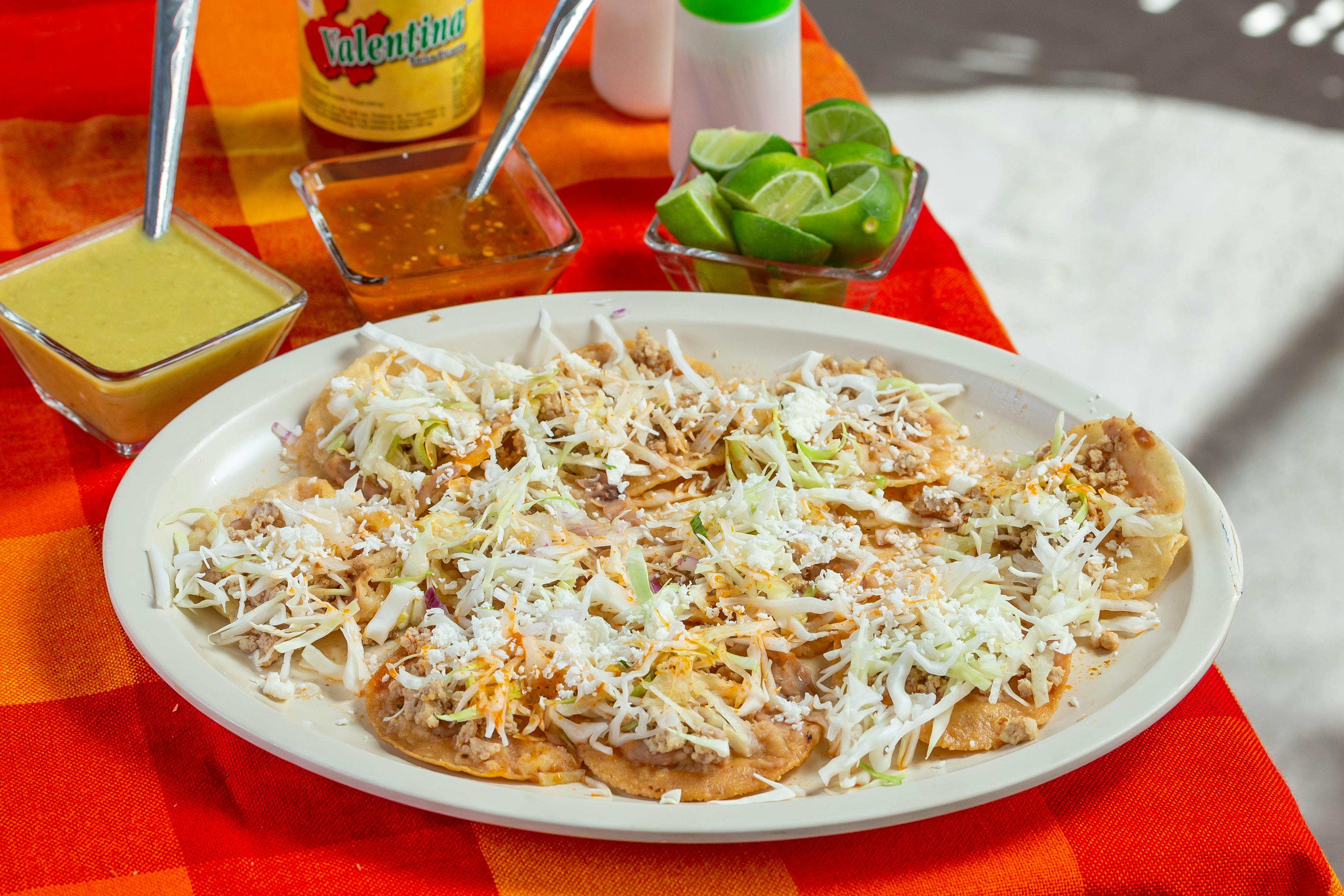
Photo: Jonathan Reynaga / Pexels
The diets react (see scores below)
Common Ingredients
- masa
- black beans
- chicken
- pickled onion
- lettuce
- tomato
- avocado
- habanero
Specific recipes may vary.
Incompatible with 6 of 11 diets
Diet Ratings
Panuchos are fundamentally incompatible with ketogenic eating. The dish is built on two major keto-incompatible components: masa (nixtamalized corn dough) and black beans. Masa is essentially pure starch, delivering roughly 20-25g of net carbs per small tortilla base alone. Black beans add another 20-25g of net carbs per half-cup serving. Together, these two ingredients easily push a single panucho well past the entire daily net carb limit for ketosis. While the toppings — chicken, avocado, lettuce, tomato, habanero, and pickled onion — are largely keto-friendly (especially avocado and chicken), they cannot offset the carb load from the masa and bean foundation. This dish cannot be adapted without fundamentally deconstructing it into something no longer resembling a panucho.
Panuchos contain chicken as the primary protein, which is poultry and a clear animal product. This makes the dish incompatible with a vegan diet. The remaining ingredients — masa, black beans, pickled onion, lettuce, tomato, avocado, and habanero — are all plant-based and would otherwise be vegan-friendly, but the inclusion of chicken disqualifies the dish entirely.
Panuchos are fundamentally built on two non-paleo foundations: masa (nixtamalized corn, a grain) and black beans (a legume). Both are explicitly excluded from the paleo diet. Corn is a grain and one of the most clearly avoided foods in paleo, and legumes like black beans contain lectins, phytates, and antinutrients that paleo authorities universally cite as reasons for exclusion. Pickled onions may also contain added salt or vinegar, adding further concern. The remaining ingredients — chicken, lettuce, tomato, avocado, and habanero — are all paleo-compliant, but they cannot redeem a dish whose structural base is entirely non-paleo. This is not a gray-area case; the core components are unambiguously excluded.
Panuchos contain several Mediterranean-compatible ingredients: black beans (excellent legume source), avocado (healthy fat), tomato, lettuce, and pickled onion are all plant-forward components aligned with Mediterranean principles. Chicken is an acceptable moderate protein. However, masa (nixtamalized corn dough) is a refined/processed grain product without the fiber benefits of whole grains, and the dish is typically fried, adding non-olive-oil fats. The overall profile is reasonably healthy due to the legume and vegetable content, but the refined corn base and frying method temper enthusiasm. If baked or prepared with olive oil and served with emphasis on beans and vegetables, it edges toward acceptable.
Some Mediterranean diet interpreters focus on the overall dietary pattern rather than individual ingredients — the legume-rich black bean filling, abundant vegetables, and avocado could be seen as sufficiently plant-forward to rate more favorably, especially since traditional Mediterranean diets vary regionally and corn-based flatbreads parallel other grain-based staples like pita or flatbread used in moderation.
Panuchos are fundamentally incompatible with the carnivore diet. The dish is built on a masa (corn flour) tortilla base stuffed with black beans — both are plant-derived foods that are strictly excluded. The remaining ingredients compound the problem: pickled onion, lettuce, tomato, avocado, and habanero are all plant foods. While chicken is the primary protein and is carnivore-acceptable, it represents only a small fraction of this dish's composition. The overwhelming majority of ingredients — masa, black beans, pickled onion, lettuce, tomato, avocado, habanero — are entirely plant-based and violate every tier of carnivore eating, including the most lenient versions.
Panuchos are fundamentally non-compliant on multiple fronts. First, masa (nixtamalized corn dough) is made from corn, which is an excluded grain on Whole30. Second, black beans are legumes, which are also explicitly excluded. Third, the dish is essentially a stuffed corn tortilla/flatbread — even if you could source compliant versions of every topping, the base structure of a panucho is a fried masa pocket, which falls squarely into the 'no recreating tortillas, wraps, or chips' prohibition (rule 4). The toppings — chicken, pickled onion (check for added sugar), lettuce, tomato, avocado, and habanero — are largely Whole30-compatible, but the foundation of this dish (masa + black beans) contains two categorically excluded ingredients, making this firmly non-compliant.
Panuchos contain multiple high-FODMAP ingredients that make this dish unsuitable during the elimination phase. Black beans are high in GOS (galacto-oligosaccharides) and are high-FODMAP even at small servings — they are stuffed directly into the masa shell, making avoidance impossible without deconstructing the dish entirely. Pickled onion is high in fructans and a significant FODMAP concern. Avocado, while low-FODMAP at 1/8 serving per Monash, is typically used in quantities well beyond that threshold in panuchos. Habanero pepper is not well-tested by Monash and carries uncertainty. Masa (corn-based) and chicken are both low-FODMAP, but the combination of black beans and pickled onion alone is sufficient to classify this dish as high-FODMAP and unsuitable for elimination phase.
Panuchos contain several DASH-friendly components: lean chicken protein, black beans (rich in potassium, fiber, and magnesium), fresh vegetables (lettuce, tomato), avocado (healthy monounsaturated fats, potassium), and habanero. These align well with DASH principles. However, key concerns include: (1) masa (nixtamalized corn dough) is refined/starchy and typically fried when forming panuchos, adding saturated fat and calories beyond what DASH portion guidance recommends; (2) pickled onions introduce added sodium from the pickling brine; (3) the traditional preparation involves frying the stuffed tortilla, which increases total and saturated fat content significantly. If baked or lightly pan-toasted rather than deep-fried, and sodium-conscious pickled onions are used, the dish improves considerably. The black beans stuffed inside are a DASH highlight, and the lean chicken and produce toppings are positives, but the fried masa base and pickled sodium are moderating factors that place this in the caution category.
NIH DASH guidelines do not specifically address traditional Mexican dishes like panuchos, requiring extrapolation from food-group principles. Some DASH-oriented dietitians note that when panuchos are prepared with minimal frying, the combination of beans, lean poultry, and fresh vegetables aligns reasonably well with DASH goals — the updated clinical interpretation may be more permissive if preparation method is optimized and portion size is controlled to one or two pieces.
Panuchos are a Yucatecan dish consisting of fried masa tortillas stuffed with black beans, topped with chicken, pickled onion, lettuce, tomato, avocado, and habanero. The macronutrient profile is mixed from a Zone perspective. The masa (corn dough) is a moderate-to-high glycemic carbohydrate that Zone classifies as 'unfavorable' — it's refined, starchy, and typically fried, which compounds the glycemic concern. Black beans add additional carbohydrate load but are higher in fiber and protein, making them more Zone-friendly than the masa alone. On the positive side, chicken is an ideal lean Zone protein, avocado provides excellent monounsaturated fat, and the vegetables (lettuce, tomato, pickled onion, habanero) contribute low-glycemic carbs with polyphenols. The challenge is that panuchos are carbohydrate-heavy by construction — masa plus black beans create a significant carb surplus relative to what a Zone meal would allow. A standard panucho would likely deliver too many carb blocks and too few protein blocks to hit 40/30/30 without significant modification. However, eating a smaller portion (one small panucho with generous toppings) while ensuring adequate chicken and avocado could bring it closer to Zone ratios. The fried masa is the primary obstacle.
Some Zone practitioners note that black beans are actually a reasonable Zone carbohydrate source due to their high fiber content and lower net carb impact, and that the combination of beans + chicken + avocado represents a reasonably balanced macro trio. Dr. Sears' later work increasingly emphasizes polyphenol-rich, anti-inflammatory foods — the habanero and pickled onion contribute polyphenols, and avocado provides anti-inflammatory monounsaturated fat. A strict early-Zone reading would flag the fried masa more harshly; later Zone frameworks might rate this more favorably if portion size is controlled.
Panuchos are a traditional Yucatecan dish featuring several anti-inflammatory ingredients. Black beans provide fiber, polyphenols, and plant-based protein that support gut health and reduce inflammatory markers. Avocado contributes monounsaturated fats and anti-inflammatory compounds similar to olive oil. Chicken (lean poultry) is a moderate-category protein, well within anti-inflammatory guidelines. Habanero peppers contain capsaicin, a well-documented anti-inflammatory compound, and are rich in carotenoids. Tomatoes and lettuce add antioxidants and phytonutrients. Pickled onions retain quercetin (a potent flavonoid) and may also support the microbiome. Masa (nixtamalized corn) is a whole-grain-adjacent base — nixtamalization improves nutrient bioavailability and the glycemic impact is moderate rather than extreme. The overall dish is minimally processed, vegetable-forward, and built around legumes and lean protein with meaningful anti-inflammatory contributors. The main caveats are that masa is a refined starch that raises blood sugar modestly, and preparation method (frying vs. baking the tortilla shell) significantly affects the inflammatory profile — traditional panuchos involve lightly frying the masa shell, which may introduce some omega-6 if seed oils are used.
The masa shell in panuchos is typically fried, and if cooked in corn or vegetable oil (high omega-6), this introduces a pro-inflammatory element that strict anti-inflammatory protocols like the IF Rating system would penalize. Dr. Weil's framework is permissive of occasional fried foods in otherwise healthy dishes, but practitioners emphasizing omega-6 minimization would lower the score depending on the cooking fat used.
Panuchos are a traditional Yucatecan snack consisting of a fried masa shell stuffed with black beans and topped with chicken, pickled onion, lettuce, tomato, and avocado. The dish has meaningful nutritional strengths for GLP-1 patients: chicken provides solid lean protein, black beans contribute both protein and fiber, and the vegetable toppings (lettuce, tomato, pickled onion) add micronutrients and water content. However, the key concern is the masa shell, which is traditionally fried — this is the standard preparation of panuchos. Fried masa increases fat content significantly, slows digestion further on top of already slowed GLP-1 gastric emptying, and can worsen nausea and bloating. The habanero is a serious flag: it is one of the hottest common peppers and may significantly worsen reflux and GI discomfort in GLP-1 patients. Avocado is a positive fat source (unsaturated) but adds caloric density in a food that already has limited portion headroom. The refined masa base offers low protein density per calorie compared to the protein it accompanies. A baked or air-fried version without habanero would score meaningfully higher.
Some GLP-1-focused RDs would rate this more favorably if the masa shell is baked rather than fried, arguing that the bean-and-chicken protein-fiber combination is genuinely valuable and the small snack format aligns well with the 4-5 small meal pattern. Others would flag habanero as an automatic downgrade regardless of preparation method, given the high individual variability in GI sensitivity to capsaicin among GLP-1 patients.
*See how scores were generated at our methodology page.
Nutritional profile
Six traits that cut across every diet.
Fiber & Plants
How much whole-plant food and fiber it delivers.
Healthy Fats
The quality of its fats (unsaturated, omega-3).
Whole / Unprocessed
How close it is to its natural, unprocessed form.
Gut Gentle
How easy it is on digestion (low FODMAP, few irritants).
Low Glycemic
How little it spikes your blood sugar.
Protein Density
How much protein it packs per calorie.
Controversy Index
Higher controversy = more disagreement between diets.
Diet-Specific Tips
 Mediterranean — 5/10
View tips
- Black beans provide excellent legume protein and fiber consistent with Mediterranean emphasis
- Avocado contributes healthy monounsaturated fats analogous to olive oil
- Masa is a refined grain product, not a whole grain, limiting nutritional value
- Traditional preparation involves frying in non-olive oils, contradicting Mediterranean fat principles
- Chicken is an acceptable moderate protein within Mediterranean guidelines
- Abundant vegetables (tomato, lettuce, pickled onion) support plant-forward eating
- Not a traditional Mediterranean dish — evaluation requires cross-cultural mapping
 DASH — 5/10
View tips
- Fried masa base adds saturated fat and calories beyond DASH portion recommendations
- Pickled onions contribute added sodium from brine
- Black beans are an excellent DASH food — high in fiber, potassium, and magnesium
- Lean chicken is an approved DASH protein source
- Avocado provides DASH-favorable monounsaturated fats and potassium
- Fresh vegetables (lettuce, tomato, habanero) align with DASH vegetable servings
- Preparation method (fried vs. baked) significantly impacts DASH compatibility
- Portion control critical — traditional serving of multiple panuchos increases sodium and fat load
 Zone — 5/10
View tips
- Masa is a moderate-to-high glycemic, starchy carbohydrate classified as 'unfavorable' in Zone terminology
- Fried preparation of masa increases caloric density and may involve pro-inflammatory oils
- Black beans add carb load but contribute fiber, protein, and a lower net glycemic impact
- Chicken is an ideal Zone lean protein source
- Avocado provides excellent monounsaturated fat aligned with Zone fat recommendations
- Vegetables (lettuce, tomato, pickled onion, habanero) are favorable low-glycemic Zone carbs with polyphenol benefits
- Overall dish skews carbohydrate-heavy, making 40/30/30 ratio difficult without strict portion control
- Can be incorporated cautiously with small portion size and emphasis on chicken and vegetable toppings
 Anti-Inflammatory — 7/10
View tips
- Black beans: excellent anti-inflammatory legume with fiber and polyphenols
- Avocado: monounsaturated fats, anti-inflammatory profile
- Habanero: capsaicin and carotenoids with documented anti-inflammatory properties
- Chicken: lean poultry, acceptable moderate-category protein
- Pickled onions: quercetin-rich, potential microbiome benefit
- Tomato and lettuce: antioxidants and phytonutrients
- Masa shell: refined starch with moderate glycemic impact; frying method and oil type significantly affect anti-inflammatory score
 GLP-1 Friendly — 5/10
View tips
- Masa shell is traditionally fried — increases fat, worsens gastric emptying delay, may cause nausea and bloating
- Habanero is a high-capsaicin pepper — significant risk of worsening reflux, nausea, and GI discomfort on GLP-1s
- Black beans provide both fiber and plant protein — a genuine positive
- Chicken topping is lean protein — aligns well with GLP-1 protein priority
- Avocado contributes healthy unsaturated fat but adds caloric density in a small-portion context
- Refined masa offers low protein density per calorie — reduces nutrient efficiency
- Pickled onion, lettuce, and tomato add micronutrients and water content — positive
- Small snack format is appropriate for GLP-1 eating pattern if portion is controlled