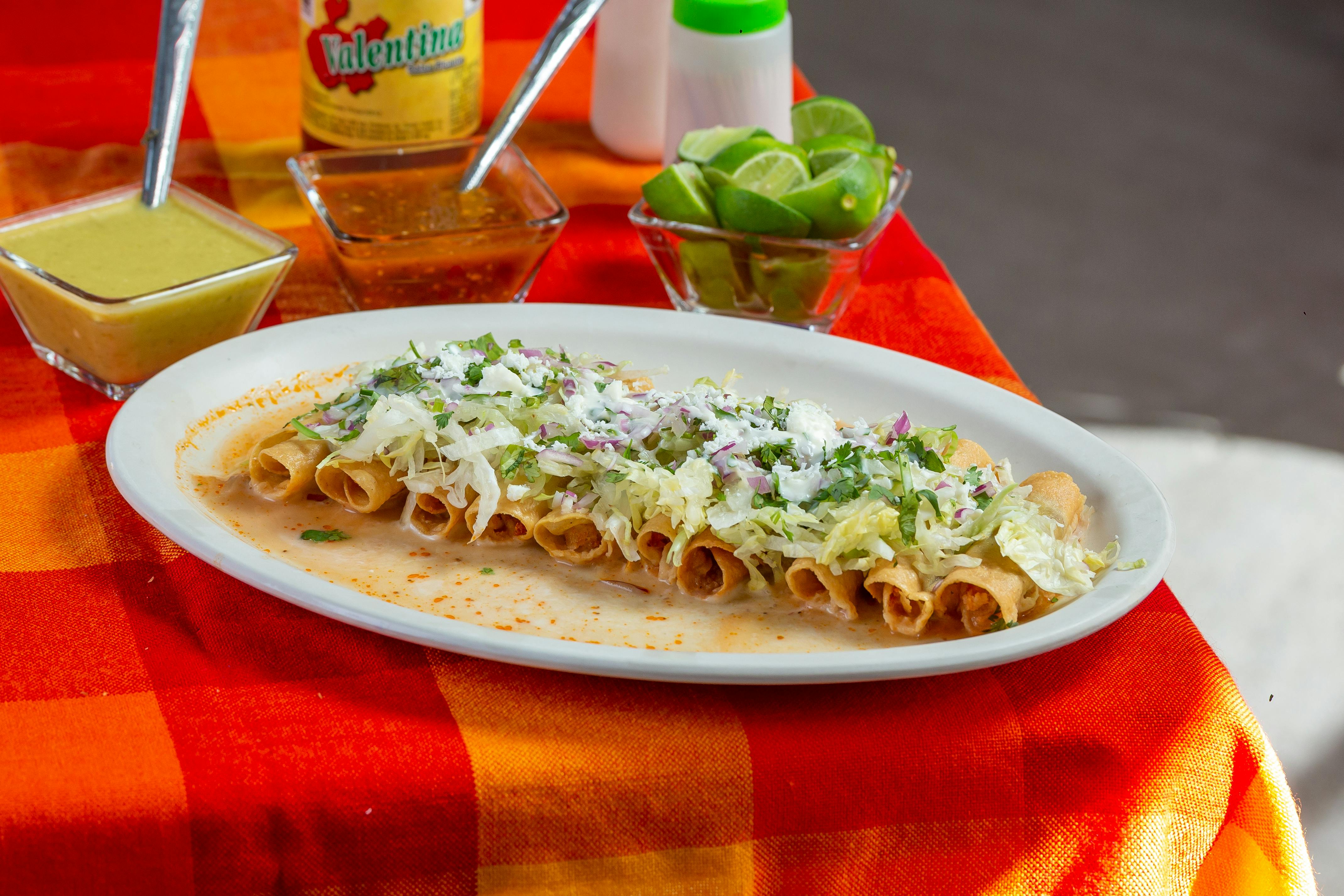
Photo: Jonathan Reynaga / Pexels
The diets react (see scores below)
Common Ingredients
- eggs
- pumpkin seeds
- tortilla
- epazote
- tomato
- habanero
- onion
- garlic
Specific recipes may vary.
Incompatible with 6 of 11 diets
Diet Ratings
Papadzules are a traditional Yucatecan dish consisting of corn tortillas dipped in a pumpkin seed sauce and filled with eggs, then topped with tomato sauce. The corn tortillas are the critical disqualifying ingredient — each tortilla contains approximately 12-15g of net carbs, and a typical serving uses 2-4 tortillas, easily contributing 25-60g of net carbs from tortillas alone. This single ingredient is enough to break ketosis for most people. While the eggs and pumpkin seeds are keto-friendly and the tomato/habanero/onion/garlic toppings add only modest carbs, the dish cannot be considered keto-compatible in its traditional form. The overall macronutrient profile is dominated by the high-carb corn base, making this dish fundamentally incompatible with ketogenic eating.
Papadzules are a traditional Yucatecan dish consisting of tortillas dipped in a pumpkin seed sauce and filled with hard-boiled eggs, topped with a tomato-habanero salsa. Eggs are a core, non-negotiable ingredient and an animal product excluded under all vegan standards. While the remaining ingredients — pumpkin seeds, tortillas, epazote, tomato, habanero, onion, and garlic — are entirely plant-based, the eggs make this dish incompatible with a vegan diet. There is no meaningful debate within the vegan community about whether eggs qualify as an animal product.
Papadzules are a traditional Yucatecan dish that is fundamentally built around corn tortillas, which are a grain and strictly excluded from the paleo diet. The tortilla is not a minor ingredient — it is the structural base of the dish, making the entire preparation non-paleo regardless of the other components. The remaining ingredients (eggs, pumpkin seeds, tomato, habanero, onion, garlic, epazote) are all paleo-approved, but the corn tortilla alone disqualifies the dish. Corn is a grain, and grains are excluded with high consensus across all major paleo authorities including Loren Cordain, Mark Sisson, and Robb Wolf.
Papadzules are a traditional Yucatecan dish featuring eggs rolled in corn tortillas and topped with pumpkin seed and tomato sauces. The ingredient profile aligns moderately well with Mediterranean principles: eggs are an acceptable moderate-consumption protein, pumpkin seeds are nutrient-dense plant-based fats analogous to nuts, tomatoes, onion, garlic, and epazote are wholesome vegetables and herbs. The main concern is the corn tortilla, which is a refined grain product not found in the Mediterranean diet tradition. However, corn tortillas are less processed than many refined grain products and have a reasonable fiber content. The absence of red meat and heavy saturated fats is a positive. Overall this is a reasonable, plant-forward egg dish that fits cautious Mediterranean-compatible eating, with the tortilla and grain type being the primary limiting factor.
Some Mediterranean diet interpreters might rate this more favorably, noting that legume-adjacent seeds (pumpkin seeds), eggs, and abundant vegetables closely mirror the spirit of traditional Mediterranean eating; traditional Mediterranean cuisines also include flatbreads made from whole or minimally processed grains, and corn tortillas can be viewed in a similar light.
Papadzules is a traditional Yucatecan dish that is fundamentally incompatible with the carnivore diet. While eggs are a carnivore-approved food, they are completely overwhelmed by a large number of plant-based ingredients. The tortilla (corn grain), pumpkin seeds (seeds/legumes), epazote (herb), tomato (fruit/vegetable), habanero (pepper/plant), onion (vegetable), and garlic (vegetable) are all strictly excluded plant foods. The dish's defining components — the pumpkin seed sauce and corn tortilla wrap — are entirely plant-derived. There is no meaningful carnivore adaptation possible here without completely deconstructing and rebuilding the dish from scratch. The egg filling is the only carnivore-compatible element in this otherwise wholly plant-based preparation.
Papadzules are a traditional Yucatecan dish consisting of eggs wrapped in corn tortillas and topped with pumpkin seed sauce and tomato salsa. The critical disqualifying ingredient is the corn tortilla, which is explicitly excluded under Whole30 rule 4 ('no recreating baked goods/junk food'), which specifically lists tortillas and wraps as off-limits regardless of whether the ingredients are otherwise compliant. Corn is also a grain excluded under rule 1. All other ingredients — eggs, pumpkin seeds, epazote, tomato, habanero, onion, and garlic — are fully Whole30-compliant. However, because the tortilla is structural and definitional to this dish (it is the wrap that makes it papadzules), the dish cannot be made Whole30-compliant without fundamentally ceasing to be papadzules.
Papadzules contain multiple high-FODMAP ingredients that make this dish unsuitable during the elimination phase. Onion is one of the highest fructan-containing foods and is a primary FODMAP offender. Garlic is similarly very high in fructans. Corn tortillas are generally low-FODMAP at 2 small tortillas, but the combination of onion and garlic alone is enough to disqualify this dish. Traditional papadzules are made with these aromatics as foundational sauce components, not in trace amounts, so there is no realistic way to consume a standard serving without significant FODMAP exposure. Eggs and pumpkin seeds are low-FODMAP, tomato is low-FODMAP at standard servings, and epazote and habanero are low-FODMAP herbs/spices. However, the onion and garlic content — integral to the dish's pumpkin seed sauce and tomato salsa — cannot be omitted without fundamentally altering the recipe.
Papadzules are a traditional Yucatecan dish of egg-filled corn tortillas topped with pumpkin seed sauce and tomato-habanero salsa. The ingredient profile aligns reasonably well with DASH principles: eggs provide lean protein, pumpkin seeds are rich in magnesium and healthy unsaturated fats (a DASH-friendly nut/seed), corn tortillas are a whole grain option with moderate sodium, and the vegetable-forward toppings (tomato, onion, garlic, epazote) contribute potassium and fiber. However, pumpkin seeds are calorie-dense and relatively high in fat (though mostly unsaturated), requiring portion control. Eggs occupy a moderate position under DASH — historically limited due to cholesterol concerns, now more accepted in moderation. The dish is naturally low in sodium if prepared without added salt, and contains no red meat, processed ingredients, or added sugars. Portion size of pumpkin seed sauce is the main variable to watch, as large quantities increase saturated fat and calorie load. Overall, this is a moderately DASH-compatible dish when portions are controlled.
NIH DASH guidelines historically limited egg yolks due to dietary cholesterol and also emphasize low-fat preparation; some conservative DASH clinicians would flag whole eggs and the fat content of pumpkin seed sauce as concerns requiring strict portion limits. Updated clinical interpretations following the 2020-2025 Dietary Guidelines removal of the cholesterol cap generally view eggs in moderation as acceptable within DASH, and pumpkin seeds' unsaturated fat profile is largely consistent with DASH-endorsed nuts and seeds.
Papadzules are a traditional Yucatecan dish of corn tortillas filled with hard-boiled eggs and topped with a pumpkin seed (pepita) sauce and tomato-habanero salsa. From a Zone perspective, the dish has some strong elements and some challenges. Eggs are a solid protein source, and pumpkin seeds provide healthy fats (though higher in omega-6 than ideal monounsaturated fats like olive oil or almonds). Tomato, epazote, onion, garlic, and habanero are all favorable Zone carb sources — low-glycemic, polyphenol-rich, and anti-inflammatory. The main Zone challenge is the corn tortilla, which is a higher-glycemic grain carbohydrate and an 'unfavorable' Zone carb. Traditional recipes use two tortillas per serving, which can easily exceed the 1–2 carb blocks target from grain sources for a meal. The pumpkin seed sauce also contributes a significant fat load, which can push the fat ratio well above 30% of calories if portion is not controlled. However, the dish is not without merit: the protein from eggs is well-matched to Zone portions (~2 eggs ≈ 2 protein blocks), and the vegetable-based salsas are Zone-friendly. With careful portioning — limiting to one small tortilla, controlling seed sauce quantity, and pairing with extra non-starchy vegetables — this dish can be reasonably Zone-adapted.
Some Zone practitioners would rate this more favorably, noting that corn tortillas, while 'unfavorable,' are not categorically off-limits — Sears acknowledges that corn products can fit within Zone blocks if portions are controlled. A single small corn tortilla (~15g net carbs) represents roughly 1.5 carb blocks, which is manageable within a 3-block meal. Pumpkin seeds, while omega-6-heavy, do contain meaningful amounts of zinc and magnesium and are accepted by some Zone-aligned practitioners as a reasonable fat source in moderation. The traditional presentation is actually relatively whole-food and minimally processed, which aligns with Sears' anti-inflammatory emphasis.
Papadzules are a traditional Yucatecan dish featuring hard-boiled eggs rolled in corn tortillas, bathed in a pumpkin seed (pepita) sauce, and topped with a tomato-habanero salsa. The ingredient profile is largely anti-inflammatory: pumpkin seeds are rich in zinc, magnesium, and have a more balanced omega-6 to omega-3 ratio than most other seeds, along with phytosterols and antioxidants. Epazote is a traditional herb with antioxidant polyphenols. Tomato provides lycopene (especially when cooked in the salsa). Habanero and garlic contribute capsaicin and allicin respectively, both well-supported anti-inflammatory compounds. Onion provides quercetin. Corn tortillas, while a refined carbohydrate, are a whole-grain adjacent food with a lower glycemic load than wheat flour tortillas, especially in traditional nixtamalized form. Eggs are the most contested ingredient — they provide choline and selenium (anti-inflammatory nutrients) but also arachidonic acid, which some frameworks flag as pro-inflammatory. The dish is minimally processed, plant-forward in its sauce and salsa components, and contains no trans fats, added sugars, or seed oils in its traditional preparation. Overall this is a nutrient-dense, whole-food dish that aligns reasonably well with anti-inflammatory principles.
Eggs remain genuinely debated: some anti-inflammatory researchers and AIP protocols flag egg yolk arachidonic acid as a driver of inflammatory eicosanoids, recommending limitation or avoidance, while Dr. Weil's framework and mainstream nutrition science classify eggs as acceptable in moderation given their nutrient density. Additionally, corn tortillas — particularly in commercially produced form — may be made from masa treated with additives or represent a refined carbohydrate load that some stricter anti-inflammatory protocols would flag.
Papadzules are a traditional Yucatecan dish of hard-boiled eggs wrapped in corn tortillas, topped with a pumpkin seed (pepita) sauce and a tomato-habanero salsa. The protein profile is solid — eggs provide complete protein and are easy to digest — and epazote supports digestion. However, the pumpkin seed sauce is notably high in fat (pumpkin seeds are ~45% fat by weight), which is the primary concern for GLP-1 patients. The fat content can worsen nausea, bloating, and reflux given slowed gastric emptying. Corn tortillas contribute moderate fiber but also refined carbohydrate with limited protein. The habanero in the tomato salsa is a meaningful concern — it is one of the hottest common peppers and may exacerbate nausea and GI reflux, both already common GLP-1 side effects. The dish does offer nutrient density (eggs, seeds, tomato, herbs) and no frying is involved in the traditional preparation. A modified version — smaller portion, lighter pumpkin seed sauce, habanero salsa served on the side or omitted — improves the rating. As served traditionally, the fat load and habanero heat push this into caution territory.
Some GLP-1-focused dietitians would rate this more favorably, noting that pumpkin seeds provide unsaturated fats, magnesium, and zinc — micronutrients often depleted during caloric restriction — and that eggs are an ideal GLP-1 protein source. The disagreement centers on whether the fat content of the seed sauce is clinically problematic for a given patient's GI tolerance, which varies considerably.
*See how scores were generated at our methodology page.
Nutritional profile
Six traits that cut across every diet.
Fiber & Plants
How much whole-plant food and fiber it delivers.
Healthy Fats
The quality of its fats (unsaturated, omega-3).
Whole / Unprocessed
How close it is to its natural, unprocessed form.
Gut Gentle
How easy it is on digestion (low FODMAP, few irritants).
Low Glycemic
How little it spikes your blood sugar.
Protein Density
How much protein it packs per calorie.
Controversy Index
Higher controversy = more disagreement between diets.
Diet-Specific Tips
 Mediterranean — 5/10
View tips
- Eggs are acceptable in moderation per Mediterranean guidelines
- Pumpkin seeds are a beneficial plant-based fat and protein source
- Corn tortillas are a refined/processed grain not native to the Mediterranean tradition
- Tomato, onion, garlic are strongly encouraged Mediterranean staples
- No red meat or added sugars
- No olive oil as primary fat; pumpkin seed oil/sauce is used instead
- Dish is minimally processed and whole-food-oriented
 DASH — 6/10
View tips
- Eggs are acceptable in moderation under updated DASH interpretations but were historically limited
- Pumpkin seeds are DASH-friendly (magnesium, unsaturated fats) but calorie-dense — portion control needed
- Corn tortillas contribute whole grain carbohydrates with moderate sodium
- Tomato, onion, garlic, and epazote provide potassium, fiber, and antioxidants aligned with DASH
- No red meat, processed ingredients, added sugar, or high-sodium components
- Naturally low sodium if prepared without added salt — a significant DASH advantage
- Fat content of pumpkin seed sauce can accumulate; dish scores higher with moderate sauce portions
 Zone — 5/10
View tips
- Corn tortillas are a higher-glycemic 'unfavorable' Zone carbohydrate — the primary concern in this dish
- Eggs are a lean, Zone-favorable protein source (~7g protein per egg aligns cleanly with block system)
- Pumpkin seeds contribute fat but are higher in omega-6 fatty acids than ideal Zone monounsaturated fats
- Tomato, habanero, onion, and garlic are all low-glycemic, polyphenol-rich, Zone-favorable carb sources
- Epazote is a negligible-calorie herb with no Zone impact
- Portion control is essential: traditional two-tortilla serving likely exceeds Zone grain carb allocation for one meal
- No processed ingredients, refined sugar, or trans fats — the dish is whole-food based, which aligns with Zone anti-inflammatory principles
 Anti-Inflammatory — 7/10
View tips
- Pumpkin seeds (pepitas): good zinc, magnesium, phytosterols, relatively balanced fatty acid profile
- Habanero pepper: high capsaicin content, strong anti-inflammatory compound
- Garlic: allicin and organosulfur compounds with well-documented anti-inflammatory effects
- Tomato (cooked): lycopene bioavailability enhanced by cooking
- Epazote: traditional herb with antioxidant polyphenols
- Onion: quercetin and flavonoids
- Eggs: debated — choline and selenium are beneficial, but arachidonic acid is a concern in some frameworks
- Corn tortillas (nixtamalized): lower glycemic than refined wheat, but still a starchy carbohydrate base
- No trans fats, seed oils, added sugars, or artificial additives in traditional preparation
 GLP-1 Friendly — 5/10
View tips
- Eggs are a high-quality, easily digestible complete protein — strongly positive for GLP-1 patients
- Pumpkin seed sauce is high in fat (unsaturated but still high volume), increasing risk of nausea and bloating due to slowed gastric emptying
- Habanero is among the hottest common peppers and may worsen GLP-1-associated nausea and acid reflux
- Corn tortillas add carbohydrate and modest fiber but dilute protein density per serving
- No frying involved in traditional preparation — a positive for digestibility
- Epazote is a traditional digestive herb — mildly beneficial
- Dish is portion-sensitive: a small serving with reduced sauce improves tolerability significantly
- Overall nutrient density is moderate but fat load is the limiting factor for GLP-1 compatibility