Photo: Andrés Góngora / Pexels
The diets react (see scores below)
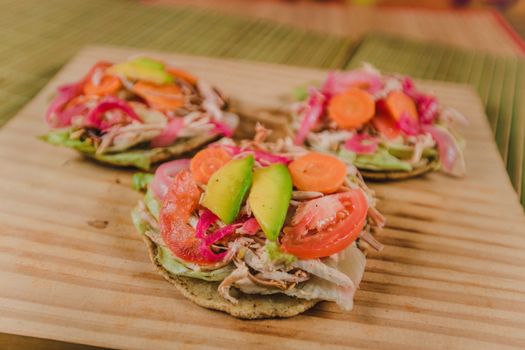
Common Ingredients
- masa
- chicken
- lettuce
- tomato
- pickled onion
- avocado
- habanero
- lard
Specific recipes may vary.
Incompatible with 8 of 11 diets
Diet Ratings
Salbutes are built on a masa (nixtamalized corn dough) base that is deep-fried into a puffy tortilla shell. Masa is essentially pure corn starch — a single salbute shell contributes roughly 15-20g of net carbs on its own, and a standard serving of two to three pieces easily delivers 30-50g of net carbs from the shell alone, consuming or exceeding the entire daily keto carb budget before any toppings are counted. Corn/masa is a grain-based, high-glycemic ingredient with zero place in a ketogenic diet. The toppings — chicken, avocado, lettuce, habanero, and lard — are individually keto-friendly, but they cannot redeem a dish whose foundation is fundamentally incompatible with ketosis. Pickled onion and tomato add minor additional carbs. There is no practical portion size that makes this dish keto-compatible.
Salbutes contain two clear animal-derived ingredients: chicken (poultry) and lard (rendered pig fat). Both are unambiguously non-vegan. The masa is fried in lard, making the entire base of the dish non-compliant, and chicken is listed as the primary protein. Several other ingredients (lettuce, tomato, pickled onion, avocado, habanero) are plant-based, but the presence of multiple animal products makes this dish entirely incompatible with a vegan diet.
Salbutes are a traditional Yucatecan snack built on a masa base — masa being nixtamalized corn dough, which is a grain product and strictly excluded from the paleo diet. Corn is a grain, and no form of it (flour, dough, tortilla, masa) is permitted under paleo guidelines. The remaining ingredients are largely paleo-compatible: chicken is an approved protein, lard is an approved animal fat, lettuce, tomato, avocado, and habanero are paleo vegetables/fruits, and avocado adds healthy fat. Pickled onion may contain added salt or sugar depending on preparation, which would be an additional concern. However, the fundamental structure of the dish — the fried masa shell — is the defining and non-negotiable component of a salbute, and it disqualifies the dish outright. Without the masa, it is no longer a salbute. The dish cannot be considered paleo-compatible in any meaningful sense.
Salbutes are a traditional Yucatecan Mexican snack featuring fried masa (corn dough) bases topped with chicken and fresh vegetables. While several individual components align reasonably well with Mediterranean principles — chicken (moderate), lettuce, tomato, avocado, and even pickled onion are all compatible ingredients — the dish is fundamentally compromised by two key factors: (1) the masa base is a refined grain product, and (2) critically, lard is the traditional frying fat, which is animal-based saturated fat directly contradicting the Mediterranean principle of olive oil as the primary fat source. The deep-frying method adds further concern. The fresh toppings provide some redeeming nutritional value, but the core preparation method and fat source place this dish outside Mediterranean diet compatibility.
Some Mediterranean diet interpreters focused on the overall dietary pattern rather than individual dishes might view this more charitably, noting that the abundant fresh vegetable toppings (tomato, lettuce, avocado) and lean chicken protein mirror Mediterranean topping profiles. If prepared with olive oil rather than lard, and the masa portion kept small, a moderate accommodation could be argued — similar to how some corn-based preparations appear in certain Southern European traditional cuisines.
Salbutes are fundamentally incompatible with the carnivore diet. The dish is built on a masa (corn dough) base — a grain product that is entirely plant-derived and excluded on any tier of carnivore eating. Beyond the masa, the dish is loaded with multiple plant foods: lettuce, tomato, pickled onion, avocado, and habanero pepper. While chicken is carnivore-approved and lard is an excellent animal fat, these two ingredients are completely overwhelmed by the plant-heavy composition of the dish. This is essentially a plant-forward snack with a token amount of animal protein. No version of carnivore — not even the most lenient 'animal-based' approach — would permit a corn tortilla base with this array of vegetables and fruits.
Salbutes are fried masa (corn dough) shells topped with various ingredients. Masa is made from corn, which is a grain explicitly excluded on the Whole30 program. The fried masa base is the foundational component of this dish, making it non-compliant regardless of the toppings. Furthermore, even if the masa issue were set aside, salbutes fall squarely into the 'no recreating baked goods/junk food' rule — they are essentially a fried corn tortilla/chip base, which is explicitly listed as an excluded food type (tortillas, chips). The toppings themselves (chicken, lettuce, tomato, pickled onion, avocado, habanero, lard) are largely Whole30-compliant, but cannot redeem the dish when the base is a disqualifying grain-based fried shell.
Salbutes present two significant FODMAP concerns that prevent approval during elimination phase. First, pickled onion is a major red flag — onion is one of the highest-fructan foods on the FODMAP spectrum, and pickling does not eliminate FODMAPs (fructans are water-soluble but pickling brine does not reliably leach them out sufficiently). Even small amounts of onion are typically flagged as high-FODMAP during elimination. Second, avocado is dose-dependent: Monash rates 1/8 avocado (~20g) as low-FODMAP, but a typical salbute topping likely includes 30–60g or more, pushing into high-FODMAP territory via sorbitol. The remaining ingredients are more favorable: masa (nixtamalized corn dough) is low-FODMAP and corn tortilla-based foods are generally safe; plain chicken is low-FODMAP; lettuce and tomato are low-FODMAP at standard servings; lard is a fat and FODMAP-free; habanero pepper is low-FODMAP in small amounts. The dish could be modified to be low-FODMAP by omitting pickled onion and limiting avocado, but as traditionally prepared it carries meaningful FODMAP load from two ingredients.
Monash University rates onion as high-FODMAP even in very small quantities, making pickled onion essentially a deal-breaker for strict elimination-phase compliance; most clinical FODMAP dietitians would advise avoiding this dish as served. Some practitioners may allow avocado in carefully controlled portions (~30g), but standard salbute toppings typically exceed the Monash low-FODMAP threshold of 30g.
Salbutes are a traditional Yucatecan snack featuring a fried masa base topped with chicken, fresh vegetables, and avocado. Several ingredients align well with DASH principles: lean chicken provides quality protein, lettuce and tomato offer potassium and fiber, and avocado contributes heart-healthy monounsaturated fats and potassium. However, the dish has two significant DASH concerns. First, lard is used both in the masa dough and for deep-frying the base, introducing substantial saturated fat — a category DASH explicitly limits. Traditional salbutes are deep-fried, not baked or pan-toasted, making lard a primary preparation concern rather than a minor ingredient. Second, pickled onions typically contain added sodium from brine, which adds to the overall sodium load. The habanero itself is DASH-neutral but sauces or preparations accompanying it may add sodium. The masa base, while corn-based, is refined rather than a whole grain. The combination of deep-frying in lard and sodium from pickling shifts this dish into caution territory rather than a clear avoid, because the toppings (chicken, lettuce, tomato, avocado) are largely DASH-friendly and the portion size is small as a snack.
NIH DASH guidelines explicitly limit saturated fat and fried foods, which would push lard-fried masa toward 'avoid.' However, some DASH-oriented dietitians note that salbutes are a small-portion snack (1-2 pieces) and the overall saturated fat per serving may remain within daily limits if the rest of the diet is DASH-compliant — context of total dietary pattern matters more than any single food item.
Salbutes are a Yucatecan snack consisting of a fried masa (corn dough) base topped with shredded chicken, lettuce, tomato, pickled onion, avocado, and habanero. The macro profile is mixed from a Zone perspective. The chicken provides lean protein — a Zone-favorable building block. Avocado supplies excellent monounsaturated fat. Lettuce, tomato, pickled onion, and habanero are low-glycemic vegetables that fit well into Zone carb blocks. However, two significant Zone concerns arise: (1) The masa base is a refined corn product with a moderate-to-high glycemic load, classified as an 'unfavorable' carbohydrate in Zone terminology — similar to tortillas. (2) Lard is used in both the masa and for frying, introducing substantial saturated fat that displaces the monounsaturated fat ideal. The frying method also significantly increases total fat content, making the 30% fat ratio harder to control without inflating overall calories. A Zone-compliant version of this dish would need to be small (1–2 small salbutes max per meal), with the chicken and vegetable toppings doing the heavy nutritional lifting, while the masa and lard represent unfavorable components requiring careful portion management. It is not impossible to fit into a Zone meal, but it cannot be freely consumed and requires deliberate balancing.
Some Zone practitioners, particularly those following Sears' later anti-inflammatory framework, may note that traditional lard is actually predominantly monounsaturated fat (oleic acid, ~45%), making it somewhat more Zone-compatible than its reputation suggests. Additionally, masa made from nixtamalized corn has a lower glycemic index than refined white flour tortillas, and the small size of a traditional salbute limits the carbohydrate load per piece. In this view, 1–2 small salbutes with generous chicken and vegetable toppings could be considered a reasonable 1-block Zone snack rather than a food to strictly limit.
Salbutes are a traditional Yucatecan snack consisting of a fried masa base topped with chicken, lettuce, tomato, pickled onion, avocado, and habanero. The dish has a genuinely mixed anti-inflammatory profile. On the positive side: avocado provides anti-inflammatory monounsaturated fats and fiber; tomato and lettuce contribute antioxidants (lycopene, vitamin C, carotenoids); habanero pepper is rich in capsaicin, a well-documented anti-inflammatory compound; pickled onion contains quercetin and prebiotic properties; and masa (nixtamalized corn) is a whole grain base with reasonable fiber. Lean chicken is a moderate-category protein. However, the critical issue is lard, which is used for frying the masa shell. Lard is high in saturated fat and is listed in the 'limit' category of anti-inflammatory guidelines. Furthermore, deep-frying the masa shell significantly increases the overall fat content and can produce oxidation byproducts, both of which are pro-inflammatory concerns. The dish is not heavily processed and contains no trans fats or artificial additives, which works in its favor. The net result is a dish with genuinely beneficial toppings undermined by a lard-fried base — landing squarely in the caution zone. Preparation matters significantly: a baked or air-fried masa version would score higher.
Some traditional food advocates and ancestral diet proponents (including those aligned with the Weston A. Price Foundation) argue that lard from pasture-raised pigs is a relatively stable cooking fat with a favorable fatty acid profile compared to refined seed oils, and should not be treated as significantly pro-inflammatory. Mainstream anti-inflammatory authorities including Dr. Weil, however, consistently categorize high-saturated-fat animal fats like lard in the 'limit' category, particularly when used as a frying medium.
Salbutes are deep-fried masa shells — the frying in lard is the primary disqualifier for GLP-1 patients. Lard is a saturated animal fat, and deep-frying creates a high-fat, greasy base that is strongly associated with worsening GLP-1 side effects including nausea, bloating, and reflux. Slowed gastric emptying means high-fat fried foods sit in the stomach significantly longer, amplifying discomfort. The masa shell also contributes refined carbohydrates with minimal fiber or protein value. The toppings tell a more positive story — chicken adds lean protein, lettuce and tomato contribute water content and micronutrients, pickled onion adds fiber and flavor with minimal calories — but these positives are overwhelmed by the fried lard base. Avocado contributes healthy unsaturated fat but adds to the total fat load of an already high-fat dish. The habanero is a meaningful concern: very spicy ingredients are flagged as likely to worsen reflux and nausea in GLP-1 patients, and habanero is among the highest-heat common peppers. As a snack, portion size is small, but even a small salbute delivers a concentrated hit of saturated fat, refined carbs, and capsaicin — a problematic combination for this population.
Some GLP-1-informed dietitians note that a single small salbute could be tolerated by patients who are past the acute side effect window and have established GI tolerance, particularly if the chicken topping is generous and habanero is omitted or minimized. The disagreement centers on individual tolerance variability and whether the cultural and psychological value of familiar foods justifies occasional inclusion versus categorical avoidance.
*See how scores were generated at our methodology page.
Nutritional profile
Six traits that cut across every diet.
Fiber & Plants
How much whole-plant food and fiber it delivers.
Healthy Fats
The quality of its fats (unsaturated, omega-3).
Whole / Unprocessed
How close it is to its natural, unprocessed form.
Gut Gentle
How easy it is on digestion (low FODMAP, few irritants).
Low Glycemic
How little it spikes your blood sugar.
Protein Density
How much protein it packs per calorie.
Controversy Index
Higher controversy = more disagreement between diets.
Diet-Specific Tips
 DASH — 4/10
View tips
- Lard used for deep-frying introduces significant saturated fat, which DASH explicitly limits
- Masa base is refined corn, not a whole grain — lower fiber than DASH-preferred grains
- Pickled onions add sodium via brine, elevating the dish's sodium contribution
- Chicken topping is lean protein, well-aligned with DASH
- Avocado provides DASH-friendly monounsaturated fat and potassium
- Fresh lettuce and tomato contribute vegetables consistent with DASH
- Small snack-sized portions partially mitigate concerns about saturated fat and sodium
- Replacing lard with a vegetable oil and baking rather than frying would substantially improve DASH compatibility
 Zone — 4/10
View tips
- Masa (corn dough) is an 'unfavorable' high-glycemic carbohydrate in Zone terminology
- Lard used for frying increases saturated fat and overall fat content significantly
- Shredded chicken is a lean, Zone-favorable protein source
- Avocado provides ideal monounsaturated fat
- Lettuce, tomato, pickled onion, and habanero are low-glycemic, Zone-favorable vegetables
- Frying method makes fat content difficult to control and measure for block balancing
- Traditional lard is ~45% monounsaturated fat, partially mitigating saturated fat concerns
- Small snack portion size limits but does not eliminate glycemic load concern
 Anti-Inflammatory — 5/10
View tips
- Lard-fried masa base adds saturated fat and oxidation risk — a meaningful anti-inflammatory concern
- Avocado contributes anti-inflammatory monounsaturated fats and fiber
- Habanero pepper contains capsaicin, a well-researched anti-inflammatory compound
- Tomato and lettuce provide antioxidants (lycopene, carotenoids, vitamin C)
- Pickled onion contains quercetin with anti-inflammatory and prebiotic properties
- Lean chicken is an acceptable moderate-category protein
- No processed additives, trans fats, or refined sugars — a positive baseline
- Frying method amplifies the inflammatory impact of lard beyond raw fat content