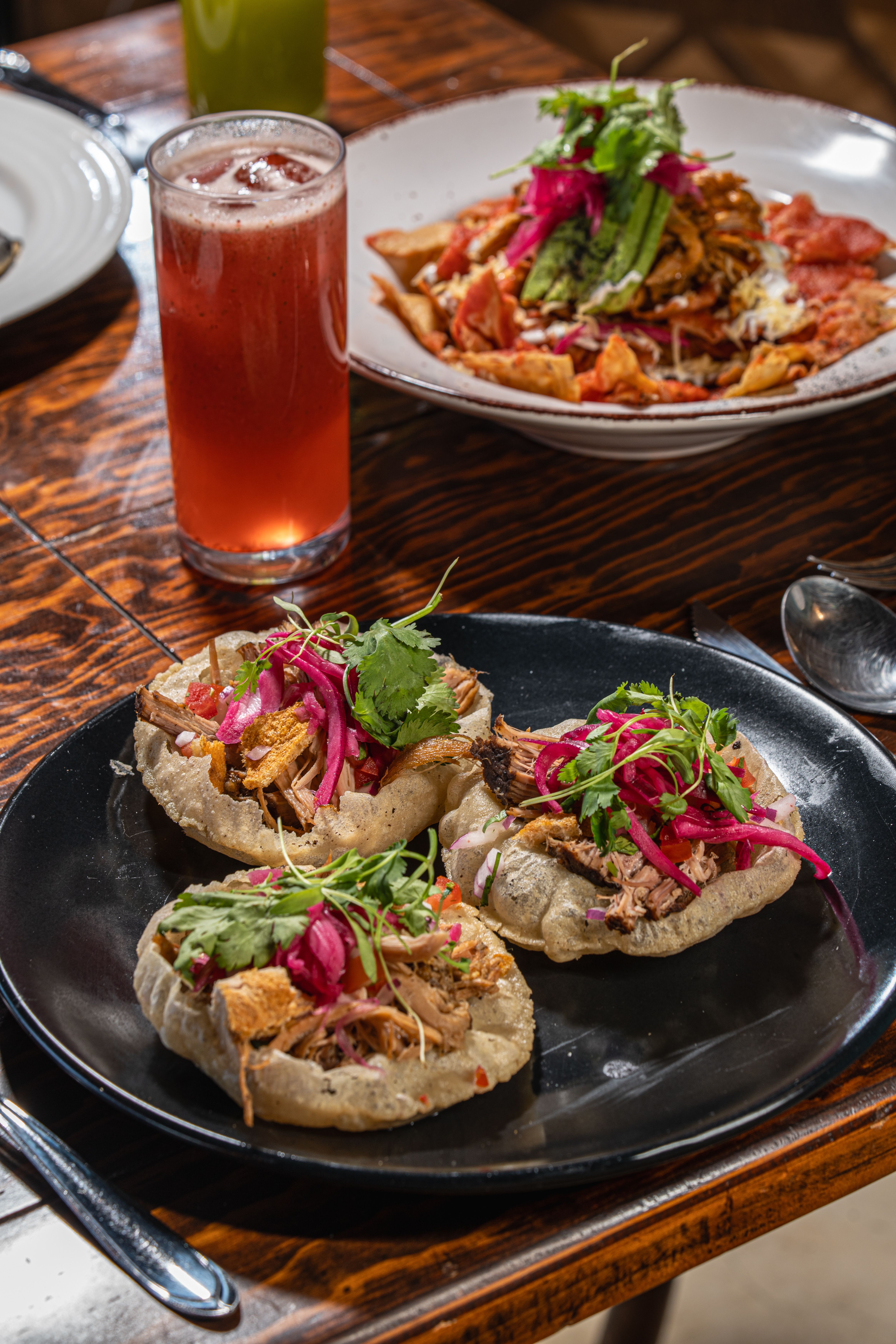
The diets react (see scores below)
Common Ingredients
- masa
- refried beans
- salsa
- queso fresco
- crema
- lettuce
- onion
- lard
Specific recipes may vary.
Incompatible with 9 of 11 diets
Diet Ratings
Sopes are fundamentally incompatible with a ketogenic diet. The base is made from masa (nixtamalized corn dough), which is extremely high in net carbs — a single sope shell contains roughly 20-30g of net carbs on its own, immediately threatening or exceeding the daily keto limit. Refried beans add another significant carb load (approximately 15-20g net carbs per half cup). Together, these two core ingredients alone can push a single serving well past the entire daily carb budget of 20-50g. The remaining toppings (crema, queso fresco, lard) are keto-friendly, and the lettuce, onion, and salsa contribute minimally, but they cannot offset the massive carb content from the masa and beans. There is no practical portion size that makes this dish compatible with ketosis.
Sopes as described contain multiple animal-derived ingredients that make them clearly non-vegan. Queso fresco is a dairy cheese, crema is a dairy-based soured cream, and lard is rendered pig fat used in the masa and/or refried beans. Three distinct animal products disqualify this dish unambiguously. The base ingredients — masa, salsa, lettuce, onion — are plant-based, and the refried beans could be vegan if prepared without lard, but as listed this dish fails the vegan standard on multiple counts. A vegan version is achievable by substituting lard with vegetable shortening or oil, omitting queso fresco and crema, and using oil-cooked beans, but the dish as described is not vegan.
Sopes are fundamentally incompatible with the paleo diet. The base is masa (nixtamalized corn), a grain explicitly excluded from paleo. Refried beans are a legume, also strictly prohibited. Queso fresco and crema are dairy products, banned under paleo rules. These three core non-paleo ingredients are structural to the dish — removing them leaves nothing resembling a sope. The only paleo-compatible ingredients are salsa, lettuce, onion, and lard (an approved animal fat), but they are minor toppings and cannot redeem the dish. This is one of the clearest possible paleo violations, with no credible paleo authority endorsing corn-based foods or legumes.
Sopes contain several ingredients that conflict with Mediterranean diet principles. The most significant concern is lard, an animal-derived saturated fat that directly contradicts the Mediterranean diet's emphasis on extra virgin olive oil as the primary fat source. Masa (nixtamalized corn dough) is a refined/processed grain product with a high glycemic load, not a whole grain. Crema is a high-fat dairy product similar to sour cream, adding saturated fat. Refried beans are a positive element — legumes are a Mediterranean staple — and salsa, lettuce, and onion are plant-based vegetables that align well. Queso fresco is a moderate dairy, acceptable in small amounts. However, the lard and refined masa base make this dish fundamentally incompatible with Mediterranean principles as typically prepared.
Some Mediterranean diet interpreters argue that the legume content (refried beans) and vegetable toppings (salsa, onion, lettuce) represent the plant-forward spirit of the diet, and that with substitution of lard for olive oil and use of whole-grain masa, the dish could be adapted to be acceptable. Traditional Mediterranean cuisines also include flatbreads and grain-based platforms, so the concept is not entirely foreign.
Sopes are fundamentally incompatible with the carnivore diet. The dish is built on masa (corn dough), a grain-based foundation that is entirely plant-derived and represents exactly the type of food carnivore eliminates. The toppings compound the problem: refried beans (legumes), salsa (plant-based), lettuce (vegetable), and onion (vegetable) are all strictly excluded plant foods. Queso fresco and crema are dairy and would ordinarily be debated, and lard is carnivore-approved, but these two ingredients cannot redeem a dish that is overwhelmingly plant-based. There is no meaningful animal protein present. This dish is essentially a plant food delivery vehicle with negligible animal-derived components.
Sopes contain multiple excluded ingredients that make them incompatible with Whole30. First, masa (nixtamalized corn dough) is made from corn, which is an explicitly excluded grain on Whole30. Second, refried beans are legumes, which are also explicitly excluded. Third, queso fresco is a dairy product (cheese), which is excluded. Fourth, crema is a dairy product (similar to sour cream), also excluded. Even if individual components could theoretically be swapped out, sopes as a dish are fundamentally built on a corn masa base, making them structurally non-compliant. Additionally, the form factor — a thick corn tortilla-like platform — falls into the excluded 'tortillas and wraps' category under the no junk food recreation rule.
Sopes contain multiple high-FODMAP ingredients that make this dish unsuitable during the elimination phase. Refried beans are the primary offender — beans are high in GOS (galacto-oligosaccharides), and refried beans are definitively high-FODMAP at any standard serving. Onion is high in fructans and is one of the most problematic FODMAP foods, typically present in both the toppings and likely cooked into the refried beans. Queso fresco is a fresh, soft cheese with meaningful lactose content, making it high-FODMAP. Crema (Mexican sour cream) also contains lactose and is high-FODMAP at typical serving amounts. Masa (nixtamalized corn dough) is generally considered low-FODMAP, and lard is fat-based and FODMAP-free. Salsa may be low-FODMAP if made without garlic or onion, but traditional salsas typically include both. Lettuce is low-FODMAP. With at least four clearly high-FODMAP components — refried beans (GOS), onion (fructans), queso fresco (lactose), and crema (lactose) — this dish cannot be made safe during elimination without fundamentally altering its composition.
Sopes as traditionally prepared present multiple DASH diet concerns. The use of lard in the masa adds saturated fat, which DASH explicitly limits. Refried beans are often made with lard and are typically high in sodium. Crema is a full-fat dairy product, contrary to DASH's emphasis on low-fat or fat-free dairy. Queso fresco adds additional sodium and saturated fat. While some ingredients are DASH-friendly — masa (whole-grain corn), lettuce, onion, salsa, and beans themselves are all acceptable — the cumulative effect of lard, crema, and high-sodium refried beans pushes this dish into avoid territory. A modified version using vegetable oil in the masa, low-sodium canned or home-cooked beans, low-fat sour cream or Greek yogurt instead of crema, and reduced queso fresco could elevate this to a caution or even approve rating.
NIH DASH guidelines categorically limit saturated fat and full-fat dairy, which makes traditional sopes problematic. However, updated clinical interpretations note that beans are a DASH superfood high in potassium, fiber, and magnesium, and that modest amounts of full-fat dairy (like queso fresco used as a garnish) may not significantly harm cardiovascular outcomes per recent meta-analyses — some DASH practitioners would rate a portion-controlled sope as 'caution' rather than 'avoid' if sodium is managed.
Sopes present multiple Zone Diet challenges. The base is masa (nixtamalized corn dough), which is a higher-glycemic refined grain carbohydrate — Zone classifies corn products as 'unfavorable' carbs. Refried beans are a mixed signal: they provide some protein but are primarily a carb source and are often cooked with lard, adding saturated fat. Crema and queso fresco add saturated fat with minimal protein benefit. Lard used in preparation is a saturated fat, contrary to Zone's preference for monounsaturated fats. The dish is essentially carbohydrate-dominant (masa + beans) with no lean protein block, high glycemic load, and saturated fat rather than monounsaturated fat. Lettuce, onion, and salsa are Zone-friendly vegetables, but they are minor components here. The 40/30/30 ratio would be very difficult to achieve even with careful portioning — this snack would run heavily carb-heavy with the wrong fat profile and no adequate lean protein to anchor Zone blocks.
A Zone practitioner might argue that a small sope (one unit, not three) could be incorporated as part of a larger balanced meal if paired with added lean protein (grilled chicken, shrimp) and a fat swap (avocado instead of crema/lard). Refried beans made without lard do provide some protein. In this framing, the sope becomes a small 'unfavorable' carb block rather than an outright avoid — consistent with Sears' position that unfavorable carbs are usable in small quantities within a balanced Zone meal.
Sopes present a mixed anti-inflammatory profile. On the positive side, refried beans provide fiber, plant protein, and legume-based nutrition that fits well within anti-inflammatory frameworks. Salsa (tomatoes, chili, onion) contributes lycopene and quercetin-rich antioxidants. Onion adds quercetin. Queso fresco is relatively lower in fat than aged cheeses, and lettuce adds modest antioxidant value. However, the dish has meaningful pro-inflammatory concerns. Lard (rendered pork fat) is high in saturated fat, which most anti-inflammatory protocols recommend limiting — though lard is less problematic than trans fats and is actually lower in saturated fat than butter and contains some oleic acid. Masa (nixtamalized corn) is a refined carbohydrate with moderate glycemic impact, offering limited anti-inflammatory benefit. Crema (Mexican sour cream) is a full-fat dairy product flagged for limitation under anti-inflammatory guidelines. Refried beans, if prepared traditionally with lard, compound the saturated fat burden. The dish lacks omega-3 fatty acids, anti-inflammatory herbs beyond what's in salsa, or significant polyphenol-rich foods. It is a traditional whole-food dish with no artificial additives or trans fats, which distinguishes it from processed foods, but the lard + crema + refined masa combination tilts it toward a cautionary rating for general anti-inflammatory purposes.
Some anti-inflammatory-leaning researchers and ancestral diet advocates argue that lard from pasture-raised pigs — a traditional cooking fat used for millennia — is preferable to industrially refined seed oils high in omega-6, and that nixtamalized masa improves corn's nutritional profile and reduces anti-nutrient load. From this perspective, a traditional sope made with quality lard and whole-food toppings is more anti-inflammatory than many modern processed snack alternatives. The mainstream anti-inflammatory framework, however, consistently places saturated animal fats in the 'limit' category.
Sopes as described are a poor fit for GLP-1 patients. The base is masa (refined corn dough), which is a refined carbohydrate with low protein density and moderate glycemic impact. Lard is used in the dough and often in frying the sope shell, adding saturated fat that can worsen GLP-1 side effects like nausea, bloating, and reflux. Refried beans do contribute some fiber and plant protein, but traditional refried beans are also prepared with lard, further increasing saturated fat load. Queso fresco and crema add additional saturated fat with minimal protein payoff per calorie. The dish lists no primary protein source, and the overall macronutrient profile skews heavily toward refined carbs and saturated fat with low protein density — the opposite of GLP-1 dietary priorities. The small portion size of a sope is a mild point in its favor, but even a 2-3 sope serving delivers substantial fat and refined carbs relative to protein and fiber. Lettuce and salsa contribute minimal fiber and nutrients. This dish as constructed does not meet the protein, fiber, or low-fat criteria and is likely to worsen GI side effects.
Some GLP-1-focused dietitians note that a modified sope — using a baked masa shell, lard-free bean preparation, and added lean protein (grilled chicken, shrimp) — could shift this into caution territory. The disagreement centers on whether traditional preparation versus modified preparation should drive the rating, and some clinicians prefer to guide patients toward modification rather than avoidance of culturally significant foods.
*See how scores were generated at our methodology page.
Nutritional profile
Six traits that cut across every diet.
Fiber & Plants
How much whole-plant food and fiber it delivers.
Healthy Fats
The quality of its fats (unsaturated, omega-3).
Whole / Unprocessed
How close it is to its natural, unprocessed form.
Gut Gentle
How easy it is on digestion (low FODMAP, few irritants).
Low Glycemic
How little it spikes your blood sugar.
Protein Density
How much protein it packs per calorie.
Controversy Index
Higher controversy = more disagreement between diets.
Diet-Specific Tips
 Zone — 5/10
View tips
- Masa (corn dough) is a high-glycemic, unfavorable Zone carbohydrate
- No lean protein source — beans serve primarily as a carb block, not a protein block
- Lard and crema contribute saturated fat rather than preferred monounsaturated fat
- Carbohydrate-dominant macronutrient profile makes 40/30/30 ratio very difficult to achieve
- Queso fresco adds minimal protein relative to its saturated fat content
- Favorable elements (lettuce, onion, salsa) are too minor to offset the overall macro imbalance
- Traditional preparation with lard conflicts with Zone's anti-inflammatory fat guidelines
 Anti-Inflammatory — 4/10
View tips
- Lard (saturated fat) — pro-inflammatory, limit
- Crema (full-fat dairy) — pro-inflammatory, limit
- Masa (refined carbohydrate) — moderate glycemic impact, neutral to mildly pro-inflammatory
- Refried beans — anti-inflammatory, fiber and plant protein
- Salsa (tomato, chili, onion) — anti-inflammatory antioxidants (lycopene, quercetin)
- No trans fats or artificial additives — a positive distinction
- No omega-3 fatty acids present
- No therapeutic anti-inflammatory spices (e.g., turmeric, ginger)