Photo: Nano Erdozain / Pexels
Mexican
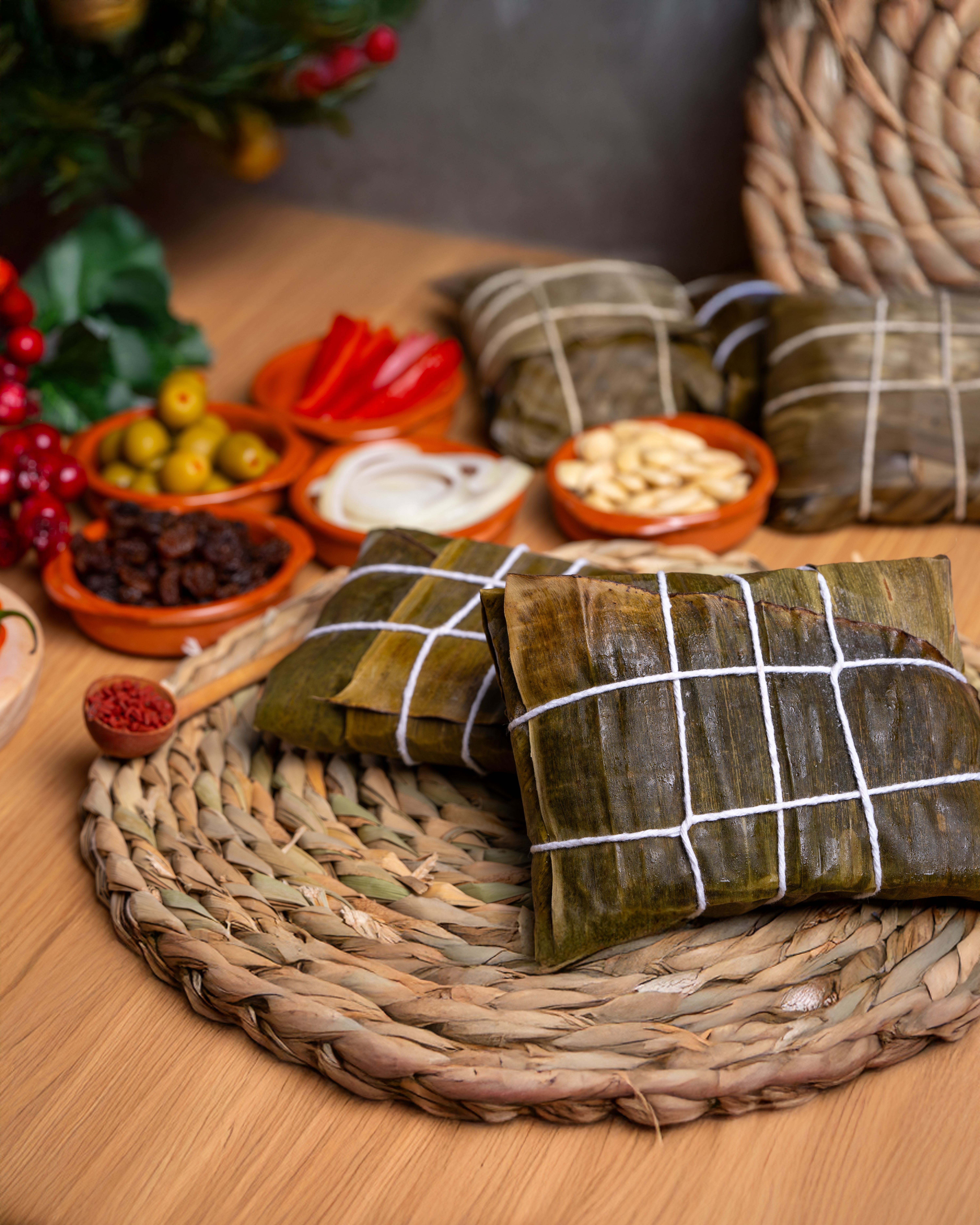
Tamales Oaxaquenos
The diets react (see scores below)
Common Ingredients
- masa
- banana leaf
- chicken
- mole
- lard
- chicken broth
- chile
Specific recipes may vary.
Incompatible with 7 of 11 diets
Diet Ratings
Tamales Oaxaqueños are fundamentally incompatible with a ketogenic diet due to masa (nixtamalized corn dough), which is the primary structural ingredient. Masa is a high-carbohydrate grain product — a standard tamale contains roughly 20-35g net carbs from masa alone, easily exceeding or consuming the entire daily keto carb budget in a single serving. Mole sauce compounds the problem, as traditional Oaxacan mole contains dried fruits, chocolate, and sugar alongside chiles, adding further net carbs. While lard and chicken are individually keto-friendly, the dominant masa component makes this dish a non-starter for ketosis. There is no realistic portion size that renders this dish keto-compatible.
Tamales Oaxaqueños as described contain multiple animal products that are categorically excluded from a vegan diet. Chicken is direct animal flesh, lard is rendered pig fat, and chicken broth is an animal-derived liquid. These three ingredients alone make this dish thoroughly non-vegan with no ambiguity. The banana leaf and masa base could theoretically anchor a vegan version, but the dish as listed is incompatible with vegan principles.
Tamales Oaxaqueños are fundamentally incompatible with the paleo diet. The defining ingredient is masa — a nixtamalized corn dough — which is a grain product explicitly excluded from paleo. Corn in any form (including masa harina) is a grain and represents a clear paleo violation. Mole sauce, while it contains paleo-friendly chiles, typically includes additional grains, seeds processed into paste, sugar, and sometimes chocolate with additives. The chicken, lard, and chile are paleo-compatible, but the dish's core structure is built around masa, making the overall dish a definitive avoid. No reasonable paleo interpretation permits corn-based products.
Tamales Oaxaqueños are largely incompatible with Mediterranean diet principles. The primary fat source is lard (saturated animal fat), which directly contradicts the Mediterranean emphasis on extra virgin olive oil as the principal fat. Masa is a refined corn dough, not a whole grain. While chicken is an acceptable moderate protein and chiles are plant-based positives, the overall dish is built on a foundation of refined starch and animal fat with no olive oil, no legumes, and no vegetables as primary components. The mole adds complexity but typically contains added sugars and seed oils. This is a culturally rich dish but structurally misaligned with Mediterranean diet architecture.
Tamales Oaxaqueños are fundamentally incompatible with the carnivore diet. The dish is built on masa (nixtamalized corn dough), which is a grain-based carbohydrate and the primary structural component. Additional plant-derived ingredients include banana leaf (used as a wrapper), mole sauce (contains chiles, chocolate, nuts, seeds, and spices), and chile — all explicitly excluded on carnivore. While the dish does contain some carnivore-compatible ingredients (chicken, lard, chicken broth), these are minor components embedded in a predominantly plant-based preparation. The masa alone disqualifies this dish entirely, and the mole sauce compounds the violation with multiple plant-based ingredients.
Tamales Oaxaqueños are excluded on Whole30 for two independent reasons. First, masa (nixtamalized corn dough) is made from corn, which is an explicitly excluded grain on the Whole30 program. Second, even if the ingredients were somehow compliant, tamales fall squarely into the 'no recreating baked goods/junk food' rule — they are a corn-dough-wrapped comfort food analogous to a wrap or bread product, explicitly in the spirit of what Whole30 prohibits. The other ingredients (chicken, lard, banana leaf, chile, chicken broth) are generally compliant, but mole sauces frequently contain chocolate, sugar, and sometimes grains or other excluded ingredients. The masa alone is a definitive disqualifier.
Tamales Oaxaqueños present multiple FODMAP concerns primarily due to the mole sauce. Traditional Oaxacan mole negro — the defining component of this dish — typically contains garlic, onion, and sometimes dried fruits or chocolate with high-FODMAP sweeteners, all of which are high-FODMAP ingredients. Garlic and onion alone are among the highest-fructan foods on the Monash scale and cannot be made safe through portion control at any reasonable serving size. The masa (corn dough) and chicken are individually low-FODMAP and safe. Lard is a pure fat and FODMAP-free. Banana leaf is a wrapper and not consumed. Chicken broth is potentially problematic if it contains onion or garlic (as most commercial and homemade broths do), though low-FODMAP certified broths exist. Dried chiles alone are generally low-FODMAP at typical serving sizes, but in mole they are combined with high-FODMAP aromatics. The mole sauce is the disqualifying element — it is structurally built on onion and garlic and cannot be considered low-FODMAP in any standard preparation.
If tamales were prepared with a specially modified mole using garlic-infused oil instead of garlic cloves, onion-free broth, and no high-FODMAP sweeteners or fruits, the dish could theoretically be low-FODMAP — but this would not represent a standard Tamales Oaxaqueños preparation. Monash University does not have a specific listing for Oaxacan mole, so the rating depends on ingredient-level assessment; clinical FODMAP practitioners would universally advise avoidance of any standard mole-based dish during elimination phase.
Tamales Oaxaqueños present a mixed DASH profile. The dish contains some DASH-friendly components — chicken (lean protein), chiles (vegetables, rich in potassium and antioxidants), and masa (corn-based whole grain). However, the primary concerns are lard (high in saturated fat, which DASH explicitly limits), mole sauce (typically contains chocolate, sugar, and significant sodium), and chicken broth (a meaningful source of sodium). The combination of lard-enriched masa and sodium-heavy broth and mole sauce pushes this dish into caution territory. Traditional tamales can contain 400–800mg sodium per piece and substantial saturated fat from lard. The banana leaf wrapping is neutral. Occasional consumption in portion-controlled amounts is acceptable on a DASH plan, but this is not a DASH-emphasized food. Substituting lard with canola or olive oil and using low-sodium broth would meaningfully improve the DASH score.
NIH DASH guidelines explicitly limit saturated fat and high-sodium foods, placing lard-based, broth-heavy dishes in caution territory. However, some DASH-aligned dietitians note that traditional Mexican cuisine using lard in moderate amounts, paired with nutrient-dense chiles and lean chicken, can fit within a flexible DASH framework if overall daily sodium and saturated fat targets are respected — particularly when homemade with sodium-controlled broth.
Tamales Oaxaqueños present a mixed Zone Diet profile. The chicken provides lean protein that aligns well with Zone principles, and the chile peppers offer polyphenols consistent with Sears' anti-inflammatory focus. However, several elements complicate Zone compatibility. Masa (nixtamalized corn dough) is a moderate-to-high glycemic carbohydrate that Zone classifies as 'unfavorable' — it's starchy, calorie-dense, and lacks the fiber profile of preferred low-GI carbs. Lard is a significant source of saturated fat, which Zone traditionally limits in favor of monounsaturated fats. Mole sauce, while complex and polyphenol-rich from chiles and spices, typically contains sugar, chocolate, and sometimes additional starchy thickeners, adding glycemic load. The overall macronutrient ratio will skew heavily toward carbohydrates and saturated fat, making it difficult to achieve the 40/30/30 Zone balance in a typical serving. A small portion (1 tamale) paired with a large vegetable side could partially rebalance the meal, but the dish as traditionally served is a Zone challenge. It's not categorically off-limits, but requires significant portion control and meal engineering.
Some Zone practitioners in Sears' later work (particularly around polyphenols in 'The Mediterranean Zone') would note that traditional mole contains significant polyphenol sources — dried chiles, dark chocolate, and spices — which support the anti-inflammatory goals of the Zone. Additionally, lard, once universally discouraged, has been partially rehabilitated in some later Zone-adjacent thinking as a natural saturated fat preferable to trans fats or industrial seed oils. A small tamale portion with careful attention to block sizing could fit into a Zone day for someone who is otherwise balanced.
Tamales Oaxaqueños present a mixed anti-inflammatory profile. On the positive side: chicken is a lean protein generally acceptable in anti-inflammatory diets; chile peppers contain capsaicin with documented anti-inflammatory properties; and mole sauce typically includes anti-inflammatory spices (chili, cumin, cinnamon, sometimes dark chocolate/cacao) along with antioxidant-rich dried chiles. Banana leaves used for wrapping contribute negligible nutritional content but are a clean, natural wrapper. However, the significant concern is lard — a saturated animal fat that anti-inflammatory guidelines recommend limiting due to its potential to promote inflammatory pathways when consumed regularly. Masa (nixtamalized corn dough) is a refined carbohydrate with moderate glycemic impact, though nixtamalization does improve nutrient bioavailability. Chicken broth is benign to mildly beneficial. The dish is not heavily processed and contains no trans fats or artificial additives, which keeps it from scoring lower. The overall profile is a traditional whole-food dish with meaningful pro-inflammatory components (lard, refined masa) partially offset by anti-inflammatory ingredients (chile, mole spices, lean protein).
Some anti-inflammatory practitioners, including those aligned with ancestral or whole-food frameworks, argue that lard from pasture-raised pigs contains a reasonable monounsaturated fat profile and is preferable to seed oils or shortening, potentially softening the concern. Conversely, stricter anti-inflammatory protocols (including Dr. Weil's guidance) clearly limit saturated animal fats, and the refined masa's glycemic load may be a concern for individuals managing metabolic inflammation.
Tamales Oaxaqueños present a mixed nutritional profile for GLP-1 patients. The chicken provides meaningful protein, but it is embedded in a masa dough made with lard, which adds significant saturated fat per serving — directly conflicting with the low-fat priority. Mole sauce, while flavorful and containing some fiber from dried chiles, typically adds additional fat (from seeds, nuts, and sometimes chocolate) and can be calorie-dense. Masa (nixtamalized corn dough) is a refined-ish starch with moderate fiber but low protein density per calorie. The dish is not fried, which helps, and the banana leaf steaming method is relatively gentle on digestion. However, the lard content is the central concern: high saturated fat worsens nausea, bloating, and reflux — the core GLP-1 GI side effects. A single tamale may be manageable as a small portion, but traditional serving sizes (2-3 tamales) would deliver a high fat load. The chile content may also irritate some GLP-1 patients with reflux sensitivity. Protein per serving is moderate but not high relative to caloric load, meaning nutrient density per calorie is suboptimal.
Some GLP-1-focused dietitians note that a single tamale can be a culturally appropriate, portion-controlled option when chicken filling is generous and the patient tolerates fat reasonably well; others flag lard-based masa as consistently problematic for GI side effects and recommend avoiding it entirely in favor of leaner masa preparations or substituting with beans and vegetables.
*See how scores were generated at our methodology page.
Nutritional profile
Six traits that cut across every diet.
Fiber & Plants
How much whole-plant food and fiber it delivers.
Healthy Fats
The quality of its fats (unsaturated, omega-3).
Whole / Unprocessed
How close it is to its natural, unprocessed form.
Gut Gentle
How easy it is on digestion (low FODMAP, few irritants).
Low Glycemic
How little it spikes your blood sugar.
Protein Density
How much protein it packs per calorie.
Controversy Index
Higher controversy = more disagreement between diets.
Diet-Specific Tips
 DASH — 4/10
View tips
- Lard is high in saturated fat, which DASH explicitly limits
- Chicken broth and mole contribute significant sodium, potentially 400–800mg+ per tamale
- Chicken provides lean DASH-compatible protein
- Chiles and masa contribute potassium, fiber, and plant-based nutrients
- Mole often contains added sugar and chocolate, adding saturated fat and calories
- Low-sodium broth and oil substitution for lard would improve DASH compatibility
- Portion control is essential — one tamale may be acceptable, multiple exceed DASH targets
 Zone — 4/10
View tips
- Masa is a high-glycemic, starchy carbohydrate classified as 'unfavorable' in Zone terminology
- Lard is a saturated fat source inconsistent with Zone's preference for monounsaturated fats
- Chicken provides lean Zone-approved protein
- Mole sauce adds sugar and glycemic load but also polyphenols from chiles and spices
- Macronutrient ratio skews high-carb and high-saturated-fat, making 40/30/30 difficult to achieve
- Portion control (1 small tamale) with a large vegetable accompaniment could partially rehabilitate the meal
- Chile peppers are anti-inflammatory and polyphenol-rich, aligning with Sears' later Zone focus
 Anti-Inflammatory — 4/10
View tips
- Lard is a saturated animal fat — recommended to be limited in anti-inflammatory diets
- Masa is a refined carbohydrate with moderate glycemic impact, though nixtamalization improves its nutritional profile
- Mole sauce contains anti-inflammatory spices (chili, cinnamon, cacao) and antioxidant-rich dried chiles
- Chile peppers provide capsaicin, a well-documented anti-inflammatory compound
- Chicken is a lean protein acceptable in anti-inflammatory frameworks
- No processed ingredients, trans fats, or artificial additives — a positive for a traditional preparation
- Banana leaf wrapping is a clean, natural cooking method
 GLP-1 Friendly — 4/10
View tips
- Lard in masa adds significant saturated fat, worsening GLP-1 GI side effects
- Mole sauce contributes additional fat and calories, reducing nutrient density per calorie
- Chicken filling provides protein but is diluted by the masa-to-filling ratio
- Steamed preparation (banana leaf) is easier to digest than fried alternatives
- Chile content may trigger reflux or nausea in sensitive GLP-1 patients
- Portion-sensitive: one tamale is borderline acceptable, traditional multi-tamale serving is not
- Moderate fiber from masa and chile, but not a high-fiber dish overall