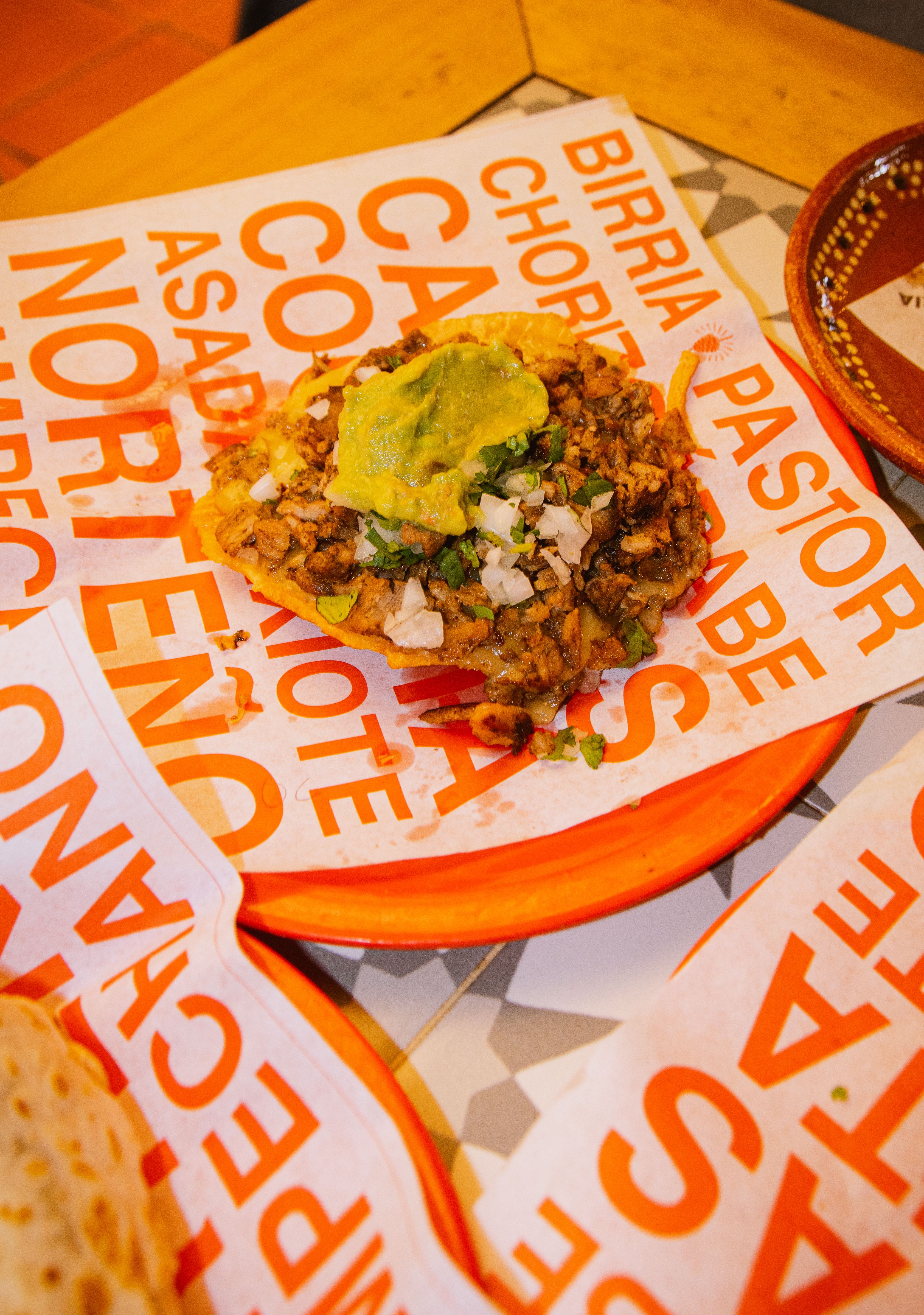
Photo: César O'neill / Pexels
The diets react (see scores below)
Common Ingredients
- tortilla
- black beans
- asiento
- quesillo
- cabbage
- tasajo
- avocado
- salsa
Specific recipes may vary.
Incompatible with 7 of 11 diets
Diet Ratings
Tlayuda is built on a large corn tortilla (tostada base), which is a grain-based, high-carb foundation containing roughly 40-60g of net carbs on its own — immediately exceeding or maxing out the entire daily keto carb budget. Black beans add another significant carb load (approximately 20-25g net carbs per half cup). Together, these two ingredients alone make the dish fundamentally incompatible with ketosis. While several individual components are keto-friendly — asiento (unrefined pork fat) is excellent, quesillo (Oaxacan string cheese) is acceptable, tasajo (cured beef/pork) is a quality protein, avocado is ideal, cabbage in small amounts is fine, and salsa depends on preparation — the structural carb load from the tortilla and beans cannot be mitigated by portion control without deconstructing the dish entirely. A tlayuda without its tortilla and beans is no longer a tlayuda.
Tlayuda as described contains multiple animal products that make it entirely incompatible with a vegan diet. Tasajo is a dried, cured beef (not pork despite the listed primary protein — it is the traditional Oaxacan meat used in tlayudas), quesillo is Oaxacan string cheese (a dairy product), and asiento is unrefined pork fat scraped from the bottom of lard-rendering pots. These three ingredients alone — animal flesh, dairy, and rendered animal fat — each independently disqualify this dish. The tortilla, black beans, cabbage, avocado, and salsa are plant-based and would be acceptable, but the dish as traditionally prepared is not vegan-compatible.
Tlayuda is fundamentally incompatible with the paleo diet. The dish is built on a large corn tortilla, which is a grain and a clear paleo exclusion. Black beans are legumes, another hard paleo exclusion. Quesillo (Oaxacan string cheese) is dairy, also excluded. Asiento is unrefined pork fat residue — while animal fat is generally paleo-friendly, asiento is typically salted and may contain additives, placing it in a gray area. The only paleo-compliant ingredients are cabbage, avocado, and potentially salsa (if made from whole, unprocessed ingredients) and tasajo (a cured/salted meat that is borderline due to added salt and curing process). With three of the dish's foundational components — tortilla (grain), black beans (legume), and quesillo (dairy) — being firm paleo exclusions, this dish cannot be reconciled with paleo principles in any recognized variation of the diet.
Tlayuda contains several Mediterranean diet-compatible elements — black beans (legumes, strongly encouraged), avocado (healthy plant fat), cabbage (vegetable), salsa (vegetable-based), and the corn tortilla (a whole grain analog). However, the dish is anchored by problematic components from a Mediterranean perspective: asiento is unrefined pork fat (lard-like), which is a saturated animal fat rather than olive oil; tasajo is a cured/dried beef, making this a red meat dish; and quesillo (string cheese) adds dairy. The primary protein is pork/beef-based, and the fat source contradicts the olive oil-centric Mediterranean principle. The combination of red meat (tasajo) and animal fat (asiento) as core structural ingredients pushes this toward 'avoid' territory, but the strong legume, vegetable, and avocado components keep it in 'caution'.
Some Mediterranean diet interpreters take a broader view that traditional whole-food preparations from any culture — featuring legumes, vegetables, and minimally processed ingredients — can fit within Mediterranean principles with simple substitutions (e.g., replacing asiento with olive oil). From this lens, the bean-and-vegetable base of a tlayuda could be seen as culturally equivalent to a Mediterranean flatbread dish, with the animal components treated as condiments rather than the focus.
Tlayuda is fundamentally incompatible with the carnivore diet. The dish is built on a large corn tortilla (grain-based), topped with black beans (legume), cabbage (vegetable), avocado (fruit/plant fat), and salsa (plant-based). While it does contain animal-derived components — tasajo (dried/cured beef, carnivore-friendly), asiento (unrefined pork fat, carnivore-friendly), and quesillo (Oaxacan string cheese, debated but animal-derived) — these are minor elements in an otherwise entirely plant-dominated dish. The foundational ingredients are all excluded on a carnivore diet, making this a clear avoid regardless of the animal components present.
A tlayuda is a traditional Oaxacan dish built on a large toasted tortilla (corn-based grain, excluded), topped with black beans (legumes, excluded), asiento (unrefined pork fat — potentially compliant on its own, but served in this context), quesillo/Oaxacan string cheese (dairy, excluded), and tasajo (cured meat that typically contains non-compliant additives). Multiple core structural ingredients violate Whole30 rules: the tortilla is a grain product and also falls under Rule 4's explicit prohibition on tortillas/wraps even if made with compliant ingredients; black beans are a excluded legume; and quesillo is dairy. The dish cannot be made compliant without fundamentally deconstructing it into something that is no longer a tlayuda.
A Tlayuda contains multiple high-FODMAP ingredients that make it unsuitable during the elimination phase. Black beans are high in GOS (galacto-oligosaccharides) and are high-FODMAP at any typical serving size — even canned and rinsed beans remain borderline. Quesillo (Oaxacan string cheese) is a fresh, high-moisture cheese similar to mozzarella, which contains moderate lactose and is risky at standard portions. Avocado is low-FODMAP only at 1/8 of a fruit per Monash, but tlayudas typically include a generous spread, making excess fructose and polyol exposure likely. The large corn tortilla base is generally low-FODMAP (corn masa), but the cumulative FODMAP load from beans, fresh cheese, and avocado in typical serving quantities makes this dish a clear avoid during elimination. Asiento (unrefined pork lard) is fat-based and low-FODMAP. Tasajo (cured beef/pork) is generally low-FODMAP if no high-FODMAP marinades are used. Cabbage in small amounts is low-FODMAP. Salsa may contain onion or garlic, which are high-fructan — this is very likely in traditional Oaxacan salsas. The combination of beans, fresh cheese, avocado, and likely-garlicky/oniony salsa creates an overwhelming FODMAP burden.
Monash University rates canned, rinsed lentils and beans as borderline, and small amounts of quesillo-style cheese may be tolerated by some individuals; clinical FODMAP practitioners would still advise avoiding this dish entirely during elimination due to the stacked FODMAP load from multiple moderate-to-high sources. The corn tortilla base itself is safe, meaning a heavily modified version (no beans, no fresh cheese, limited avocado, garlic/onion-free salsa) could theoretically be made low-FODMAP.
Tlayuda is a traditional Oaxacan dish with a mixed DASH profile. Several ingredients align well with DASH principles: black beans provide fiber, potassium, and plant protein; avocado offers heart-healthy monounsaturated fats and potassium; cabbage is a DASH-friendly vegetable; and salsa (fresh) contributes vegetables with minimal calories. However, the dish contains multiple problematic elements from a DASH perspective. Asiento (unrefined pork lard) is high in saturated fat, directly conflicting with DASH's emphasis on limiting saturated fat. Quesillo (Oaxacan string cheese) is a full-fat dairy product, whereas DASH specifies low-fat or fat-free dairy. Tasajo is a heavily salted, cured pork meat — high in sodium and saturated fat, both of which DASH restricts. The large corn tortilla base, while not inherently problematic, adds significant calories and refined carbohydrate load depending on preparation. The combination of cured meat, full-fat cheese, and pork lard pushes this dish into caution territory despite the beneficial beans, avocado, and vegetables. Portion size is also a concern as tlayudas are typically large, shareable platters.
NIH DASH guidelines explicitly limit cured/processed meats, full-fat dairy, and saturated fats, which would push this dish toward 'avoid.' However, updated clinical interpretations note that the black beans, avocado, cabbage, and fresh salsa provide meaningful DASH-aligned nutrients (fiber, potassium, magnesium), and some DASH-oriented dietitians would allow a modified tlayuda with reduced asiento, low-fat cheese substitution, and grilled rather than cured tasajo as an occasional moderate-sodium meal.
A Tlayuda is a large Oaxacan flatbread dish that contains a mix of Zone-friendly and Zone-challenging components. On the positive side: black beans provide a reasonable low-glycemic carbohydrate source with significant fiber (lowering net carbs), cabbage is an excellent low-GI vegetable, avocado contributes ideal monounsaturated fat, and salsa adds polyphenol-rich vegetables. Tasajo (cured beef) and quesillo (Oaxacan string cheese) provide protein, though tasajo is a fatty, salt-cured meat and quesillo adds saturated fat. The main Zone challenges are the large corn tortilla (high-glycemic, starchy base that dominates the macro profile), asiento (unrefined pork lard — a saturated fat source Sears discourages), and the overall fat profile leaning saturated rather than monounsaturated. The dish's macro balance skews toward too many carbs (tortilla + beans) and too much saturated fat (asiento, quesillo, tasajo) relative to Zone targets. However, with portion control — using a smaller tortilla portion, loading up on cabbage, moderating the asiento, and leaning on avocado for fat — the dish can be adjusted toward Zone ratios. As a snack, traditional serving sizes would likely be too large and carb-heavy for Zone compliance.
Some Zone practitioners might rate this more favorably, noting that black beans are a Zone-approved carb source, avocado is ideal Zone fat, and tasajo provides the protein block. If the tortilla portion is modest and asiento is minimized in favor of avocado, the dish can approximate Zone ratios. Conversely, strict Zone followers might score it lower (3-4) given the large corn tortilla base and lard content, which represent two simultaneous unfavorable elements that are hard to avoid in an authentic Tlayuda.
Tlayuda is a traditional Oaxacan dish with a mixed anti-inflammatory profile. On the positive side, black beans provide fiber, plant protein, and polyphenols with well-established anti-inflammatory benefits. Avocado contributes heart-healthy monounsaturated fats and anti-inflammatory compounds. Cabbage is a cruciferous vegetable rich in antioxidants and vitamin C. Salsa typically contains tomatoes, chili, and garlic — all anti-inflammatory ingredients. These components meaningfully anchor the dish toward the beneficial end. However, the protein components are problematic. Tasajo is a cured, salted beef — red meat that is moderately pro-inflammatory due to saturated fat and heme iron, which can promote oxidative stress. The corn tortilla base is acceptable as a whole grain but is fairly refined in large tlayuda form. Asiento (unrefined pork lard/fat residue) is high in saturated fat, placing it in the 'limit' category. Quesillo (Oaxacan string cheese) is full-fat dairy, also a moderate concern under anti-inflammatory guidelines. The combination of cured red meat, pork fat, and full-fat dairy creates a meaningful saturated fat and pro-inflammatory load that offsets the genuinely beneficial plant components. This dish is best approached as an occasional food rather than a staple, and substituting tasajo with fish or grilled chicken, and reducing asiento, would substantially improve its anti-inflammatory profile.
Some anti-inflammatory practitioners would rate this more favorably, noting that traditional whole-food preparations using minimally processed lard (asiento) are preferable to industrial seed oils, and that the overall vegetable, bean, and avocado content is substantial. Dr. Weil's framework does not strictly prohibit moderate saturated fat in whole-food form. Conversely, stricter anti-inflammatory protocols (such as those targeting autoimmune conditions) would rate this lower due to the red meat, full-fat dairy, and potential nightshade sensitivity from the salsa.
A tlayuda is a large, crispy Oaxacan tortilla (typically lard-crisped) topped with asiento (unrefined pork fat/lard), black beans, quesillo (string cheese), shredded cabbage, tasajo (heavily salted, fatty cured beef or pork), avocado, and salsa. While a few individual components are GLP-1-friendly — black beans provide protein and fiber, cabbage adds fiber and water content, avocado offers healthy unsaturated fats, and salsa is low-calorie — the overall dish is disqualifying for several reasons. Asiento is rendered pork fat, one of the highest-saturated-fat condiments in Mexican cuisine and a near-certain trigger for GLP-1 nausea, bloating, and reflux. Tasajo is a fatty, heavily cured meat that compounds the saturated fat load. Quesillo adds additional fat. The large crispy tortilla base is a refined carbohydrate with low nutrient density and is not small-portion-friendly. The cumulative fat content from asiento plus tasajo plus quesillo plus avocado is very high per serving, far exceeding what GLP-1 patients tolerate well. The dish is also difficult to modulate — the asiento is structural to the recipe, not an optional garnish. A standard serving would likely trigger significant GI distress including nausea, delayed gastric emptying symptoms, and reflux in most GLP-1 patients.
Some GLP-1 dietitians might note that the black beans and cabbage provide meaningful fiber, and that a heavily modified version — omitting asiento entirely, using minimal quesillo, substituting grilled chicken for tasajo, and eating only a portion of the tortilla — could be tolerated by patients in later stages of GLP-1 therapy with stabilized GI tolerance. However, as traditionally prepared, the dish is not appropriate, and the fat load from asiento alone is a significant clinical concern.
*See how scores were generated at our methodology page.
Nutritional profile
Six traits that cut across every diet.
Fiber & Plants
How much whole-plant food and fiber it delivers.
Healthy Fats
The quality of its fats (unsaturated, omega-3).
Whole / Unprocessed
How close it is to its natural, unprocessed form.
Gut Gentle
How easy it is on digestion (low FODMAP, few irritants).
Low Glycemic
How little it spikes your blood sugar.
Protein Density
How much protein it packs per calorie.
Controversy Index
Higher controversy = more disagreement between diets.
Diet-Specific Tips
 Mediterranean — 4/10
View tips
- Tasajo (cured beef/red meat) is a primary protein — red meat should be limited to a few times per month
- Asiento (pork fat) replaces olive oil as the primary fat, contradicting a core Mediterranean principle
- Black beans are a Mediterranean-approved legume staple and a positive element
- Avocado provides heart-healthy monounsaturated fats aligned with Mediterranean values
- Cabbage and salsa add vegetable content, a positive factor
- Quesillo (dairy/cheese) is acceptable in moderation per Mediterranean guidelines
- Corn tortilla is a refined/processed grain without whole grain fiber benefits
 DASH — 4/10
View tips
- Asiento (pork lard) is high in saturated fat — not compatible with DASH fat guidelines
- Tasajo is a cured, salted pork — high sodium and saturated fat, DASH discourages processed/cured meats
- Quesillo is full-fat dairy; DASH recommends low-fat or fat-free dairy alternatives
- Black beans are an excellent DASH food: high fiber, potassium, magnesium, and plant protein
- Avocado contributes heart-healthy monounsaturated fats and potassium, consistent with DASH
- Cabbage and fresh salsa are DASH-approved vegetables
- Large portion size increases sodium, saturated fat, and caloric load significantly
- Low-sodium modifications (reduced asiento, fresh lean protein, low-fat cheese) would improve DASH compatibility
 Zone — 5/10
View tips
- Large corn tortilla base is high-glycemic and carb-heavy, disrupting 40/30/30 ratio
- Asiento (pork lard) is a saturated fat source discouraged by Sears
- Quesillo and tasajo add significant saturated fat load
- Black beans are a Zone-favorable low-glycemic carbohydrate with good fiber
- Avocado is an ideal monounsaturated fat source for the Zone
- Cabbage is an excellent low-GI vegetable and Zone-approved carb
- As a snack, traditional portion size likely too large for Zone block targets
- Tasajo is fatty cured meat rather than lean protein preferred by Zone
 Anti-Inflammatory — 4/10
View tips
- Black beans: strong anti-inflammatory benefit — fiber, polyphenols, plant protein
- Avocado: anti-inflammatory monounsaturated fats and bioactive compounds
- Cabbage: cruciferous vegetable with antioxidants and anti-inflammatory glucosinolates
- Salsa: typically contains chili, garlic, and tomato — all anti-inflammatory
- Tasajo (cured beef): red and processed meat — pro-inflammatory saturated fat, heme iron, sodium
- Asiento (pork fat residue): high saturated fat — falls in 'limit' category
- Quesillo (full-fat cheese): full-fat dairy — moderate pro-inflammatory concern under anti-inflammatory guidelines
- Corn tortilla: acceptable as a whole grain base but refined carbohydrate in large portions