Mexican
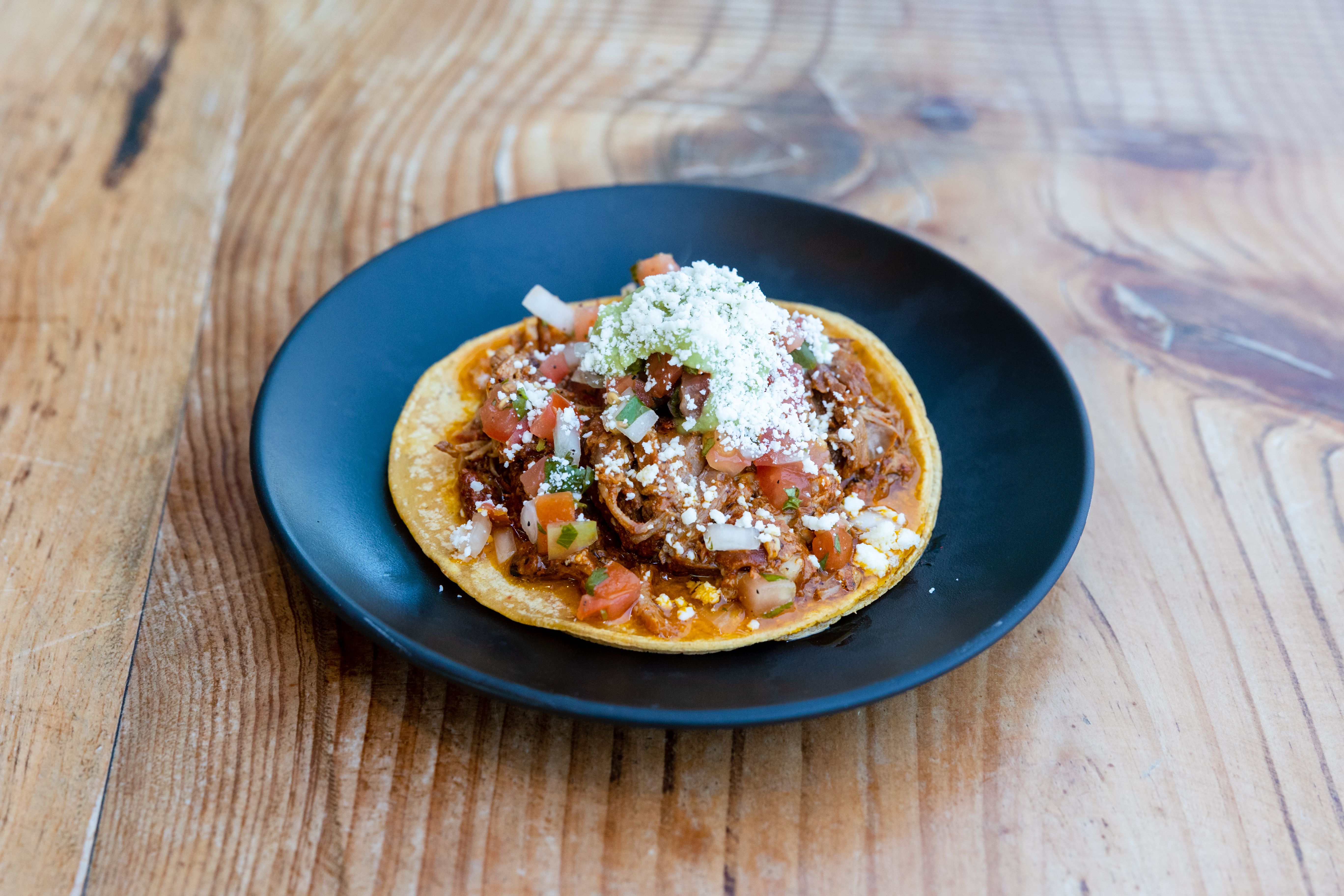
Tostada de Tinga
The diets react (see scores below)
Common Ingredients
- tostada
- chicken
- chipotle
- tomato
- onion
- garlic
- refried beans
- crema
- lettuce
Specific recipes may vary.
Incompatible with 6 of 11 diets
Diet Ratings
Tostada de Tinga is fundamentally incompatible with ketogenic eating. The tostada shell is a fried corn tortilla, a grain-based product carrying approximately 15-18g net carbs per shell alone. Refried beans add another significant carb load (roughly 10-15g net carbs per serving), pushing a single snack well over the entire daily keto carb budget of 20-50g before even accounting for the tomato, onion, and garlic. The chipotle-braised chicken (tinga) itself is keto-friendly, as are the crema and lettuce, but the structural and foundational ingredients — the tostada shell and refried beans — make this dish incompatible with ketosis in its traditional form. There is no realistic portion modification that preserves the dish's identity while making it keto-compliant.
Tostada de Tinga contains multiple animal-derived ingredients that make it clearly incompatible with a vegan diet. Chicken is the primary protein and a direct animal product. Crema (Mexican sour cream) is a dairy product. Refried beans, while plant-based in their base form, are traditionally prepared with lard in Mexican cuisine, adding a third animal-derived concern. This dish fails on multiple counts under any definition of veganism.
Tostada de Tinga contains multiple non-paleo ingredients that are central to the dish and cannot be separated out. The tostada shell is a fried corn tortilla — a grain product strictly excluded from all paleo frameworks. Refried beans are a legume, universally rejected by paleo authorities. Crema is a dairy product, also excluded. While the chicken, chipotle, tomato, onion, and garlic are paleo-compliant, the structural and foundational components of this dish (tostada, refried beans, crema) are core paleo violations, making the dish as a whole incompatible with the diet.
Tostada de Tinga contains several Mediterranean-compatible elements — chicken (acceptable in moderation), tomato, onion, garlic, lettuce, and legumes via refried beans — but also presents notable concerns. The tostada shell is a fried, refined corn tortilla (refined grain, processed), refried beans are often cooked with lard rather than olive oil (though they can be plant-based), and crema is a full-fat dairy addition. Chipotle (smoked jalapeño) is a whole food flavoring that aligns well. The dish is not inherently harmful, but the fried shell, potential animal fats in the beans, and sour cream push it toward moderation territory. With ingredient substitutions (baked whole-grain base, olive oil-cooked beans), it could score higher.
Some Mediterranean diet practitioners would view this more favorably, noting that legumes (beans), vegetables (tomato, onion, garlic, lettuce), and lean poultry are all core-compatible ingredients, and that corn — a whole grain in its natural form — has regional legitimacy in traditional diets outside the strict Mediterranean frame. The dish's overall vegetable and legume density is a genuine positive.
Tostada de Tinga is almost entirely incompatible with the carnivore diet. The dish is built on a tostada (fried corn tortilla), which is a grain-based plant food and the structural foundation of the dish. The tinga preparation itself layers on multiple plant ingredients: chipotle peppers, tomato, onion, and garlic. It is then topped with refried beans (legumes — doubly excluded as both plant-derived and typically cooked with lard but still fundamentally plant food), lettuce (leafy vegetable), and crema (dairy, the one debatable animal-derived component). The only carnivore-compatible element is the chicken itself, and possibly the crema. Every other ingredient is explicitly excluded under carnivore rules. This dish cannot be adapted without being completely deconstructed — at that point it is no longer a Tostada de Tinga.
Tostada de Tinga contains multiple excluded ingredients. The tostada itself is a fried corn tortilla — corn is a grain explicitly excluded from Whole30. Refried beans are legumes, also explicitly excluded. Crema is a dairy product (similar to sour cream), which is excluded. Even setting aside the spirit of the program, the dish structurally cannot be made compliant without fundamentally changing it, since the tostada shell (the defining element of the dish) is made from corn.
Tostada de Tinga contains multiple high-FODMAP ingredients that make it unsuitable during the elimination phase. Garlic and onion are among the highest-FODMAP foods tested by Monash University, both being significant sources of fructans — even small amounts are problematic. Refried beans are high in GOS (galacto-oligosaccharides), a major FODMAP category. Traditional tostadas are made from corn, which is generally low-FODMAP, but the combination of onion, garlic, and refried beans alone makes this dish a clear 'avoid.' Chipotle peppers in adobo sauce often contain onion and garlic as well. Crema (Mexican sour cream) contains lactose and may be problematic depending on quantity. The chicken, tomato, and lettuce are low-FODMAP, but the offending ingredients dominate this dish structurally and cannot easily be removed without fundamentally changing the recipe.
Tostada de Tinga combines several DASH-friendly elements (lean chicken, tomato, onion, garlic, lettuce) with ingredients that require moderation. The chicken tinga filling with chipotle and tomato is generally acceptable, and the vegetables add fiber, potassium, and micronutrients. However, the dish has notable DASH concerns: the tostada shell is a fried corn tortilla contributing sodium and refined carbs; refried beans, while a good source of fiber and plant protein, are commonly prepared with lard and significant added sodium (standard canned refried beans can contain 400-500mg per half-cup serving); and crema (Mexican sour cream) is a full-fat dairy product that DASH explicitly recommends avoiding in favor of low-fat alternatives. Chipotle peppers in adobo sauce are high in sodium. The cumulative sodium load across tostada shell, refried beans, and chipotle adobo is a meaningful concern for DASH adherents. As a snack portion it is more manageable, but as typically prepared this dish requires careful modification to align with DASH principles.
NIH DASH guidelines flag full-fat dairy (crema) and high-sodium processed ingredients (canned refried beans, chipotle in adobo) as problematic. However, updated clinical interpretations note that beans are a DASH-emphasized food, and modifications — baked tostada, low-sodium beans, plain low-fat Greek yogurt substituted for crema — can substantially improve DASH compatibility without compromising the dish's character.
Tostada de Tinga has genuinely favorable Zone components — shredded chicken tinga is an excellent lean protein source, tomatoes/onion/garlic/chipotle are low-glycemic, anti-inflammatory vegetables and spices, and lettuce adds polyphenols with negligible glycemic impact. However, the dish as traditionally served creates Zone challenges. The tostada shell is a fried corn tortilla — a higher-glycemic refined carbohydrate that Zone classifies as 'unfavorable.' Refried beans add carbohydrates (though they're a slower-digesting legume with decent fiber, making them more Zone-friendly than the tostada shell). The bigger issue is crema (Mexican sour cream), which adds saturated fat rather than monounsaturated fat, and the fat ratio will likely skew toward saturated. As a snack, a full traditional tostada is likely oversized for a Zone snack block (a Zone snack targets ~1 block: ~7g protein, ~9g carbs, ~1.5-3g fat). The chicken tinga itself is excellent, but the platform and toppings require careful portioning. A Zone-adapted version would use a smaller tostada or swap for lettuce wrap, use just a small amount of beans, and substitute avocado for crema to shift toward monounsaturated fat.
Some Zone practitioners would rate this more favorably, noting that refried beans (especially when made with minimal lard) are a Zone-acceptable carbohydrate source with significant fiber reducing net carb impact, and that the overall dish can be portioned to hit the 40/30/30 ratio if crema is minimized. Dr. Sears' later anti-inflammatory writings also show more flexibility around small amounts of saturated fat in context of an otherwise polyphenol-rich meal — chipotle and tomatoes contribute meaningful polyphenols that support Sears' Zone anti-inflammatory goals.
Tostada de Tinga is a mixed dish from an anti-inflammatory perspective. On the positive side, it contains several beneficial ingredients: lean chicken (an approved moderate protein), tomato (lycopene, antioxidants), onion and garlic (quercetin, allicin — both with notable anti-inflammatory properties), and chipotle/chili pepper (capsaicin, a known anti-inflammatory compound). Refried beans offer fiber, plant protein, and polyphenols, all of which support an anti-inflammatory profile — though traditionally prepared with lard, which adds saturated fat. The tostada (fried corn tortilla) is the most problematic element: it's a refined, deep-fried carbohydrate with a high glycemic load and likely cooked in seed oils high in omega-6 fatty acids, both of which can promote inflammatory signaling. Crema (full-fat Mexican soured cream) is a limited dairy product contributing saturated fat. Shredded lettuce adds minimal anti-inflammatory value but no harm. Overall, the dish has a genuinely beneficial core — lean poultry, alliums, legumes, and capsaicin-rich chili — undermined by the fried tostada shell and full-fat dairy. Swapping the tostada for a baked version and the crema for a smaller amount of plain Greek yogurt would meaningfully improve the profile.
Some anti-inflammatory practitioners, particularly those following Dr. Weil's more permissive pyramid, would view this dish more favorably, emphasizing the garlic, onion, tomato, beans, and chili pepper as a strong polyphenol and fiber base with lean protein — arguing the occasional fried corn tostada is an acceptable cultural food in an overall healthy diet. Stricter anti-inflammatory protocols, and those aligned with AIP or low-glycemic approaches, would flag the fried shell, seed oils, and full-fat crema more harshly and consider this dish a regular 'avoid.'
Tostada de Tinga has a genuinely mixed nutritional profile for GLP-1 patients. The chicken tinga filling is a solid lean protein source, and refried beans add both protein and fiber — two top priorities. Tomato, onion, and garlic contribute micronutrients with minimal caloric cost. However, several ingredients introduce meaningful concerns: the fried tostada shell is a hard-fried corn disc, which is high in fat and may worsen nausea or reflux due to GLP-1-slowed gastric emptying; crema is a high-fat dairy topping that adds saturated fat and relatively little protein per calorie; and chipotle peppers in adobo introduce moderate-to-high spice and acidity, which can aggravate GI discomfort and reflux in GLP-1 patients. As a snack category item, the portion is likely one tostada, which is manageable, but the combination of a fried base, fatty topping, and spicy sauce on top of already-slowed digestion makes this a dish that many GLP-1 patients will tolerate poorly, especially in the first several months of treatment. The protein contribution from chicken and beans is real but may not be sufficient to offset these drawbacks without modification.
Some GLP-1-focused dietitians would rate this more favorably, noting that the chicken and bean combination delivers meaningful protein and fiber in a small, satisfying portion — aligning well with the small-meal-frequency recommendation. The disagreement centers on individual GI tolerance to fried foods and spice: patients further along in treatment or with milder side effects may handle this dish without issue, while those in early titration phases or prone to reflux should avoid it.
*See how scores were generated at our methodology page.
Nutritional profile
Six traits that cut across every diet.
Fiber & Plants
How much whole-plant food and fiber it delivers.
Healthy Fats
The quality of its fats (unsaturated, omega-3).
Whole / Unprocessed
How close it is to its natural, unprocessed form.
Gut Gentle
How easy it is on digestion (low FODMAP, few irritants).
Low Glycemic
How little it spikes your blood sugar.
Protein Density
How much protein it packs per calorie.
Controversy Index
Higher controversy = more disagreement between diets.
Diet-Specific Tips
 Mediterranean — 5/10
View tips
- Tostada shell is fried refined grain — a processed carbohydrate
- Chicken is acceptable poultry, appropriate in moderation
- Tomato, onion, garlic, lettuce are strongly Mediterranean-compatible vegetables
- Refried beans are a legume positive but may contain lard
- Crema adds saturated dairy fat
- No olive oil present as primary fat
- Chipotle is a whole-food flavoring, not problematic
 DASH — 5/10
View tips
- Fried tostada shell adds sodium and refined carbs — baked versions preferred
- Refried beans often contain lard and high sodium (400-500mg/serving); low-fat, low-sodium versions score better
- Crema is full-fat dairy, which DASH explicitly limits
- Chipotle in adobo sauce is high in sodium
- Chicken is a DASH-approved lean protein
- Tomato, onion, garlic, and lettuce are DASH-friendly vegetables
- Cumulative sodium across multiple ingredients is a significant concern
 Zone — 5/10
View tips
- Chicken tinga is a lean protein — strong Zone protein block
- Tostada shell is fried, high-glycemic corn — 'unfavorable' Zone carbohydrate
- Refried beans add carbs but are relatively low-glycemic due to fiber content
- Crema adds saturated fat, not the preferred monounsaturated fat
- Tomato, onion, garlic, chipotle, lettuce are all favorable low-glycemic Zone carbohydrates with polyphenol benefits
- As a snack, total portion size of a full tostada likely exceeds 1 Zone block
- Zone-adaptable by reducing tostada size, limiting beans, swapping crema for avocado
 Anti-Inflammatory — 5/10
View tips
- Fried corn tostada: refined carbohydrate with high glycemic load, likely cooked in pro-inflammatory omega-6 seed oil
- Chicken (lean protein): anti-inflammatory approved in moderation
- Chipotle/chili pepper: capsaicin has documented anti-inflammatory effects
- Garlic and onion: rich in allicin and quercetin, strong anti-inflammatory compounds
- Tomato: lycopene and antioxidants support anti-inflammatory profile
- Refried beans: beneficial fiber and plant protein, but often prepared with lard (saturated fat)
- Crema: full-fat dairy contributes saturated fat — limit category
 GLP-1 Friendly — 5/10
View tips
- Fried tostada shell increases fat content and may worsen nausea and reflux due to slowed gastric emptying
- Chipotle in adobo introduces moderate spice and acidity, a known GLP-1 GI irritant
- Crema adds saturated fat with low protein density per calorie
- Chicken tinga provides lean protein — a strong positive
- Refried beans contribute both protein and fiber, supporting two top GLP-1 priorities
- As a snack, portion size is likely one tostada, which limits total fat and calorie load
- Overall dish is nutritionally uneven: good core ingredients undermined by a fried base and fatty, spicy toppings