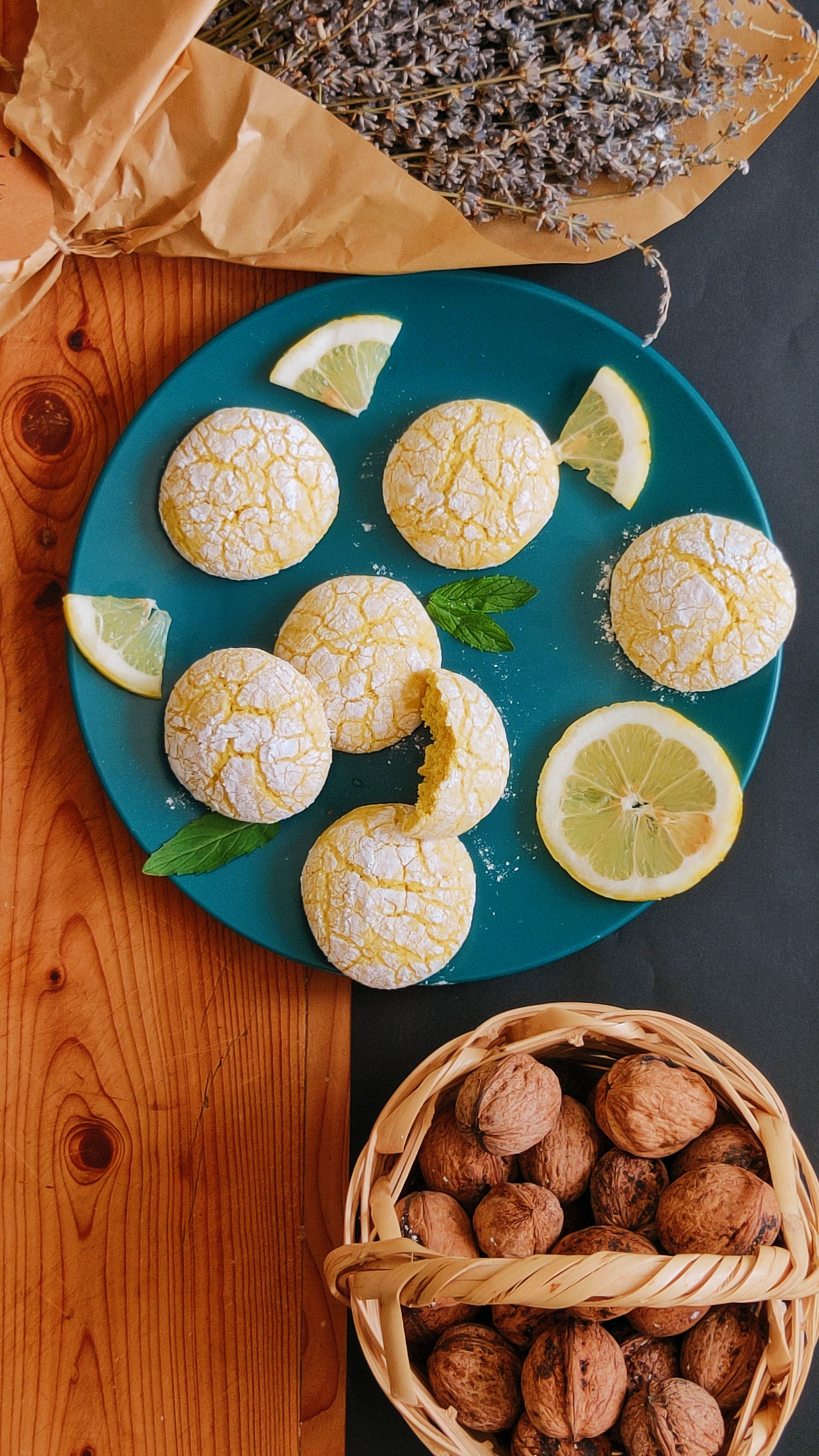
Photo: Emre Ayata / Pexels
The diets react (see scores below)
Common Ingredients
- almonds
- sugar
- flour
- egg
- butter
- baking powder
- orange blossom water
Specific recipes may vary.
Incompatible with 9 of 11 diets
Diet Ratings
Ghriba is a traditional Moroccan cookie made with wheat flour and sugar as primary ingredients, both of which are strictly incompatible with a ketogenic diet. Flour is a high-glycemic grain product that will spike blood glucose and disrupt ketosis, while added sugar provides pure carbohydrates with no nutritional benefit for keto. A single Ghriba cookie contains a significant amount of net carbs from these two ingredients alone, easily exceeding a large portion of the daily 20-50g net carb limit. While almonds and butter are keto-friendly, they are outweighed entirely by the flour and sugar content. There is no reasonable portion size that makes this food compatible with ketosis.
Ghriba contains both egg and butter, which are animal-derived products clearly excluded under vegan dietary rules. Eggs are an animal product (from hens), and butter is a dairy product made from cow's milk. These two ingredients alone make the dish non-vegan regardless of the other fully plant-based components (almonds, sugar, flour, baking powder, orange blossom water). A vegan version of ghriba could be made by substituting flax egg or aquafaba for the egg and using plant-based butter, but the traditional recipe as listed is not vegan-compliant.
Ghriba is a Moroccan shortbread cookie that contains multiple non-paleo ingredients. Flour (wheat) is a grain and a core exclusion from the paleo diet. Refined sugar is explicitly prohibited. Butter is a dairy product excluded under strict paleo guidelines. Baking powder is a processed additive not available to Paleolithic humans. While almonds and eggs are paleo-approved, and orange blossom water is generally acceptable as a natural flavoring, the combination of wheat flour, refined sugar, butter, and baking powder makes this dish fundamentally incompatible with the paleo diet. Three out of seven ingredients are clear paleo violations, making this an easy avoid.
Ghriba is a traditional Moroccan almond cookie containing significant added sugar and refined flour, which places it firmly in the 'avoid' category under Mediterranean diet principles. While almonds are a Mediterranean staple and orange blossom water is traditional, the overall profile is a refined-grain, high-sugar sweet that contradicts the diet's emphasis on minimally processed foods. Butter, rather than olive oil, is used as the fat, further distancing it from core Mediterranean guidelines. This is essentially a dessert/confection, and such items should be consumed only rarely.
Some Mediterranean diet interpretations acknowledge that traditional sweets from Morocco, Greece, and the Levant — made with whole nuts, eggs, and natural flavorings like orange blossom water — are an authentic part of the cultural food tradition and can be enjoyed occasionally in small portions, particularly when the nut content is high relative to sugar and refined flour.
Ghriba is a Moroccan almond cookie that is almost entirely plant-based and processed. The primary ingredients — almonds, flour, sugar, and orange blossom water — are all strictly excluded on the carnivore diet. Baking powder is a plant-derived additive, and sugar is a processed ingredient forbidden on any tier of carnivore. While eggs and butter are animal-derived, they are minor components in an otherwise completely non-carnivore food. This dish offers no meaningful animal protein and is essentially a dessert cookie built on plant foods and sugar.
Ghriba is a Moroccan cookie/biscuit that contains multiple excluded ingredients and violates core Whole30 rules. It contains added sugar (explicitly excluded), flour/wheat (a grain, explicitly excluded), and butter (dairy, excluded — only ghee/clarified butter is allowed). Additionally, even if these ingredients were substituted with compliant alternatives, Ghriba is fundamentally a cookie/baked good, which is explicitly prohibited under Whole30's 'no recreating baked goods or junk food' rule. This food fails on multiple fronts simultaneously.
Ghriba is a traditional Moroccan shortbread cookie whose standard recipe relies heavily on wheat flour, which is high in fructans — a major FODMAP. Wheat flour is a clear 'avoid' during the elimination phase per Monash University. While almonds are low-FODMAP at small servings (up to ~10 almonds or 12g per Monash), the other ingredients are largely benign: sugar, egg, butter, and orange blossom water are all low-FODMAP. Baking powder in typical small quantities is also fine. However, the wheat flour is a disqualifying ingredient at any standard serving size of a cookie. A single ghriba cookie would contain a meaningful amount of wheat flour, making this dish unsuitable during the elimination phase.
Ghriba is a Moroccan almond cookie containing butter, sugar, flour, egg, and almonds. While almonds are explicitly DASH-approved (nuts are encouraged for their potassium, magnesium, and healthy fats), the dish as a whole is a sweet baked good with added sugar and butter, both of which DASH guidelines discourage. Butter contributes saturated fat, which DASH limits, and refined flour with added sugar places this firmly in the 'sweets' category that DASH restricts to 5 or fewer servings per week. Orange blossom water and baking powder add negligible nutritional concern. In moderation (1-2 small cookies occasionally), the almond base provides some redeeming nutritional value, but this cannot be considered a DASH staple food.
NIH DASH guidelines explicitly limit sweets and added sugars; however, some updated clinical DASH interpretations note that almond-based cookies with minimal added sugar can fit within the weekly sweets allowance (≤5 servings/week), and the nut content provides beneficial unsaturated fats, magnesium, and fiber that partially offset concerns — portion control and frequency are the key variables in this context.
Ghriba is a Moroccan shortbread-style cookie whose ingredient profile is fundamentally incompatible with Zone Diet principles. The primary carbohydrate sources are refined white flour and sugar — both high-glycemic, nutritionally empty carbs that Dr. Sears explicitly classifies as 'unfavorable' or outright problematic. Sugar alone triggers a sharp insulin spike, the exact hormonal response the Zone Diet is designed to prevent. Butter contributes saturated fat rather than the preferred monounsaturated fats (olive oil, avocado, macadamia nuts). While almonds are a Zone-favorable ingredient (monounsaturated fat, some protein), they are a minor player here relative to the sugar and flour base. There is no meaningful lean protein component, making it impossible to construct a 40/30/30 block ratio from this food even with careful portioning. As a snack, it provides primarily a high-glycemic carbohydrate and saturated fat load with negligible protein — the worst possible macronutrient profile from a Zone perspective. The orange blossom water and baking powder are nutritionally neutral. This is a treat that essentially cannot be incorporated into Zone eating without completely undermining the ratio framework.
Ghriba is a traditional Moroccan almond cookie with a mixed anti-inflammatory profile. On the positive side, almonds are a genuine anti-inflammatory asset — rich in vitamin E, monounsaturated fats, magnesium, and fiber, all associated with reduced inflammatory markers. Orange blossom water is benign and may carry minor polyphenol benefits. However, the dish is fundamentally a sweet baked good built around refined flour, added sugar, and butter. Refined flour (a refined carbohydrate) and added sugar are both flagged under anti-inflammatory principles as foods that promote glycemic spikes and can elevate pro-inflammatory cytokines like IL-6. Butter, a saturated fat, is in the 'limit' category. The egg contributes some nutrients but is a minor factor here. The overall structure of this food — a sugar-and-refined-flour cookie with moderate fat — places it squarely in caution territory despite the almond content. It's not in the 'avoid' category because almonds provide meaningful mitigation and there are no trans fats, seed oils, HFCS, or artificial additives. Best treated as an occasional treat rather than a regular snack.
Ghriba is a traditional Moroccan almond cookie that is essentially a high-sugar, moderate-fat, low-protein confection. The primary ingredients are sugar, flour, butter, and almonds — a profile that is counterproductive for GLP-1 patients on nearly every dimension. It is calorie-dense with low nutritional return per bite, contains refined carbohydrates and added sugar, and offers no meaningful protein (no primary protein source listed). While almonds provide some healthy unsaturated fat and minor protein, they are present in a processed cookie format where the sugar and refined flour dominate the nutritional profile. Butter adds saturated fat. The baking process produces a dense, rich texture that is not easy to digest for patients with slowed gastric emptying. A single Ghriba cookie typically contains 8–12g sugar, 5–8g fat, and only 1–2g protein — a near-perfect example of empty calories that GLP-1 patients should avoid. It provides no fiber benefit, no hydration support, and no meaningful micronutrient density relative to its calorie cost.
*See how scores were generated at our methodology page.
Nutritional profile
Six traits that cut across every diet.
Fiber & Plants
How much whole-plant food and fiber it delivers.
Healthy Fats
The quality of its fats (unsaturated, omega-3).
Whole / Unprocessed
How close it is to its natural, unprocessed form.
Gut Gentle
How easy it is on digestion (low FODMAP, few irritants).
Low Glycemic
How little it spikes your blood sugar.
Protein Density
How much protein it packs per calorie.
Controversy Index
Higher controversy = more disagreement between diets.
Diet-Specific Tips
 DASH — 4/10
View tips
- Contains almonds — a DASH-approved nut source with heart-healthy fats, magnesium, and fiber
- Contains butter — a source of saturated fat that DASH limits
- Contains added sugar — DASH restricts sweets to ≤5 servings/week
- Uses refined flour — DASH favors whole grains over refined grains
- Low sodium — no salt in the ingredient list, favorable for DASH
- Occasional consumption in small portions may fit within DASH weekly sweets allowance
 Anti-Inflammatory — 4/10
View tips
- Almonds provide vitamin E, monounsaturated fats, and fiber — anti-inflammatory positives
- Refined white flour is a pro-inflammatory refined carbohydrate
- Added sugar drives glycemic spikes and elevates inflammatory cytokines
- Butter contributes saturated fat, which is in the 'limit' category
- No trans fats, seed oils, HFCS, or artificial additives — cleaner than many processed snacks
- Orange blossom water is neutral to mildly beneficial