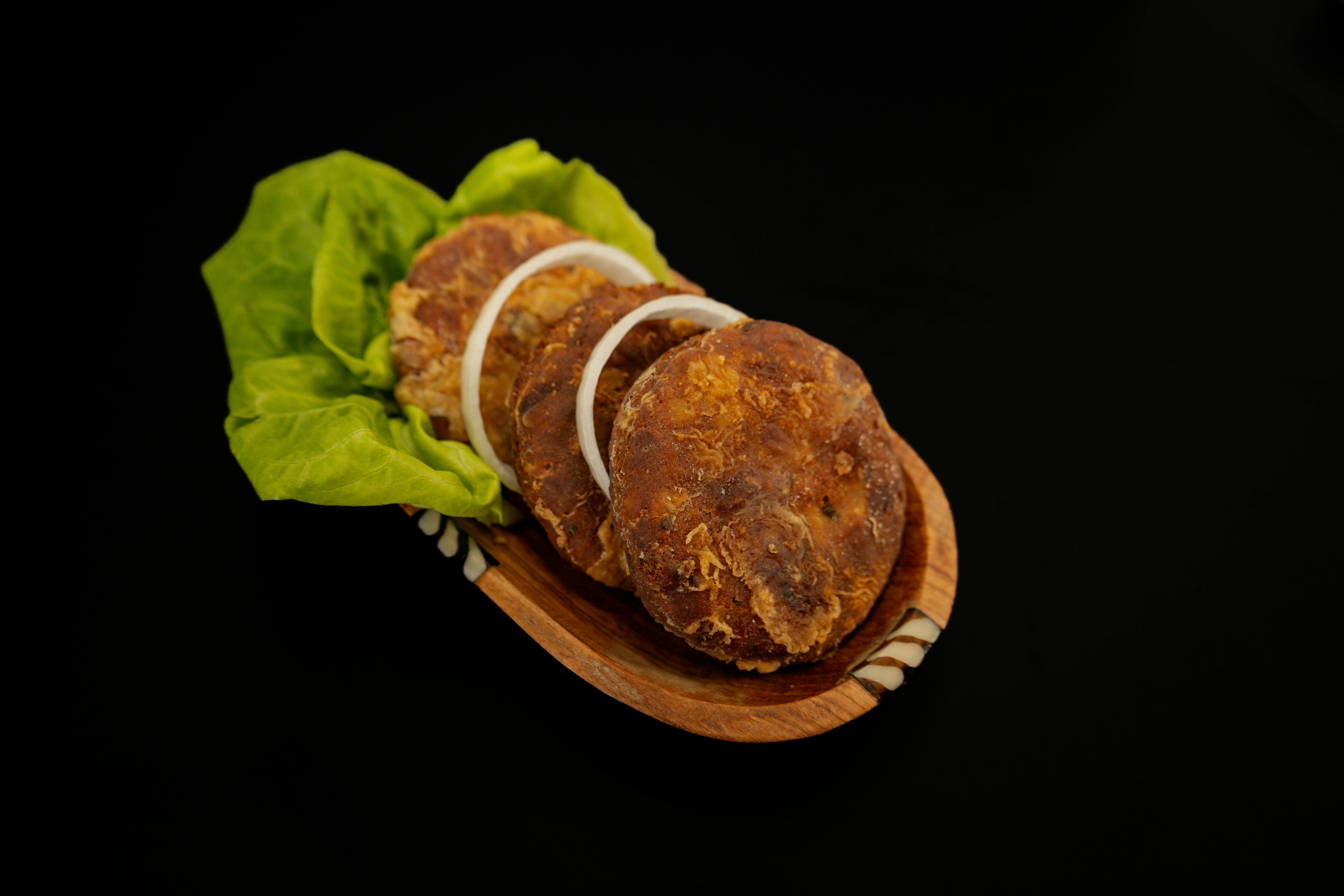
Photo: Evan Mahmud Shuvo / Pexels
The diets react (see scores below)
Common Ingredients
- potatoes
- garlic
- cumin
- parsley
- egg
- flour
- oil
- paprika
Specific recipes may vary.
Incompatible with 8 of 11 diets
Diet Ratings
Maakouda is a Moroccan potato fritter that is fundamentally incompatible with ketogenic eating. The two primary ingredients — potatoes and flour — are both high-carb foods that would blow through a full day's keto carb budget in a single serving. A medium potato alone contains roughly 30-35g net carbs, and the added flour for coating compounds this further. While the egg and oil are keto-friendly, and the spices (cumin, paprika, garlic, parsley) are negligible in carb content, they cannot offset the dominant carbohydrate load from the base ingredients. This dish would immediately disrupt ketosis and cannot be made keto-compatible without fundamentally changing its core ingredients.
Maakouda is a traditional Moroccan potato fritter that contains egg as a binding ingredient, which is an animal product excluded from the vegan diet. All other ingredients — potatoes, garlic, cumin, parsley, flour, oil, and paprika — are fully plant-based, making egg the sole disqualifying factor. A vegan version could easily be made by substituting the egg with a flax egg, aquafaba, or another plant-based binder.
Maakouda contains two clear paleo violations: flour (a grain-based product) and unspecified oil (likely a seed oil such as sunflower or vegetable oil, commonly used for deep-frying in Moroccan cooking). White potatoes are themselves debated in paleo, but the presence of wheat flour and seed oil makes this dish firmly non-compliant regardless of the potato debate. The remaining ingredients — garlic, cumin, parsley, egg, and paprika — are all paleo-approved, but the structural components of the dish (flour as a binder/coating and frying oil) disqualify it.
Maakouda is a Moroccan potato fritter made with whole-food, plant-based ingredients including potatoes, garlic, parsley, and spices — all consistent with Mediterranean principles. Egg and a small amount of flour are used as binders, which are acceptable in moderation. The main concern is the cooking method: traditional maakouda is deep-fried in oil, which adds significant calories and, depending on the oil used, may introduce less healthy fats. If fried in extra virgin olive oil or a quality vegetable oil the impact is reduced, but deep-frying is not the Mediterranean ideal compared to baking or pan-searing with minimal oil. The refined flour component is minor but slightly detracts from whole-grain principles. Overall, it's a snack built on wholesome ingredients but prepared in a way that places it in the moderation category rather than full approval.
Some Mediterranean diet interpretations, particularly those rooted in traditional North African and Moroccan culinary practice, view occasional deep-fried vegetable-based snacks as culturally authentic and acceptable, especially when olive oil is used; modern clinical guidelines, however, discourage deep-frying as a routine preparation method regardless of the oil used.
Maakouda is a Moroccan potato cake/fritter that is entirely plant-based and grain-based. The primary ingredient is potatoes (a plant carbohydrate), combined with garlic, cumin, parsley, flour, oil, and paprika — all plant-derived. While eggs appear in the ingredient list, they serve only as a binder in a dish that is overwhelmingly composed of excluded foods. There are no meaningful animal products here; this is essentially a fried starch patty seasoned with plant spices. Every core ingredient violates carnivore diet principles: potatoes are high-carb plant foods, flour is a grain, plant oils are excluded, and all spices and herbs are plant-derived. This dish has no place on a carnivore diet under any interpretation of the protocol.
Maakouda is a Moroccan potato fritter that contains flour (a grain-based ingredient excluded on Whole30) as a binding/coating agent. Flour is derived from wheat, which is explicitly excluded from the Whole30 program. Beyond the flour issue, Maakouda is a fritter — a fried patty or cake — which falls into the category of foods that 'recreate' comfort food/snack formats discouraged by the Whole30 spirit (similar to pancakes or hash brown patties made to mimic junk food). The remaining ingredients — potatoes, garlic, cumin, parsley, egg, oil, paprika — are all individually Whole30-compliant, but the inclusion of flour makes this dish non-compliant regardless.
Maakouda is a Moroccan potato cake/fritter that contains two significant high-FODMAP ingredients: garlic and wheat flour. Garlic is one of the highest-FODMAP foods tested by Monash University, containing very high levels of fructans even in tiny amounts (1/4 clove is already high-FODMAP). Wheat flour is also high in fructans and is a core avoid food during the elimination phase. While potatoes, cumin, parsley, egg, oil, and paprika are all low-FODMAP, the combination of garlic and wheat flour makes this dish unsuitable for the elimination phase at any standard serving size. The dish cannot be easily modified without fundamentally changing the recipe, as both problematic ingredients are structural and flavoring components.
Maakouda is a Moroccan fried potato patty made from mostly DASH-friendly whole-food ingredients (potatoes, garlic, parsley, spices). The individual components are largely acceptable: potatoes provide potassium and fiber, garlic and herbs are encouraged, and the spices (cumin, paprika) are fine. However, the dish is typically deep-fried in oil, which significantly increases total fat content and caloric density — a concern under DASH guidelines that limit total fat and emphasize heart-healthy preparation methods. The egg and flour are not problematic in moderation. The main DASH concern is the frying method rather than the ingredients themselves. If baked or pan-fried with minimal oil, this dish would score closer to 6-7. As typically prepared (deep-fried), it warrants caution due to elevated fat intake, though sodium is naturally low and there are no processed or high-sodium ingredients.
NIH DASH guidelines do not specifically address fried potato patties, but generally discourage high-fat preparation methods. Some updated DASH-oriented dietitians argue that when prepared with modest amounts of a healthy vegetable oil (e.g., olive oil) and not deep-fried, dishes like Maakouda can fit within DASH's allowance for vegetable oils and lean whole-food snacks — particularly given the potassium-rich potato base and absence of processed sodium.
Maakouda is a Moroccan potato fritter that poses significant challenges for Zone Diet compliance. The primary ingredient is potatoes, which Dr. Sears explicitly categorizes as an 'unfavorable' high-glycemic carbohydrate to be avoided in Zone eating — they spike insulin rapidly and are listed alongside white bread and rice as foods to eliminate. Flour adds another high-glycemic carbohydrate layer. The dish is deep-fried in oil (likely vegetable/seed oil), contributing unfavorable omega-6 fats rather than the preferred monounsaturated fats from olive oil. The macronutrient profile is severely imbalanced: overwhelmingly carbohydrate-dominant with negligible lean protein (the egg contributes minimally given the volume of potatoes and flour), and fat from frying is difficult to control. There is no meaningful lean protein source listed. As a snack, it would disrupt Zone block balance entirely — delivering a large glycemic load with no protein counterbalance to moderate insulin response. The combination of high-GI starch + fried oil + no lean protein makes this one of the harder foods to accommodate in any Zone framework.
Maakouda is a Moroccan potato fritter with a mixed anti-inflammatory profile. On the positive side, it contains several beneficial ingredients: garlic has well-documented anti-inflammatory properties (allicin), cumin provides anti-inflammatory compounds, parsley is rich in flavonoids and vitamin C, and paprika contributes antioxidant carotenoids. Potatoes, while starchy, are not inherently pro-inflammatory and contain vitamin C and potassium; they fall into a moderate category. Eggs add modest nutritional value (choline, selenium). The main concerns are the refined flour (refined carbohydrate with minimal fiber) and the frying oil — if fried in refined seed oils (sunflower, corn) as is common, this introduces high omega-6 fatty acids and potential oxidation products, which are pro-inflammatory. The frying method itself concentrates the oil content significantly. If cooked with olive oil or pan-fried minimally, the dish improves considerably. As a snack, portion size matters — occasional consumption is unlikely to cause meaningful inflammatory burden, but regular consumption as a deep-fried dish would be a concern.
Some anti-inflammatory practitioners would score this lower (toward 'avoid') due to the combination of refined flour and deep-frying in omega-6-rich seed oils, which is the typical preparation. Others following a more Mediterranean-aligned anti-inflammatory approach would note that the spice profile — garlic, cumin, paprika, parsley — is genuinely anti-inflammatory and that potatoes are not the villain they are sometimes portrayed to be, making occasional consumption acceptable.
Maakouda is a Moroccan fried potato cake — the standard preparation involves deep-frying battered potato patties in oil. The ingredient profile reveals multiple red flags for GLP-1 patients: potatoes provide mostly starch with minimal protein or fiber per serving, the flour coating adds refined carbohydrates, and deep-frying in oil dramatically increases fat content and caloric density. High-fat fried foods are among the worst triggers for GLP-1 medication side effects including nausea, bloating, and reflux, because fat further slows gastric emptying on top of the medication's existing effect. The egg contributes a small amount of protein but not enough to meaningfully offset the dish's nutritional weaknesses. As a snack, it offers poor nutrient density per calorie — primarily refined starch and fat with negligible protein and fiber. Even a small portion delivers a poor nutritional return for GLP-1 patients who have limited appetite and must prioritize every bite.
*See how scores were generated at our methodology page.
Nutritional profile
Six traits that cut across every diet.
Fiber & Plants
How much whole-plant food and fiber it delivers.
Healthy Fats
The quality of its fats (unsaturated, omega-3).
Whole / Unprocessed
How close it is to its natural, unprocessed form.
Gut Gentle
How easy it is on digestion (low FODMAP, few irritants).
Low Glycemic
How little it spikes your blood sugar.
Protein Density
How much protein it packs per calorie.
Controversy Index
Higher controversy = more disagreement between diets.
Diet-Specific Tips
 Mediterranean — 5/10
View tips
- Potato base is a whole plant food but starchy and moderate on the glycemic index
- Deep-frying method significantly increases fat and calorie content
- Egg and flour are minor ingredients, acceptable in moderation
- Garlic, parsley, cumin, and paprika are Mediterranean-approved aromatics and spices
- No red meat, processed ingredients, or added sugars
- Oil type and frying method are the primary determinants of healthfulness
 DASH — 5/10
View tips
- Typically deep-fried, significantly increasing total fat content
- Potatoes provide potassium and fiber — a DASH-positive base
- No high-sodium processed ingredients; naturally low sodium
- Egg and flour are acceptable in moderation under DASH
- Garlic, parsley, cumin, and paprika are DASH-friendly herbs and spices
- Preparation method (frying vs. baking) is the primary determinant of DASH compatibility
- Portion control important as a snack given caloric density when fried
 Anti-Inflammatory — 5/10
View tips
- Garlic, cumin, paprika, and parsley provide meaningful anti-inflammatory polyphenols and antioxidants
- Frying oil type is critical — refined seed oils (sunflower/corn) would shift this toward avoid; olive oil improves the profile
- Refined white flour contributes refined carbohydrates with low fiber and glycemic concern
- Potatoes are starchy but not inherently inflammatory; they supply vitamin C and potassium
- Deep-frying method increases total fat content and potential for oxidized lipids
- No omega-3 sources; overall fatty acid profile is unbalanced unless olive oil is used
- Eggs provide modest nutritional benefit without significant inflammatory concern