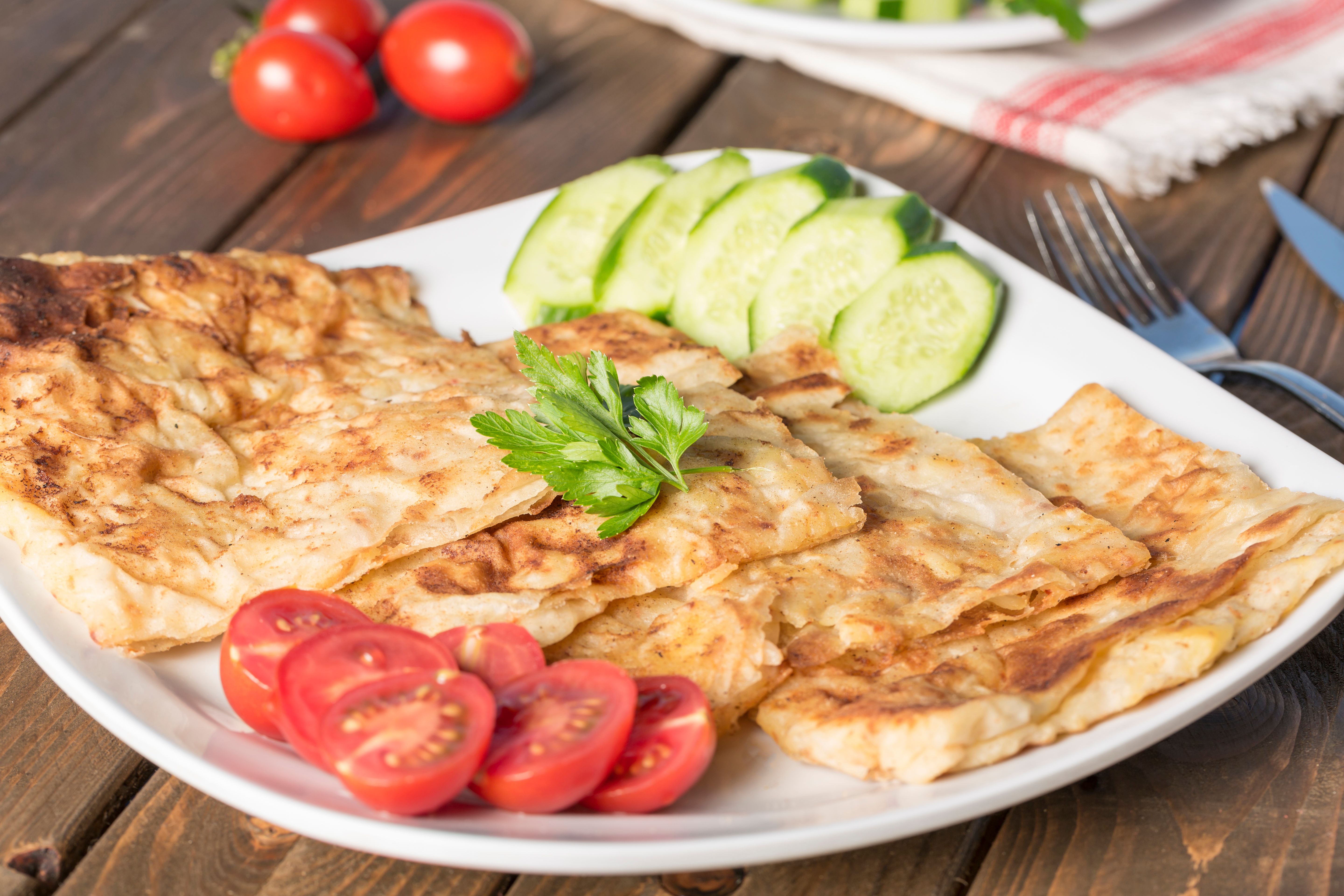
The diets react (see scores below)
Common Ingredients
- flour
- semolina
- water
- butter
- oil
- salt
- yeast
Specific recipes may vary.
Incompatible with 9 of 11 diets
Diet Ratings
Msemen is a Moroccan flatbread made primarily from wheat flour and semolina, both of which are high-carbohydrate grains. A single piece of msemen contains roughly 30-40g of net carbs, which alone can exceed or nearly exhaust the entire daily carb budget on a ketogenic diet. The presence of butter and oil does not offset the overwhelming carbohydrate load from the grains. This food is fundamentally incompatible with ketosis.
Msemen as listed contains butter, which is a dairy product derived from cow's milk and therefore not vegan. All other ingredients (flour, semolina, water, oil, salt, yeast) are fully plant-based. The dish itself is disqualified solely by the inclusion of butter. A vegan version of msemen is achievable by substituting butter with a plant-based alternative such as vegan margarine or additional vegetable oil, which is a common adaptation.
Msemen is a Moroccan flatbread made almost entirely from non-paleo ingredients. Flour and semolina are both wheat-based grains, which are explicitly excluded from the paleo diet due to their gluten content, anti-nutrients (phytates, lectins), and absence from the Paleolithic diet. Yeast and added salt are also non-paleo. The butter and oil used are the only ingredients that approach paleo-acceptability, but they are entirely overshadowed by the grain-heavy base. This dish has no paleo-compliant adaptation without a complete ingredient overhaul.
Msemen is a traditional Moroccan flatbread made primarily from refined white flour and semolina, with butter as a key fat. From a Mediterranean diet perspective, this is problematic on two fronts: (1) refined grains (white flour, refined semolina) are discouraged in favor of whole grains, and (2) butter rather than extra virgin olive oil is the primary fat used. The combination of refined carbohydrates and saturated fat from butter places this firmly outside Mediterranean diet principles. While oil is also listed as an ingredient, butter dominates the fat profile and texture of this bread. As a breakfast staple eaten regularly, it would contribute significantly to refined grain and saturated fat intake.
Some Mediterranean diet interpretations acknowledge traditional North African and Levantine breads as culturally integral to the diet pattern, noting that semolina has a lower glycemic index than plain white flour and that moderate consumption within an otherwise plant-rich dietary pattern may be acceptable. Traditional Moroccan dietary practice often pairs msemen with olive oil and honey, and regional authenticity is sometimes weighted alongside nutritional purity in broader Mediterranean diet frameworks.
Msemen is a Moroccan flatbread made entirely from plant-derived ingredients: flour, semolina, water, yeast, and plant oil. While butter is included, it is a minor component in an otherwise fully grain-based dish. The primary ingredients — flour, semolina, and yeast — are all grains or grain derivatives, which are strictly excluded on the carnivore diet. Grains are among the most clearly prohibited foods across all carnivore protocols, representing exactly the type of processed carbohydrate the diet eliminates. There is no meaningful animal-derived protein or fat base here.
Msemen is a Moroccan flatbread made primarily from flour and semolina, both of which are wheat-based grains explicitly excluded on the Whole30. Additionally, even if the ingredients were compliant, msemen is a flatbread/wrap-style item that falls squarely into the 'no recreating baked goods' rule — specifically listed under tortillas, wraps, and similar items that violate the spirit of the program. The dish fails on two independent counts: excluded grain ingredients and prohibited food-form category.
Msemen is a traditional Moroccan flatbread made primarily from wheat flour and semolina, both of which are high in fructans — a key FODMAP that must be restricted during the elimination phase. Unlike sourdough breads where long fermentation can degrade fructans, msemen uses a relatively short yeast-leavened process that does not meaningfully reduce fructan content. The remaining ingredients (water, butter, oil, salt) are all low-FODMAP, but the wheat flour and semolina are the dominant components and render the dish high-FODMAP at any standard serving size. Semolina is durum wheat, which is equally problematic for fructan load. A standard serving of msemen (one piece, ~100-150g) would deliver a significant fructan dose well above safe elimination phase thresholds.
Msemen is a Moroccan flatbread made from refined wheat flour and semolina, cooked with butter and oil. From a DASH perspective, it presents several concerns: (1) It uses refined (white) flour rather than whole grains, missing the fiber, potassium, and magnesium benefits DASH emphasizes. (2) Butter contributes saturated fat, which DASH explicitly limits. (3) Salt is added during preparation, contributing to sodium load. (4) It offers no significant potassium, calcium, or magnesium. On the positive side, it is not heavily processed, contains no added sugar, and the vegetable oil component is DASH-compatible. The total saturated fat and sodium content depend heavily on preparation ratios — home-made versions with moderate butter and salt are more acceptable than heavily buttered versions. It can be tolerated occasionally in small portions but is not a DASH-emphasized food.
NIH DASH guidelines emphasize whole grains over refined grains and limit saturated fat from butter; however, some DASH-aligned clinicians note that traditional flatbreads like msemen, when made with modest amounts of fat and consumed in controlled portions, can fit within a flexible DASH pattern — particularly if paired with DASH-positive toppings like olive oil, honey in small amounts, or vegetables.
Msemen is a Moroccan flatbread made almost entirely of refined wheat flour and semolina — both high-glycemic carbohydrates with virtually no fiber to offset their impact. It contains no meaningful protein source, making it impossible to construct a Zone-balanced meal from this food alone. The fat content comes from butter (saturated) and oil, which are not inherently disqualifying, but without protein and with an overwhelmingly high-glycemic carbohydrate base, this dish fundamentally breaks the 40/30/30 ratio in a way that is very difficult to correct even with portion control. Zone Diet methodology classifies refined grain products like white flour flatbreads as 'unfavorable' carbohydrates — they raise insulin rapidly and provide no polyphenol or anti-inflammatory benefit. Even a small portion delivers a disproportionate carbohydrate load with no accompanying protein block. While technically one could eat a tiny sliver alongside lean protein and vegetables, the food as typically consumed offers essentially zero Zone compatibility.
Msemen is a Moroccan flatbread made from refined white flour and semolina — both refined carbohydrates with a high glycemic index that can promote inflammatory pathways (elevated blood glucose, insulin spikes, increased CRP) when consumed regularly. Butter adds saturated fat, which in excess is associated with pro-inflammatory signaling. The oil used is typically a neutral vegetable oil (often sunflower or corn), which is high in omega-6 fatty acids — a concern under anti-inflammatory principles. There are no meaningful anti-inflammatory components in this dish: no fiber-rich whole grains, no omega-3s, no antioxidants, no polyphenols, no herbs or spices. Semolina does offer slightly more protein and a marginally lower glycemic response than plain white flour, which is a modest positive. Occasional consumption is not a significant concern, but msemen is not compatible with a diet emphasizing anti-inflammatory foods. It falls squarely in the 'caution' category as a refined-grain, saturated-fat-containing food with no meaningful anti-inflammatory offset.
Msemen is a Moroccan flatbread made from refined wheat flour and semolina, cooked with butter and oil. It is essentially a refined-carbohydrate, high-fat bread with virtually no protein, minimal fiber, and significant saturated fat from butter. For GLP-1 patients, this is a poor nutritional choice: it offers empty calories with no protein to protect muscle mass, no meaningful fiber to support digestion or blood sugar stability, and the fat content (particularly saturated fat from butter) can worsen GLP-1 side effects including nausea, bloating, and reflux due to slowed gastric emptying. The layered, oily texture means fat is distributed throughout, not just on the surface. A standard serving provides little nutritional value per calorie, directly contradicting the core requirement that every calorie count during reduced-appetite eating.
*See how scores were generated at our methodology page.
Nutritional profile
Six traits that cut across every diet.
Fiber & Plants
How much whole-plant food and fiber it delivers.
Healthy Fats
The quality of its fats (unsaturated, omega-3).
Whole / Unprocessed
How close it is to its natural, unprocessed form.
Gut Gentle
How easy it is on digestion (low FODMAP, few irritants).
Low Glycemic
How little it spikes your blood sugar.
Protein Density
How much protein it packs per calorie.
Controversy Index
Higher controversy = more disagreement between diets.
Diet-Specific Tips
 DASH — 4/10
View tips
- Refined flour rather than whole grain — misses fiber, magnesium, and potassium targets
- Butter contributes saturated fat, which DASH limits
- Added salt increases sodium load per serving
- No significant micronutrients emphasized by DASH (potassium, calcium, magnesium)
- Vegetable oil component is DASH-compatible
- No added sugar or heavily processed ingredients
- Portion control and preparation method (butter quantity, salt) significantly affect DASH compatibility
 Anti-Inflammatory — 4/10
View tips
- Refined white flour and semolina are high-glycemic refined carbohydrates linked to pro-inflammatory blood sugar spikes
- Butter contributes saturated fat, which is categorized as 'limit' under anti-inflammatory guidelines
- Oil (typically sunflower or corn) is high in omega-6 fatty acids, which anti-inflammatory protocols recommend avoiding regularly
- No anti-inflammatory ingredients present — no fiber, no omega-3s, no antioxidants, no polyphenols
- Semolina provides a marginally better glycemic profile than pure white flour, offering a slight positive
- Acceptable occasionally but not compatible with regular anti-inflammatory eating patterns