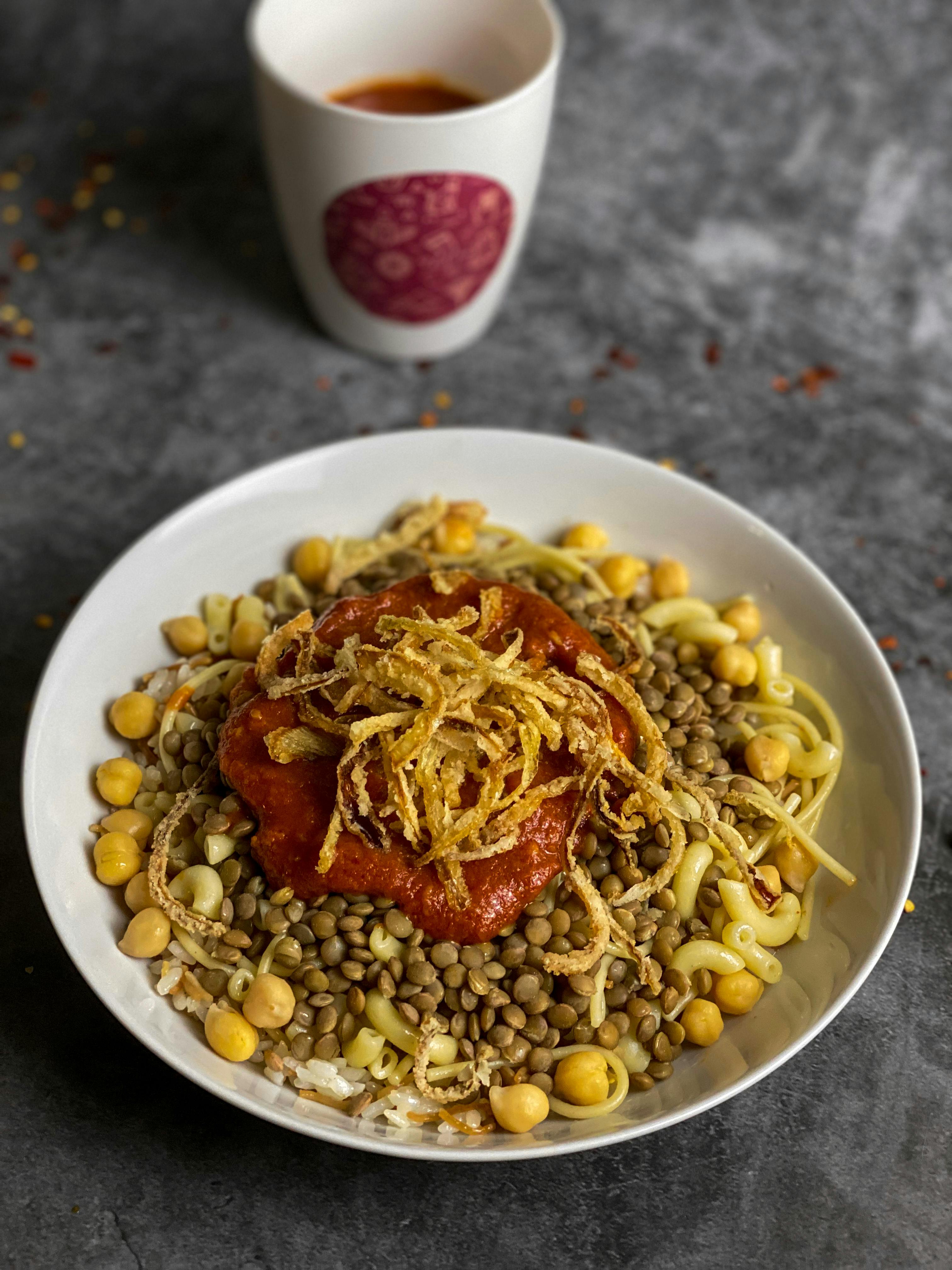
Photo: MADEINEGYPT.CA / Pexels
The diets react (see scores below)
Common Ingredients
- chicken
- msemen
- lentils
- onion
- fenugreek
- saffron
- ras el hanout
- olive oil
Specific recipes may vary.
Incompatible with 6 of 11 diets
Diet Ratings
Rfissa is fundamentally incompatible with a ketogenic diet due to two core high-carb ingredients: msemen (a Moroccan flatbread made from semolina/flour) and lentils. Msemen is a grain-based bread with extremely high net carbs, directly violating keto's zero-tolerance rule for grains. Lentils, while nutritious, are a legume with roughly 12-15g net carbs per 100g cooked serving, making them a significant carb source. Together, these two ingredients alone can easily push a single serving well beyond the entire daily 20-50g net carb limit. The remaining ingredients — chicken, onion, olive oil, and spices — are individually keto-friendly, but they cannot offset the carbohydrate load of the msemen and lentils. The dish cannot be modified while remaining authentic; removing both staple ingredients would fundamentally alter the dish beyond recognition.
Rfissa is a traditional Moroccan dish centered on chicken as its primary protein, which is an animal product and therefore incompatible with a vegan diet. While several other ingredients — lentils, onion, fenugreek, saffron, ras el hanout, and olive oil — are fully plant-based, the inclusion of chicken is an absolute disqualifier. Msemen (Moroccan flatbread) is also traditionally made with flour, semolina, butter, and sometimes eggs, adding further non-vegan ingredients. There is no meaningful debate within the vegan community about poultry being non-vegan.
Rfissa contains two major non-paleo ingredients that disqualify it entirely: msemen (a Moroccan flatbread made from wheat flour — a grain) and lentils (a legume). Both are explicitly excluded under paleo rules with high consensus. The remaining ingredients — chicken, onion, saffron, ras el hanout, and olive oil — are all paleo-approved, and fenugreek (a seed/herb used as a spice) is generally acceptable. However, the foundational structure of this dish relies on msemen as its base and lentils as a core component, making it incompatible with a paleo diet regardless of the quality of the other ingredients.
Rfissa is a traditional Moroccan celebration dish that aligns reasonably well with Mediterranean diet principles but has some nuances. The dish features chicken (a Mediterranean-approved protein), lentils (an excellent plant-based legume staple), onion, and olive oil — all core Mediterranean foods. The spices (saffron, ras el hanout, fenugreek) are beneficial and anti-inflammatory. The main concern is msemen, a pan-fried Moroccan flatbread made from refined white flour, which falls into the refined grains category discouraged by modern Mediterranean diet guidelines. However, the lentil content is substantial and the overall dish is minimally processed and whole-food-based. Chicken as a primary protein fits in the moderate/acceptable category. The dish is not a staple Mediterranean food but reflects the broader North African Mediterranean culinary tradition.
Some Mediterranean diet scholars include Moroccan cuisine within the broader Mediterranean food culture, arguing that traditional dishes like Rfissa — with their emphasis on legumes, spices, and olive oil — reflect authentic regional practices. Modern clinical guidelines, however, would flag the refined msemen and suggest substituting whole grain bread or reducing its proportion.
Rfissa is fundamentally incompatible with the carnivore diet. While chicken is an acceptable animal protein, the dish is dominated by multiple plant-based ingredients that are strictly excluded: msemen (a flatbread made from wheat flour), lentils (a legume), onion (a vegetable), fenugreek (a seed/spice), saffron (a plant spice), ras el hanout (a spice blend of entirely plant origin), and olive oil (a plant-derived oil). The majority of the dish's ingredients and caloric content come from plant sources, making this a clear avoid regardless of the animal protein present.
Rfissa contains two clearly excluded ingredients: msemen (a Moroccan flatbread/crepe made from wheat flour, which is both a grain product and falls under the 'no recreating baked goods/bread' rule) and lentils (a legume explicitly excluded from Whole30). Either of these alone would disqualify the dish. Chicken, onion, fenugreek, saffron, ras el hanout, and olive oil are all compliant, but the foundational components of this traditional dish cannot be made Whole30-compatible without fundamentally changing what the dish is.
Rfissa contains multiple high-FODMAP ingredients that make it unsuitable during the elimination phase. Msemen is a traditional Moroccan flatbread made from wheat flour, which is high in fructans — a major FODMAP. Lentils are high in GOS (galacto-oligosaccharides) and are high-FODMAP at standard serving sizes (though canned/drained lentils are slightly lower, they still pose a risk at typical dish portions). Onion is one of the highest-FODMAP foods known, rich in fructans, and is a foundational ingredient in this dish. Fenugreek seeds also contain significant GOS and fructans and are high-FODMAP. The combination of these four problematic ingredients — wheat-based msemen, lentils, onion, and fenugreek — makes this dish a definitive avoid during the elimination phase. The remaining ingredients (chicken, saffron, ras el hanout in small amounts, olive oil) are generally low-FODMAP, but they cannot offset the multiple high-FODMAP components.
Rfissa is a Moroccan dish combining chicken, lentils, msemen (a layered semolina flatbread), onions, and spices including fenugreek, saffron, and ras el hanout, cooked in olive oil. Several components align well with DASH principles: chicken is lean protein, lentils are an excellent DASH food (high in fiber, potassium, and plant protein), onions are a DASH-friendly vegetable, olive oil is an approved vegetable oil, and the spices contribute negligible sodium while adding flavor. Fenugreek and saffron have no adverse DASH implications. The main concern is msemen, a refined-flour flatbread that is typically layered with butter or oil during preparation, contributing saturated fat and refined carbohydrates — neither of which is emphasized in DASH. Msemen also lacks the fiber of whole grains that DASH prioritizes. Ras el hanout is a spice blend that occasionally contains added salt in commercial preparations, which could raise sodium content. The dish is not inherently high-sodium or high in saturated fat if prepared carefully, but the refined flatbread component and potential fat content from msemen preparation prevent a full approval. Portion control — particularly of msemen — and using minimal butter or oil in its preparation would improve DASH compatibility.
NIH DASH guidelines emphasize whole grains over refined flours and limit saturated fat, which places msemen (butter-layered refined flatbread) in a less favorable position. However, updated clinical interpretations note that the overall dietary pattern matters more than individual components — the lentils, lean chicken, and olive oil in Rfissa contribute strong DASH-positive nutrients, and some DASH practitioners would consider this dish acceptable in moderation if msemen portions are controlled and prepared with minimal butter.
Rfissa is a traditional Moroccan dish with a mixed Zone profile. The chicken provides excellent lean protein aligned with Zone principles, and olive oil is an ideal monounsaturated fat source. Lentils are a Zone-favorable carbohydrate — low glycemic, high fiber, and protein-contributing. The spices (saffron, ras el hanout, fenugreek) are polyphenol-rich and anti-inflammatory, which aligns well with Dr. Sears' later emphasis on omega-3s and polyphenols. The major Zone challenge is the msemen (Moroccan layered flatbread), a refined wheat bread that is high-glycemic and carbohydrate-dense, making it an 'unfavorable' carb in Zone terminology. The dish as traditionally served would be heavily skewed toward carbohydrates from the msemen, disrupting the 40/30/30 block ratio significantly. With careful portioning — reducing the msemen portion substantially, emphasizing the lentil and chicken components, and keeping olive oil portions controlled — the dish can be partially adapted to Zone ratios, but it requires significant modification from traditional serving sizes.
Some Zone practitioners following Sears' later writings (particularly 'The Zone Diet' updates emphasizing anti-inflammatory foods) might rate this more favorably, noting that lentils are among the most Zone-favorable carb sources, chicken is ideal lean protein, and the polyphenol-rich spice blend actively supports the anti-inflammatory goals of the diet. If msemen is reduced to a single small piece as a garnish rather than a base, the dish's macro profile becomes much more Zone-compatible. The lentil-forward version of this dish could approach Zone ratios more closely than a typical Western meal.
Rfissa is a traditional Moroccan dish with a notably favorable anti-inflammatory profile overall. Chicken (lean poultry) is classified as 'moderate' — acceptable and not pro-inflammatory. Lentils are an anti-inflammatory star: high in fiber, polyphenols, and plant protein, associated with reduced CRP and IL-6. Onions contribute quercetin and other flavonoids with well-documented anti-inflammatory effects. The spice profile is exceptional: fenugreek contains diosgenin and saponins with anti-inflammatory and antioxidant properties; saffron contains crocin and safranal, among the most potent anti-inflammatory compounds in culinary spices; ras el hanout typically blends turmeric, ginger, cinnamon, cumin, and other spices, making it a concentrated source of anti-inflammatory phytochemicals. Olive oil (ideally extra virgin) is a cornerstone of anti-inflammatory eating due to oleocanthal. The main limiting factor is msemen, a layered flatbread made from refined white flour, which contributes refined carbohydrates that are considered mildly pro-inflammatory. However, msemen is used more as a vehicle (often broken or soaked into the broth) rather than consumed in large quantities relative to the other ingredients, and its presence is offset by the strong anti-inflammatory components. On balance, the dish merits approval, though the refined grain base tempers the score somewhat.
Some stricter anti-inflammatory protocols (e.g., AIP or grain-free approaches advocated by practitioners like Dr. Tom O'Bryan) would flag msemen's refined wheat flour as meaningfully inflammatory due to gluten content and refined carbohydrates, potentially downgrading this dish to 'caution.' Mainstream anti-inflammatory guidance (including Dr. Weil's framework) is less rigid about whole-meal wheat preparations and focuses more on overall dietary patterns, which remain favorable here.
Rfissa is a nutrient-dense Moroccan dish with a solid GLP-1-compatible foundation — chicken provides lean protein, lentils add both protein and fiber, and olive oil represents a preferred unsaturated fat. Fenugreek is a bonus, as it supports blood sugar regulation and digestion. However, the dish is anchored by msemen, a rich, layered Moroccan flatbread made with semolina and butter or oil, which introduces refined carbohydrates and saturated fat. Msemen is also dense and heavy, which can worsen GLP-1-related bloating and slow gastric emptying further. Ras el hanout is a complex spice blend that varies widely — some versions are mild and well-tolerated, others are moderately spicy and may trigger reflux or nausea in sensitive patients. The dish is typically served as a rich braise with significant olive oil, so fat per serving can be moderate to high depending on preparation. The chicken and lentil base would rate as approvable on their own; the msemen component pulls the score into caution territory. Portion sensitivity is high — a small serving centered on the protein and lentil components is preferable to a full traditional serving.
Some GLP-1-focused dietitians would rate this more favorably, emphasizing the lentil-and-chicken base as genuinely high in protein and fiber with meaningful blood sugar benefits; the concern centers specifically on how much msemen is consumed and how oily the braise is, which varies by preparation. Others would rate it lower if the patient is in an early GLP-1 dose-escalation phase when GI sensitivity is highest, as the spice complexity and fat load may be poorly tolerated even in moderate portions.
*See how scores were generated at our methodology page.
Nutritional profile
Six traits that cut across every diet.
Fiber & Plants
How much whole-plant food and fiber it delivers.
Healthy Fats
The quality of its fats (unsaturated, omega-3).
Whole / Unprocessed
How close it is to its natural, unprocessed form.
Gut Gentle
How easy it is on digestion (low FODMAP, few irritants).
Low Glycemic
How little it spikes your blood sugar.
Protein Density
How much protein it packs per calorie.
Controversy Index
Higher controversy = more disagreement between diets.
Diet-Specific Tips
 Mediterranean — 6/10
View tips
- Chicken is an acceptable moderate protein source per Mediterranean guidelines
- Lentils are an excellent plant-based legume, strongly encouraged
- Olive oil as the cooking fat aligns perfectly with Mediterranean principles
- Msemen is made from refined white flour, a refined grain discouraged by modern Mediterranean diet guidelines
- Rich anti-inflammatory spice profile (saffron, fenugreek, ras el hanout) is beneficial
- Overall dish is minimally processed and whole-food-based
- Moroccan cuisine sits within the broader North African Mediterranean culinary tradition
 DASH — 5/10
View tips
- Lentils are a DASH-approved legume high in fiber, potassium, and plant protein
- Chicken is lean protein consistent with DASH recommendations
- Olive oil is a DASH-approved vegetable oil
- Msemen is a refined-flour flatbread typically prepared with butter or oil, contributing saturated fat and lacking whole-grain fiber
- Ras el hanout in commercial blends may contain added sodium — homemade or low-sodium versions preferred
- Saffron, fenugreek, and onion are DASH-compatible ingredients
- Overall dish sodium is moderate if no added salt beyond spices, but preparation style affects final assessment
 Zone — 5/10
View tips
- Msemen (refined wheat flatbread) is a high-glycemic 'unfavorable' carb that dominates the carbohydrate load
- Chicken provides ideal lean Zone protein (~25g per serving readily achievable)
- Lentils are a Zone-favorable low-glycemic, high-fiber carbohydrate source
- Olive oil aligns perfectly with Zone monounsaturated fat guidelines
- Saffron, fenugreek, and ras el hanout provide polyphenols supporting anti-inflammatory Zone goals
- Traditional serving ratios are carbohydrate-heavy due to msemen base, requiring significant portion adjustment
- Dish is adaptable to Zone with portion control but not Zone-friendly as traditionally served
 Anti-Inflammatory — 7/10
View tips
- Lentils: high-fiber legume with strong anti-inflammatory and antioxidant properties
- Saffron: contains crocin and safranal, potent anti-inflammatory phytochemicals
- Fenugreek: diosgenin and saponins shown to reduce inflammatory markers
- Ras el hanout: concentrated blend of anti-inflammatory spices (turmeric, ginger, cinnamon, cumin)
- Olive oil: oleocanthal and monounsaturated fats support anti-inflammatory response
- Onions: rich in quercetin and other flavonoids
- Chicken: lean poultry — moderate/acceptable protein source
- Msemen (refined wheat flatbread): pro-inflammatory refined carbohydrates, partially offset by other ingredients
 GLP-1 Friendly — 6/10
View tips
- Chicken provides lean, high-quality protein — positive
- Lentils add meaningful fiber and plant protein — positive
- Msemen is a refined, butter-enriched flatbread — negative for fat and digestibility
- Olive oil is the preferred fat source but total fat per serving may be high — moderate concern
- Fenugreek supports digestion and blood sugar regulation — positive
- Ras el hanout spice complexity may trigger reflux or nausea in sensitive patients — moderate concern
- Dish is portion-sensitive — small servings focused on chicken and lentils are preferable
- Heavy braise texture may worsen GLP-1-related bloating and delayed gastric emptying