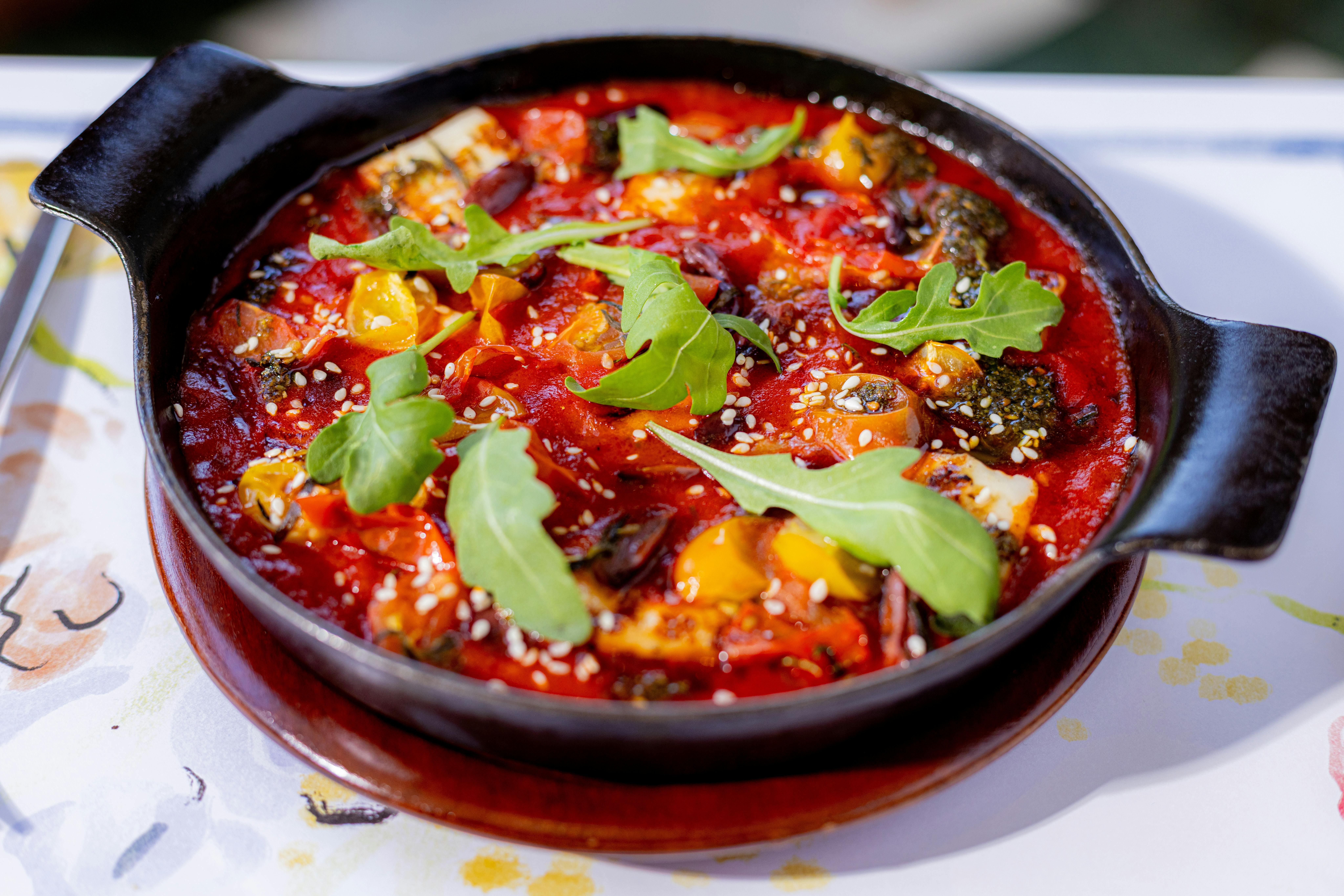
Photo: Anthony Rahayel / Pexels
The diets react (see scores below)
Common Ingredients
- green peppers
- tomato
- garlic
- olive oil
- paprika
- cumin
- cilantro
Specific recipes may vary.
Incompatible with 2 of 11 diets
Diet Ratings
Taktouka is a cooked Moroccan salad of roasted green peppers and tomatoes with olive oil and spices. The main carb contributors are tomatoes and green peppers. A standard serving (roughly 150-200g) contains approximately 8-12g net carbs, primarily from tomatoes which are higher in natural sugars than most keto-friendly vegetables. Green peppers are relatively low carb (~3g net per 100g). The olive oil base is keto-friendly and adds beneficial fats. The dish can fit keto in moderate portions, but the tomato content makes it portion-sensitive — a generous serving could push a significant fraction of the daily carb allowance. Spices and garlic add negligible carbs. Overall, it is consumable with portion awareness but not a freely eaten keto staple.
Some strict keto practitioners flag cooked tomatoes specifically, as cooking concentrates their natural sugars and increases the glycemic impact compared to raw tomatoes; these adherents would recommend limiting or avoiding tomato-heavy dishes entirely regardless of portion size.
Taktouka is a traditional Moroccan cooked salad made entirely from whole plant foods. Every ingredient — green peppers, tomatoes, garlic, olive oil, paprika, cumin, and cilantro — is fully plant-derived with no animal products or animal-derived additives. The dish is minimally processed, relying on fresh vegetables and spices, which places it at the high end of the approval range under both standard vegan and whole-food plant-based criteria. Olive oil is the only processed component, but it is universally accepted in vegan diets.
Taktouka is a Moroccan cooked salad made entirely from whole, unprocessed ingredients that align well with Paleolithic eating principles. Green peppers and tomatoes are non-starchy vegetables, garlic is a natural allium, olive oil is a paleo-approved fat, and paprika, cumin, and cilantro are natural herbs and spices available in unprocessed form. There are no grains, legumes, dairy, refined sugars, seed oils, or processed additives present. This dish is essentially a slow-cooked vegetable preparation with clean seasonings — a strong paleo-compatible choice.
Taktouka is an exemplary Mediterranean dish. It consists entirely of plant-based whole foods — green peppers, tomatoes, garlic — cooked in extra virgin olive oil and seasoned with spices. Every single ingredient aligns perfectly with Mediterranean diet principles. Vegetables form the base, olive oil is the primary fat, and aromatic spices replace processed condiments. This Moroccan cooked salad is precisely the kind of vegetable-forward preparation the Mediterranean diet emphasizes eating multiple times daily.
Taktouka is entirely plant-based with zero animal-derived ingredients. It consists of green peppers, tomatoes, garlic, olive oil, paprika, cumin, and cilantro — all of which are explicitly excluded from the carnivore diet. There is no protein source, no animal fat, and no animal product of any kind. This dish is incompatible with even the most liberal interpretations of carnivore eating.
Taktouka is a Moroccan cooked salad made entirely from whole, unprocessed, Whole30-compliant ingredients. Green peppers, tomatoes, garlic, and cilantro are all fresh vegetables and herbs explicitly allowed on the program. Olive oil is a natural fat that is fully compliant. Paprika and cumin are straightforward spices with no excluded additives in their standard forms. There are no grains, legumes, dairy, added sugars, alcohol, or any other excluded ingredients in this dish. It is a simple, whole-food vegetable side dish that aligns perfectly with the spirit and letter of the Whole30 program.
Taktouka contains garlic as a primary ingredient, which is one of the highest-FODMAP foods tested by Monash University due to its very high fructan content. Even small amounts of garlic cloves are high-FODMAP and must be avoided during the elimination phase. This single ingredient is disqualifying. Green peppers (capsicum) are low-FODMAP in standard servings (~52g). Tomatoes are low-FODMAP at typical servings (1 medium/75g), though excess amounts can be moderate. Olive oil, paprika, cumin, and cilantro are all low-FODMAP. However, garlic cannot be removed or substituted without fundamentally changing the dish — it is a structural flavor component in taktouka. The dish cannot be approved in its traditional form.
Taktouka is a Moroccan cooked salad made entirely from DASH-friendly ingredients. Green peppers and tomatoes are non-starchy vegetables rich in potassium, magnesium, vitamin C, and fiber — core DASH foods. Garlic is a heart-healthy aromatic with no sodium concerns. Olive oil is a DASH-approved unsaturated fat (vegetable oil), used in moderate amounts typical of this dish. Paprika, cumin, and cilantro are sodium-free spices and herbs that align perfectly with the DASH strategy of flavoring food without salt. The dish contains no added sodium, no saturated fat, no added sugar, and no processed ingredients. It is naturally low in calories and high in DASH-priority micronutrients.
Taktouka is a Moroccan cooked salad made from green peppers, tomatoes, garlic, olive oil, and spices — an excellent combination of Zone-favorable ingredients. Green peppers and tomatoes are low-glycemic vegetables with high polyphenol content, strongly aligned with Sears' emphasis on colorful vegetables and anti-inflammatory eating. Olive oil is the gold standard Zone fat source, providing monounsaturated fatty acids. Garlic adds additional polyphenol benefit. The spices (paprika, cumin, cilantro) contribute anti-inflammatory compounds with negligible macronutrient impact. As a side dish with no protein, it functions well as the carbohydrate and fat component of a Zone meal, easily paired with a lean protein source (e.g., grilled fish or chicken) to complete the 40/30/30 ratio. The main consideration is portion control of olive oil to stay within the 1-2 fat blocks (1.5–3g fat per block) appropriate for a meal. The vegetable base is low enough in net carbs that a generous serving fits within 1-2 carb blocks easily.
Taktouka is a Moroccan cooked salad featuring roasted or sautéed green peppers and tomatoes with garlic, olive oil, and spices. Nearly every ingredient earns high marks on an anti-inflammatory diet. Tomatoes provide lycopene (a potent carotenoid antioxidant), especially when cooked, as heat increases lycopene bioavailability. Green peppers supply vitamin C and flavonoids. Garlic contains allicin and organosulfur compounds with well-documented anti-inflammatory and immune-modulating effects. Extra virgin olive oil delivers oleocanthal, a natural COX inhibitor with ibuprofen-like anti-inflammatory action, and is a cornerstone of anti-inflammatory eating. Paprika and cumin both contain antioxidant polyphenols and have anti-inflammatory properties in the research literature. Cilantro contributes additional antioxidants. The dish is plant-forward, high in antioxidants and polyphenols, uses a healthy fat base, and contains zero refined carbohydrates, added sugars, or processed ingredients. The only reason confidence is 'medium' rather than 'high' is that green peppers are nightshades, and a meaningful minority camp (AIP, autoimmune protocol advocates) flags nightshades as potentially inflammatory for individuals with autoimmune conditions due to alkaloids like solanine and lectins.
Mainstream anti-inflammatory nutrition (including Dr. Weil's pyramid) strongly endorses tomatoes and peppers for their high antioxidant and lycopene content. However, AIP (Autoimmune Protocol) and practitioners like Dr. Tom O'Bryan exclude all nightshades — including tomatoes and peppers — on the grounds that solanine and other alkaloids may increase intestinal permeability and trigger inflammatory responses in genetically susceptible individuals with autoimmune conditions.
Taktouka is a Moroccan cooked salad of green peppers and tomatoes sautéed with garlic, olive oil, and spices. Its strengths are meaningful: it is vegetable-forward with high water content supporting hydration, contains fiber from peppers and tomatoes, uses heart-healthy olive oil (an unsaturated fat), and is easy to digest when cooked soft. The spices — paprika and cumin — are generally well tolerated at typical culinary doses. However, Taktouka scores as caution rather than approve for GLP-1 patients primarily because it carries virtually no protein, which is the #1 nutritional priority on this medication. As a standalone side dish, every calorie it contributes is essentially protein-free. The olive oil adds moderate fat per serving (amount varies by preparation but traditional recipes can use 3–4 tablespoons), which can worsen nausea or reflux if portions are not controlled. It is best used as a small accompaniment to a high-protein main rather than a featured dish, and the olive oil quantity should be kept modest. When paired strategically, it contributes fiber, micronutrients, and flavor without significant harm.
Some GLP-1-focused dietitians would rate vegetable-based dishes like this more favorably, arguing that nutrient-dense, high-fiber, easily digestible sides serve an important role in building satisfying, varied meals at reduced calorie intake — and that protein pairing responsibility lies with the overall meal, not the individual dish. Others would flag the olive oil quantity more aggressively, cautioning that fat-heavy preparations of otherwise healthy vegetables can meaningfully worsen gastric slowing and nausea, particularly in patients earlier in treatment.
*See how scores were generated at our methodology page.
Nutritional profile
Six traits that cut across every diet.
Fiber & Plants
How much whole-plant food and fiber it delivers.
Healthy Fats
The quality of its fats (unsaturated, omega-3).
Whole / Unprocessed
How close it is to its natural, unprocessed form.
Gut Gentle
How easy it is on digestion (low FODMAP, few irritants).
Low Glycemic
How little it spikes your blood sugar.
Protein Density
How much protein it packs per calorie.
Controversy Index
Higher controversy = more disagreement between diets.
Diet-Specific Tips
 Keto — 5/10
View tips
- Tomatoes contribute meaningful natural sugars and net carbs, especially when cooked and concentrated
- Green peppers are relatively low net carb (~3g/100g)
- Olive oil base is highly keto-compatible and raises fat content favorably
- Standard serving estimated at 8-12g net carbs — fits keto only with careful portioning
- No added sugars or grains present
- Garlic and spices add negligible carbohydrates
 Vegan — 9/10
View tips
- All ingredients are whole plant foods
- No animal products or animal-derived ingredients present
- Olive oil is plant-derived and widely accepted as vegan
- Spices (paprika, cumin) and aromatics (garlic, cilantro) are fully plant-based
- No processed substitutes or ethically contested ingredients
 Paleo — 9/10
View tips
- Green peppers and tomatoes are paleo-approved non-starchy vegetables
- Olive oil is an accepted paleo fat source
- Garlic, paprika, cumin, and cilantro are natural, unprocessed herbs and spices
- No grains, legumes, dairy, or seed oils present
- Entirely whole-food, unprocessed preparation
- Some strict paleo adherents note that nightshades (tomatoes, peppers, paprika) may cause issues for those with autoimmune conditions, but they are generally approved on standard paleo
 Mediterranean — 9/10
View tips
- 100% plant-based ingredients
- Extra virgin olive oil as the sole fat source
- No processed ingredients, refined grains, or added sugars
- Rich in vegetables (peppers, tomatoes) providing antioxidants and fiber
- Garlic and spices (paprika, cumin, cilantro) add flavor without unhealthy additives
- Traditional North African dish consistent with broader Mediterranean dietary patterns
 Whole30 — 9/10
View tips
- All ingredients are whole, unprocessed vegetables, herbs, spices, and natural fats
- Olive oil is an explicitly approved natural fat
- Paprika and cumin are compliant spices (standard versions contain no excluded additives)
- No excluded ingredients present (no grains, legumes, dairy, added sugar, or alcohol)
- Dish aligns with the whole-food spirit of Whole30, not a recreated junk food or baked good
 DASH — 9/10
View tips
- Green peppers and tomatoes are core DASH vegetables — rich in potassium, magnesium, and fiber
- Olive oil is a DASH-approved unsaturated vegetable oil
- Zero added sodium — herbs and spices used for flavor in classic DASH style
- No saturated fat, trans fat, added sugar, or processed components
- Garlic provides cardiovascular benefits consistent with DASH principles
- Portion of olive oil should be moderate to keep total fat in check, but as prepared this is well within DASH guidelines
 Zone — 8/10
View tips
- Green peppers and tomatoes are low-glycemic, polyphenol-rich vegetables — ideal Zone carb sources
- Olive oil is the preferred Zone monounsaturated fat
- No protein component — must be paired with lean protein to form a complete Zone meal
- Anti-inflammatory spice profile (paprika, cumin, garlic) aligns with Sears' later anti-inflammatory Zone principles
- Low net carb load from vegetables makes portion control straightforward
- No high-glycemic, processed, or trans fat ingredients present
 Anti-Inflammatory — 9/10
View tips
- Cooked tomatoes: enhanced lycopene bioavailability, a potent carotenoid antioxidant
- Extra virgin olive oil: oleocanthal with COX-inhibiting anti-inflammatory action
- Garlic: allicin and organosulfur compounds reduce inflammatory markers
- Green peppers: rich in vitamin C and flavonoids; nightshade consideration for autoimmune populations
- Cumin and paprika: polyphenol-rich spices with anti-inflammatory properties
- Cilantro: additional antioxidant contribution
- No refined carbohydrates, added sugars, or processed ingredients
- Entirely plant-based with healthy fat base
 GLP-1 Friendly — 5/10
View tips
- No protein content — fails the #1 GLP-1 dietary priority as a standalone dish
- Good fiber contribution from peppers and tomatoes supports digestion and GI regularity
- High water content from tomatoes and cooked peppers supports hydration
- Olive oil is a preferred unsaturated fat but quantity per serving may be moderate-to-high in traditional preparations
- Spices (paprika, cumin) are generally well tolerated at culinary doses
- Soft-cooked texture supports easy digestibility — favorable for slowed gastric emptying
- Best used as a small side paired with a high-protein main to compensate for zero protein contribution