Russian
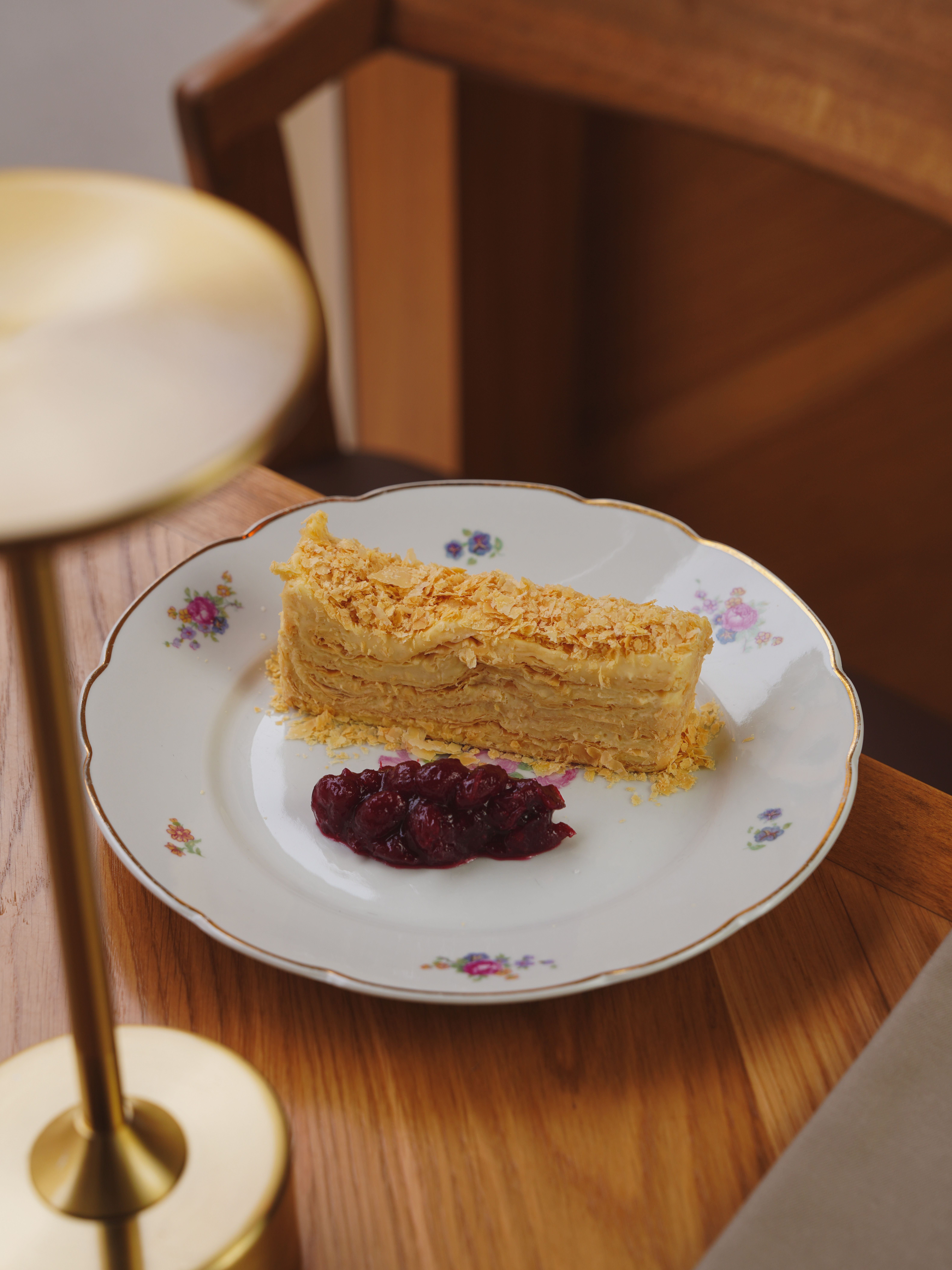
Napoleon Cake
The diets react (see scores below)
Common Ingredients
- puff pastry
- milk
- egg yolks
- sugar
- butter
- flour
- vanilla
- powdered sugar
- water
Specific recipes may vary.
Incompatible with 11 of 11 diets
Diet Ratings
Napoleon Cake is fundamentally incompatible with a ketogenic diet. Every structural component violates keto principles: puff pastry is made from wheat flour and is extremely high in refined carbohydrates, the custard cream contains sugar, milk, and flour, and powdered sugar is used as a finishing element. A single serving would easily contain 50-80g of net carbs, far exceeding the entire daily keto allowance. There are no meaningful keto-friendly elements in this dish — it is essentially layers of grain-based pastry cemented together with a sugar-heavy dairy cream.
Napoleon Cake contains multiple animal-derived ingredients that make it entirely incompatible with a vegan diet. The custard cream filling requires milk and egg yolks, both of which are direct animal products. Butter, another dairy derivative, is used in both the puff pastry and likely the cream. These are not trace or incidental ingredients — they are structural components of the dish. There is no meaningful debate within the vegan community about any of these ingredients: dairy (milk, butter) and eggs are unambiguously excluded under all mainstream vegan frameworks.
Napoleon Cake is fundamentally incompatible with the Paleo diet. It contains multiple strictly excluded ingredients: puff pastry is made from wheat flour (a grain), milk and butter are dairy products, refined sugar and powdered sugar are processed sweeteners, and flour is used in the custard filling. There is virtually no Paleo-compliant ingredient in this dish. This is a highly processed, grain-and-dairy-heavy dessert with zero ambiguity from a Paleo perspective.
Napoleon Cake is a Russian layered pastry made from refined puff pastry and a rich custard cream containing butter, sugar, egg yolks, milk, and flour, topped with powdered sugar. This dessert directly contradicts Mediterranean diet principles on multiple fronts: it is built on refined, processed pastry dough (not whole grains), is high in added sugars, relies on butter as its primary fat rather than olive oil, and contains virtually no plant-forward ingredients. It offers no vegetables, legumes, fruits, or whole grains. The high saturated fat content from butter and the significant added sugar load place it firmly in the 'avoid' category. Occasional small portions of dessert are not absolutely forbidden in Mediterranean eating, but Napoleon Cake has no redeeming Mediterranean-compatible qualities and should not be a regular part of the diet.
Napoleon Cake is a Russian layered dessert built almost entirely on plant-derived and processed ingredients that are fundamentally incompatible with the carnivore diet. Puff pastry is made from wheat flour and plant-based fats, sugar is a refined plant-derived sweetener, vanilla is a plant extract, and powdered sugar with water are additional non-animal ingredients. While egg yolks, butter, and milk are animal-derived components present in the custard cream, they are minor elements within a dish dominated by grains, sugar, and plant compounds. No carnivore framework — from the strictest Lion Diet to the more permissive animal-based approach — would accommodate a wheat-flour pastry loaded with refined sugar. This dish has no place on a carnivore diet.
Napoleon Cake contains multiple Whole30-excluded ingredients. Puff pastry contains wheat flour (a grain), butter (dairy), and typically sugar. The custard filling contains milk (dairy), sugar (added sugar), and flour (grain). Powdered sugar is added sugar. Even setting aside individual ingredients, this is a layered pastry cake — exactly the kind of baked good/dessert that Whole30 Rule 4 prohibits recreating, even with compliant ingredients. This dish fails on multiple independent grounds: excluded grains, excluded dairy, added sugar, and the 'no recreating baked goods/desserts' rule.
Napoleon Cake contains multiple high-FODMAP ingredients that make it unsuitable during the elimination phase. Puff pastry is made from wheat flour, which is high in fructans — a primary FODMAP concern. The custard cream (pastry cream) contains milk, which is high in lactose, a key disaccharide FODMAP. These two ingredients alone — wheat-based pastry and dairy milk — are enough to classify this dish as high-FODMAP at any standard serving size. The sugar, egg yolks, butter, and vanilla are low-FODMAP and not problematic, but they cannot offset the fructan and lactose load from the primary structural ingredients. A typical serving of Napoleon Cake would involve multiple layers of wheat puff pastry and substantial milk-based cream, making the cumulative FODMAP load very high.
Napoleon Cake is a Russian layered pastry made from puff pastry and a rich custard cream (milk, egg yolks, sugar, butter, flour, vanilla), topped with powdered sugar. This dessert conflicts with DASH diet principles on multiple fronts. Puff pastry is high in saturated fat and often contains trans fats from hydrogenated shortenings. The custard filling is rich in butter (high saturated fat) and egg yolks. The dish is heavily loaded with added sugars (sugar, powdered sugar), which DASH explicitly limits. There is virtually no fiber, potassium, calcium, magnesium, or other DASH-emphasized nutrients in meaningful amounts relative to the caloric density. This is a classic high-fat, high-sugar dessert that belongs to the category of sweets DASH guidelines recommend minimizing to ≤5 servings per week of small portions — and even a single serving of Napoleon Cake would likely exceed those limits in fat and sugar content.
Napoleon Cake is a Russian layered pastry consisting of high-glycemic puff pastry (refined white flour, butter) filled with a rich custard cream made from egg yolks, whole milk, sugar, and butter, topped with powdered sugar. This dish is essentially pure refined carbohydrates and saturated fat with no lean protein component whatsoever. The macronutrient profile is radically skewed: very high in carbohydrates (predominantly high-glycemic refined flour and sugar), high in saturated fat from butter, and nearly devoid of protein. There is no realistic portioning strategy that would bring this food into Zone balance — even a small slice would deliver a massive glycemic spike with virtually zero protein offset. The puff pastry alone is one of the most Zone-unfavorable carbohydrate sources imaginable (refined flour laminated with butter). The custard adds more sugar and saturated fat. As a snack, it provides none of the Zone's requirements: no favorable low-GI carbohydrates, no lean protein block, no monounsaturated fat. It would require pairing with substantial lean protein and low-GI vegetables to even begin to approach Zone ratios, making the cake itself a dietary liability rather than a building block.
Napoleon Cake is a classic Russian layered dessert made from puff pastry and a rich custard cream (pastry cream). From an anti-inflammatory perspective, it is highly problematic across nearly every ingredient category. Puff pastry is typically made with refined white flour and large amounts of butter or shortening, delivering refined carbohydrates and saturated fat simultaneously. The custard filling combines egg yolks, whole milk, butter, sugar, and flour — a combination high in saturated fat and added sugar. The powdered sugar glaze adds further refined sugar with no nutritional benefit. There are essentially no anti-inflammatory components: no omega-3s, no meaningful antioxidants, no polyphenols, no fiber, no colorful vegetables or fruits, no beneficial spices beyond trace vanilla. The dish is a concentrated source of refined carbohydrates and saturated fat, both of which are well-established drivers of inflammatory markers including CRP and IL-6. Occasional consumption as a treat is a personal choice, but this food has no place as a regular part of an anti-inflammatory dietary pattern.
Napoleon Cake is a layered dessert made of puff pastry and custard cream (milk, egg yolks, sugar, butter, flour, vanilla) topped with powdered sugar. It is high in refined carbohydrates, saturated fat, and added sugar, with negligible protein and fiber. Puff pastry is one of the highest-fat pastry formats due to its laminated butter layers. The custard filling adds additional butter, sugar, and egg yolks, compounding the saturated fat and sugar load. This combination is directly contrary to GLP-1 dietary priorities: it provides empty calories with no meaningful protein, no fiber, slows gastric emptying further on top of the medication's effect, and is highly likely to worsen nausea, bloating, and reflux. Even a small serving delivers a significant sugar and fat hit with almost no nutritional return per calorie.
*See how scores were generated at our methodology page.
Nutritional profile
Six traits that cut across every diet.
Fiber & Plants
How much whole-plant food and fiber it delivers.
Healthy Fats
The quality of its fats (unsaturated, omega-3).
Whole / Unprocessed
How close it is to its natural, unprocessed form.
Gut Gentle
How easy it is on digestion (low FODMAP, few irritants).
Low Glycemic
How little it spikes your blood sugar.
Protein Density
How much protein it packs per calorie.
Controversy Index
Higher controversy = more disagreement between diets.