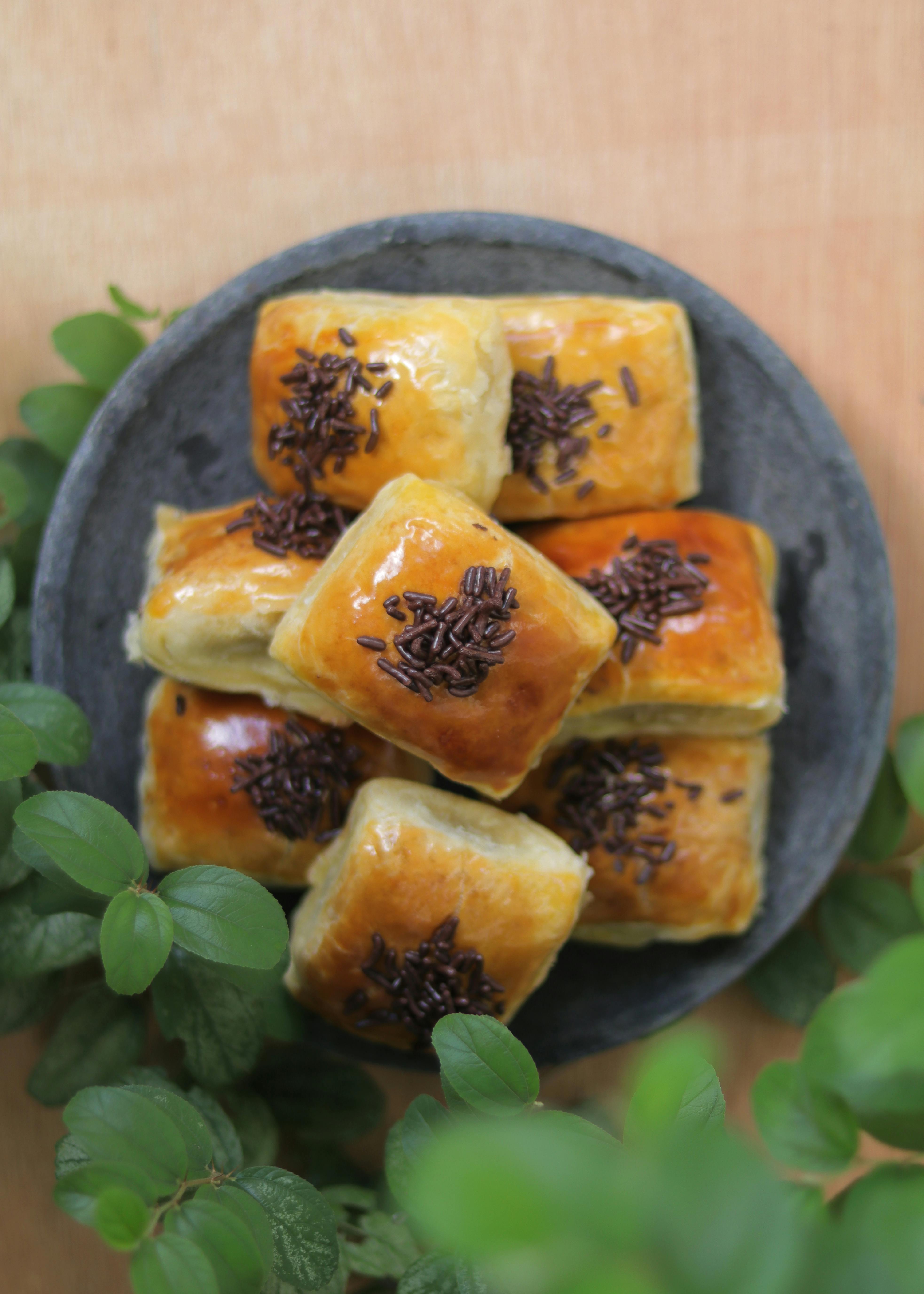
Photo: Andreas Elshaddai / Pexels
The diets react (see scores below)
Common Ingredients
- phyllo dough
- walnuts
- sugar
- butter
- cinnamon
- cloves
- water
- honey
Specific recipes may vary.
Incompatible with 10 of 11 diets
Diet Ratings
Nazook is fundamentally incompatible with a ketogenic diet. It is built on phyllo dough, which is a grain-based, high-carbohydrate pastry containing refined wheat flour. Added sugar and honey further compound the carb load with pure sugars. A single serving would contain an extremely high amount of net carbs — likely 30-50g or more — easily blowing the entire daily keto carb budget. While walnuts and butter are keto-friendly ingredients, they are minor components that cannot offset the massive carbohydrate content from the dough, sugar, and honey. This dish hits multiple zero-tolerance triggers: grains, added sugar, and honey.
Nazook contains two clear animal-derived ingredients: butter (dairy) and honey. Butter is unambiguously non-vegan, making this dish incompatible with a vegan diet regardless of any debate about honey. A vegan version could be made by substituting plant-based butter (e.g., vegan margarine or coconut oil) and replacing honey with agave nectar or maple syrup, but as traditionally prepared this dish is not vegan. The score is 2 rather than 1 because the majority of ingredients are plant-based and the dish is easily adaptable.
Regarding honey specifically: a minority of plant-based eaters who follow a dietary rather than ethical veganism framework argue that bee products cause no meaningful animal suffering and therefore include honey in their diets. However, this position does not resolve the butter issue, which remains non-vegan by any definition within vegan thinking.
Nazook is a traditional Armenian pastry that is fundamentally incompatible with the paleo diet. Phyllo dough is made from wheat flour, a grain that is explicitly excluded from paleo. Refined sugar is also a clear paleo violation. Butter is a dairy product, which is excluded (or at best debated). While walnuts, honey, cinnamon, and cloves are paleo-friendly, the two primary structural ingredients — phyllo dough and refined sugar — are hard avoids with no ambiguity in the paleo community. This dish cannot be made paleo-compliant without a complete reconstruction.
Nazook is a traditional Armenian pastry that combines several ingredients problematic for the Mediterranean diet. Phyllo dough is a refined grain product, sugar and honey add significant simple sugars, and butter (saturated fat) replaces the preferred olive oil as the primary fat. While walnuts, cinnamon, and cloves are Mediterranean-friendly ingredients, the overall profile — refined grain base, high added sugar, and butter-heavy preparation — positions this firmly in the 'avoid' category as an occasional treat at best. This is essentially a high-sugar, refined-grain dessert/snack with saturated fat as the primary fat source.
Some Mediterranean diet interpretations acknowledge that traditional sweets using nuts and honey (like baklava in Greek and Levantine traditions) have a centuries-long presence in the broader Mediterranean region and may be acceptable in very small, infrequent portions. The walnut and honey content does provide some nutritional value, and traditional Mediterranean cultures did consume such confections during celebrations.
Nazook is almost entirely plant-based and processed, containing phyllo dough (grain-based), walnuts (nuts), sugar (refined carbohydrate), cinnamon and cloves (plant spices), and water. The only marginally carnivore-adjacent ingredients are butter and honey, both of which are themselves debated on carnivore. This dish is fundamentally incompatible with the carnivore diet — it is a grain, nut, and sugar-laden pastry with no animal protein and negligible animal-derived content relative to the overwhelming plant and processed ingredients.
Nazook contains multiple Whole30-excluded ingredients. Phyllo dough is a grain-based product (wheat flour), making it excluded outright. Sugar is an added sweetener, explicitly banned on Whole30. Butter (non-clarified) is a dairy product and excluded. Honey is classified as an added sugar under Whole30 rules and is also excluded. With four distinct excluded ingredients, this dish is clearly non-compliant. Additionally, even if all ingredients were somehow substituted for compliant versions, Nazook is a pastry/baked good that falls squarely into the 'no recreating baked goods' rule.
Nazook contains two significant high-FODMAP ingredients that make it problematic during the elimination phase. Phyllo dough is made from wheat flour, which is high in fructans — a major FODMAP. Even small amounts of wheat-based phyllo in a standard serving of this pastry would likely exceed the safe fructan threshold. Honey is also high in excess fructose and is explicitly avoided during FODMAP elimination. Walnuts are low-FODMAP at small servings (around 10 halves), sugar and butter are low-FODMAP, cinnamon is low-FODMAP in culinary amounts, and cloves are generally considered low-FODMAP in small doses. However, the combination of wheat-based phyllo and honey — both central structural and flavoring components — makes this dish high-FODMAP at any realistic serving size. There is no easy substitution that preserves the dish's character during elimination.
Some FODMAP practitioners note that the actual fructan load per piece depends on how much phyllo is consumed — a very small taste might theoretically stay under threshold, but Monash University's guidance on wheat-based pastry doughs makes this impractical to portion safely. Additionally, honey's excess fructose content is well established by Monash, leaving little room for debate on that ingredient.
Nazook is a traditional Armenian pastry made with phyllo dough, butter, sugar, honey, and walnuts. While walnuts offer beneficial unsaturated fats and cinnamon/cloves provide antioxidants, the overall nutritional profile is incompatible with DASH diet principles. The dish is high in saturated fat from substantial butter, high in added sugars from both sugar and honey, and calorie-dense with minimal fiber or micronutrient benefit relative to its caloric load. DASH guidelines explicitly limit sweets, added sugars, and saturated fat. This is essentially a dessert pastry with no meaningful contribution of potassium, magnesium, calcium, or dietary fiber in the context of DASH-relevant portions. Occasional, very small portions might be tolerated within an otherwise strict DASH diet, but the food as commonly consumed does not align with DASH principles.
Nazook is an Armenian pastry that combines phyllo dough (refined high-glycemic carbohydrate), sugar, honey, and butter — a convergence of nearly everything the Zone Diet flags as problematic. The macro profile is dominated by high-glycemic carbohydrates and saturated fat, with virtually no protein to balance the blocks. Sugar and honey are among the highest-glycemic ingredients possible, spiking insulin sharply. Phyllo dough is refined white flour with a high glycemic load. Butter is a saturated fat source, not the monounsaturated fat preferred in Zone. While walnuts do offer some beneficial omega-3s and monounsaturated fats, they are a minor redemptive element in an otherwise Zone-incompatible food. There is no lean protein, no low-glycemic carbohydrate, and no monounsaturated fat dominance. Even with careful portioning, a small serving would contribute a heavily carb-skewed, insulin-spiking block with negligible protein — making it nearly impossible to construct a Zone-balanced snack around this dish without replacing most of its ingredients.
Nazook (a buttery Armenian pastry, similar in profile to baklava) presents a mixed anti-inflammatory picture. On the positive side, walnuts are one of the best plant-based sources of omega-3 fatty acids (ALA) and polyphenols, and both cinnamon and cloves are potent anti-inflammatory spices with well-documented antioxidant properties. Honey, used in moderation, contains some flavonoids and is preferable to refined sugar. However, the dish is anchored by significant amounts of butter (saturated fat, pro-inflammatory at high intake) and sugar (added sugars directly promote inflammatory markers like CRP and IL-6). Phyllo dough is a refined carbohydrate with minimal fiber or nutritional value. The combination of butter + refined starch + added sugar places this firmly in the 'limit' category of anti-inflammatory eating. The beneficial ingredients (walnuts, cinnamon, cloves) are present but likely in proportions that do not offset the pro-inflammatory load. Occasional consumption is acceptable, but this is not a food to eat regularly on an anti-inflammatory protocol.
Nazook is a traditional Armenian pastry made from phyllo dough, butter, walnuts, sugar, and honey — a combination that is directly at odds with nearly every GLP-1 dietary priority. It is high in sugar (honey + added sugar), high in saturated fat (butter throughout phyllo layers), and delivers most of its calories as refined carbohydrates and fat with virtually no protein and minimal fiber. GLP-1 patients eating significantly reduced calorie volumes cannot afford empty or nutritionally poor calories, and the high fat content will worsen nausea, bloating, and reflux by further slowing already-delayed gastric emptying. The sweetness and fat density also make it easy to overconsume in small bites, undermining appetite regulation.
*See how scores were generated at our methodology page.
Nutritional profile
Six traits that cut across every diet.
Fiber & Plants
How much whole-plant food and fiber it delivers.
Healthy Fats
The quality of its fats (unsaturated, omega-3).
Whole / Unprocessed
How close it is to its natural, unprocessed form.
Gut Gentle
How easy it is on digestion (low FODMAP, few irritants).
Low Glycemic
How little it spikes your blood sugar.
Protein Density
How much protein it packs per calorie.
Controversy Index
Higher controversy = more disagreement between diets.
Diet-Specific Tips
 Anti-Inflammatory — 4/10
View tips
- Walnuts provide anti-inflammatory omega-3 ALA and polyphenols — a genuine positive
- Cinnamon and cloves are high-antioxidant spices with demonstrated anti-inflammatory activity
- Butter contributes significant saturated fat, which the anti-inflammatory framework advises limiting
- Sugar (refined) is a direct driver of inflammatory markers; combined with phyllo dough this is a high-glycemic load dish
- Phyllo dough is a refined carbohydrate with negligible fiber
- Honey is marginally preferable to white sugar but still an added sugar
- Net profile is pro-inflammatory due to butter + sugar + refined starch dominance over beneficial ingredients