American
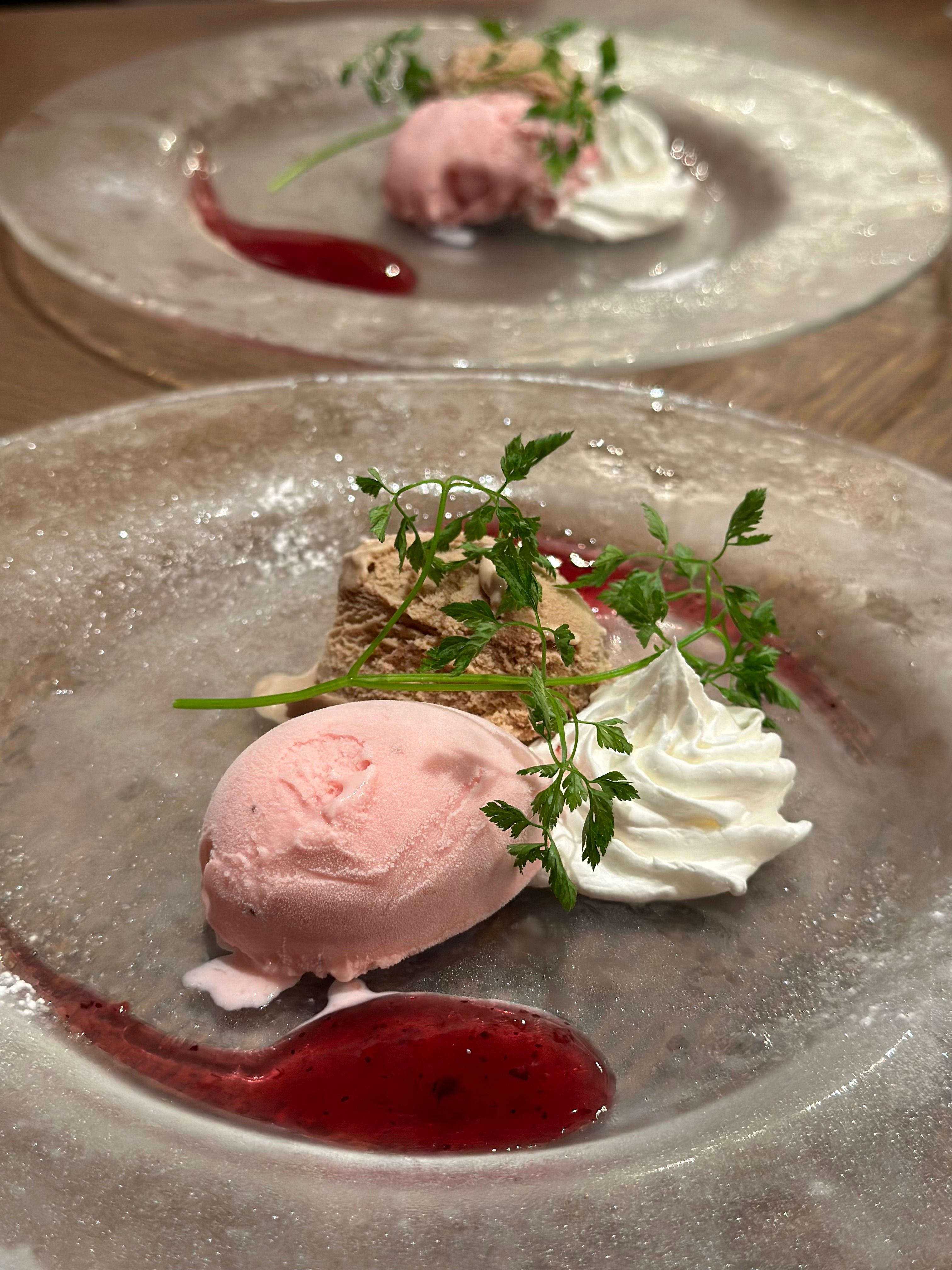
Neapolitan Ice Cream
The diets react (see scores below)
Common Ingredients
- cream
- milk
- sugar
- egg yolks
- vanilla extract
- cocoa powder
- strawberry puree
Specific recipes may vary.
Incompatible with 11 of 11 diets
Diet Ratings
Neapolitan ice cream is fundamentally incompatible with a ketogenic diet. The primary issue is sugar as a core ingredient — a standard serving (roughly 2/3 cup or ~87g) contains approximately 20-25g of net carbs, almost entirely from added sugar. This single serving could consume an entire day's carb budget, and realistically people eat more than one serving. The milk adds lactose (additional sugar), and the strawberry puree contributes natural fruit sugars on top of added sugar. While the cream and egg yolks provide fat and are keto-friendly components, the sugar content makes the overall product a clear avoid. There is no realistic portion size that makes this food keto-compatible without replacing it with a keto-specific reformulation using sugar substitutes.
Neapolitan ice cream contains multiple animal-derived ingredients that are categorically excluded from a vegan diet. Cream and milk are dairy products, and egg yolks are an animal product. These are core, non-incidental ingredients that form the base of the dish. There is no ambiguity here — this is a dairy- and egg-based dessert that is entirely incompatible with veganism. Vegan versions do exist using plant-based milks (oat, coconut, almond) and without egg yolks, but the dish as described is not vegan.
Neapolitan ice cream contains multiple core non-paleo ingredients. Cream and milk are dairy products explicitly excluded from the paleo diet. Refined sugar is a processed sweetener with no place in paleo eating. While egg yolks, vanilla extract, cocoa powder, and strawberry puree are individually more acceptable in a paleo context, the foundational base of this dish — dairy and refined sugar — makes it a clear avoid. This is not a gray-area food; it is a heavily processed dairy-and-sugar dessert that would have been entirely unavailable to Paleolithic humans.
Neapolitan ice cream is a heavily processed, high-sugar, high-saturated-fat dessert that fundamentally contradicts Mediterranean diet principles. It is built on a base of heavy cream and added sugar, delivering substantial saturated fat and refined sugars with little nutritional value. Ice cream is not a traditional Mediterranean food, and its nutritional profile—high in saturated fat, added sugars, and calories with minimal fiber or micronutrients—places it firmly in the 'avoid' category. While dairy is permitted in moderation in the Mediterranean diet, it is represented by foods like yogurt, cheese, and milk in modest amounts, not sugar-laden frozen desserts consumed as a snack.
Neapolitan ice cream is fundamentally incompatible with the carnivore diet. While it does contain some animal-derived ingredients (cream, milk, egg yolks), the dish is dominated by non-carnivore elements: sugar is a direct violation of carnivore principles, vanilla extract is plant-derived, cocoa powder is a plant product, and strawberry puree is fruit — all strictly excluded. Even the dairy base would be debated by strict carnivore practitioners. The combination of added sugar, multiple plant-derived flavorings, and fruit puree makes this a clear avoid with high confidence across all carnivore camps.
Neapolitan ice cream contains multiple excluded ingredients. Dairy (cream and milk) is explicitly prohibited on the Whole30 program — the only dairy exception is ghee/clarified butter. Added sugar is also explicitly excluded. These two violations alone make this food clearly non-compliant, regardless of the other ingredients.
Neapolitan ice cream contains several FODMAP-relevant ingredients that create a nuanced picture. The primary concern is lactose: both cream and milk contribute lactose, and ice cream is classified as high-FODMAP at standard servings (around 1/2 cup or ~65g) due to lactose content. Monash rates regular ice cream as high-FODMAP at typical portions. However, the high fat content of cream slows lactose digestion slightly, and some individuals tolerate small amounts. Egg yolks are low-FODMAP. Sugar (sucrose) is low-FODMAP. Vanilla extract is low-FODMAP at standard culinary amounts. Cocoa powder is low-FODMAP at small servings (~1 tbsp) but becomes moderate at larger amounts; in ice cream proportions it is generally low-FODMAP. Strawberry puree is the other concern: strawberries are low-FODMAP at up to 5 medium berries (~65g) per Monash, but concentrated puree may contain more fructose per gram — portion-dependent. Overall, the lactose from milk and cream in a typical serving of ice cream (1/2 cup) pushes this into cautious territory. A very small portion (2-3 tbsp) might be tolerated, but standard serving sizes are high-FODMAP.
Monash University rates regular ice cream as high-FODMAP at a standard 1/2 cup serving due to lactose, which would push this toward 'avoid.' However, some clinical FODMAP practitioners allow small portions (2-3 tablespoons) for patients who show lactose tolerance during reintroduction, making elimination-phase guidance dependent on individual protocol strictness.
Neapolitan ice cream is a full-fat dairy product made primarily with cream and egg yolks, making it high in saturated fat and cholesterol — both of which DASH explicitly limits. It is also high in added sugar, another category DASH restricts. The NHLBI DASH eating plan clearly categorizes sweets and full-fat dairy as foods to limit or avoid, recommending instead fat-free or low-fat dairy and minimizing added sugars. While the ingredients (vanilla, cocoa powder, strawberry puree) include some natural components, the base of heavy cream and sugar disqualifies this as a DASH-compatible food in regular consumption. Ice cream is specifically called out in DASH guidance as a food to limit, falling under both 'sweets' and 'full-fat dairy.'
Neapolitan ice cream is fundamentally incompatible with Zone Diet principles. Its primary ingredients — cream, sugar, and egg yolks — create a macronutrient profile that is high in saturated fat, high in simple sugars (very high glycemic), and relatively low in lean protein. A typical serving (~100g) delivers roughly 20g of sugar, 10-12g of saturated fat, and only 2-3g of protein. This is nearly the opposite of a Zone-favorable snack, which would target a 40/30/30 ratio. The sugar load spikes insulin sharply, directly violating Zone's core anti-insulin-surge principle. The fat content is predominantly saturated from heavy cream rather than the monounsaturated fats (olive oil, avocado, almonds) Sears recommends. There is no meaningful lean protein, no fiber, and no low-glycemic carbohydrate component. While Zone is ratio-based rather than exclusion-based, this food offers no practical path to a Zone-balanced snack — you cannot add enough lean protein or fiber to offset the sugar and saturated fat load without abandoning the food entirely. Even a very small portion (a few tablespoons) would contribute disproportionate sugar and saturated fat calories with negligible Zone-useful nutrition.
Neapolitan ice cream is a high-fat, high-sugar dairy dessert that sits firmly in pro-inflammatory territory under anti-inflammatory diet principles. The base is heavy cream and milk, which are full-fat dairy products — sources of saturated fat that anti-inflammatory frameworks recommend limiting or avoiding. The significant added sugar content drives insulin spikes and promotes production of pro-inflammatory cytokines; research consistently links high added sugar intake to elevated CRP and IL-6. Egg yolks in the custard base contribute arachidonic acid, a precursor to pro-inflammatory eicosanoids. While cocoa powder has genuine anti-inflammatory polyphenol content (flavanols), the quantity in a typical ice cream formula is too small to meaningfully offset the inflammatory burden, and it is paired with large amounts of sugar. Strawberry puree contains antioxidants and vitamin C, which are modestly beneficial, but again the sugar load dominates. Vanilla extract is neutral to mildly positive. Overall, this is an occasional-treat food that should be minimized in an anti-inflammatory eating pattern: high saturated fat, high added sugar, full-fat dairy — three of the key drivers of systemic inflammation.
Neapolitan ice cream is a poor fit for GLP-1 patients across nearly every priority dimension. It is high in sugar and saturated fat (cream, egg yolks), offers negligible protein and fiber, and delivers empty calories with low nutrient density per calorie. The high fat and sugar content are likely to worsen GLP-1 side effects including nausea, bloating, and reflux, given slowed gastric emptying. As an ultra-processed frozen dairy dessert, it provides no meaningful protein contribution toward the 100-120g daily target and no fiber toward the 25-30g daily target. The primary macronutrient contribution is sugar and saturated fat — exactly what GLP-1 dietary guidance deprioritizes. Even in a small portion, it displaces more nutritious options and contributes to blood sugar spikes.
*See how scores were generated at our methodology page.
Nutritional profile
Six traits that cut across every diet.
Fiber & Plants
How much whole-plant food and fiber it delivers.
Healthy Fats
The quality of its fats (unsaturated, omega-3).
Whole / Unprocessed
How close it is to its natural, unprocessed form.
Gut Gentle
How easy it is on digestion (low FODMAP, few irritants).
Low Glycemic
How little it spikes your blood sugar.
Protein Density
How much protein it packs per calorie.
Controversy Index
Higher controversy = more disagreement between diets.