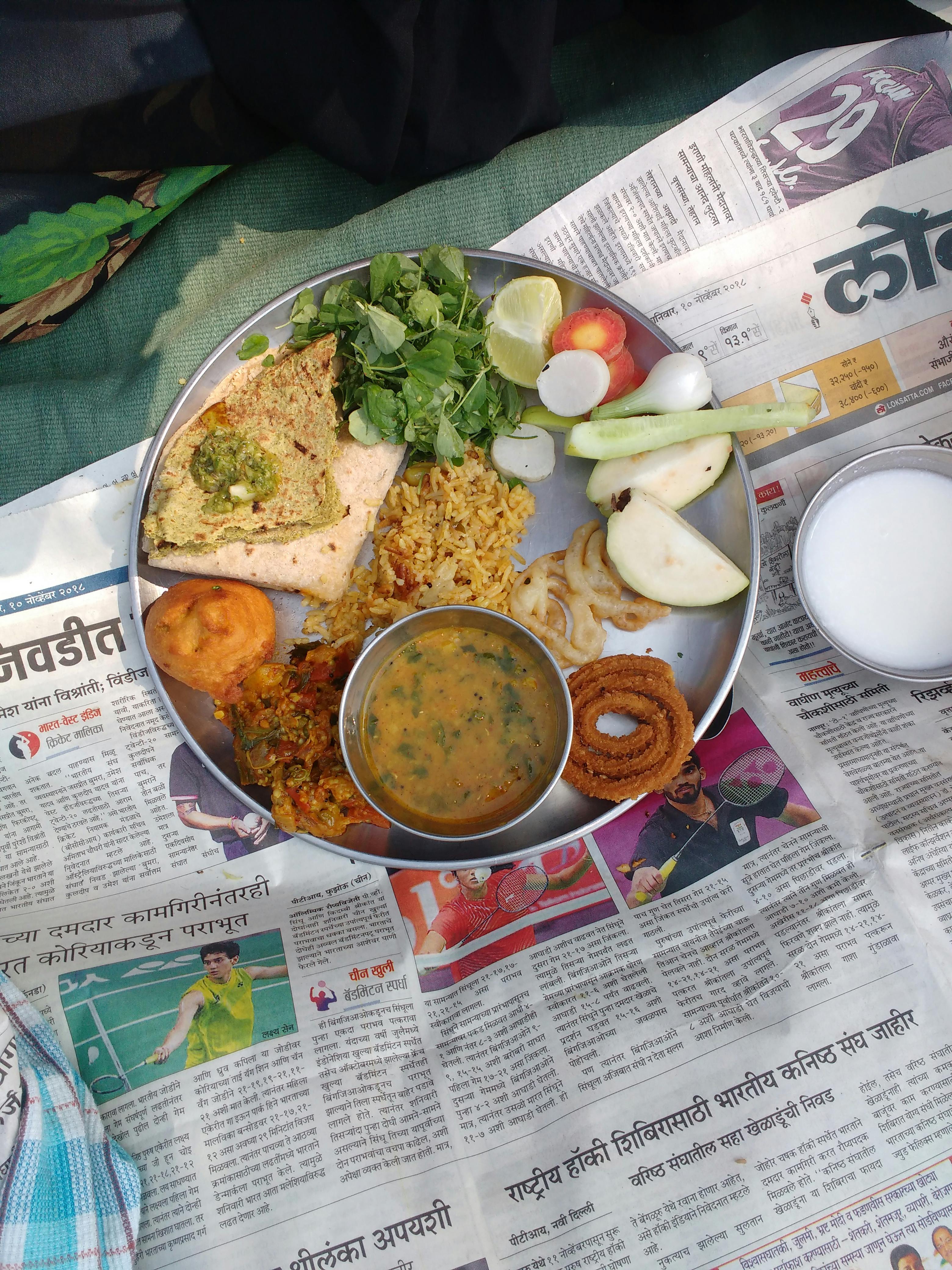
Photo: Abhiram Kodape / Pexels
The diets react (see scores below)
Common Ingredients
- rice
- lentils
- turmeric
- cumin
- garlic
- ginger
- spinach
- potato
- tomato
Specific recipes may vary.
Incompatible with 5 of 11 diets
Diet Ratings
Dal Bhat is fundamentally incompatible with a ketogenic diet. The dish is built around two of the most carb-dense foods possible: white rice (roughly 45g net carbs per cup cooked) and lentils (roughly 20g net carbs per half cup cooked). Together, a standard serving easily delivers 60-100g+ of net carbs, far exceeding the entire daily keto limit of 20-50g in a single meal. The potato adds another significant carb load (approximately 15-17g net carbs per medium potato). Even the tomato contributes modest carbs. The spices and spinach are keto-friendly, but they are entirely overwhelmed by the core ingredients. There is no portion size of a traditional Dal Bhat serving that would fit within ketogenic macros.
Dal Bhat as described here is entirely plant-based. The dish consists of rice and lentils as its foundation, seasoned with turmeric, cumin, garlic, and ginger, and rounded out with spinach, potato, and tomato — all whole plant foods with no animal-derived ingredients. This version contains no ghee or dairy, which are sometimes added in traditional preparations, so the listed ingredient set is fully vegan. It is also a nutritionally strong meal, providing complete protein via the rice-lentil combination, complex carbohydrates, fiber, and micronutrients from the vegetables and spices. As a whole-food, minimally processed dish, it scores at the high end of the approval range.
Dal Bhat is built on two paleo-excluded foundations: rice (a grain) and lentils (a legume). Both are explicitly off-limits in all mainstream paleo frameworks. Lentils contain lectins and phytic acid that paleo authorities consistently cite as anti-nutrients, and rice is a grain regardless of its relatively low anti-nutrient profile. The remaining ingredients — turmeric, cumin, garlic, ginger, spinach, tomato, and potato — are individually paleo-compatible or debated, but they cannot redeem a dish whose two primary components are hard paleo exclusions. This dish is structurally incompatible with a paleo diet.
Dal Bhat is a highly nutritious, whole-food, plant-based dish featuring lentils (an excellent legume protein), vegetables (spinach, tomato, potato), and aromatic spices. Nearly every ingredient aligns well with Mediterranean diet principles. The primary concern is the use of white rice as the base, which is a refined grain not emphasized in Mediterranean guidelines that favor whole grains like barley, farro, or whole wheat. The lentils, spinach, tomato, garlic, ginger, and turmeric are all Mediterranean-compatible ingredients. The dish is minimally processed, low in saturated fat, and plant-forward, making it a strong candidate for approval were it made with whole grains. As served with white rice, it lands in the caution zone rather than a clear avoid, since the overall nutritional profile remains excellent.
Some Mediterranean diet researchers note that white rice is a staple in traditional Mediterranean cuisines — particularly in Greece, Turkey, and the Middle East — and that its glycemic impact is mitigated when combined with legumes, vegetables, and fiber-rich ingredients as in this dish. Under this interpretation, Dal Bhat with white rice could be fully approved given its exceptional legume, vegetable, and spice content.
Dal Bhat is entirely plant-based and contains zero animal products. Every single ingredient — rice, lentils, turmeric, cumin, garlic, ginger, spinach, potato, and tomato — is explicitly excluded on the carnivore diet. Lentils are legumes, a particularly problematic food in carnivore circles due to antinutrients (lectins, phytates). Rice is a grain. The remaining ingredients are vegetables and plant-derived spices. This dish is the antithesis of carnivore eating and would be rejected unanimously across all carnivore diet tiers, from the broadest 'animal-based' approach to the strictest Lion Diet.
Dal Bhat contains two clearly excluded ingredient categories: rice (a grain) and lentils (a legume). Both are explicitly prohibited on Whole30. Rice is listed among excluded grains, and lentils are listed among excluded legumes. Unlike green beans or sugar snap peas, lentils have no special exception. The remaining ingredients — turmeric, cumin, garlic, ginger, spinach, potato, and tomato — are all Whole30-compliant, but the two foundational components of this dish make it incompatible with the program.
Dal Bhat contains multiple high-FODMAP ingredients that make it unsuitable during the elimination phase. Lentils (dal) are high in GOS (galacto-oligosaccharides) and are a primary high-FODMAP food — even canned lentils are borderline during elimination. Garlic is one of the highest-FODMAP foods, rich in fructans, and is a core flavoring in this dish. Potato is moderate to high in GOS depending on serving size and variety. Together, these three ingredients alone disqualify the dish. Rice, turmeric, cumin, ginger, spinach (in small amounts), and tomato are generally low-FODMAP, but they cannot offset the high-FODMAP load from lentils, garlic, and potato. A standard serving of Dal Bhat as traditionally prepared would deliver a significant FODMAP burden across multiple FODMAP categories (GOS, fructans, and potentially polyols).
Dal Bhat is an excellent fit for the DASH diet. Lentils are a DASH-endorsed legume providing plant-based protein, fiber, potassium, and magnesium. Rice (ideally brown, though white rice is common) contributes complex carbohydrates. Spinach, tomato, and potato are DASH-approved vegetables rich in potassium and magnesium. Turmeric, cumin, garlic, and ginger are sodium-free spices that add flavor without salt, supporting the DASH goal of reducing sodium intake. The dish is naturally low in saturated fat, contains no red meat or full-fat dairy, and is built around plant foods that DASH explicitly emphasizes. The main consideration is added salt during cooking — home preparation with minimal salt keeps sodium well within DASH limits, while restaurant versions may be higher in sodium. Using brown rice instead of white rice would further align this dish with DASH whole-grain recommendations.
Dal Bhat presents a mixed Zone picture. The lentils are a vegetarian protein source that also carry significant carbohydrate load, making macro balancing tricky. White rice is a high-glycemic carb that Sears explicitly classifies as 'unfavorable,' spiking insulin and disrupting the Zone's eicosanoid balance. Potato is similarly high-glycemic and on Sears' avoid list. On the positive side, lentils provide reasonable protein with fiber (lowering net carbs), the spices (turmeric, cumin, ginger, garlic) are potent polyphenols and anti-inflammatory agents that Sears strongly endorses, spinach is an ideal Zone vegetable, and tomato is a favorable low-glycemic carb. The dish as traditionally served is carbohydrate-heavy and protein-light relative to Zone ratios — a typical serving tilts heavily toward the 40% carb target being exceeded, with protein falling short of the 30% target. A Zone-adapted version would reduce rice significantly (or substitute cauliflower rice), eliminate potato, increase the lentil-to-rice ratio, add a fat source like olive oil or avocado, and bulk up the spinach/tomato component. The dish is not impossible to adapt but requires substantial modification from its traditional form.
Some Zone practitioners note that lentils, as a high-fiber legume, have a relatively low glycemic load despite their carb content, and Dr. Sears' later work (particularly his omega-3 and polyphenol-focused writings) would celebrate the anti-inflammatory spice profile of this dish. In a smaller, controlled portion with reduced rice and no potato, this could edge toward a 5-6 — particularly if the lentil dal is treated as the main event and rice is minimized or eliminated. Traditional Nepali dal bhat also often uses relatively small rice portions by Western standards in some regional preparations.
Dal Bhat is a nutrient-dense, plant-forward meal with a strong anti-inflammatory profile. Lentils are a cornerstone of anti-inflammatory eating — high in fiber, plant protein, polyphenols, and folate, and associated with reduced CRP levels in research. The spice base is exemplary: turmeric (curcumin), ginger, garlic, and cumin are among the most well-documented anti-inflammatory ingredients across virtually all anti-inflammatory frameworks. Spinach contributes carotenoids (lutein, beta-carotene) and vitamin K, both linked to reduced inflammatory markers. Tomatoes provide lycopene, a potent antioxidant. Potato is nutritionally neutral-to-modest in this context — it adds starch and potassium but is the weakest anti-inflammatory contributor on the list. White rice is a refined carbohydrate that provides energy without significant anti-inflammatory benefit; in large portions it represents a mild glycemic concern. However, the cumulative effect of this dish is strongly positive — a legume-based, vegetable-rich, heavily spiced whole-food meal with no processed ingredients, added sugars, seed oils, or saturated fat. This dish aligns closely with Dr. Weil's Anti-Inflammatory Food Pyramid, which explicitly emphasizes beans/legumes, cooked vegetables, and herbs and spices.
The white rice component gives some anti-inflammatory practitioners pause: high-glycemic refined carbohydrates can transiently raise blood sugar and are downgraded in strict anti-inflammatory protocols. Some autoimmune-oriented frameworks (e.g., AIP) also flag nightshade tomatoes and white potato for solanine content in sensitive individuals, though mainstream anti-inflammatory nutrition — including Dr. Weil — considers both beneficial due to their antioxidant content.
Dal Bhat is a nutritionally solid whole-food meal with meaningful strengths for GLP-1 patients, but the rice-heavy base introduces a portion-sensitivity concern that keeps it out of the approve tier. The lentil dal provides plant-based protein (roughly 9-12g per standard serving of dal) and meaningful fiber, both high priorities. Turmeric, cumin, garlic, and ginger are digestive-friendly spices with anti-inflammatory properties and no GLP-1 side effect risk. Spinach and tomato add micronutrient density. The dish is low in fat and easy to digest — two important GLP-1 criteria. The limiting factor is protein density: lentils alone rarely hit the 15-30g per meal protein target without a generous portion of dal, and white rice (the traditional base) is a refined-adjacent grain that adds carbohydrate calories with minimal protein or fiber contribution. The starchy potato further dilutes protein density per calorie. For GLP-1 patients with reduced appetite eating small volumes, this dish may fill the stomach with rice and potato before adequate protein is consumed. A modified version — larger dal portion, smaller rice portion, brown rice substitution, or pairing with a protein-rich side like eggs or yogurt — would score higher.
Some GLP-1-focused dietitians consider lentil-based dishes like dal a near-ideal protein-fiber combination and would rate this higher, particularly for patients who tolerate legumes well and can control portion ratios. Others flag that lentils and potato together can cause gas and bloating in patients already experiencing GLP-1-related GI slowing, making individual digestive tolerance a meaningful variable in this rating.
*See how scores were generated at our methodology page.
Nutritional profile
Six traits that cut across every diet.
Fiber & Plants
How much whole-plant food and fiber it delivers.
Healthy Fats
The quality of its fats (unsaturated, omega-3).
Whole / Unprocessed
How close it is to its natural, unprocessed form.
Gut Gentle
How easy it is on digestion (low FODMAP, few irritants).
Low Glycemic
How little it spikes your blood sugar.
Protein Density
How much protein it packs per calorie.
Controversy Index
Higher controversy = more disagreement between diets.
Diet-Specific Tips
 Vegan — 9/10
View tips
- All ingredients are whole plant foods
- Lentils and rice together form a nutritionally complete protein profile
- No ghee, butter, or dairy in the listed ingredients — common additions in some traditional versions that would change the verdict
- Turmeric, cumin, garlic, and ginger are all plant-derived spices
- Spinach, potato, and tomato add micronutrient density
- Minimally processed — aligns with both strict vegan and whole-food plant-based standards
 Mediterranean — 6/10
View tips
- Lentils are a core Mediterranean legume — excellent plant protein and fiber source
- White rice is a refined grain, less preferred than whole grains in Mediterranean guidelines
- Spinach, tomato, and potato are all Mediterranean-compatible vegetables
- Garlic, cumin, turmeric, and ginger are health-promoting aromatics consistent with the diet
- No processed ingredients, added sugars, or unhealthy fats
- Lentil-rice combination creates a complete protein profile
- Dish is entirely plant-based with no red meat or processed components
 DASH — 8/10
View tips
- Lentils are a DASH-core legume: high fiber, protein, potassium, magnesium
- Spinach, tomato, and potato are potassium- and magnesium-rich DASH vegetables
- Sodium-free spices (turmeric, cumin, garlic, ginger) replace salt effectively
- Naturally low in saturated fat and free of red meat or full-fat dairy
- White rice is commonly used — brown rice would improve whole-grain alignment
- Sodium content depends heavily on preparation; home cooking allows strict sodium control
- Restaurant or packaged versions may contain significantly more sodium
 Zone — 4/10
View tips
- White rice is a high-glycemic 'unfavorable' carb in Zone terminology — primary concern
- Potato is explicitly unfavorable in Zone due to high glycemic index
- Lentils serve as vegetarian protein but carry a dual carb+protein block profile, complicating Zone ratios
- Spinach and tomato are ideal Zone-favorable vegetables
- Turmeric, cumin, ginger, and garlic are potent polyphenols strongly endorsed by Sears
- No fat source present — olive oil or avocado would need to be added to complete the Zone meal
- As served traditionally, macro ratio skews heavily carbohydrate, undershooting protein and fat targets
- Dish is adaptable with portion control but requires significant modification from traditional form
 Anti-Inflammatory — 8/10
View tips
- Lentils: high-fiber legume, reduces CRP, emphasized in all anti-inflammatory frameworks
- Turmeric: curcumin is one of the most researched anti-inflammatory phytonutrients
- Garlic and ginger: well-documented anti-inflammatory and immune-modulatory properties
- Spinach: rich in carotenoids, vitamin K, and magnesium — linked to reduced inflammatory markers
- Tomato: lycopene is a potent anti-inflammatory antioxidant
- White rice: refined carbohydrate with limited anti-inflammatory benefit; mild glycemic concern in large portions
- No processed ingredients, seed oils, added sugars, or saturated fat
- Potato: mildest contributor; nightshade concern for autoimmune-sensitive individuals
 GLP-1 Friendly — 6/10
View tips
- Lentils provide plant protein and fiber — both GLP-1 priorities
- Protein per meal target (15-30g) is difficult to meet in a small portion without a generous dal-to-rice ratio
- White rice adds carbohydrate volume with low protein and fiber return
- Potato further dilutes protein density per calorie
- Digestive-friendly spices (turmeric, ginger, cumin, garlic) are GLP-1 compatible
- Low fat content aligns well with GLP-1 side effect management
- Spinach and tomato add micronutrient density
- Legumes may cause gas/bloating in some GLP-1 patients due to slowed gastric emptying
- Portion ratio control (more dal, less rice) is key to making this meal GLP-1 optimal