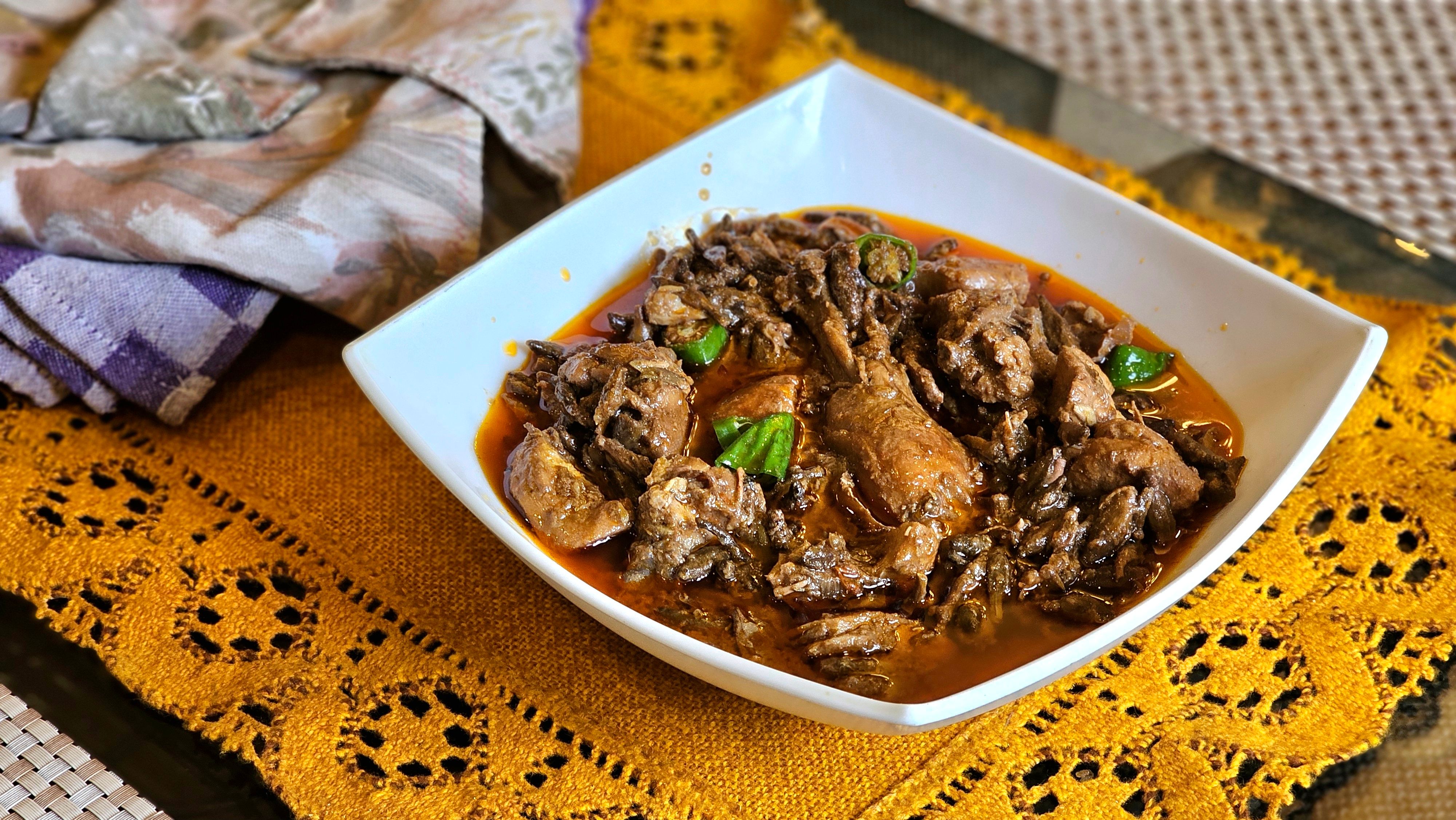
Photo: Muhammad Khawar Nazir / Pexels
The diets react (see scores below)
Common Ingredients
- leafy greens
- garlic
- ginger
- tomato
- chili
- turmeric
- onion
- mustard oil
Specific recipes may vary.
Incompatible with 3 of 11 diets
Diet Ratings
Gundruk is a fermented leafy green dish (typically made from mustard, radish, or cauliflower leaves) cooked with aromatics. The fermented greens themselves are low in net carbs and may offer probiotic benefits. However, the inclusion of onion, tomato, and garlic adds moderate carbohydrates that can accumulate. A typical serving in small amounts is manageable within keto limits, but the combined carb load from onion (notably higher in carbs), tomato, and the fermented greens warrants portion control. Mustard oil is an excellent fat source for keto. Overall, a small side-dish portion (~1/2 cup) likely stays within acceptable net carb range, but larger servings could push toward the daily limit, especially if other carb sources are consumed throughout the day.
Strict keto practitioners may flag this dish due to the onion and tomato content, arguing that even small portions of these ingredients can trigger insulin responses or cumulatively exceed daily carb budgets, particularly for those targeting the lower 20g net carb threshold.
Gundruk is a traditional Nepali fermented leafy green dish. All listed ingredients are entirely plant-based: fermented leafy greens (typically mustard, radish, or cauliflower leaves), garlic, ginger, tomato, chili, turmeric, onion, and mustard oil. There are no animal products or animal-derived ingredients present. The fermentation process is microbial (lactic acid bacteria), not animal-derived. Mustard oil is a plant-based fat pressed from mustard seeds. This is a whole-food, minimally processed dish, which scores highly even by whole-food plant-based standards.
Gundruk is a traditional Nepali fermented leafy green dish. While most individual ingredients (leafy greens, garlic, ginger, tomato, chili, turmeric, onion) are paleo-approved, the dish has two significant disqualifying factors. First, mustard oil is a seed oil, which is explicitly excluded from the paleo diet — it falls squarely in the same category as canola, soybean, and other seed oils that paleo authorities reject due to their high omega-6 content and processing concerns. Second, and critically, Gundruk itself is defined by its fermentation process — leafy greens (typically mustard greens, radish tops, or cauliflower leaves) are wilted, packed, and fermented for days to weeks. While fermentation is a natural process, the resulting product is a heavily processed food by paleo standards, analogous to how soy becomes miso or cabbage becomes sauerkraut with significant structural changes. The combination of a seed oil and a fermented/processed food product pushes this firmly into avoid territory.
Gundruk is a fermented leafy green dish packed with plant-based ingredients — leafy greens, tomato, garlic, ginger, onion, chili, and turmeric — all of which are staples of the Mediterranean diet. The fermentation process adds probiotic benefit, which aligns with Mediterranean dietary principles around gut health (similar to fermented foods like yogurt and olives). The only notable deviation is the use of mustard oil rather than extra virgin olive oil as the cooking fat. Mustard oil is not a Mediterranean tradition but is a monounsaturated-rich plant oil with a broadly favorable fatty acid profile, making it a reasonable substitute in this context. All other ingredients are strongly encouraged Mediterranean foods, and there is no red meat, added sugar, or refined grain.
Traditional Mediterranean diet guidelines specify extra virgin olive oil as the canonical fat source; mustard oil, while plant-based and used in South Asian cuisines, is not recognized within Mediterranean dietary traditions. Strict interpretations would flag this substitution and lower the score slightly, though the overall dish profile remains highly plant-forward.
Gundruk is a fermented leafy green dish from Nepal with zero animal-derived ingredients. Every component — leafy greens, garlic, ginger, tomato, chili, turmeric, onion, and mustard oil — is entirely plant-based. This dish is fundamentally incompatible with the carnivore diet at every level, including the most lenient interpretations. There is no animal protein, no animal fat, and no animal-derived ingredient of any kind. Even practitioners who allow minor carnivore-adjacent items like coffee or spices would not consider this dish remotely compatible, as it is a fully plant-based side dish with no redemptive animal component.
Gundruk is a traditional Nepali fermented leafy green (typically mustard greens, radish leaves, or cauliflower leaves). The listed ingredients — leafy greens, garlic, ginger, tomato, chili, turmeric, onion, and mustard oil — are all individually Whole30-compliant. However, the key consideration is the fermentation process itself. Gundruk is made by wilting, packing, and fermenting leafy greens for several days, which produces lactic acid fermentation. Fermented vegetables (like sauerkraut or kimchi) are generally accepted on Whole30 as long as no excluded ingredients are added. The ingredients listed contain no grains, legumes, dairy, or other excluded items. The caution rating reflects that (1) commercial or restaurant versions may include added sugar, vinegar with additives, or other non-compliant ingredients not listed, and (2) the fermented nature, while generally accepted, warrants label scrutiny for packaged versions. Homemade gundruk with only compliant ingredients should be fine, but careful label-reading is advised for store-bought versions.
Official Whole30 guidelines do not explicitly address fermented leafy greens like gundruk, but fermented vegetables with compliant ingredients are broadly accepted by the Whole30 community. Some practitioners may flag restaurant or packaged versions for potential hidden additives, but Melissa Urban's framework would likely approve a clean, homemade version without reservation.
Gundruk is a traditional Nepali fermented leafy green dish, typically made from mustard greens, radish leaves, or cauliflower leaves. The fermentation process may reduce some FODMAPs in the greens themselves, but the standard recipe includes two major high-FODMAP ingredients: garlic (high in fructans at any culinary dose) and onion (also high in fructans and a primary trigger food during FODMAP elimination). These two ingredients alone make the dish high-FODMAP regardless of portion size. Tomato is low-FODMAP in standard servings, ginger is low-FODMAP, chili is low-FODMAP, turmeric is low-FODMAP, and mustard oil is FODMAP-free. However, garlic and onion are non-negotiable problems during the elimination phase — they cannot be reduced to a safe quantity in a cooked dish of this nature. The fermentation of the greens is an interesting variable, as fermentation can reduce fructans in some cases (as seen with sourdough), but there is insufficient Monash data specifically on gundruk to rely on this effect.
Some FODMAP practitioners acknowledge that fermentation can degrade fructans and other FODMAPs in vegetables, similar to how sourdough fermentation lowers fructan content in bread. However, Monash University has not specifically tested gundruk, and the garlic and onion added during cooking (post-fermentation) remain fully high-FODMAP, making any fermentation benefit moot for this prepared dish.
Gundruk is a fermented leafy green dish popular in Nepali cuisine. Its base ingredients — leafy greens, garlic, ginger, tomato, onion, turmeric, and chili — are strongly aligned with DASH principles, being rich in potassium, magnesium, fiber, and antioxidants. However, two factors introduce caution: (1) Fermentation: Gundruk is traditionally a fermented food, and fermented vegetables can have moderate-to-high sodium content depending on preparation method, which conflicts with DASH's sodium limits. (2) Mustard oil: While it is a vegetable oil and not a tropical oil, mustard oil has a notably high erucic acid content and its cardiovascular safety profile is debated; it is not explicitly endorsed by NIH DASH guidelines. The dish is not processed junk food and has genuine nutritional merit, but the fermentation-related sodium load and the use of mustard oil prevent a full approval under standard DASH criteria.
NIH DASH guidelines focus on limiting sodium and saturated fat without specifically addressing fermented ethnic vegetables like gundruk or mustard oil. Some DASH-aligned clinicians and global nutrition researchers note that traditional fermented greens provide beneficial probiotics, fiber, and micronutrients, and that mustard oil — predominantly monounsaturated and polyunsaturated — may be cardiovascularly neutral or even beneficial compared to saturated fats, suggesting this dish could be fully approved in moderate portions if sodium in fermentation is managed.
Gundruk is a fermented leafy green dish from Nepal, cooked with garlic, ginger, tomato, chili, turmeric, and onion — all Zone-favorable ingredients from a carbohydrate standpoint. Leafy greens are among the best Zone carbohydrate sources (low glycemic, high fiber, polyphenol-rich), and the aromatics and spices are negligible in macro terms and anti-inflammatory in nature. The primary concern is the use of mustard oil. Mustard oil has a relatively high omega-3 content (alpha-linolenic acid) compared to many seed oils, which is favorable from an anti-inflammatory Zone perspective, but it is also high in erucic acid and has a significant omega-6 component, and it is not a monounsaturated fat in the same category as olive oil or avocado oil that Sears explicitly recommends. As a side dish with no protein source, it would need to be paired with a lean protein and potentially additional Zone-approved fat to complete a balanced meal. The fermentation aspect of gundruk is actually a bonus — fermented foods align well with Sears' later anti-inflammatory and gut health emphasis. If mustard oil were replaced with olive oil, this would score 7-8. As-is, it is a solid Zone-compatible carbohydrate/vegetable side that earns a cautious approval pending proper meal pairing.
Some Zone practitioners may rate this higher, noting that mustard oil's omega-3 content (ALA) is relatively favorable compared to corn or soybean oil, and that Sears' later writings (The Zone Diet and Mastering the Zone updates) emphasize anti-inflammatory polyphenols — which fermented vegetables and turmeric provide abundantly. From that lens, gundruk could be treated as a near-approve vegetable side. Others adhering strictly to early Zone guidance would flag mustard oil as a non-preferred fat and keep the caution rating.
Gundruk is a traditional Nepali fermented leafy green (typically mustard, radish, or cauliflower leaves), and this preparation combines it with a strongly anti-inflammatory spice base of garlic, ginger, turmeric, and chili, plus tomato and onion — all well-supported anti-inflammatory ingredients. The fermented leafy greens themselves offer probiotic benefits and retain polyphenols and fiber, supporting gut health and reducing systemic inflammation. Garlic (allicin), ginger (gingerols), turmeric (curcumin), and chili (capsaicin) are each individually well-researched for anti-inflammatory properties. Tomatoes provide lycopene; onions provide quercetin. The main point of contention is mustard oil. Mustard oil is high in erucic acid and has a moderately high omega-6 content, and it is not emphasized in mainstream Western anti-inflammatory frameworks like Dr. Weil's pyramid (which favors extra virgin olive oil). However, mustard oil also contains significant alpha-linolenic acid (ALA, an omega-3), a favorable omega-6:omega-3 ratio compared to many seed oils, and allyl isothiocyanate with anti-inflammatory properties. Traditional Ayurvedic and South Asian nutritional perspectives view mustard oil favorably. Cold-pressed mustard oil is generally considered more beneficial than refined versions. The fermentation process of gundruk also enhances bioavailability of micronutrients and contributes beneficial bacteria. Overall, this dish is strongly anti-inflammatory with the one caveat being mustard oil's debated status in Western anti-inflammatory frameworks.
Mainstream Western anti-inflammatory frameworks (Dr. Weil, IF Rating system) do not list mustard oil as a preferred fat and may flag its erucic acid content and omega-6 load; these protocols favor extra virgin olive oil. However, Ayurvedic tradition and South Asian nutritional research highlight mustard oil's favorable ALA content and anti-inflammatory phytochemicals, and many practitioners consider cold-pressed mustard oil compatible with anti-inflammatory eating.
Gundruk is a fermented leafy green dish that offers meaningful fiber and micronutrient value from the vegetables, with beneficial aromatics (garlic, ginger, turmeric) that support digestion and have anti-inflammatory properties. The fermentation process creates probiotics that may support gut health, which is a genuine plus for GLP-1 patients managing GI side effects. However, it contains no meaningful protein, which is the top priority for GLP-1 patients, meaning it must always be paired with a protein source to be useful in a meal. The inclusion of mustard oil is the primary caution flag — while it contains unsaturated fats (erucic acid, omega-3 ALA) and is preferable to saturated fats, it is a higher-fat cooking medium that can worsen nausea or reflux in GLP-1 patients, especially if used generously. Chili may also trigger reflux or GI discomfort in sensitive patients. As a small side dish paired with a lean protein (lentils, chicken, fish), it fits well. As a standalone dish or in large portions, it falls short of GLP-1 nutritional priorities.
Some GLP-1-focused dietitians would rate fermented foods more favorably due to potential gut microbiome benefits that may complement GLP-1 GI side effect management, while others caution that fermented and pickled foods can be high in sodium and may worsen bloating or reflux in patients with slowed gastric emptying — individual tolerance varies significantly.
*See how scores were generated at our methodology page.
Nutritional profile
Six traits that cut across every diet.
Fiber & Plants
How much whole-plant food and fiber it delivers.
Healthy Fats
The quality of its fats (unsaturated, omega-3).
Whole / Unprocessed
How close it is to its natural, unprocessed form.
Gut Gentle
How easy it is on digestion (low FODMAP, few irritants).
Low Glycemic
How little it spikes your blood sugar.
Protein Density
How much protein it packs per calorie.
Controversy Index
Higher controversy = more disagreement between diets.
Diet-Specific Tips
 Keto — 5/10
View tips
- Fermented leafy greens are low in net carbs and keto-friendly in moderate portions
- Onion is the primary carb concern — roughly 10-15g net carbs per medium onion; portion size matters significantly
- Tomato adds additional carbs (~3-4g net per medium tomato)
- Garlic and ginger contribute minor carbs but are used in small quantities
- Mustard oil is a high-fat, keto-compatible cooking medium
- Fermentation may reduce carbohydrate content slightly and adds gut-health benefits
- Dish is appropriate as a small side with strict portion control
 Vegan — 9/10
View tips
- All ingredients are fully plant-based
- Fermentation is microbial — no animal involvement
- Mustard oil is plant-derived from mustard seeds
- Whole-food, minimally processed preparation
- No dairy, eggs, meat, or animal-derived additives
- Traditional dish naturally aligned with vegan principles
 Mediterranean — 8/10
View tips
- Fermented leafy greens are an excellent plant-based, nutrient-dense food aligned with Mediterranean principles
- Garlic, onion, tomato, chili, and turmeric are all Mediterranean-friendly aromatics and vegetables
- No animal protein, red meat, added sugar, or refined grains
- Mustard oil is a plant-based fat but is not the traditional Mediterranean fat (extra virgin olive oil)
- Fermentation provides probiotic value consistent with Mediterranean dietary patterns
 Whole30 — 5/10
View tips
- Fermented leafy greens are generally Whole30-acceptable (similar to sauerkraut or kimchi)
- All listed ingredients are individually Whole30-compliant
- Mustard oil is an unrefined natural fat and is allowed
- Commercial or restaurant versions may contain added sugar or non-compliant additives
- No grains, legumes, dairy, or other excluded ingredients in the listed recipe
- Label-reading essential for packaged versions
 DASH — 6/10
View tips
- Fermented leafy greens: rich in fiber, potassium, and magnesium — core DASH nutrients
- Fermentation process may introduce moderate sodium content — a DASH concern
- Mustard oil not explicitly endorsed by NIH DASH; erucic acid content raises mild concern
- Aromatics (garlic, ginger, onion, turmeric, tomato) are all DASH-compatible
- No saturated fat, no added sugar, no refined grains — positives for DASH
- Low-sodium preparation (rinsing fermented greens) would improve DASH compatibility
 Zone — 6/10
View tips
- Fermented leafy greens are an excellent low-glycemic Zone carbohydrate source
- Garlic, ginger, turmeric, and chili are anti-inflammatory polyphenol-rich additions — Zone-positive
- Mustard oil is not Sears' preferred monounsaturated fat (olive oil, avocado, almonds) and contains erucic acid and omega-6
- No protein source — must be paired with lean protein to form a Zone-balanced meal
- Fermentation aligns with Sears' later gut microbiome and anti-inflammatory focus
- Onion and tomato are Zone-favorable low-glycemic carbohydrates
 Anti-Inflammatory — 7/10
View tips
- Fermented leafy greens provide probiotics and polyphenols supporting gut and systemic anti-inflammatory responses
- Turmeric (curcumin), garlic (allicin), ginger (gingerols), and chili (capsaicin) are all well-researched anti-inflammatory spices
- Tomatoes contribute lycopene; onions contribute quercetin — both anti-inflammatory polyphenols
- Mustard oil is debated: contains erucic acid and omega-6s, but also ALA (omega-3) and anti-inflammatory isothiocyanates
- Fermentation process enhances micronutrient bioavailability and adds beneficial bacteria
- No refined sugars, processed ingredients, trans fats, or strongly pro-inflammatory components
 GLP-1 Friendly — 5/10
View tips
- Zero protein — must be paired with a protein source at every meal
- High fiber from fermented leafy greens supports constipation prevention, a key GLP-1 concern
- Fermented food with potential probiotic benefit for gut health
- Mustard oil adds fat that may worsen nausea or reflux in GLP-1 patients
- Chili content is a reflux and GI irritation risk for sensitive patients
- Beneficial aromatics: garlic, ginger, turmeric support digestion and reduce inflammation
- Nutrient-dense per calorie — good micronutrient profile for a low-calorie side
- Portion-friendly as a small side dish