Photo: Deepak Maurya / Pexels
The diets react (see scores below)
Common Ingredients
- buffalo milk
- sugar
- yogurt culture
- cardamom
- cinnamon
- cloves
Specific recipes may vary.
Incompatible with 6 of 11 diets
Diet Ratings
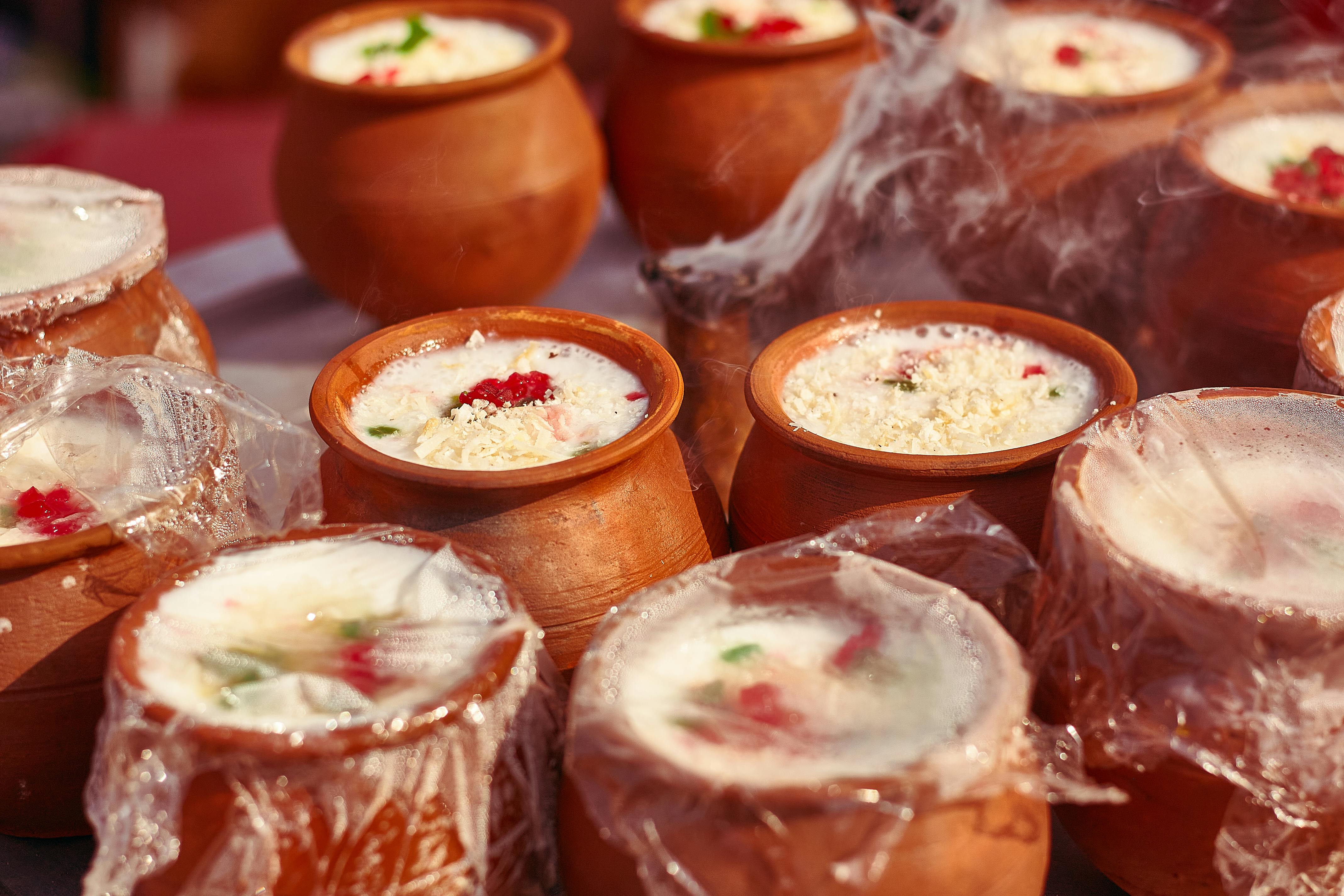
Juju Dhau is a traditional Nepali sweetened yogurt made from rich buffalo milk with added sugar as a core ingredient. While buffalo milk yogurt itself contains some fat and protein, the explicit addition of sugar makes this dish incompatible with ketogenic eating. A typical serving of Juju Dhau contains significant added sugar, pushing net carbs well above keto thresholds. Sugar is zero-tolerance on keto regardless of the fat content of the base milk. The spices (cardamom, cinnamon, cloves) are negligible in carb impact, but they cannot offset the fundamental issue of intentional sugar addition. This dish cannot be consumed in any reasonable portion without breaking ketosis.
Juju Dhau is a traditional Nepali buffalo milk yogurt. Its primary and defining ingredient is buffalo milk, an animal-derived dairy product that is unambiguously excluded from a vegan diet. The yogurt culture is derived from fermenting milk, and the dish cannot be made without the animal product at its core. The remaining ingredients (cardamom, cinnamon, cloves, sugar) are plant-based, but they are merely flavorings and do not change the fundamental non-vegan nature of this dish.
Juju Dhau is a traditional Nepali buffalo milk yogurt sweetened with sugar. The two primary components — dairy (buffalo milk and yogurt culture) and refined sugar — are both clearly excluded from the paleo diet. Dairy is excluded because Paleolithic humans did not consume milk beyond infancy and lacked the widespread lactase persistence seen in post-Neolithic populations. Refined sugar is a processed food with no place in ancestral eating. The spices (cardamom, cinnamon, cloves) are fully paleo-approved, but they cannot offset the core non-paleo ingredients that define this dish. This is fundamentally a dairy-and-sugar dessert, making it a clear avoid.
Juju Dhau is a traditional Nepali sweetened yogurt made from buffalo milk. As a dairy product, it falls into the 'moderate' category of the Mediterranean diet — acceptable but not a core staple. Buffalo milk is higher in fat and calories than cow's milk, which adds some concern compared to standard yogurt. The added sugar is a mild negative, though the amount is typically modest. On the positive side, it is a fermented dairy product (yogurt culture), which aligns with Mediterranean appreciation for fermented dairy like Greek yogurt. The spices (cardamom, cinnamon, cloves) are anti-inflammatory and compatible. Overall, this is a treat-style dairy snack — fine occasionally, but the buffalo milk fat content and added sugar prevent full approval.
Some Mediterranean diet practitioners, particularly those drawing on traditional Greek and Turkish culinary norms, view sweetened strained yogurt desserts as culturally analogous to acceptable dairy indulgences. From this perspective, a small serving of Juju Dhau could be seen as comparable to a honey-drizzled Greek yogurt — a modest, occasional treat that is not problematic. However, modern clinical Mediterranean diet guidelines emphasize minimizing added sugars even in dairy contexts.
Juju Dhau is a traditional Nepali sweet yogurt made from buffalo milk. While buffalo milk and yogurt culture are animal-derived and would otherwise be debated within the carnivore community, this dish is disqualified primarily by its non-animal ingredients: sugar (processed, plant-derived sweetener) and three plant-based spices (cardamom, cinnamon, and cloves). Sugar is explicitly excluded on carnivore — it is a processed plant-derived carbohydrate with no place even in lenient carnivore frameworks. The spices add additional plant compounds. Even practitioners who accept dairy cannot justify the added sugar and spices. The buffalo milk base is a positive factor, but the overall formulation is incompatible with carnivore principles.
Some lenient 'animal-based' practitioners following Paul Saladino's approach might tolerate trace spices as acceptable flavor enhancers, but even that camp excludes refined sugar. No mainstream carnivore authority would approve this dish as formulated due to the sugar content.
Juju Dhau is a traditional Nepali sweet yogurt that contains two excluded ingredients: (1) buffalo milk, which is dairy and explicitly excluded on Whole30, and (2) added sugar, which is explicitly excluded on Whole30. While the yogurt culture, cardamom, cinnamon, and cloves are all compliant, the foundational dairy component and the added sugar make this dish clearly non-compliant. There are no exceptions for yogurt or flavored/sweetened dairy products in the Whole30 program.
Juju Dhau is a traditional Nepali set yogurt made from rich buffalo milk, sugar, and yogurt cultures with spices. The primary FODMAP concern is lactose. Buffalo milk is high in lactose (similar to or higher than cow's milk), and while yogurt fermentation reduces lactose content somewhat, the degree of reduction depends on fermentation time, culture activity, and the thick set-yogurt style of preparation. Unlike strained yogurts (e.g., Greek yogurt) where lactose partially drains away with the whey, Juju Dhau retains all its whey and thus retains more lactose. Monash University rates regular (cow's milk) yogurt as high-FODMAP at standard serving sizes (>2/3 cup), and low-FODMAP only at small portions (~125g for lactose-reduced or certain firm varieties). Buffalo milk yogurt is likely higher in lactose per gram than cow's milk yogurt due to higher total solids and the non-strained format, making a standard serving (typically 100–200g) high in lactose. The added sugar is low-FODMAP (sucrose is not a FODMAP). Cardamom, cinnamon, and cloves at typical spice quantities are low-FODMAP. The disqualifying ingredient is the buffalo milk yogurt base itself at a realistic serving size.
Monash University has not specifically tested buffalo milk yogurt or Juju Dhau; their yogurt ratings are based on cow's milk varieties. Some FODMAP practitioners note that traditional fermented yogurts — especially those with long set times — may have meaningfully reduced lactose, and a small portion (e.g., 2–3 tablespoons) might be tolerated by those with moderate lactose sensitivity. However, during the strict elimination phase, most clinical dietitians advise avoiding all regular (non-lactose-free) yogurts made from high-lactose milks, and buffalo milk yogurt in a standard snack serving would exceed safe lactose thresholds.
Juju Dhau is a traditional Nepali 'King Curd' made from full-fat buffalo milk, which is significantly higher in saturated fat than cow's milk (buffalo milk contains roughly 7-8% fat vs. ~3.5% in cow's milk). DASH guidelines explicitly specify low-fat or fat-free dairy, making full-fat buffalo milk yogurt a departure from core DASH recommendations. The added sugar is also a concern, as DASH limits sweets and added sugars. On the positive side, it is a fermented dairy product providing calcium, probiotics, and some potassium and magnesium. The spices (cardamom, cinnamon, cloves) are DASH-friendly and add no sodium. Low sodium content is a clear positive. However, the high saturated fat from buffalo milk and the added sugar prevent an 'approve' rating under standard DASH guidelines. It is acceptable occasionally in small portions but not a core DASH food.
NIH DASH guidelines categorically recommend low-fat or fat-free dairy due to saturated fat concerns. However, updated clinical interpretations note that recent meta-analyses (including studies cited in the 2020-2025 Dietary Guidelines context) suggest full-fat fermented dairy like yogurt may not adversely affect cardiovascular outcomes and could even be neutral or beneficial — some DASH-oriented clinicians may permit moderate portions of full-fat yogurt, including buffalo milk varieties, especially given their high calcium density.
Juju Dhau is a traditional Nepali 'king yogurt' made from rich buffalo milk, sugar, and aromatic spices. From a Zone perspective, it presents several challenges. Buffalo milk is significantly higher in fat and calories than cow's milk, with a notably higher saturated fat content — something the Zone Diet discourages. The added sugar pushes the glycemic load higher, making this an 'unfavorable' carbohydrate source. However, the yogurt base does provide protein and the fermentation culture offers some probiotic benefit. The spices (cardamom, cinnamon, cloves) are actually polyphenol-rich and anti-inflammatory, aligning with Sears' later emphasis on polyphenols. As a snack, a small portion could technically be incorporated into a Zone block framework, but the saturated fat-to-monounsaturated fat ratio and the added sugar make careful portioning essential. It is not categorically 'avoid' since plain yogurt is a usable Zone protein/carb source, but the buffalo milk fat content and sugar addition push this into 'unfavorable' territory.
Some Zone practitioners following Sears' later anti-inflammatory writings (notably 'The Zone,' revised editions and 'Toxic Fat') may argue that full-fat dairy's saturated fat is less harmful in context than refined processed foods, and that the polyphenol-rich spices (cinnamon is specifically highlighted by Sears for blood sugar regulation) partially offset concerns. In small portions as a 1-block snack, the yogurt protein and controlled carb content could fit a Zone block with minimal added fat blocks needed.
Juju Dhau is a traditional Nepali 'king yogurt' made from full-fat buffalo milk, sugar, yogurt culture, and anti-inflammatory spices. The profile is genuinely mixed. On the pro-inflammatory side: buffalo milk is significantly higher in saturated fat than cow's milk (roughly 7-8% fat vs. 3-4%), and added sugar — even in modest culinary amounts — is a flag in anti-inflammatory frameworks. Full-fat dairy and added sugar are both in the 'limit' category. On the anti-inflammatory side: the yogurt culture provides beneficial probiotics, which are broadly recognized for supporting gut health and modulating inflammatory pathways (reducing systemic CRP). Cardamom, cinnamon, and cloves are all well-regarded anti-inflammatory spices with meaningful polyphenol and antioxidant content — cloves in particular have among the highest ORAC values of any spice. The fermentation process also partially breaks down lactose and casein, which may reduce inflammatory burden compared to unfermented full-fat dairy. Overall, the beneficial spices and probiotic content partially offset the saturated fat and sugar concerns, but the high-fat dairy base and added sugar prevent an 'approve' verdict. Consumed occasionally in small portions (as is traditional for a snack), it sits in cautious moderation territory.
Some anti-inflammatory practitioners, including those aligned with Dr. Weil's framework, argue that full-fat fermented dairy occupies a nuanced zone — fermentation-derived probiotics and fat-soluble nutrients (vitamins A, D, K2) may confer net anti-inflammatory benefits, and emerging research (e.g., studies in Nutrients and the American Journal of Clinical Nutrition) suggests full-fat dairy is not clearly pro-inflammatory for most people. By contrast, stricter anti-inflammatory and AIP-aligned approaches would flag the high saturated fat content of buffalo milk and added sugar as disqualifying for regular consumption.
Juju Dhau is a traditional Nepali 'king yogurt' made from whole buffalo milk, which is significantly higher in fat than cow's milk yogurt (buffalo milk typically contains 7-8% fat vs. 3-4% for cow's milk). It also contains added sugar, reducing its nutrient density per calorie. On the positive side, it does provide some protein and probiotics from the yogurt culture, and the spices (cardamom, cinnamon, cloves) are GLP-1 friendly and may aid digestion. However, the high fat content from buffalo milk risks worsening GLP-1 side effects such as nausea, bloating, and reflux, and the added sugar contributes empty calories with no fiber. It is not protein-dense enough to serve as a meaningful protein source for GLP-1 patients, and the sugar-fat combination makes it a low-priority food when calorie budgets are tight. Small portions on occasion are acceptable, but it should not be a dietary staple.
Some GLP-1-focused dietitians may view fermented dairy like Juju Dhau more favorably due to its probiotic content, which can support gut health and mitigate GI side effects such as constipation. Others will flag the high saturated fat from buffalo milk and added sugar as disqualifying factors given reduced caloric intake and heightened GI sensitivity on these medications.
*See how scores were generated at our methodology page.
Nutritional profile
Six traits that cut across every diet.
Fiber & Plants
How much whole-plant food and fiber it delivers.
Healthy Fats
The quality of its fats (unsaturated, omega-3).
Whole / Unprocessed
How close it is to its natural, unprocessed form.
Gut Gentle
How easy it is on digestion (low FODMAP, few irritants).
Low Glycemic
How little it spikes your blood sugar.
Protein Density
How much protein it packs per calorie.
Controversy Index
Higher controversy = more disagreement between diets.
Diet-Specific Tips
 Mediterranean — 5/10
View tips
- Buffalo milk yogurt is a fermented dairy — aligns with Mediterranean moderate dairy inclusion
- Higher fat content of buffalo milk compared to standard cow's milk yogurt
- Added sugar is a mild negative under Mediterranean principles
- Aromatic spices (cardamom, cinnamon, cloves) are anti-inflammatory and diet-compatible
- Consumed as a snack/dessert rather than a staple — limits overall diet impact
- Not traditional to Mediterranean cuisine but structurally similar to sweetened yogurt desserts in the region
 DASH — 4/10
View tips
- Full-fat buffalo milk is high in saturated fat (~7-8% fat), conflicting with DASH low-fat dairy requirement
- Added sugar increases caloric and glycemic load, which DASH recommends limiting
- Very low sodium — a strong positive for DASH compliance
- Provides calcium and probiotics consistent with DASH dairy goals
- Spices (cardamom, cinnamon, cloves) are DASH-compatible and add no sodium
- Portion size matters — small servings reduce saturated fat and sugar impact
- Emerging research on full-fat fermented dairy creates some ambiguity in strict DASH application
 Zone — 4/10
View tips
- Buffalo milk is high in saturated fat, which Zone Diet discourages in favor of monounsaturated fats
- Added sugar is an 'unfavorable' carbohydrate that raises glycemic load
- Yogurt base provides protein and qualifies as a usable Zone protein/carb source
- Probiotic fermentation culture aligns with Sears' gut health recommendations
- Cardamom, cinnamon, and cloves are polyphenol-rich spices Sears endorses for anti-inflammatory effect
- No lean protein present, so this functions as a carb-fat snack block requiring supplemental protein
- Small portions could technically fit into a Zone snack block structure
 Anti-Inflammatory — 4/10
View tips
- Buffalo milk is high in saturated fat — flagged in anti-inflammatory guidelines under 'limit'
- Added sugar is a pro-inflammatory concern, even in moderate culinary amounts
- Yogurt culture provides probiotics with documented anti-inflammatory and gut-modulating effects
- Cardamom, cinnamon, and cloves are potent anti-inflammatory spices rich in polyphenols and antioxidants
- Fermentation partially mitigates the inflammatory burden of full-fat dairy
- Traditional serving size is small, which moderates overall impact
- No omega-3s, no high-antioxidant vegetables — limited positive drivers beyond spices and probiotics
 GLP-1 Friendly — 4/10
View tips
- High fat content from buffalo milk (7-8% fat) increases risk of nausea, bloating, and reflux on GLP-1 medications
- Contains added sugar, reducing nutrient density per calorie with no fiber offset
- Moderate protein from yogurt culture, but insufficient protein density to meaningfully support GLP-1 protein targets
- Probiotic content from yogurt culture is a minor benefit for gut health
- Digestive spices (cardamom, cinnamon, cloves) are GLP-1 friendly
- No fiber content
- Small portions only if consumed; not recommended as a regular dietary choice