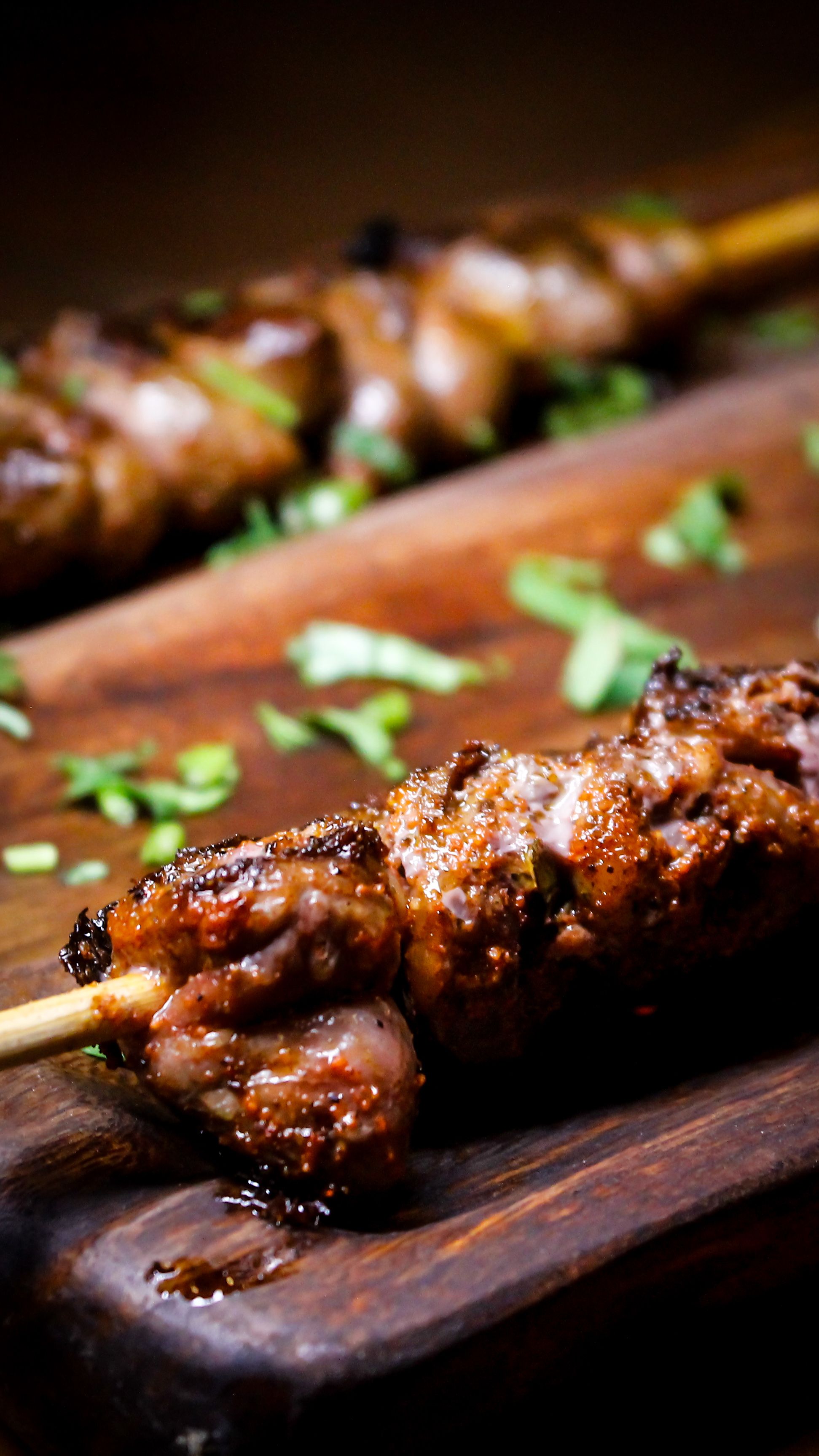
Photo: Caio Niceas / Pexels
The diets react (see scores below)
Common Ingredients
- goat meat
- ginger
- garlic
- cumin
- turmeric
- chili powder
- mustard oil
- timur
- cilantro
Specific recipes may vary.
Incompatible with 4 of 11 diets
Diet Ratings
Sekuwa is a Nepali grilled/skewered goat meat dish that is fundamentally keto-friendly. Goat meat is a lean-to-moderate protein with negligible carbohydrates. The marinade consists entirely of low-carb spices (ginger, garlic, cumin, turmeric, chili powder, timur/Sichuan pepper, cilantro) and mustard oil, which is a healthy fat. The net carb contribution from the spice quantities used in a typical serving is minimal (under 2-3g). Mustard oil adds healthy fats, aligning well with keto macros. There are no grains, sugars, starches, or high-carb ingredients in this dish. This is essentially a clean, whole-food, high-protein, moderate-fat snack that fits well within ketogenic parameters.
Sekuwa is a traditional Nepali grilled meat dish with goat meat as its primary and central ingredient. Goat meat is an animal product — specifically mammalian flesh — which is unambiguously excluded from a vegan diet. No substitution or interpretation changes this fact. The remaining ingredients (ginger, garlic, cumin, turmeric, chili powder, mustard oil, timur/Sichuan pepper, cilantro) are all plant-based, but the dish is defined by and built around goat meat, making it entirely incompatible with vegan dietary standards.
Sekuwa is a Nepali grilled goat meat skewer seasoned with ginger, garlic, cumin, turmeric, chili powder, timur (Sichuan pepper), and cilantro — all paleo-approved ingredients. The primary concern is mustard oil, which is a seed oil derived from mustard seeds. The paleo framework generally excludes seed oils in favor of animal fats, olive oil, coconut oil, avocado oil, and similar options. Mustard oil is not a mainstream seed oil in the Western sense (it has a distinct fatty acid profile with erucic acid and some omega-3 content), but it is pressed from a seed and not part of the preferred paleo fat list. All other components — goat meat, spices, herbs — are straightforwardly paleo-approved. The dish is otherwise very close to an ideal paleo meal (grilled unprocessed meat with whole spices), held back only by the oil used in marination.
Some paleo practitioners with a broader view of traditional fats may accept mustard oil given its long history of use in South Asian cuisine and its relatively high omega-3 content compared to common seed oils; they argue ancestral populations in the region would have used it, aligning with an ancestral health framework over a strict Cordain-school definition.
Sekuwa is a Nepali grilled goat meat skewer. Goat is a red meat, which the Mediterranean diet restricts to a few times per month at most. While the spices (ginger, garlic, cumin, turmeric, chili, cilantro) are flavorful and health-supportive, the primary protein is red meat, which is the defining concern here. Additionally, mustard oil is used as the fat rather than extra virgin olive oil, which is not aligned with Mediterranean dietary principles. The dish has no plant-based components beyond aromatics and spices, and offers no vegetables, legumes, or whole grains. As a snack centered on red meat, it clearly contradicts core Mediterranean diet guidance around limiting red meat and emphasizing plant-forward eating.
Sekuwa is a Nepali grilled goat meat skewer that is heavily marinated in plant-based ingredients. While goat meat itself is carnivore-approved, this dish contains numerous plant-derived components that violate carnivore principles: ginger, garlic, cumin, turmeric, chili powder, mustard oil (a plant oil), timur (Sichuan pepper, a plant spice), and cilantro. The marinade is essentially a plant-compound delivery vehicle. Mustard oil is a plant-derived oil, which is explicitly excluded on carnivore. The combination of multiple spices, herbs, and plant oil makes this dish fundamentally incompatible with carnivore eating. The only salvageable element is the goat meat itself — if one were to strip all marinade and grill the meat plain with salt, it would be carnivore-compliant.
Sekuwa is a Nepali grilled meat dish featuring goat meat marinated in whole spices and herbs. Every ingredient is fully Whole30 compliant: goat meat is an unprocessed protein, ginger, garlic, cumin, turmeric, chili powder, and cilantro are all allowed herbs and spices, mustard oil is a natural fat permitted on Whole30, and timur (Sichuan pepper/Nepali peppercorn) is a natural spice with no excluded components. There are no grains, legumes, dairy, added sugars, or other excluded ingredients. This is a clean, whole-food preparation that aligns perfectly with the program's intent.
Sekuwa contains garlic as a primary marinade ingredient, which is one of the highest-FODMAP foods due to fructans and must be strictly avoided during the elimination phase at any reasonable serving size. Garlic is used as a direct ingredient in the marinade, not infused into oil, meaning the fructans remain fully present in the meat. The remaining ingredients are generally low-FODMAP: goat meat (protein, no FODMAPs), ginger (low-FODMAP at typical culinary amounts), cumin (low-FODMAP at typical spice amounts), turmeric (low-FODMAP), chili powder (low-FODMAP at small amounts), mustard oil (fat, no FODMAPs), timur/Sichuan pepper (low-FODMAP, no Monash concern), and cilantro (low-FODMAP). However, garlic alone disqualifies this dish during the elimination phase. If garlic were replaced with garlic-infused oil, the dish could potentially be low-FODMAP.
Sekuwa is a Nepali grilled/skewered goat meat dish seasoned with spices. Goat meat is a lean red meat — it is lower in saturated fat than beef or lamb and is a good source of protein, iron, and potassium. DASH guidelines limit red meat in general, recommending no more than 6 oz of lean meat per day and favoring poultry and fish. However, goat is one of the leaner red meats, making it more acceptable than fatty cuts of beef or lamb. The spice blend (ginger, garlic, cumin, turmeric, chili powder, timur/Sichuan pepper, cilantro) is sodium-free and adds anti-inflammatory, antioxidant benefits — a clear positive. Mustard oil is unsaturated (high in monounsaturated and omega-3 fatty acids) and generally DASH-compatible, though it is not commonly referenced in NIH DASH materials. The dish appears to be relatively low in sodium as prepared, with no added salt in the listed ingredients. The primary concern is the red meat classification under DASH, which recommends limiting red meat and preferring leaner proteins. As a snack portion rather than a main course, the serving size likely mitigates the red meat concern. Overall, acceptable in moderation within DASH parameters.
NIH DASH guidelines broadly categorize all red meat as a limited food, favoring poultry and fish instead. However, updated clinical interpretations increasingly distinguish lean red meats like goat from fatty red meats, noting goat's favorable saturated fat profile (comparable to chicken) — some DASH-oriented dietitians would consider lean goat meat in moderate portions more permissible than the original DASH framework strictly implies.
Sekuwa is a Nepali grilled/barbecued goat meat skewer seasoned with aromatic spices. The protein source — goat meat — is actually leaner than many red meats and comparable to chicken in fat content, making it a reasonable Zone protein choice. The spice blend (ginger, garlic, cumin, turmeric, chili, timur/Sichuan pepper, cilantro) is anti-inflammatory and polyphenol-rich, which aligns well with Dr. Sears' later anti-inflammatory Zone emphasis. However, two factors push this to 'caution': (1) Mustard oil is the primary fat source — it is high in erucic acid and contains a mix of omega-3 ALA and omega-6 fatty acids, making it less ideal than monounsaturated olive oil or avocado oil preferred in Zone methodology; it is not a trans fat but is not the favored fat type. (2) As a snack, Sekuwa is essentially pure protein and fat with minimal carbohydrates, meaning it is macronutrient-imbalanced for Zone purposes — it lacks the low-glycemic carbohydrate component needed to achieve the 40/30/30 ratio. To fit Zone protocol, it would need to be paired with a vegetable side or low-GI fruit to complete the carb block. The dish itself is Zone-compatible as a protein/fat component but cannot serve as a standalone Zone snack without carbohydrate addition.
Some Zone practitioners following Sears' later anti-inflammatory writings (Toxic Fat, The Anti-Inflammation Zone) would view goat meat more favorably than conventional red meats due to its relatively favorable fatty acid profile and lower saturated fat content. Additionally, mustard oil, while not the Zone ideal, contains ALA omega-3s and some practitioners in South Asian Zone adaptation contexts accept it as a reasonable regional substitute for olive oil. In those frameworks, Sekuwa paired with a small vegetable serving could score closer to 6-7.
Sekuwa is a Nepali grilled/skewered meat dish made with goat meat and a strongly anti-inflammatory spice blend. The spice profile is genuinely impressive from an anti-inflammatory standpoint: turmeric (curcumin), ginger, garlic, cumin, chili powder, and timur (Sichuan pepper) all have well-documented anti-inflammatory properties, including NF-κB inhibition and antioxidant activity. Cilantro adds additional polyphenols. However, the primary protein — goat meat — is red meat, which the anti-inflammatory framework places in the 'limit' category due to saturated fat content and arachidonic acid, both of which can promote inflammatory signaling at higher intakes. Goat is notably leaner than beef or lamb and has a more favorable fat profile than most red meats, which softens the concern somewhat. The more significant issue is mustard oil: while it is rich in ALA (alpha-linolenic acid, an omega-3) and erucic acid with some anti-inflammatory potential, it sits in a debated zone. Traditional cold-pressed mustard oil has a reasonable omega-3 to omega-6 ratio and is used in anti-inflammatory cooking traditions, but it is also high in erucic acid (which raises cardiovascular concerns at high intake) and is banned for edible use in some Western countries. Most mainstream anti-inflammatory protocols do not endorse it, though South Asian culinary medicine traditions view it positively. On balance, the dish is a mixed profile: excellent spices and lean red meat tempered by the mustard oil question. As a snack portion rather than a daily staple, it falls solidly in the caution/moderate range.
Cold-pressed mustard oil is high in ALA omega-3s and monounsaturated fats, and Ayurvedic and South Asian anti-inflammatory traditions consider it therapeutic — some integrative practitioners would view this dish more favorably given the spice synergy and goat's leanness. Conversely, strict anti-inflammatory protocols (and the FDA) flag erucic acid in mustard oil as a concern, and red meat as a category is recommended to be limited regardless of leanness.
Sekuwa is a Nepali grilled/skewered goat meat dish seasoned with ginger, garlic, cumin, turmeric, chili powder, mustard oil, timur (Sichuan pepper), and cilantro. As a protein source it has genuine merit — goat is a lean red meat relative to beef or lamb, delivering solid protein per serving to support the GLP-1 priority of muscle preservation. However, several factors limit the rating. First, goat still carries moderate saturated fat, which is less favorable than chicken breast, fish, or legumes for GLP-1 patients sensitive to fat-triggered nausea and slowed gastric emptying. Second, mustard oil is a high-fat cooking medium; even in moderate amounts it adds caloric density and fat load that can worsen GI side effects. Third, the spice profile is assertive — chili powder plus timur (which has a numbing, peppery intensity) creates meaningful GI irritation risk, particularly reflux and nausea, which are already primary GLP-1 side effect concerns. Fourth, sekuwa is a snack-category dish, typically eaten as a small skewered portion, which is portion-friendly; this partially offsets the fat concern. Fifth, there is no fiber contribution and no hydration support. For a GLP-1 patient who tolerates spice well and keeps the portion small (2-3 skewers), this is an acceptable occasional choice. It should not be a dietary staple given the saturated fat and spice load.
Some GLP-1-focused dietitians accept lean red meats like goat in moderation, citing their high biological value protein and micronutrient density (iron, zinc, B12) that become critical when total caloric intake drops significantly — nutrients that plant proteins alone may not adequately supply. Others caution that even lean red meat raises saturation fat intake enough to meaningfully worsen nausea and reflux in gastroparesis-adjacent GLP-1 physiology, and recommend reserving red meat for patients who are fully side-effect stable.
*See how scores were generated at our methodology page.
Nutritional profile
Six traits that cut across every diet.
Fiber & Plants
How much whole-plant food and fiber it delivers.
Healthy Fats
The quality of its fats (unsaturated, omega-3).
Whole / Unprocessed
How close it is to its natural, unprocessed form.
Gut Gentle
How easy it is on digestion (low FODMAP, few irritants).
Low Glycemic
How little it spikes your blood sugar.
Protein Density
How much protein it packs per calorie.
Controversy Index
Higher controversy = more disagreement between diets.
Diet-Specific Tips
 Keto — 9/10
View tips
- Goat meat is a high-quality, zero-carb protein source
- All marinade ingredients are keto-compatible spices with negligible net carbs
- Mustard oil contributes healthy fats, supporting keto fat macros
- No added sugars, grains, or starchy ingredients present
- Timur (Sichuan pepper) is a low-carb spice with no meaningful carb impact
- Whole, unprocessed food preparation aligns with keto best practices
 Paleo — 5/10
View tips
- Goat meat is fully paleo-approved — unprocessed, nutrient-dense protein
- All spices (ginger, garlic, cumin, turmeric, chili powder, timur, cilantro) are paleo-compliant
- Mustard oil is a seed oil and falls outside the recommended paleo fat sources
- Grilling method aligns well with paleo cooking philosophy
- No grains, legumes, dairy, or refined sugar present
- Dish would score 8-9 if animal fat or coconut oil replaced mustard oil
 Whole30 — 9/10
View tips
- Goat meat is a compliant whole protein
- All spices (cumin, turmeric, chili powder, timur) are naturally Whole30-compliant
- Mustard oil is a natural, allowed fat
- No grains, legumes, dairy, or added sugar present
- Timur (Sichuan pepper) is a whole spice with no excluded additives
- Dish is a traditional grilled preparation, not a recreated junk food
 DASH — 5/10
View tips
- Goat meat is red meat, which DASH recommends limiting in favor of poultry and fish
- Goat is among the leanest red meats with relatively low saturated fat content
- No added sodium in the ingredient list — spice-based seasoning is DASH-friendly
- Mustard oil is high in unsaturated fats (MUFA and ALA omega-3), compatible with DASH fat guidelines
- Anti-inflammatory spice blend (turmeric, ginger, garlic, cumin) aligns with DASH's emphasis on nutrient-rich foods
- Snack portion size reduces red meat intake concern relative to a full main dish serving
- Timur (Sichuan pepper) adds negligible sodium and is not a DASH concern
 Zone — 5/10
View tips
- Goat meat is leaner than most red meats, comparable to chicken — reasonable Zone protein source
- Anti-inflammatory spice profile (turmeric, ginger, garlic, timur) aligns with Sears' polyphenol emphasis
- Mustard oil is not the preferred Zone fat — less monounsaturated than olive oil or avocado oil
- As a standalone snack, the dish is carbohydrate-deficient — violates 40/30/30 ratio without pairing
- Needs low-glycemic vegetable or fruit pairing to complete Zone block structure
- No added sugar, no high-glycemic ingredients — favorable in that respect
- Portion control on goat meat needed (~85-90g cooked to approximate 3 protein blocks)
 Anti-Inflammatory — 5/10
View tips
- Goat meat is red meat — falls in the 'limit' category — but is leaner than beef or lamb with lower saturated fat
- Turmeric (curcumin) is one of the most researched anti-inflammatory spices — a strong positive
- Ginger, garlic, cumin, and chili powder all have anti-inflammatory evidence
- Timur (Sichuan/Nepalese pepper) contains hydroxy-alpha-sanshool with antioxidant properties
- Mustard oil is debated: high in ALA omega-3s and MUFAs but also erucic acid; not endorsed by mainstream anti-inflammatory Western frameworks
- Grilling preparation is preferable to deep-frying but high-heat cooking of red meat can generate pro-inflammatory advanced glycation end products (AGEs)
- Snack portion size limits overall red meat and oil exposure
 GLP-1 Friendly — 4/10
View tips
- Goat is a relatively lean red meat with good protein density, supporting muscle preservation
- Moderate saturated fat content is less ideal than chicken, fish, or legumes for GLP-1 patients
- Mustard oil adds fat load that may worsen nausea and GI side effects
- Chili powder and timur (Sichuan pepper) create meaningful reflux and nausea risk
- No fiber content — does not support GLP-1 digestive side effect management
- No hydration contribution
- Small skewer portion format is GLP-1-friendly and limits fat exposure per sitting
- Acceptable occasionally for spice-tolerant patients who are GI side-effect stable