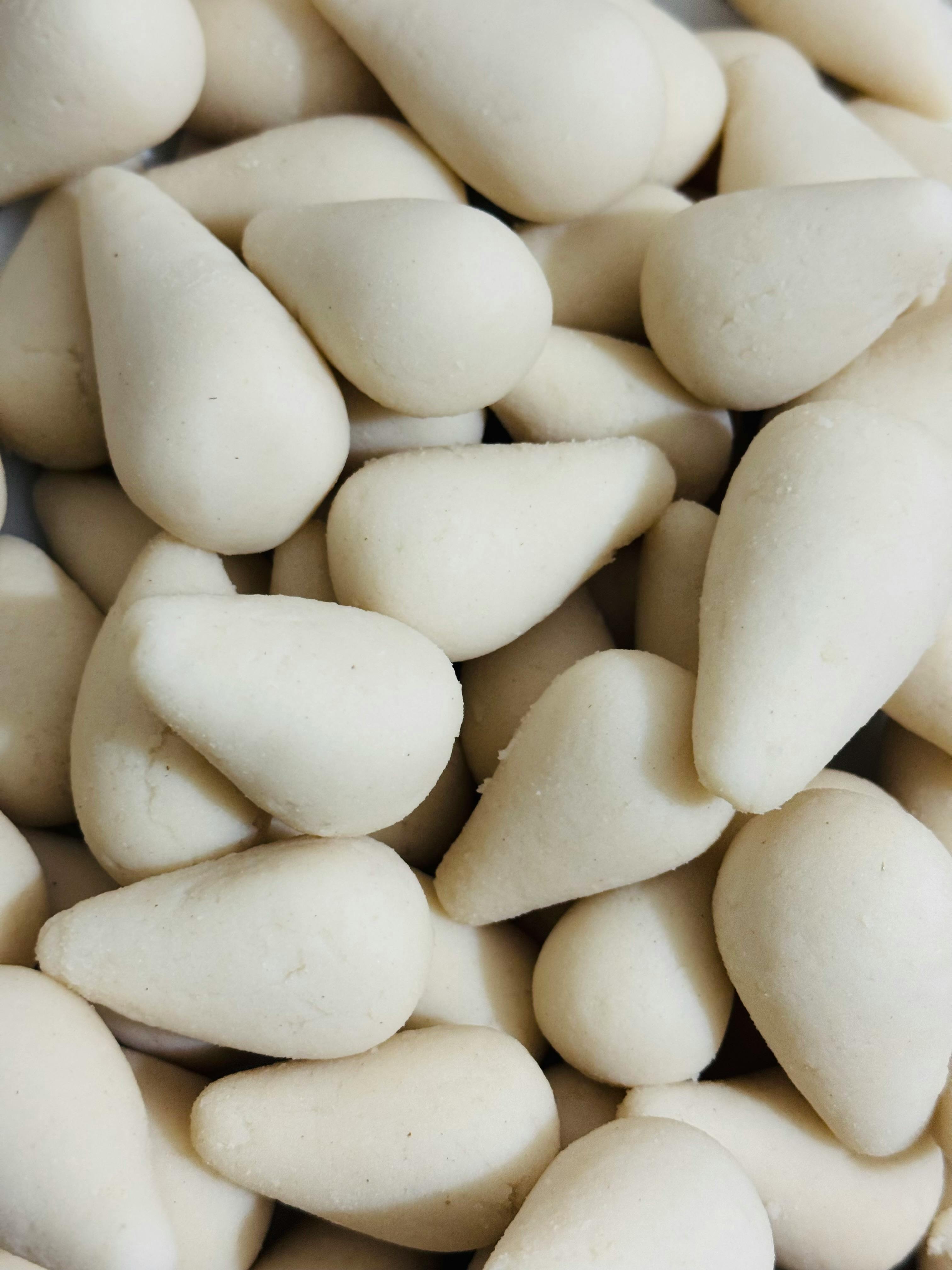
Photo: Fahim shizan / Pexels
The diets react (see scores below)
Common Ingredients
- rice flour
- molasses
- sesame seeds
- coconut
- cardamom
- water
Specific recipes may vary.
Incompatible with 7 of 11 diets
Diet Ratings
Yomari is a traditional Nepali steamed dumpling made from rice flour dough filled with molasses, sesame seeds, and coconut. Every primary component is deeply incompatible with ketogenic eating. Rice flour is a high-glycemic grain-based flour with approximately 80g of net carbs per 100g — far exceeding the entire daily keto carb budget in a single serving. Molasses is essentially concentrated sugar syrup, one of the highest-sugar sweeteners available, containing roughly 74g of carbohydrates per 100g. Even the coconut and sesame seeds, which are individually keto-friendly ingredients, are completely overwhelmed by the dominant carbohydrate load from the rice flour and molasses. A single Yomari would likely contain 40-60g of net carbs, instantly breaking ketosis. There is no realistic portion size that makes this dish compatible with a ketogenic diet.
Yomari is a traditional Newari steamed rice flour dumpling filled with a mixture of molasses (chaku), sesame seeds, coconut, and cardamom. Every ingredient listed is entirely plant-based: rice flour is a whole grain product, molasses is a plant-derived sweetener from sugarcane, sesame seeds and coconut are whole plant foods, and cardamom is a spice. There are no animal products, animal-derived ingredients, or ethically contested components present. The dish is made with predominantly whole, minimally processed ingredients, warranting a high score within the approve range.
Yomari is a traditional Nepali steamed dumpling whose wrapper is made entirely from rice flour — a grain product that is categorically excluded from the paleo diet. Rice flour retains the starchy grain profile of rice and is not a food available in any meaningful processed form to Paleolithic hunter-gatherers. The filling contains molasses, which is a refined sugar byproduct of cane processing and equally excluded. While several individual ingredients — sesame seeds, coconut, and cardamom — are paleo-compliant, and water is obviously neutral, the two foundational components (rice flour wrapper and molasses filling) are clear paleo violations. No version of this dish can be made paleo-compliant without fundamentally reconstructing it into a different dish entirely.
Yomari is a traditional Nepali steamed rice flour dumpling filled with molasses, sesame seeds, coconut, and cardamom. From a Mediterranean diet perspective, the primary concern is the refined rice flour wrapper, which is a refined grain offering little fiber or nutritional density compared to whole grains. Molasses, while containing some minerals and being less processed than refined sugar, is still a concentrated added sugar and sweetener, which the Mediterranean diet minimizes. The sesame seeds and coconut add some plant-based fats, which are mild positives, but coconut's high saturated fat content is not aligned with the olive-oil-centric fat profile. Overall, this is a sweet, refined-grain-based snack that contradicts core Mediterranean principles of whole grains and minimal added sugars.
Some Mediterranean diet interpreters note that sesame seeds (tahini) are deeply embedded in Mediterranean culinary tradition and carry genuine nutritional value, and that molasses, unlike refined sugar, retains trace minerals. A lenient interpretation might view this as an occasional treat with redeeming plant-based elements, similar to how small amounts of traditional sweets like baklava are tolerated in the broader Mediterranean dietary pattern.
Yomari is a traditional Nepali steamed dumpling made entirely from plant-based ingredients. Rice flour forms the dough, while the filling consists of molasses, sesame seeds, coconut, and cardamom — all plant-derived. There is zero animal content in this dish. Every single ingredient is explicitly excluded on the carnivore diet: rice flour is a grain, molasses is a plant-derived sugar, sesame seeds are seeds, coconut is a plant, and cardamom is a spice. This dish is fundamentally incompatible with carnivore principles at every level.
Yomari is a traditional Nepali steamed dumpling made with rice flour dough and filled with molasses, sesame seeds, and coconut. It fails Whole30 compliance on two separate grounds. First, rice flour is a grain product — rice is explicitly excluded under Whole30 rules. Second, even if the grain issue were set aside, Yomari is a classic example of a 'recreated baked good/dumpling' — a filled dough snack that falls squarely within the excluded category of baked goods and grain-based comfort foods. Molasses is also an added sugar, providing a third disqualifying ingredient. There is no compliant version of this dish possible, as its structure is fundamentally built on excluded ingredients.
Yomari is a Nepali steamed dumpling made with rice flour dough filled with a mixture of molasses (chaku), sesame seeds, coconut, and cardamom. The rice flour wrapper is low-FODMAP and safe. Cardamom and sesame seeds are low-FODMAP at standard serving sizes. Desiccated or shredded coconut is low-FODMAP at small amounts (~1/4 cup) but becomes high-FODMAP at larger servings due to polyols (sorbitol). The key concern is molasses (chaku): molasses is a concentrated byproduct of sugar cane processing and contains fructans and excess fructose. Monash has not specifically tested molasses, but dark/blackstrap molasses is generally considered high-FODMAP due to its concentrated sugars and fructan content. A traditional Yomari contains a substantial filling of molasses, meaning the fructan and potentially excess fructose load could be significant. While the rice flour shell is safe, the sweet molasses-coconut filling makes this dish problematic during strict elimination unless consumed in very small amounts.
Monash University has not specifically tested molasses or traditional Yomari, so FODMAP load depends on the type of molasses (light vs. blackstrap) and portion consumed. Some FODMAP practitioners may consider a single small Yomari borderline acceptable if molasses content is minimal, while stricter elimination protocols would advise avoiding it entirely due to the unquantified fructan/fructose risk from molasses.
Yomari is a traditional Nepali steamed dumpling made from rice flour and filled with molasses, sesame seeds, coconut, and cardamom. From a DASH perspective, this dish has several positives: it is low in sodium, contains no saturated fat from animal sources, and includes sesame seeds (a source of magnesium, calcium, and healthy fats) and whole-food spices. However, it raises caution for two key reasons: (1) molasses provides significant added sugar, which DASH guidelines recommend limiting, though blackstrap molasses does contain potassium, calcium, and iron that partially offset concerns; (2) coconut contains saturated fat in the form of tropical oils/flesh, which DASH explicitly limits. The refined rice flour also lacks the fiber benefits of whole grains emphasized by DASH. As an occasional snack consumed in traditional small portions, it is borderline acceptable, but the combination of added sugar and coconut saturated fat prevents a full approval.
NIH DASH guidelines explicitly limit added sugars and tropical oils like coconut, pushing this toward caution or avoid. However, updated clinical interpretations note that the saturated fat in whole coconut flesh differs metabolically from coconut oil, and blackstrap molasses provides meaningful minerals (potassium, calcium, iron) — some DASH-oriented dietitians may accept Yomari as an occasional small-portion cultural food without significant concern.
Yomari is a Nepali steamed sweet dumpling made from rice flour dough filled with a mixture of molasses (chaku), sesame seeds, and coconut. From a Zone Diet perspective, this dish is highly problematic. The outer shell is made from refined rice flour, which is a high-glycemic carbohydrate offering little fiber to offset its glycemic load. The filling is dominated by molasses, which is essentially a concentrated sugar — one of the highest-glycemic, insulin-spiking ingredients possible. The entire macro profile is carbohydrate-heavy with virtually no protein (the dish lists 'none' as its primary protein), and the fat present comes primarily from coconut and sesame, which while not the worst fats, are accompanied by saturated fat (coconut) and omega-6-heavy sesame. There is no lean protein component to create a Zone-balanced block structure. The ratio is wildly skewed: almost entirely carbohydrates and fat, with negligible protein. Even with small portions, it is nearly impossible to incorporate this as a Zone snack without completely separate protein and fat additions that would dwarf the snack itself. The molasses-rice flour combination is essentially a pure sugar-starch delivery vehicle, which Zone explicitly identifies as the category of food most disruptive to insulin control.
Yomari is a traditional Newari steamed rice flour dumpling filled with a mixture of molasses (chaku), sesame seeds, and coconut, flavored with cardamom. The dish presents a genuinely mixed anti-inflammatory profile. On the positive side: sesame seeds contain sesamin and sesamolin, lignans with demonstrated anti-inflammatory properties, along with zinc and copper; coconut provides medium-chain triglycerides (MCTs), though its saturated fat content is debated; cardamom is a beneficial anti-inflammatory spice with antioxidant compounds; and the steaming cooking method avoids the oxidative damage of frying. Molasses, unlike refined sugar, retains iron, calcium, magnesium, and antioxidants — making it meaningfully less inflammatory than white sugar, though it is still a concentrated sweetener that raises blood sugar. Rice flour is a refined carbohydrate lacking the fiber and bran of whole grain rice, which is a moderate negative for anti-inflammatory purposes. The overall profile is not strongly pro-inflammatory but is not anti-inflammatory either — the refined grain base and concentrated sweetener offset the beneficial components from sesame, cardamom, and coconut. Best consumed occasionally rather than regularly.
Some anti-inflammatory practitioners, particularly those following paleo or autoimmune-adjacent frameworks, would rate coconut's saturated fat and molasses's glycemic impact more harshly and push this toward 'avoid.' Conversely, traditional food advocates and some functional nutrition researchers would note that minimally processed, whole-ingredient, steamed foods like Yomari — with their nutrient-retaining preparation and anti-inflammatory spices — compare favorably to typical processed snacks, potentially warranting a soft 'approve' in context.
Yomari is a traditional Nepali steamed rice flour dumpling filled with a sweetened mixture of molasses (chaku), sesame seeds, coconut, and cardamom. While steaming is a gentle cooking method that avoids added fats from frying, the overall nutritional profile is poorly suited for GLP-1 patients. The shell is made from refined rice flour — a refined carbohydrate with minimal fiber and negligible protein. The filling is primarily molasses and coconut, delivering a high sugar and saturated fat load in a small, calorie-dense package. There is no meaningful protein source listed. For GLP-1 patients eating significantly reduced calorie volumes, this food delivers empty or counterproductive calories — high sugar, high saturated fat, low protein, low fiber — the opposite of what every bite needs to accomplish. The sweetness and refined carb load also risk spiking blood sugar, which is particularly relevant for the diabetic and pre-diabetic patients most commonly on these medications. Coconut's saturated fat content may also worsen GI side effects including nausea and bloating, given slowed gastric emptying on GLP-1s.
*See how scores were generated at our methodology page.
Nutritional profile
Six traits that cut across every diet.
Fiber & Plants
How much whole-plant food and fiber it delivers.
Healthy Fats
The quality of its fats (unsaturated, omega-3).
Whole / Unprocessed
How close it is to its natural, unprocessed form.
Gut Gentle
How easy it is on digestion (low FODMAP, few irritants).
Low Glycemic
How little it spikes your blood sugar.
Protein Density
How much protein it packs per calorie.
Controversy Index
Higher controversy = more disagreement between diets.
Diet-Specific Tips
 Vegan — 6/10
View tips
- Rice flour is fully plant-based
- Molasses is a plant-derived sugarcane byproduct with no animal ingredients
- Sesame seeds and coconut are whole plant foods
- Cardamom is a plant-based spice
- No animal products, dairy, eggs, or hidden animal-derived additives present
- Whole-food ingredient profile supports a high approve score
 Low-FODMAP — 5/10
View tips
- Rice flour wrapper is low-FODMAP and safe
- Molasses (chaku) is the primary concern — concentrated sugars likely contain fructans and excess fructose, making it high-FODMAP
- Coconut is low-FODMAP at small portions (~1/4 cup) but high-FODMAP at larger amounts due to sorbitol
- Sesame seeds are low-FODMAP at standard serving sizes
- Cardamom is low-FODMAP in typical culinary quantities
- No Monash-specific testing data exists for molasses or Yomari as a dish
- Traditional serving involves multiple Yomari, increasing cumulative FODMAP load
 DASH — 5/10
View tips
- Low sodium — positive for DASH
- Molasses contributes added sugar — DASH recommends limiting sweets
- Coconut contains saturated fat from a tropical source — DASH limits tropical oils
- Sesame seeds provide calcium, magnesium, and healthy unsaturated fats — positive
- Refined rice flour lacks the fiber of whole grains emphasized by DASH
- Traditional small portion size mitigates some concerns
- No animal protein or cholesterol — neutral to positive
 Anti-Inflammatory — 5/10
View tips
- Rice flour is a refined carbohydrate — lower fiber and higher glycemic than whole grain alternatives
- Molasses is a concentrated sweetener but retains minerals and antioxidants unlike refined sugar
- Sesame seeds contribute anti-inflammatory lignans (sesamin, sesamolin), zinc, and copper
- Cardamom is a beneficial anti-inflammatory spice
- Coconut provides MCTs but also saturated fat — inflammatory impact is debated
- Steaming is a preferred cooking method — no oxidized oils or high-heat damage
- No processed additives, artificial ingredients, or trans fats — a clean whole-food ingredient list