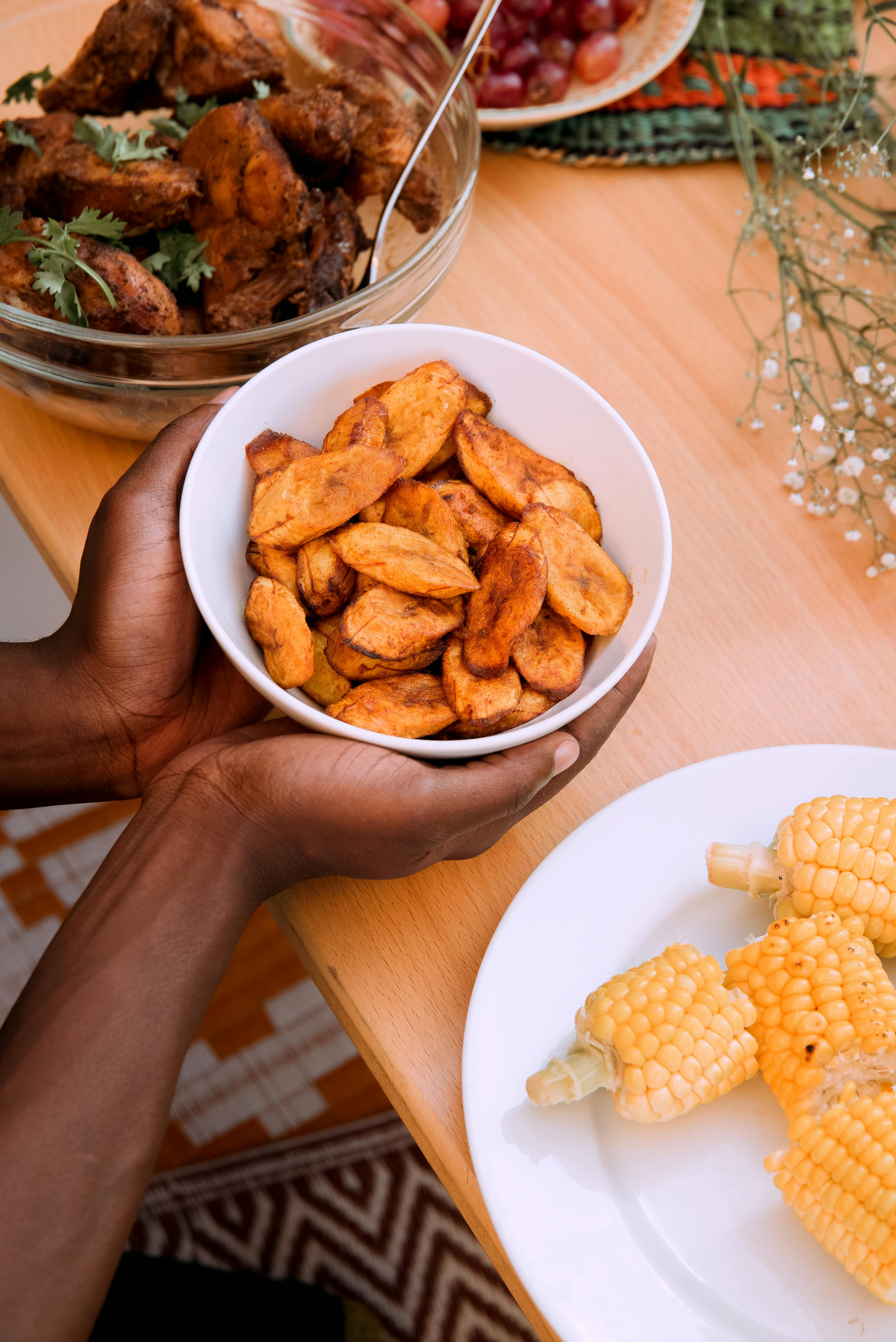
The diets react (see scores below)
Common Ingredients
- ripe plantains
- vegetable oil
- salt
- onion
- cayenne pepper
Specific recipes may vary.
Incompatible with 5 of 11 diets
Diet Ratings
Dodo is fried ripe plantain, which is fundamentally incompatible with ketogenic eating. Ripe plantains are very high in net carbohydrates — a single medium ripe plantain contains approximately 50-55g of net carbs, far exceeding the entire daily keto budget of 20-50g in just one serving. Ripe plantains are also high in natural sugars (glucose, fructose, sucrose), which spike blood glucose and disrupt ketosis. While the dish is fried in oil (adding fat), this does not compensate for the extreme carbohydrate load. The ripening process converts starches into simple sugars, making ripe plantains significantly worse than unripe plantains from a keto perspective.
Dodo (Nigerian fried plantains) is entirely plant-based. All five ingredients — ripe plantains, vegetable oil, salt, onion, and cayenne pepper — are derived from plants with no animal products or animal-derived additives. It is a minimally processed whole-food dish, with the only processing step being frying in vegetable oil. The use of vegetable oil (rather than lard or butter) keeps it fully vegan-compliant. This is a staple Nigerian side dish with strong nutritional value from the plantains, which provide complex carbohydrates, potassium, and vitamins A and C. The score is 8 rather than 9-10 primarily because frying introduces added fat and reduces the whole-food profile slightly compared to, say, boiled or baked plantains.
Dodo (Nigerian fried plantains) contains three non-paleo ingredients that disqualify it. Vegetable oil is a seed/industrial oil explicitly excluded from the paleo diet — it should be replaced with coconut oil, avocado oil, or animal fat. Added salt is discouraged on strict paleo. While ripe plantains themselves are paleo-approved fruits, the combination of a seed oil for frying and added salt pushes this dish firmly into avoid territory. The onion and cayenne pepper are fine, and plantains on their own would score well, but the preparation method undermines paleo compliance.
Dodo (fried ripe plantains) features plantains, which are a whole, plant-based food rich in fiber, vitamins, and complex carbohydrates — well aligned with Mediterranean dietary principles. The supporting ingredients (onion, cayenne pepper, salt) are also compatible. The key concern is the cooking method: deep or shallow frying in vegetable oil (typically refined oils such as sunflower or palm oil) rather than extra virgin olive oil. Frying adds significant calories and, depending on the oil used, may introduce less favorable fat profiles. If prepared with olive oil in modest amounts, this dish would score higher; as typically made with refined vegetable oil, it sits in the caution range. Ripe plantains are also higher in natural sugars than unripe ones, though this is a minor concern as no added sugars are present.
Some Mediterranean diet practitioners would argue that a whole-food, plant-based dish like fried plantains is acceptable as an occasional side regardless of oil type, noting that the Mediterranean diet is broadly permissive of plant foods. Others following stricter clinical guidelines (e.g., PREDIMED-style protocols) would flag the use of non-olive refined oils as inconsistent with core principles.
Dodo is fried ripe plantain, a dish composed entirely of plant-based ingredients. Plantains are a starchy fruit, vegetable oil is a plant-derived fat, onion and cayenne pepper are plant foods, and salt is the only carnivore-compatible ingredient. There is no animal product in this dish whatsoever. This violates the foundational rule of the carnivore diet, which permits only animal-derived foods. There is no version of this dish that could be made carnivore-compatible without completely replacing the core ingredient.
Dodo (Nigerian fried plantains) is made from whole, unprocessed ingredients — ripe plantains, vegetable oil, salt, onion, and cayenne pepper — all of which are individually Whole30-compliant. Plantains are a fruit, oil (depending on type) is an allowed natural fat, and the seasonings are permitted. However, two factors introduce caution: (1) The type of vegetable oil matters — many generic 'vegetable oils' are blended with soybean oil, corn oil, or other less ideal oils. Whole30 recommends avoiding soybean and corn oil specifically when choosing compliant cooking fats. A clearly labeled oil like coconut oil, avocado oil, or light olive oil would be unambiguously compliant. (2) Dodo is fried plantains, which some practitioners consider analogous to 'chips' or 'fries' — falling into the spirit-of-the-program concern around recreating fried comfort foods. However, the official Whole30 exclusion list specifically names 'chips, french fries, or tots' in the context of recreating junk food with compliant ingredients, and dodo is a traditional whole-food dish rather than a deliberate junk food recreation. The plantain itself is not the issue — it's a whole fruit.
Melissa Urban's official guidelines flag french fries, chips, and tots as excluded even when made from compliant ingredients, and some practitioners argue fried plantains occupy a similar 'comfort food recreation' gray zone. However, the broader Whole30 community and most coaches treat dodo as a compliant traditional dish rather than a junk food substitute, and the official exclusion list does not specifically name plantains or fried plantains.
Dodo (Nigerian fried ripe plantains) contains one significant FODMAP concern: ripe plantains. Monash University has tested plantains and found that ripe plantains become higher in FODMAPs as they ripen, due to increased fructans and sorbitol content. Unripe plantains are considered low-FODMAP, but ripe plantains (the yellow-to-black stage used in dodo) are higher in FODMAPs. A small serving (around 75g or roughly 3-4 small slices) may be tolerable, but a standard serving as a side dish would typically exceed this threshold. The other ingredients are largely low-FODMAP: vegetable oil is safe, salt is safe, cayenne pepper in typical cooking amounts is low-FODMAP. However, onion is a high-FODMAP ingredient due to fructans and is a clear concern — even small amounts of onion cooked into the dish can contribute significant FODMAPs. Many dodo recipes use onion slices fried alongside or incorporated into the dish. The combination of ripe plantains AND onion makes this dish problematic during the elimination phase at a realistic serving size.
Monash University rates ripe plantain as moderate-FODMAP at a standard serving (~75g), meaning strict elimination phase protocols would flag this dish. Some clinical FODMAP practitioners may permit very small portions of ripe plantain, but the addition of onion — a confirmed high-FODMAP ingredient due to fructans — makes this dish difficult to recommend even cautiously during elimination without significant recipe modification (removing onion entirely).
Dodo (fried ripe plantains) features plantains as the core ingredient, which are an excellent DASH-friendly food — rich in potassium, fiber, magnesium, and complex carbohydrates. Ripe plantains have a higher glycemic index than unripe, but this is not a primary DASH concern. The main issue is the cooking method: deep or shallow frying in vegetable oil significantly increases total fat and caloric density. Vegetable oil (e.g., sunflower or canola) is a DASH-permitted unsaturated fat, but the quantity used in frying elevates total fat intake beyond what DASH typically recommends for a side dish. Salt is added but likely in modest amounts, keeping sodium manageable. Cayenne pepper and onion are DASH-positive additions. Overall, the dish sits in the 'caution' zone — the base ingredient is excellent, but frying offsets the nutritional profile. Baking or air-frying would move this dish toward 'approve.'
NIH DASH guidelines broadly permit vegetable oils and emphasize fruits and vegetables, which could support approving plantains fried in unsaturated vegetable oil in modest portions. However, some DASH-oriented dietitians caution that the volume of oil absorbed during frying adds enough caloric density and total fat to merit portion control, particularly for weight-conscious individuals managing hypertension.
Dodo (fried ripe plantains) presents a mixed Zone Diet profile. Ripe plantains are a high-glycemic carbohydrate source — significantly more glycemic than the low-GI vegetables and fruits Dr. Sears favors. Ripe plantains have a GI in the 55-70 range and are calorie-dense, making them an 'unfavorable' Zone carb. The frying in vegetable oil adds omega-6-heavy fat (typically soybean or palm oil in Nigerian cooking), which conflicts with the Zone's anti-inflammatory emphasis on monounsaturated fats and omega-3s. As a side dish with no protein component, Dodo does nothing to help balance the 40/30/30 ratio on its own. However, plantains are a real food with fiber, potassium, and vitamins A and C — not nutritionally empty. In Zone block terms, a small portion (about 1/3 cup, ~60g) could technically count as 1 carb block, but the glycemic load and omega-6 fat content make it a poor Zone choice compared to vegetables or lower-GI fruits. It can be incorporated in strict moderation as part of a carefully balanced meal that includes lean protein and monounsaturated fat, but it requires significant portion restraint.
Some Zone practitioners and later Sears writings place more emphasis on the overall meal ratio rather than categorically banning higher-GI carbs in small portions. A small serving of dodo alongside a lean protein and avocado-based fat could technically hit the 40/30/30 ratio. Additionally, green (unripe) plantains have a substantially lower GI than ripe ones — if dodo were made with less-ripe plantains, the Zone assessment would improve. The unfavorable vegetable oil used for frying is the bigger concern in the anti-inflammatory framework of Sears' later work.
Dodo (fried ripe plantains) presents a mixed anti-inflammatory profile. On the positive side, ripe plantains are rich in resistant starch, dietary fiber, potassium, vitamin C, vitamin B6, and carotenoids — all of which support anti-inflammatory pathways. Onion contributes quercetin (a notable anti-inflammatory flavonoid), and cayenne pepper provides capsaicin, which has well-documented anti-inflammatory effects via TRPV1 receptor modulation. However, the dish is deep-fried in vegetable oil, which is the primary concern. Depending on which 'vegetable oil' is used (commonly palm oil or sunflower oil in Nigerian cooking), this introduces either high saturated fat (palm oil) or high omega-6 content (sunflower/corn oil), both of which are flagged under anti-inflammatory guidelines. Frying also generates oxidized lipids and advanced glycation end products (AGEs), which promote inflammatory signaling. If made with a more favorable oil (e.g., avocado oil, or lightly pan-fried with minimal extra virgin olive oil), the dish would score higher. The cooking method is the main downgrade here — the base ingredients are otherwise quite supportive.
Some anti-inflammatory nutritionists would rate this more favorably, emphasizing that plantains are a whole-food, low-glycemic-index carbohydrate with meaningful antioxidant content, and that modest frying in oil does not meaningfully undermine the dish's overall profile. Conversely, stricter anti-inflammatory frameworks (such as those focused on oxidative stress and AGE reduction) would penalize any deep-frying regardless of oil type, potentially pushing this to a lower score.
Dodo (Nigerian fried ripe plantain) is a deep-fried dish made from naturally sugar-rich ripe plantains cooked in vegetable oil. It fails on multiple GLP-1 criteria simultaneously: it is fried (worsening nausea, bloating, and reflux — key GLP-1 side effects), high in fat per serving due to oil absorption during frying, high in simple sugars from the ripe plantain, negligible in protein, and low in fiber relative to its calorie load. Ripe plantains are inherently sweeter and higher glycemic than unripe, compounding the blood sugar concern. The cayenne pepper adds a mild GI irritation risk. As a side dish with no primary protein source, it contributes little nutritionally to the reduced-calorie budget GLP-1 patients must work within. Every calorie on GLP-1 medications needs to deliver protein, fiber, or micronutrient value — fried ripe plantain delivers primarily simple carbohydrates and absorbed fat.
*See how scores were generated at our methodology page.
Nutritional profile
Six traits that cut across every diet.
Fiber & Plants
How much whole-plant food and fiber it delivers.
Healthy Fats
The quality of its fats (unsaturated, omega-3).
Whole / Unprocessed
How close it is to its natural, unprocessed form.
Gut Gentle
How easy it is on digestion (low FODMAP, few irritants).
Low Glycemic
How little it spikes your blood sugar.
Protein Density
How much protein it packs per calorie.
Controversy Index
Higher controversy = more disagreement between diets.
Diet-Specific Tips
 Vegan — 8/10
View tips
- All ingredients are 100% plant-derived
- Ripe plantains are a nutritious whole food rich in carbohydrates, potassium, and vitamins
- Vegetable oil confirmed — no animal-based fats (lard, butter) used
- Minimal processing: simple frying of a whole fruit
- No hidden animal-derived additives or emulsifiers in the ingredient list
- Frying slightly reduces nutritional profile compared to oil-free preparation methods
 Mediterranean — 5/10
View tips
- Plantains are a whole, plant-based food consistent with Mediterranean diet emphasis on plant foods
- No animal protein or processed ingredients present
- Frying method and use of refined vegetable oil rather than extra virgin olive oil is the primary concern
- Ripe plantains are higher in natural sugars but contain no added sugars
- Onion and spices are fully compatible with Mediterranean dietary patterns
 Whole30 — 5/10
View tips
- Plantains are a Whole30-compliant fruit
- All seasonings (salt, cayenne, onion) are fully compliant
- 'Vegetable oil' label is ambiguous — soybean or corn oil would be non-compliant; avocado, coconut, or olive oil would be fine
- Fried preparation raises mild spirit-of-the-program questions given the exclusion of chips/fries
- Dodo is a traditional Nigerian dish, not a deliberate junk food recreation — most coaches treat it as compliant
- Verify oil source for full compliance
 DASH — 5/10
View tips
- Plantains are potassium- and fiber-rich, aligning well with DASH priorities
- Frying in vegetable oil increases total fat content significantly beyond DASH ideals
- Vegetable oil (unsaturated) is preferred over saturated fats under DASH guidelines
- Salt content is likely moderate but should be minimized
- Cayenne and onion are DASH-positive flavor enhancers
- Baking or air-frying would substantially improve the DASH score
- Ripe plantains are higher in sugar than unripe, though not a primary DASH disqualifier
 Zone — 4/10
View tips
- Ripe plantains are a high-glycemic 'unfavorable' Zone carbohydrate
- Frying in vegetable oil introduces omega-6-heavy fat, conflicting with Zone's anti-inflammatory principles
- No protein component — does not contribute to 40/30/30 balance on its own
- Small portions (~60g) could count as 1 carb block but glycemic load remains a concern
- Real food with nutritional value (fiber, potassium, vitamins A/C) — not nutritionally empty
- Usable in strict moderation when paired with lean protein and monounsaturated fat
 Anti-Inflammatory — 5/10
View tips
- Ripe plantains provide fiber, potassium, vitamin C, and carotenoids with anti-inflammatory properties
- Onion contributes quercetin, a potent anti-inflammatory flavonoid
- Cayenne pepper provides capsaicin, which reduces inflammatory markers
- Deep-frying in vegetable oil introduces oxidized lipids and AGEs, which are pro-inflammatory
- Oil type is unspecified — palm oil (saturated fat) and sunflower oil (high omega-6) are common but flagged under anti-inflammatory guidelines
- Cooking method (deep frying) is the primary concern; base ingredients are generally wholesome