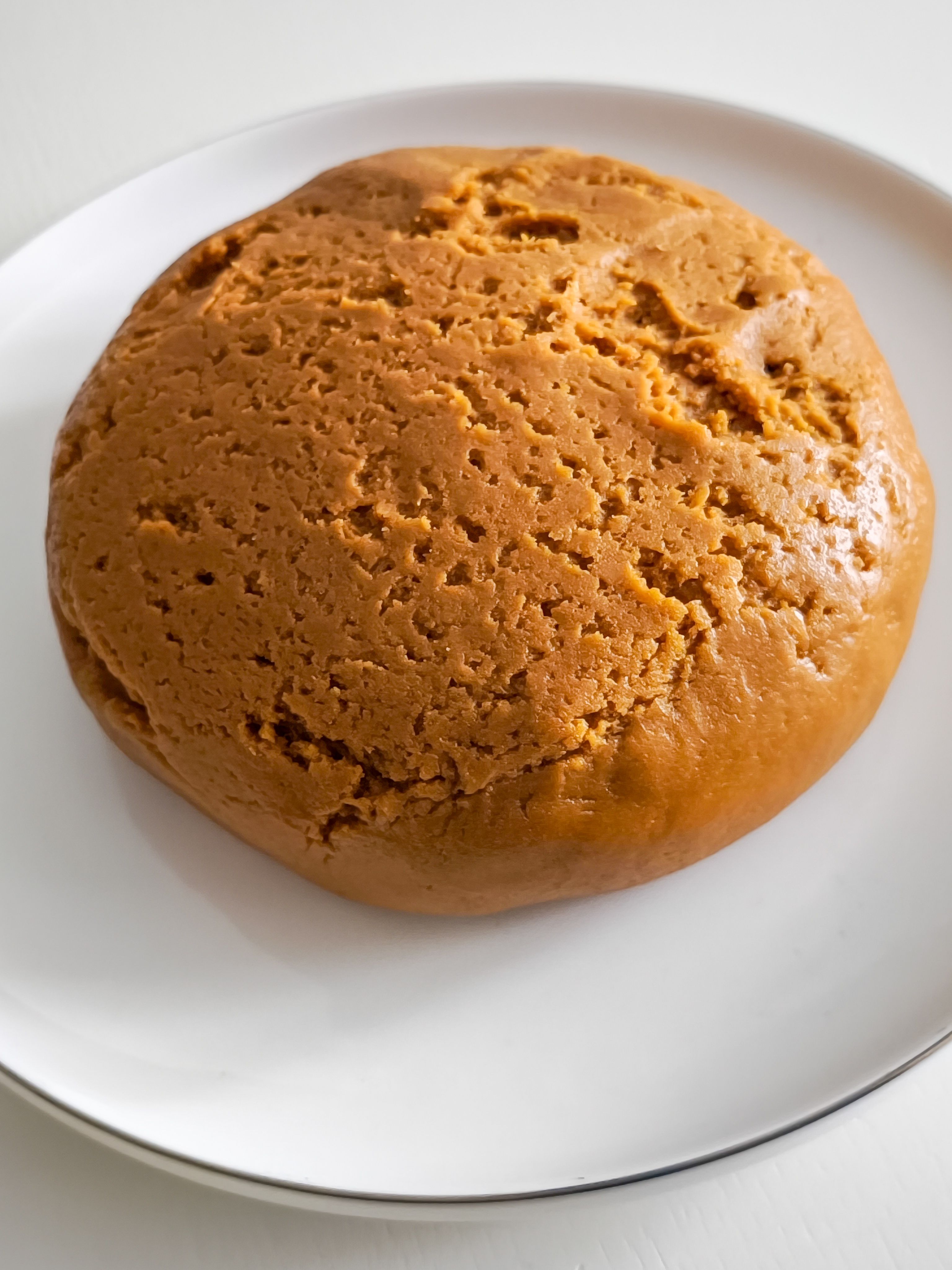
Photo: Irene Ästhetik / Pexels
The diets react (see scores below)
Common Ingredients
- garri
- hot water
- palm oil
- egusi soup
- assorted meat
Specific recipes may vary.
Incompatible with 10 of 11 diets
Diet Ratings
Eba is fundamentally incompatible with a ketogenic diet. The base ingredient, garri (dried cassava/tapioca), is extremely high in starch and net carbohydrates — a single serving (100g) can contain 80-90g of net carbs, far exceeding the entire daily keto limit of 20-50g in one dish alone. While the accompaniments (egusi soup, assorted meat, palm oil) are actually keto-friendly components — egusi (melon seeds) is high in fat and protein, assorted meat provides protein and fat, and palm oil is pure fat — the garri base is irredeemably high-carb. There is no portion size small enough to make the eba itself compatible with ketosis. The dish cannot be modified in any meaningful way while retaining its identity as eba.
Eba as described contains multiple animal products that make it incompatible with a vegan diet. The dish includes 'assorted meat' — a direct animal product — and egusi soup in its traditional Nigerian form is typically prepared with meat or fish stock and often contains additional animal proteins. While the base of eba (garri and hot water) is fully plant-based, and egusi (melon seeds) itself is vegan, the combination as listed here includes explicit animal ingredients that cannot be overlooked. This is a clear avoid verdict.
Eba is made from garri, which is processed cassava flour — a starchy, processed food product rather than a whole food available to hunter-gatherers. While cassava (a tuber) is generally paleo-permissible in its whole form, garri undergoes fermentation, grating, and drying, making it a processed grain-like starchy flour that contradicts paleo philosophy. Additionally, egusi soup typically contains ground egusi (melon seeds used in a legume-like fashion, often combined with other non-paleo additives), and the dish frequently includes added salt and processed ingredients. The assorted meat and palm oil components are paleo-friendly, but the foundational garri base is a disqualifying processed starchy product. The overall dish cannot be considered paleo-compatible due to garri being its primary component.
Eba is a West African staple made from garri (fermented, dried, and processed cassava flour), which is a refined, starchy carbohydrate with minimal fiber and nutrients — analogous to refined grains that the Mediterranean diet discourages. Palm oil, while a plant-based fat, is high in saturated fat and is not part of Mediterranean dietary traditions, where extra virgin olive oil is the exclusive primary fat. The egusi soup adds some plant-based content (melon seeds, vegetables), which has mild positive value, but 'assorted meat' typically includes red and organ meats consumed in significant quantities, directly contradicting the Mediterranean diet's guidance to limit red meat to a few times per month. The overall dish profile — refined starchy base, palm oil, and heavy meat components — is misaligned with Mediterranean principles on multiple fronts.
Eba is fundamentally incompatible with the carnivore diet. The dish is built on garri, a fermented and dried cassava product — a starchy plant-based carbohydrate that is the antithesis of carnivore eating. Palm oil, while technically a fat, is a plant-derived oil excluded from carnivore. Egusi soup is made from ground melon seeds (a plant seed/legume) cooked with vegetables, making it doubly incompatible. The only redeeming element is the assorted meat component, but it is a minor addition to an overwhelmingly plant-based dish. No amount of meat garnish can rescue a cassava-and-seed-based meal for carnivore compliance.
Eba is made from garri, which is fermented and dried cassava flour/starch. While cassava itself is a root vegetable, garri is processed into a grain-like flour product and is used to make a starchy dough — a staple carbohydrate base. More critically, Whole30 explicitly prohibits recreating bread, pasta, noodles, or similar starchy dough staples even from compliant ingredients. Eba functions as a dough/fufu-style starch that directly parallels excluded grain-based doughs and would violate the spirit and letter of rule 4 (no recreating bread/pasta/noodle equivalents). Additionally, egusi soup often contains locust beans (iru), which are a legume-based fermented seasoning, and may include other non-compliant additives. The 'assorted meat' could be compliant but requires label verification. The garri-based dough base is the primary disqualifier.
Eba as a standalone starchy base (garri + hot water) is relatively low-FODMAP — cassava/garri is not significantly tested by Monash but is generally considered low in FODMAPs as a starchy root. However, this dish as presented includes egusi soup, which is the critical problem. Egusi soup is made with ground melon seeds, but the defining concern is its core ingredients: onions, garlic, and often stockcubes or seasonings containing fructans are virtually always present. Traditional Nigerian egusi soup typically contains significant quantities of onions and garlic, both high-FODMAP fructan sources that make this dish unsuitable during the elimination phase. Palm oil itself is fat-based and low-FODMAP. Assorted meat (plain cooked meat) is low-FODMAP. The egusi seeds themselves lack dedicated Monash testing but are not inherently high-FODMAP; however, the soup preparation reliably includes high-FODMAP aromatics. The dish cannot realistically be decoupled from those soup ingredients at a typical serving.
Monash University has not specifically tested garri or egusi soup, so there is limited direct testing data. If egusi soup were prepared without onion, garlic, or FODMAP-containing seasonings (e.g., using garlic-infused oil and spring onion greens only), the dish could potentially be low-FODMAP — but traditional preparation virtually never omits these ingredients, and most clinical FODMAP practitioners would advise avoiding during elimination.
Eba as described combines multiple DASH-unfriendly elements. Garri (cassava granules) is a refined, low-fiber starch with minimal potassium, calcium, or magnesium — the opposite of DASH-emphasized whole grains. Palm oil is a tropical oil high in saturated fat (~50% saturated), which DASH explicitly limits alongside coconut and palm kernel oil. Egusi soup typically contains additional palm oil, high sodium seasoning cubes (e.g., Maggi/Knorr), and can be calorie-dense. Assorted meat in Nigerian cooking typically includes organ meats, fatty cuts, smoked/dried fish, and stockfish — components that are high in sodium, saturated fat, and cholesterol. Collectively, this dish is high in saturated fat from palm oil, likely high in sodium from seasoning and processed meat components, low in fiber, and lacks the potassium-rich, calcium-rich, low-fat profile that DASH emphasizes. It does not align with DASH core food groups in any meaningful way as commonly prepared.
NIH DASH guidelines explicitly limit tropical oils and processed/fatty meats. However, some updated clinical interpretations note that egusi (melon seeds) contributes plant protein, magnesium, and healthy unsaturated fats — and that assorted meat can include lean cuts. A DASH-adapted version using reduced palm oil, low-sodium seasoning, lean protein, and portion control could push the score toward 'caution,' but the traditional preparation as described does not meet standard DASH criteria.
Eba is a starchy dough made from garri (fermented, dried cassava), which is extremely high-glycemic and nutritionally similar to white bread or instant mashed potatoes in Zone terms. Garri is essentially pure starch with negligible fiber, protein, or fat — it functions as a dense, unfavorable carbohydrate block with virtually no Zone-friendly redeeming qualities. The dish as described also incorporates palm oil, which is high in saturated fat (palmitic acid) and omega-6 fatty acids — the opposite of the monounsaturated fats Zone prioritizes. The egusi soup component adds some protein (melon seeds, assorted meat) and fat, but egusi is also calorie-dense with significant saturated fat content. The assorted meat component may include fatty cuts that do not align with Zone's lean protein preference. The overall macronutrient ratio of this meal would be heavily skewed toward high-glycemic carbohydrates and saturated fats, making it very difficult to bring into Zone balance without fundamentally restructuring the meal. Even with aggressive portion control of the eba, the glycemic load remains problematic because garri has a high glycemic index (around 87), making small portions still spike blood sugar rapidly. This is not a food that can be portioned into Zone blocks in any practical way.
Some Zone-flexible practitioners argue that even high-GI starches can be used in very small portions (1 carb block = ~9g net carbs from garri) paired with lean protein and monounsaturated fat, technically fitting Zone math. Additionally, the egusi component does provide protein and some beneficial nutrients. If the assorted meat is lean (e.g., fish, skinless chicken), the soup portion could be Zone-compatible — the critique centers specifically on the garri base and palm oil. Traditional Nigerian diets also incorporate many vegetables into egusi soup, which could partially offset the glycemic concerns.
Eba is a Nigerian staple made from garri (dried, fermented, ground cassava) mixed with hot water to form a starchy dough, typically served with egusi soup and assorted meats. From an anti-inflammatory perspective, this dish presents a mixed profile. Garri itself is a highly refined, high-glycemic starch with minimal fiber, which can spike blood sugar and promote inflammatory markers — a clear negative. However, the dish is typically paired with egusi soup, which contains ground melon seeds (a source of healthy fats, zinc, and magnesium), leafy vegetables like bitter leaf or ugu (pumpkin leaves), and aromatics like onion, crayfish, and peppers — all with meaningful anti-inflammatory properties. Palm oil, commonly used in Nigerian cooking, is high in saturated fat (palmitic acid), which is pro-inflammatory at regular intake, though it also contains tocotrienols and beta-carotene with some antioxidant activity, making it controversial. Assorted meat (offal, goat, cow, tripe) is generally in the 'limit' category — higher in saturated fat and arachidonic acid. The overall dish skews toward caution: the refined starchy base and palm oil/assorted meat components are inflammatory concerns, while the egusi soup components add real nutritional value that partially offsets this. This is a culturally significant, whole-food-based meal that does not fit neatly into Western anti-inflammatory frameworks.
Some anti-inflammatory nutrition perspectives, particularly those centered on traditional whole-food diets, would argue that minimally processed, traditionally fermented cassava (garri) and whole egusi seeds represent nutrient-dense ancestral foods that shouldn't be judged by Western low-glycemic standards alone. Conversely, stricter anti-inflammatory protocols (e.g., those following the IF Rating system or AIP-adjacent frameworks) would flag the high glycemic load of garri, saturated fat from palm oil, and pro-inflammatory arachidonic acid in organ/assorted meats as meaningful concerns warranting an 'avoid' classification.
Eba as described here is a very poor fit for GLP-1 patients. The base is garri (cassava flour cooked into a dense, starchy dough), which is high in refined carbohydrates, extremely low in protein, very low in fiber relative to its calorie load, and heavy in the stomach — problematic given slowed gastric emptying. Palm oil adds saturated fat, worsening nausea and reflux risk. Egusi soup (ground melon seeds cooked in palm oil) is calorie-dense and high in fat, and 'assorted meat' in Nigerian culinary tradition typically includes fatty cuts, offal, and smoked or processed meats — further raising the saturated fat burden. The meal as a whole delivers very high carbohydrates, high saturated fat, and negligible fiber or lean protein per serving. Every GLP-1 dietary priority is working against this dish: it is not protein-dense, not high in beneficial fiber, not low in fat, not easy to digest, and not nutrient-dense per calorie. The portion size required to feel satisfied from eba alone is also large, which conflicts with the small-portion reality of GLP-1 patients.
Some GLP-1-aware dietitians working with West African patients note that egusi does contribute plant-based protein and unsaturated fats (melon seed fat profile is partially favorable), and that cultural foods should not be categorically excluded — a smaller portion of the soup component with reduced eba and leaner meat choices could bring this closer to a caution rating. However, the dish as described with palm oil, full garri serving, and assorted fatty meats represents the standard preparation and is rated accordingly.
*See how scores were generated at our methodology page.
Nutritional profile
Six traits that cut across every diet.
Fiber & Plants
How much whole-plant food and fiber it delivers.
Healthy Fats
The quality of its fats (unsaturated, omega-3).
Whole / Unprocessed
How close it is to its natural, unprocessed form.
Gut Gentle
How easy it is on digestion (low FODMAP, few irritants).
Low Glycemic
How little it spikes your blood sugar.
Protein Density
How much protein it packs per calorie.
Controversy Index
Higher controversy = more disagreement between diets.
Diet-Specific Tips
 Anti-Inflammatory — 4/10
View tips
- Garri (cassava-based) is a high-glycemic refined starch with minimal fiber — promotes blood sugar spikes and inflammatory markers
- Egusi (ground melon seeds) provides healthy fats, zinc, magnesium, and anti-inflammatory compounds
- Leafy vegetables in egusi soup (bitter leaf, ugu) contribute antioxidants and polyphenols
- Palm oil is high in saturated palmitic acid (pro-inflammatory) but contains tocotrienols and beta-carotene (partially offsetting)
- Assorted meat (offal/mixed cuts) is high in saturated fat and arachidonic acid — in the 'limit' category
- No omega-3 sources present; omega-6 to omega-3 ratio likely unfavorable
- Traditional fermentation of garri may offer modest prebiotic benefit, though largely negated by refining process