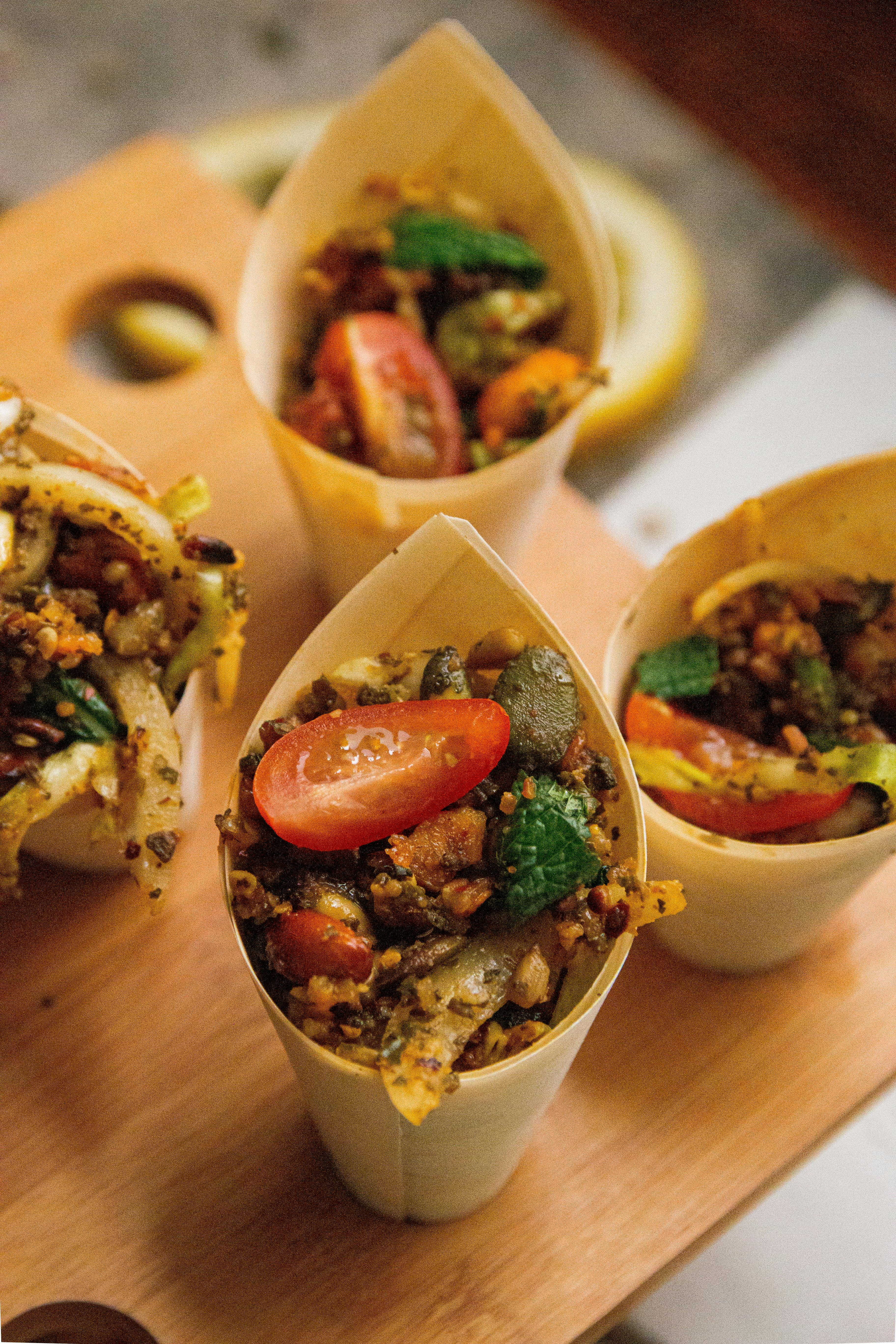
The diets react (see scores below)
Common Ingredients
- goat head
- palm oil
- potash
- utazi leaves
- ground crayfish
- scotch bonnet peppers
- onion
- ehu seeds
Specific recipes may vary.
Incompatible with 7 of 11 diets
Diet Ratings
Isi Ewu is a traditional Nigerian spiced goat head dish that aligns well with ketogenic principles. The primary protein is goat head (brain, skin, cartilage, and meat), which is rich in fat and protein with virtually zero carbohydrates. Palm oil adds healthy saturated fat, firmly supporting the high-fat requirement. Utazi leaves, scotch bonnet peppers, onion, and ground crayfish contribute minimal net carbs across a typical serving. Ehu seeds (calabash nutmeg) are a spice used in small quantities adding negligible carbs. Potash (kaun) is a food-grade salt used as a thickener/tenderizer with no caloric or carb impact. The dish is whole and unprocessed with no grains, added sugars, or starchy ingredients. Net carbs per serving are estimated to be well under 5g, making this a strong keto-compatible dish.
Some stricter keto practitioners may express caution around utazi leaves, which carry a mild bitterness and trace amounts of alkaloids, and onion used in larger quantities can push carb counts higher; portion-conscious keto adherents may track these carefully. Additionally, some clinical keto protocols flag organ-adjacent tissues and brain for their potential impact on specific metabolic markers, though this is not a mainstream keto concern.
Isi Ewu is a traditional Nigerian delicacy made from a cooked goat head, which is unambiguously an animal product. There is no vegan version of this dish — the goat head is the central and defining ingredient. Additional ingredients like ground crayfish (dried seafood) further compound the non-vegan status. Palm oil and utazi leaves are plant-based, but they are peripheral to a dish whose identity is entirely built around animal flesh and offal. No meaningful debate exists within the vegan community about this dish.
Isi Ewu is a traditional Nigerian spiced goat head dish. Most ingredients are paleo-friendly: goat head (meat, brain, connective tissue) is an unprocessed animal protein approved by paleo, palm oil is a natural fat generally accepted in paleo (though it is a high-omega-6 oil, it is not a refined seed oil), utazi leaves are a natural herb/vegetable, ground crayfish is a whole food seasoning, scotch bonnet peppers and onion are paleo-approved vegetables, and ehu seeds (Calabash nutmeg) are a natural spice. The primary concern is potash (kaun/akanwu), a food-grade alkaline salt used as a tenderizer and emulsifier in West African cooking. Potash is a form of added salt/mineral additive — it is a processed chemical compound (potassium carbonate/bicarbonate) not available in its processed culinary form to Paleolithic hunter-gatherers, placing it firmly in excluded territory. Palm oil also warrants mild scrutiny as some strict paleo frameworks prefer less omega-6-heavy fats, though it is widely accepted. The dish itself is philosophically paleo in spirit — nose-to-tail organ meat eating is celebrated in ancestral health communities — but the potash additive prevents a clean approval.
Some paleo practitioners in ancestral health communities (influenced by Weston A. Price Foundation principles embraced by figures like Chris Kresser) would fully approve this dish, arguing that potash is a naturally occurring mineral used in traditional food preparation for millennia and that the spirit of nose-to-tail eating aligns perfectly with ancestral nutrition philosophy. Strict Cordain-school paleo, however, would flag potash as a processed additive and also raise concerns about palm oil's omega-6 load.
Isi Ewu is a traditional Nigerian dish made from goat head, which classifies it as red meat — already a category limited to just a few times per month in the Mediterranean diet. Beyond the red meat concern, the primary fat source is palm oil rather than extra virgin olive oil, which is high in saturated fat and fundamentally contrary to the Mediterranean dietary pattern. Potash (kaun) is a food additive not recognized in Mediterranean cooking traditions. While several ingredients (utazi leaves, scotch bonnet peppers, onion, crayfish) offer genuine nutritional value and the dish does contain whole, unprocessed components, the combination of red meat as the primary protein and palm oil as the primary fat places this dish clearly outside Mediterranean diet principles. It scores very low on compatibility.
Isi Ewu is a traditional Nigerian spiced goat head dish, and while the goat head itself (brain, meat, skin) would be a carnivore-approved organ-rich animal product, the recipe is dominated by plant-based ingredients that render it incompatible with the carnivore diet. Palm oil is a plant-derived oil (excluded), potash is a plant ash alkaline agent (excluded), utazi leaves are a plant herb (excluded), scotch bonnet peppers are plant-based (excluded), onion is plant-based (excluded), and ehu seeds (African nutmeg) are plant-based spices (excluded). Ground crayfish is the one additional carnivore-friendly ingredient. The goat head protein base has merit, but the dish as prepared is essentially a heavily plant-spiced preparation that cannot be considered carnivore-compliant in any tier of the diet.
Isi Ewu is a traditional Nigerian spiced goat head dish. Most of its core ingredients are Whole30-compliant: goat head (meat/offal), palm oil (natural fat), utazi leaves (herb), ground crayfish (seafood-derived seasoning), scotch bonnet peppers, and onion are all fine. Ehu seeds (calabash nutmeg) are a natural spice with no compliance concerns. The key issue is potash (kaun/akanwu/trona), a food-grade alkaline mineral salt used as a thickener and tenderizer in West African cooking. Potash is a naturally occurring mineral and not an explicitly excluded ingredient under Whole30 rules — it contains no grains, legumes, dairy, or added sugars. However, it is a highly processed mineral additive that sits outside the spirit of whole, unprocessed foods the program champions. It is not explicitly addressed in official Whole30 guidelines, making this genuinely debatable. If potash is considered simply a mineral seasoning akin to baking soda (sodium bicarbonate, which is technically allowed in compliant baked goods), it would pass. But its unusual nature and lack of official guidance warrants a caution rating.
Some Whole30 practitioners may argue potash is analogous to other mineral salts and should be treated as a compliant seasoning, especially since it is a whole-food cultural ingredient rather than a modern additive. Others may flag it as a processed chemical leavening agent outside the program's whole-food philosophy, similar to how Melissa Urban encourages eliminating 'anything with a label you can't pronounce' in spirit.
Isi Ewu (spiced goat head) contains several high-FODMAP ingredients that make it unsuitable during the elimination phase. The primary concern is onion, which is high in fructans and among the most potent FODMAP triggers — it is consistently rated 'avoid' by Monash University at any typical serving. Potash (potassium carbonate, used as a thickener/tenderizer) is an alkaline salt and not a food per se, but its FODMAP status is untested by Monash. Utazi leaves (Gongronema latifolium) and ehu seeds (Monodora myristica, African calabash nutmeg) are African regional ingredients with no Monash University FODMAP testing data, creating significant uncertainty. Ground crayfish is likely low-FODMAP as a seafood-derived seasoning used in small amounts, and palm oil is fat-based and FODMAP-free. Scotch bonnet peppers are generally low-FODMAP in typical serving amounts. Goat meat itself is protein-based and low-FODMAP. However, onion alone is sufficient to classify this dish as high-FODMAP, as it is a foundational ingredient rather than a minor seasoning, and cannot be easily removed without fundamentally altering the dish.
Multiple core ingredients (utazi leaves, ehu seeds, potash) lack any Monash University FODMAP testing data, meaning the full FODMAP load of this dish is unknown — clinical FODMAP practitioners would advise avoidance during elimination simply due to insufficient data, independent of the onion issue. If onion were omitted and untested ingredients assessed as safe, the goat meat and fat-based components could theoretically be low-FODMAP, but this is highly speculative.
Isi Ewu (Nigerian spiced goat head) is problematic for the DASH diet on multiple fronts. The dish is made from goat head, which includes brain, skin, and organ-rich parts that are high in cholesterol and saturated fat. Palm oil is a tropical oil explicitly limited by DASH guidelines due to its high saturated fat content (~50% saturated). Potash (potassium carbonate/kaun) is used as a thickening agent and introduces significant alkaline mineral content that can affect sodium-potassium balance; while it adds potassium, it is a processed additive not aligned with DASH whole-food principles. The dish tends to be sodium-dense when prepared traditionally. On the positive side, utazi leaves, scotch bonnet peppers, onion, and crayfish offer some vegetables, antioxidants, and flavor without excessive sodium, and goat meat itself is relatively lean compared to beef — but the head cuts negate this advantage due to high fat and organ content. The overall profile — tropical oil, organ/fatty cuts, high cholesterol load — places this firmly in the 'avoid' category for DASH adherence.
NIH DASH guidelines explicitly limit tropical oils like palm oil and high-saturated-fat animal products; however, some updated clinical interpretations note that goat meat overall is leaner than many red meats, and modest use of traditional oils in whole-food cultural dishes may be acceptable in the broader context of an otherwise DASH-compliant diet — though the organ-meat and palm oil combination remains difficult to reconcile with core DASH principles.
Isi Ewu (spiced goat head) presents significant Zone Diet challenges but is not categorically excluded. The protein source — goat head — includes brain, cheek meat, and other offal cuts, which are higher in saturated fat and cholesterol than lean goat meat. While goat is generally leaner than beef, the head cuts are fattier than, say, skinless chicken. The primary fat source is palm oil, which is high in saturated fat (palmitic acid) — Dr. Sears explicitly discourages saturated fat and recommends monounsaturated fats like olive oil instead. Palm oil is not an omega-3 or polyphenol-rich fat, conflicting with the Zone's anti-inflammatory focus. On the positive side, utazi leaves, scotch bonnet peppers, and onions are low-glycemic polyphenol-rich vegetables consistent with Zone principles. Ground crayfish adds additional lean protein. Ehu seeds contribute aromatic compounds and minimal macronutrient impact. The dish is essentially carbohydrate-light (fitting the Zone's vegetable-forward carb profile), but the fat quality and the nature of the goat head cuts make Zone balancing difficult. As a snack, the absence of a structured protein/carb/fat block ratio is also a concern — it skews heavily toward protein and saturated fat with minimal favorable carbohydrate. Portioning a small amount alongside a low-GI carb source could theoretically bring it closer to Zone ratios, but palm oil remains a structural problem.
Some Zone-adjacent practitioners in later Sears anti-inflammatory frameworks note that traditional whole-animal eating patterns, including organ meats, can provide valuable micronutrients (zinc, B12, iron) that support overall metabolic health. Goat is one of the leanest red meats globally, and when consumed in controlled portions, the saturated fat load may be manageable. The polyphenol-rich pepper and vegetable base aligns with Sears' later OmegaRx Zone emphasis on anti-inflammatory eating. However, palm oil remains difficult to reconcile with core Zone fat recommendations regardless of edition.
Isi Ewu is a Nigerian spiced goat head dish with several significant pro-inflammatory concerns. The primary issues are palm oil and the organ/head meat composition. Palm oil is high in saturated fat (palmitic acid), which is well-documented to activate NF-κB inflammatory pathways and raise LDL cholesterol; anti-inflammatory frameworks consistently limit saturated fat sources. Goat head meat includes brain tissue, cheek meat, and other fatty cuts with high saturated fat and arachidonic acid content — arachidonic acid is a direct precursor to pro-inflammatory eicosanoids. Potash (potassium carbonate) is a food additive used as a tenderizer that is generally flagged under the 'avoid artificial additives' principle in anti-inflammatory frameworks. On the other side, several ingredients carry genuine anti-inflammatory value: scotch bonnet peppers are rich in capsaicin (shown to reduce inflammatory cytokines), utazi leaves (Gongronema latifolium) have demonstrated antioxidant and anti-inflammatory activity in ethnobotanical research, onions provide quercetin, ground crayfish contributes shellfish-derived omega-3s and astaxanthin, and ehu seeds (African nutmeg) contain phenolic compounds with antioxidant activity. However, the combination of high saturated fat from palm oil and fatty goat head meat, plus potash as an additive, places this dish in the 'avoid' category for regular consumption under anti-inflammatory guidelines. It is a culturally significant dish and could be considered an occasional indulgence rather than a regular part of an anti-inflammatory diet.
Red palm oil (unrefined) contains significant amounts of tocotrienols, beta-carotene, and lycopene — powerful antioxidants that some researchers, including work cited in the Journal of Nutritional Biochemistry, argue may partially offset its saturated fat content; traditional medicine practitioners in West Africa and some integrative nutrition researchers distinguish unrefined red palm oil from refined palm oil and consider it a net positive in whole-food culinary contexts. Additionally, goat meat is leaner than beef and lamb, and some anti-inflammatory researchers note it has a more favorable fatty acid profile than other red meats.
Isi Ewu (spiced goat head) is a poor fit for GLP-1 patients across nearly every rating criterion. Goat head is an organ- and collagen-rich cut with significant fat content, particularly from brain tissue, skin, and connective tissue — not a lean protein source. Palm oil is a saturated fat-heavy cooking fat, and the dish is prepared with substantial amounts of it, worsening the fat load per serving. Scotch bonnet peppers are among the hottest common chili peppers and are a meaningful GLP-1 risk factor — very spicy foods can trigger or worsen nausea, reflux, and GI discomfort in patients whose gastric emptying is already slowed. Potash (kaun/akanwu) is an alkaline salt used as a tenderizer; while not inherently dangerous in small culinary amounts, it adds no nutritional value and may irritate a sensitive GI tract. Ehu seeds add aromatic flavor but negligible nutritional benefit at typical serving quantities. Utazi leaves and ground crayfish are minor positives — utazi has bitter compounds with some digestive and antioxidant properties, and crayfish adds a small protein boost — but neither meaningfully offsets the dish's overall profile. The dish is also culturally served as a shared snack, often in generous portions with little fiber accompaniment. Net assessment: high saturated fat, very high spice level, low fiber, difficult digestibility, and a fat-heavy cooking medium make this a clear avoid for GLP-1 patients.
Some GLP-1-aware dietitians working with West African patient populations note that goat meat in general (when lean cuts are used) can be a reasonable red-meat protein source, and would not categorically reject all Nigerian goat-based dishes. However, the specific cut here — goat head including brain and skin — is the clinical sticking point, not goat meat broadly, so this dissent does not substantially change the rating for Isi Ewu as traditionally prepared.
*See how scores were generated at our methodology page.
Nutritional profile
Six traits that cut across every diet.
Fiber & Plants
How much whole-plant food and fiber it delivers.
Healthy Fats
The quality of its fats (unsaturated, omega-3).
Whole / Unprocessed
How close it is to its natural, unprocessed form.
Gut Gentle
How easy it is on digestion (low FODMAP, few irritants).
Low Glycemic
How little it spikes your blood sugar.
Protein Density
How much protein it packs per calorie.
Controversy Index
Higher controversy = more disagreement between diets.
Diet-Specific Tips
 Keto — 8/10
View tips
- Goat head (meat, brain, skin) is very high in fat and protein with near-zero net carbs
- Palm oil is an ideal keto fat source — high in saturated fatty acids
- No grains, starches, or added sugars in the recipe
- Utazi leaves and scotch bonnet peppers contribute negligible net carbs
- Ehu seeds and ground crayfish are spices used in small quantities — keto-safe
- Onion adds minimal carbs at typical spice-level quantities
- Potash is a mineral salt with no carb or caloric contribution
- Whole, unprocessed traditional dish with no industrial additives
 Paleo — 5/10
View tips
- Goat head (meat, brain, offal) is fully paleo-approved and praised in ancestral eating
- Palm oil is a natural fat, not a refined seed oil — generally accepted in paleo
- Potash (kaun/akanwu) is a processed alkaline salt/chemical additive excluded from strict paleo
- Utazi leaves, ehu seeds, scotch bonnet, onion, and crayfish are all whole, natural paleo foods
- Nose-to-tail organ meat consumption is highly valued in ancestral health communities
- No grains, legumes, dairy, or refined sugar present
 Whole30 — 5/10
View tips
- Goat head (meat and offal) is fully Whole30-compliant
- Palm oil is an approved natural fat
- Utazi leaves, scotch bonnet, onion, and ehu seeds are compliant herbs/spices
- Ground crayfish is a compliant seafood-based seasoning
- Potash (kaun/akanwu) is a mineral additive not explicitly addressed by Whole30 rules — its compliance is ambiguous
- No grains, legumes, dairy, added sugar, or other excluded ingredients present
- Dish is a traditional whole-food preparation, not a recreation of a non-compliant junk food
 Zone — 4/10
View tips
- Goat head cuts are fattier than lean goat meat, including saturated fat from brain and connective tissue
- Palm oil is high in saturated fat (palmitic acid), conflicting with Zone's monounsaturated fat preference
- No favorable Zone carbohydrate blocks — dish is very low-carb, making 40/30/30 ratio difficult to achieve
- Utazi leaves, scotch bonnet peppers, and onions are polyphenol-rich low-GI vegetables, a Zone positive
- Ground crayfish adds supplemental lean protein consistent with Zone building blocks
- As a snack, lacks structured Zone block balance — skews toward protein and saturated fat
- Anti-inflammatory profile is weak due to palm oil's omega-6 and saturated fat load
- Would require pairing with favorable carbs and replacing palm oil with olive oil to approximate Zone compliance