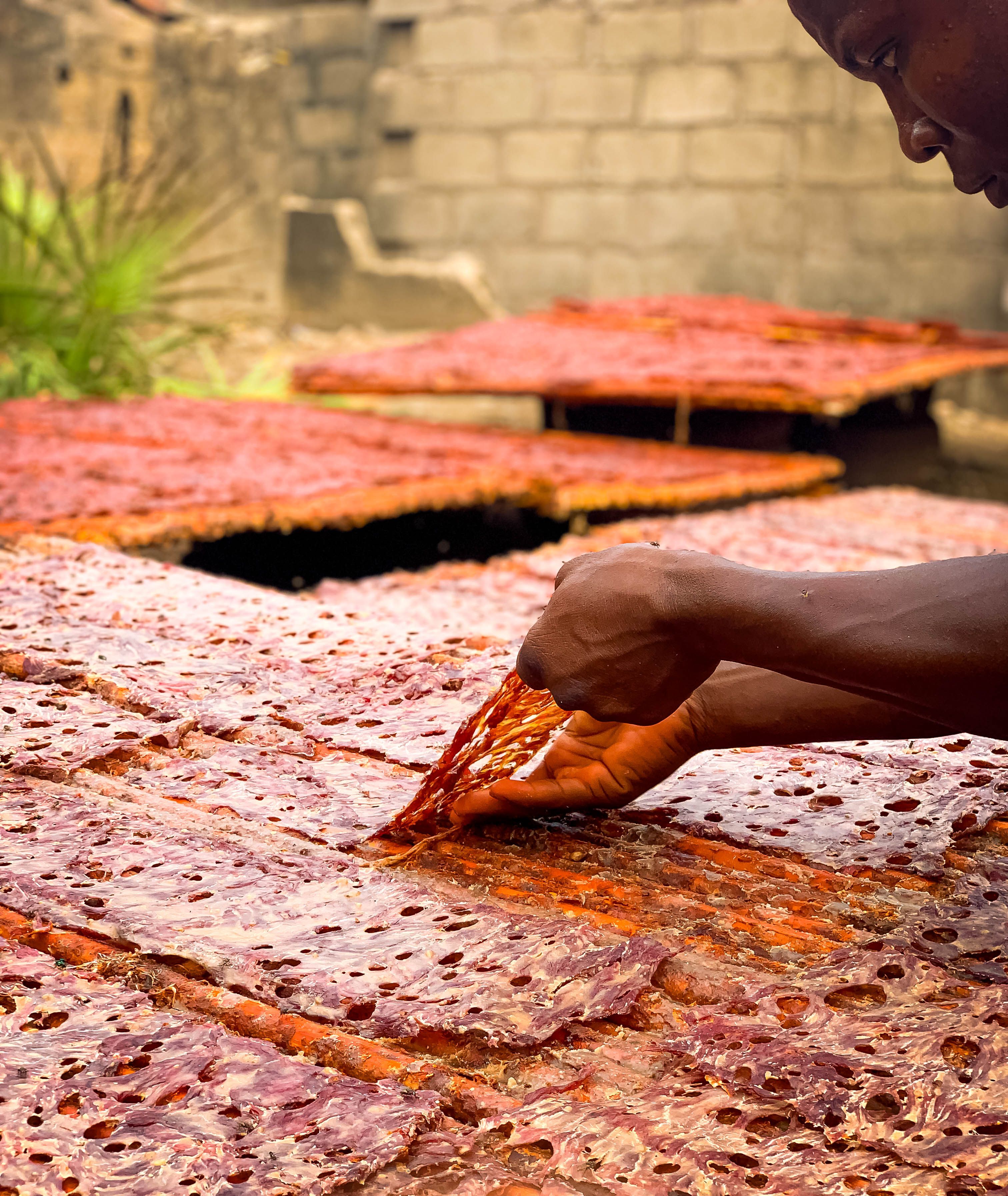
Photo: EDRIS IBRAHEEM / Pexels
The diets react (see scores below)
Common Ingredients
- beef
- groundnut paste
- ginger
- garlic
- scotch bonnet peppers
- kilishi spices
- salt
- onion
Specific recipes may vary.
Incompatible with 6 of 11 diets
Diet Ratings
Kilishi is a Nigerian dried spiced beef snack similar to jerky, but it differs significantly from plain jerky due to the groundnut (peanut) paste coating. Beef itself is keto-friendly and high in protein and fat. Groundnut paste adds healthy fats but also contributes moderate carbs (~6-8g net carbs per 2 tbsp). The spice blend and onion add minor carbs. The main concern is that traditional kilishi recipes coat the beef generously with groundnut paste mixed with spices, and some versions include small amounts of starchy thickeners. A standard serving (30-50g) likely lands in the 5-10g net carb range, which is manageable within a daily keto budget but requires portion control. The lack of added sugar distinguishes it from many commercial jerkies, which is a positive.
Strict keto practitioners may flag kilishi due to the groundnut paste quantity being variable and difficult to measure precisely, plus the risk of commercial or street-food versions containing hidden starches or sweeteners in the spice blend. Carnivore-leaning keto adherents would also avoid it due to the plant-based coating entirely.
Kilishi is a traditional Nigerian dried meat snack made from beef as its primary and defining ingredient. Beef is an animal product and is unambiguously excluded from a vegan diet. The dish cannot be considered vegan regardless of the plant-based spices and seasonings (groundnut paste, ginger, garlic, scotch bonnet peppers, onion, salt) that accompany it, as the core protein is animal-derived.
Kilishi is a Nigerian dried/spiced meat snack that contains several non-paleo ingredients. Groundnut paste (peanut paste) is a legume and is explicitly excluded from the paleo diet. Salt is also a non-paleo additive. While the beef base, ginger, garlic, scotch bonnet peppers, and onion are all paleo-approved, the groundnut paste is a core, defining ingredient of kilishi — not a minor seasoning — making the dish fundamentally incompatible with paleo principles. The 'kilishi spices' blend may also contain non-paleo additives or preservatives, adding further concern.
Kilishi is a West African dried/cured beef jerky, making red meat the primary and sole protein source. Red meat is significantly restricted in the Mediterranean diet—limited to a few times per month. As a snack food built entirely around red meat, it fundamentally contradicts Mediterranean dietary principles regardless of its other ingredients. The groundnut paste introduces some plant-based fat and protein, which is a slight positive, and the spice blend (ginger, garlic, scotch bonnet, onion) aligns well with the Mediterranean emphasis on aromatics and flavor-forward cooking without heavy sauces. However, the processing involved in drying and curing, combined with salt content and red meat as the base, keeps this firmly in 'avoid' territory. This is not a food that fits as a regular snack in a Mediterranean eating pattern.
Some Mediterranean diet researchers note that small portions of lean, minimally processed meat consumed infrequently can be accommodated within the diet's flexible framework. The groundnut paste provides monounsaturated fats somewhat analogous to nut consumption encouraged in the diet, and a small occasional portion might be viewed as culturally equivalent to a rare red meat indulgence rather than a dietary violation.
Kilishi is a Nigerian spiced, dried beef snack that is fundamentally incompatible with the carnivore diet. While the base protein is beef — which would otherwise be carnivore-approved — the preparation is heavily plant-dependent. Groundnut (peanut) paste is a legume product and one of the most excluded foods on carnivore. The marinade includes ginger, garlic, scotch bonnet peppers, onion, and a proprietary blend of kilishi spices — all plant-derived ingredients that are excluded on strict carnivore. This is not a minor spice trace; groundnut paste is a primary structural ingredient in the coating. The combination of a legume base plus multiple plant spices and aromatics disqualifies this dish clearly and unambiguously.
Kilishi is a Nigerian dried/spiced beef jerky. Most of the ingredients — beef, ginger, garlic, scotch bonnet peppers, salt, onion — are straightforwardly Whole30-compliant. However, two ingredients raise concerns. First, 'groundnut paste' is peanut-based (peanuts are legumes explicitly excluded on Whole30), which would make a traditional kilishi recipe non-compliant. Second, 'kilishi spices' is a vague catch-all that could contain excluded additives, sugar, or other non-compliant ingredients. If groundnut paste is replaced with a compliant nut or seed paste (e.g., almond or sunflower seed butter), and the spice blend is verified clean, the dish could be compliant. As traditionally prepared with groundnut (peanut) paste, this dish is non-compliant due to the legume content.
Some Whole30 practitioners might argue that since groundnut paste is used in small quantities as a marinade/coating rather than a primary ingredient, it could be overlooked in spirit — but official Whole30 guidelines are explicit that peanuts and peanut-derived ingredients are fully excluded with no exceptions, regardless of quantity (Melissa Urban, It Starts With Food).
Kilishi is a Nigerian spiced dried beef snack that contains several high-FODMAP ingredients. Garlic is a well-established high-FODMAP ingredient (high in fructans) and is avoid at any standard serving. Onion is similarly high in fructans and must be avoided during elimination. These two ingredients alone make kilishi inappropriate for the elimination phase. Additionally, groundnut paste (peanut paste) is moderate-FODMAP and can become high-FODMAP at larger servings due to GOS content. The 'kilishi spices' blend is an unknown variable that may contain additional FODMAP sources such as fenugreek or other legume-based spices common in West African cooking. Ginger and scotch bonnet peppers are low-FODMAP. Beef itself is protein and fat with no FODMAPs. However, the confirmed presence of garlic and onion as core marinade ingredients — not incidental traces — makes this dish high-FODMAP at any reasonable serving size during the elimination phase.
Monash University has not specifically tested kilishi, and some FODMAP practitioners note that when garlic and onion are used as dry rubs or marinades, water-soluble fructans may partially remain in the meat after drying — unlike garlic-infused oil where FODMAPs are excluded. The extent of fructan transfer in a dried meat preparation is not well-characterized, so a small serving might theoretically be lower in FODMAPs than expected, but clinical FODMAP practitioners would still advise avoiding this dish during elimination due to garlic and onion being integral ingredients.
Kilishi is a West African dried/cured spiced beef jerky coated with groundnut (peanut) paste and spices. It presents a mixed DASH profile. On the positive side, beef provides lean protein and the dish includes beneficial spices (ginger, garlic, peppers) and groundnut paste adds some healthy unsaturated fats, magnesium, and protein. However, several DASH concerns arise: (1) Red meat (beef) is a food DASH recommends limiting, advising lean poultry and fish instead; (2) The curing/drying process typically involves significant added salt, likely pushing sodium content well above DASH-friendly thresholds per serving; (3) Groundnut paste adds caloric density and fat load, though mostly unsaturated; (4) 'Kilishi spices' blends often contain additional sodium-based seasonings. The combination of red meat plus high sodium from the curing process makes this a caution food at best — acceptable occasionally in small portions if sodium can be controlled, but not a DASH staple. Homemade versions with minimal salt could score higher.
NIH DASH guidelines explicitly limit red meat and high-sodium processed/cured meats, placing kilishi in a problematic category. However, some DASH-oriented clinicians note that if prepared with minimal salt and consumed in small portions, the lean protein and beneficial spices (garlic, ginger) align with DASH principles more than conventional processed jerky — particularly if substituting for higher-fat snacks.
Kilishi is a Nigerian dried spiced beef jerky coated in a groundnut (peanut) paste mixture. From a Zone perspective, it has several appealing qualities: beef provides lean protein (especially when made from lean cuts, as is traditional), and the spices — ginger, garlic, scotch bonnet peppers, and onion — are all Zone-favorable anti-inflammatory polyphenol sources that Sears would endorse. However, there are meaningful caution flags. First, beef in general carries more saturated fat than Zone-preferred proteins like skinless chicken or fish, making it an 'unfavorable' protein choice unless very lean cuts are used. Second, groundnut (peanut) paste introduces fat primarily from peanuts, which are relatively high in omega-6 fatty acids (linoleic acid) — exactly the type of fat Sears' anti-inflammatory framework discourages in favor of monounsaturated fats like olive oil or almonds. Third, as a snack food, the protein-to-fat ratio can be difficult to assess without knowing the exact formulation, and commercially prepared kilishi may contain added sugars or high-sodium content. On the positive side, kilishi is naturally low in carbohydrates, making it a manageable snack within Zone block counting — it primarily occupies protein and fat blocks with minimal carb blocks, meaning a small portion paired with a low-GI fruit or vegetable could create a balanced Zone snack. Overall, kilishi sits firmly in the 'caution' range: usable in Zone eating with careful portioning and lean cut selection, but not ideal due to saturated fat content and omega-6-heavy groundnut paste.
Some Zone practitioners, particularly those following Sears' later anti-inflammatory writings (The Anti-Inflammation Zone, 2005), may rate kilishi more favorably given its protein density, near-zero glycemic load, and rich polyphenol content from the spice blend. Sears' later work softened the strict stance on saturated fat somewhat, and if kilishi is made from a very lean beef cut, the saturated fat concern diminishes. From this perspective, kilishi could function as a reasonable 1-2 block protein/fat snack when paired with vegetables or fruit to add the carbohydrate block, potentially warranting a score of 6.
Kilishi is a Nigerian dried/spiced beef jerky with a genuinely mixed anti-inflammatory profile. On the positive side, it contains several potent anti-inflammatory ingredients: ginger and garlic are well-supported anti-inflammatory spices, scotch bonnet peppers are rich in capsaicin which has demonstrated anti-inflammatory effects, and onion provides quercetin and flavonoids. Groundnut (peanut) paste adds protein, monounsaturated fats, and some polyphenols, though it also brings omega-6 fatty acids (predominantly oleic and linoleic acid). The primary concern is the beef itself — red meat is in the 'limit' category under anti-inflammatory guidelines due to saturated fat content and arachidonic acid, which can promote inflammatory prostaglandin production. The drying/curing process can also concentrate sodium, and depending on the specific 'kilishi spices,' there may be added preservatives or flavor enhancers. As a dried meat product, it sits closer to processed than fresh beef, adding another cautionary flag. The anti-inflammatory spice blend partially offsets the pro-inflammatory properties of the red meat, but the dish cannot be recommended without reservation.
Some anti-inflammatory practitioners, particularly those following ancestral or whole-food frameworks, would view kilishi more favorably than conventional anti-inflammatory guidelines suggest — arguing that traditionally prepared, minimally processed dried meat with a robust spice profile (ginger, garlic, chili) is nutritionally superior to ultra-processed snacks and that the capsaicin and polyphenols from the peppers and spices meaningfully offset the red meat's limitations. Conversely, stricter anti-inflammatory protocols (such as those aligned with Dr. Weil's pyramid) would emphasize that red meat should be limited to 1-2 servings per week and that processed/cured forms carry additional inflammatory risk, placing kilishi firmly in the 'limit or avoid as a regular snack' category.
Kilishi is a West African dried/jerky-style beef snack made from thin slices of lean beef marinated in groundnut (peanut) paste, spices, and chili, then sun-dried. It offers meaningful protein from lean beef — roughly 15-20g per standard 50g serving — and the drying process concentrates nutrients. However, several factors complicate its GLP-1 suitability. First, the groundnut paste adds a moderate-to-significant fat load, including some saturated fat, which can worsen nausea, bloating, or reflux — common GLP-1 side effects. Second, scotch bonnet peppers are among the hottest chilis used in any cuisine and can meaningfully exacerbate GLP-1-related GI discomfort, reflux, and nausea, especially on a sensitive stomach. Third, kilishi is typically high in sodium, which can complicate hydration management — a key concern on GLP-1s. Fourth, the chewy, dense texture of dried meat is harder to digest given GLP-1-slowed gastric emptying. On the positive side, it is low in refined carbohydrates, requires no cooking oil, is portion-friendly as a snack, and the beef base provides complete protein. It is not fried and is not an empty-calorie food. Overall: acceptable occasionally in small portions for patients who tolerate spice and fat well, but not ideal for routine snacking on GLP-1 therapy.
Some GLP-1-focused dietitians may view kilishi favorably as a portable, high-protein, low-carb snack comparable to beef jerky — particularly for patients struggling to meet protein targets. Others would flag the spice level and fat content from groundnut paste as meaningful GI risk factors that make it a poor routine choice for GLP-1 patients, especially in the early weeks of dose escalation when side effects are most pronounced.
*See how scores were generated at our methodology page.
Nutritional profile
Six traits that cut across every diet.
Fiber & Plants
How much whole-plant food and fiber it delivers.
Healthy Fats
The quality of its fats (unsaturated, omega-3).
Whole / Unprocessed
How close it is to its natural, unprocessed form.
Gut Gentle
How easy it is on digestion (low FODMAP, few irritants).
Low Glycemic
How little it spikes your blood sugar.
Protein Density
How much protein it packs per calorie.
Controversy Index
Higher controversy = more disagreement between diets.
Diet-Specific Tips
 Keto — 5/10
View tips
- Beef is the primary protein — inherently keto-compatible
- Groundnut (peanut) paste adds healthy fats but contributes moderate net carbs
- No added sugar in traditional preparation — unlike many commercial jerkies
- Onion and spices add minor carbohydrate load
- Portion control critical — generous coating of groundnut paste can push carbs higher
- Homemade versions are more keto-reliable than commercial/street-food versions which may contain starch binders
 DASH — 4/10
View tips
- Red meat (beef) — DASH recommends limiting red meat in favor of poultry and fish
- High sodium risk from salt curing and drying process — likely exceeds DASH sodium targets per serving
- Groundnut paste provides healthy unsaturated fats, magnesium, and protein — DASH-positive
- Beneficial spices (garlic, ginger, scotch bonnet) are DASH-compatible and anti-inflammatory
- Processed/cured meat category is generally discouraged under DASH guidelines
- Portion control critical — small amounts as an occasional snack are more acceptable than regular consumption
- Low-sodium homemade preparation would improve DASH compatibility significantly
 Zone — 5/10
View tips
- Beef is an 'unfavorable' Zone protein due to saturated fat content, though lean cuts reduce this concern
- Groundnut (peanut) paste is high in omega-6 fatty acids, conflicting with Sears' anti-inflammatory fat recommendations
- Minimal carbohydrate content makes kilishi easy to fit into Zone block counting as a protein/fat snack
- Anti-inflammatory spice blend (ginger, garlic, scotch bonnet, onion) aligns with Zone's polyphenol emphasis
- As a snack, kilishi would need to be paired with low-GI carbohydrates (vegetables or fruit) to achieve Zone's 40/30/30 ratio
- Potential for high sodium content and variable added sugars in commercial preparations adds further caution
 Anti-Inflammatory — 4/10
View tips
- Red meat (beef) is a 'limit' food under anti-inflammatory guidelines due to saturated fat and arachidonic acid
- Ginger, garlic, and scotch bonnet peppers provide meaningful anti-inflammatory polyphenols and capsaicin
- Dried/cured preparation increases sodium concentration and edges toward processed food territory
- Groundnut paste contributes omega-6 fatty acids but also beneficial monounsaturated fats and polyphenols
- Onion provides quercetin and flavonoids with anti-inflammatory properties
- Anti-inflammatory spice profile partially offsets pro-inflammatory properties of red meat
- Occasional consumption is less concerning than use as a regular snack staple
 GLP-1 Friendly — 4/10
View tips
- Moderate-to-good protein content from lean beef (~15-20g per 50g serving)
- Groundnut paste adds meaningful fat load, increasing risk of nausea and reflux
- Scotch bonnet peppers are very high on the Scoville scale — significant GI irritation risk on GLP-1s
- High sodium content may complicate hydration management
- Dense, chewy texture is harder to digest given GLP-1-slowed gastric emptying
- No refined carbohydrates or added sugar — positive for blood sugar stability
- Portable and portion-friendly as a snack — structural fit for 4-5 small meals pattern
- Not fried and not ultra-processed — meaningful positives relative to typical snack foods