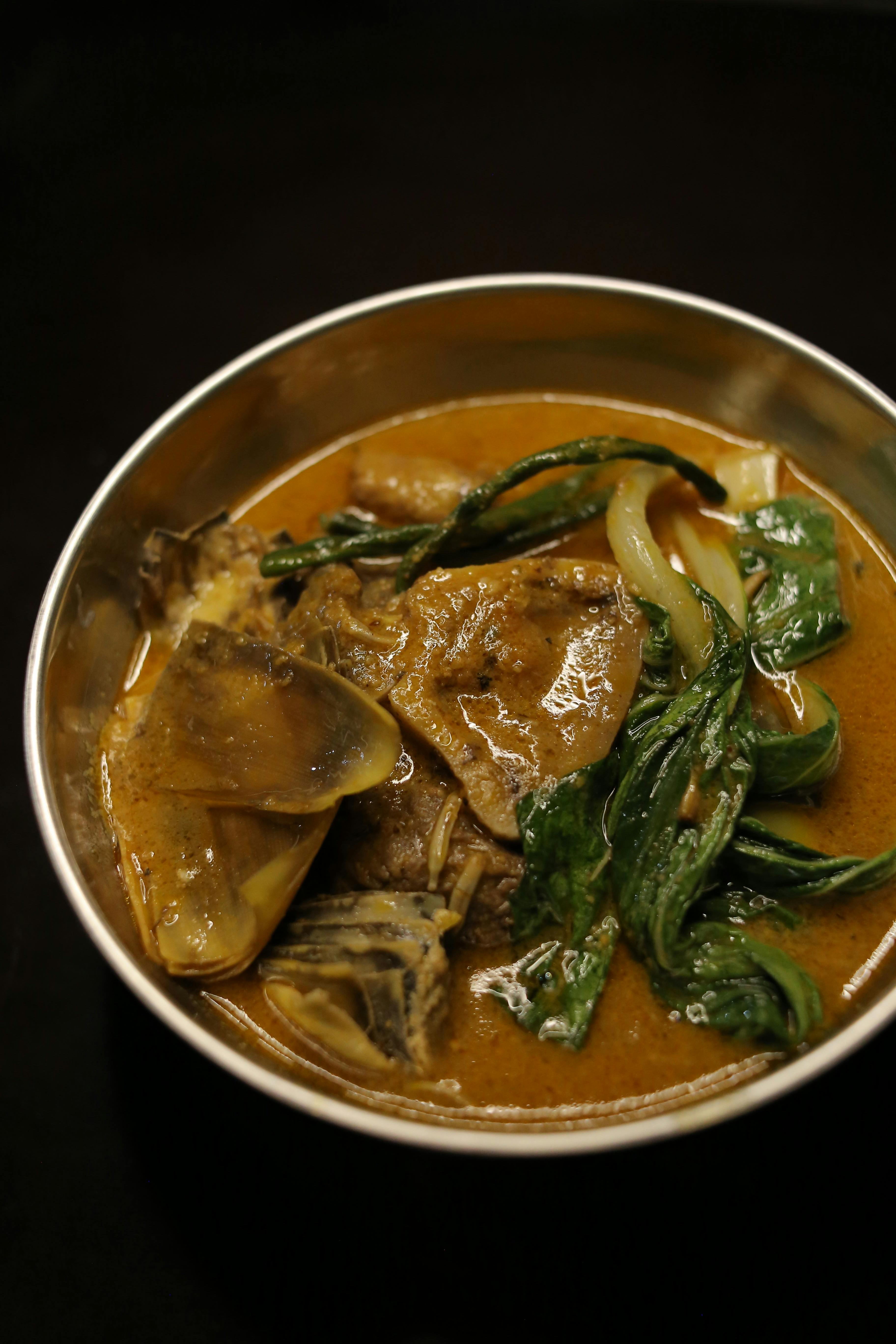
Photo: Aril Alejandro / Pexels
Nigerian
Ogbono Soup
The diets react (see scores below)
Common Ingredients
- ogbono seeds
- palm oil
- spinach
- crayfish
- stockfish
- beef
- scotch bonnet peppers
- onion
Specific recipes may vary.
Incompatible with 5 of 11 diets
Diet Ratings
Ogbono soup has a mixed keto profile. The base is palm oil, which is highly keto-friendly, and the proteins (beef, stockfish, crayfish) are excellent. Spinach, scotch bonnet peppers, and onion add minimal net carbs in typical soup quantities. The main concern is ogbono (African wild mango) seeds, which contain approximately 7-9g net carbs per 100g. A standard serving of ogbono soup uses roughly 50-100g of seeds, contributing approximately 4-9g net carbs per portion — manageable within a daily keto budget but not negligible. Ogbono seeds also contain dietary fiber, which partially offsets total carbs. The overall dish is high in fat from palm oil, moderate in protein, and relatively low in refined carbs or sugars. With careful portioning, it can fit within a keto framework, but the ogbono seed carb load warrants mindfulness.
Some strict keto practitioners flag ogbono seeds as borderline due to their starchy texture and non-trivial carb content, arguing that the cumulative carb load across a full meal makes this soup risky for those in early ketosis or with low carb tolerance. Others on relaxed lazy keto consider it fully acceptable given the high fat content and absence of grains or added sugars.
This Ogbono Soup contains multiple animal products that make it entirely incompatible with a vegan diet. Crayfish (dried/ground shellfish) is an animal product, stockfish (dried cod) is a fish product, and beef is meat — all three are clear violations of vegan principles. While the base ingredients (ogbono seeds, palm oil, spinach, scotch bonnet peppers, and onion) are fully plant-based, the presence of three distinct animal-derived ingredients means this dish cannot be considered vegan in any interpretation. A vegan version could theoretically be made by omitting crayfish, stockfish, and beef, and substituting with plant-based umami sources such as mushrooms or smoked paprika.
Ogbono soup has two significant paleo concerns. First and most critically, ogbono seeds (African bush mango seeds, Irvingia gabonensis) are seeds from a fruit, but they are used culinarily as a thickening agent in a way that resembles grain or legume flours — they are ground and their starchy, mucilaginous properties drive the dish. More importantly, they are high in carbohydrates and anti-nutrients, and most paleo frameworks would classify them similarly to other seed-based thickeners or legume-adjacent foods. Their status in the paleo community is essentially unaddressed, meaning the default ruling under strict paleo is cautious exclusion. Second, stockfish is typically heavily salted during preservation, making it a processed food with added salt, which violates paleo rules. The remaining ingredients — palm oil, spinach, crayfish, beef, scotch bonnet peppers, and onion — are all paleo-compatible. Palm oil (from the fruit pulp) is generally accepted in paleo as a natural fat. However, the two problematic ingredients (ogbono seeds and salted stockfish) are foundational to the dish, not optional additions.
Some paleo practitioners may argue that ogbono seeds, being whole seeds from a wild African fruit tree foraged in their natural state, could be considered ancestrally appropriate — particularly those following a more lenient or ancestral-foods-based interpretation. Fresh or unsalted stockfish could also be substituted to resolve the preservation concern.
Ogbono soup has several elements that conflict with Mediterranean diet principles. Palm oil, while a plant-based fat, is high in saturated fat and is not a recognized Mediterranean fat source — extra virgin olive oil is the canonical choice. The inclusion of beef adds red meat, which should be limited to a few times per month. Stockfish (dried/salted cod) is more compatible, as fish is encouraged, but the overall fat profile driven by palm oil is problematic. On the positive side, spinach, onion, scotch bonnet peppers, and ogbono seeds (a source of fiber and healthy fats) are plant-based positives. Crayfish is a seafood ingredient that aligns well. However, the combination of palm oil and beef pulls this dish away from Mediterranean principles.
Some Mediterranean diet interpreters who focus on whole-food, plant-rich diversity rather than strict regional origins might give partial credit for the ogbono seeds (rich in soluble fiber and unsaturated fats), leafy greens, and seafood components. A modified version substituting olive oil for palm oil and omitting beef could be considered caution-level by more inclusive modern interpretations.
Ogbono Soup is fundamentally incompatible with the carnivore diet. The dish is built around ogbono seeds (wild mango seeds), which are the primary thickening and flavoring agent — a plant-based seed entirely excluded on carnivore. Beyond the ogbono seeds, the soup contains multiple other plant-derived ingredients: spinach (leafy vegetable), scotch bonnet peppers (fruit/spice), and onion (vegetable). Palm oil, while debated, is also a plant-derived oil. The only carnivore-compatible ingredients are the beef, stockfish, and crayfish. This dish cannot be salvaged as carnivore-compliant without essentially rebuilding it from scratch, as the plant ingredients are structural to the dish's identity, not mere garnishes.
Ogbono soup's listed ingredients — ogbono (wild mango) seeds, palm oil, spinach, crayfish, stockfish, beef, scotch bonnet peppers, and onion — are individually Whole30-compatible. Meat, seafood (stockfish, crayfish), vegetables, and natural fats like palm oil are all explicitly allowed. However, ogbono seeds sit in an ambiguous category: they are seeds from the African bush mango (Irvingia gabonensis), not a legume or grain, so they are not categorically excluded. The soup earns a 'caution' rating primarily because: (1) ogbono seeds are extremely rarely addressed by official Whole30 resources, making compliance uncertain; (2) commercially prepared versions of this dish or store-bought ogbono soup bases may contain added bouillon, MSG (now allowed per 2024 rules), or other additives that require label scrutiny; and (3) stockfish and crayfish as purchased in markets sometimes include sulfites or other preservatives (now allowed per 2024 rules, but worth noting). If made from scratch with clean, verified ingredients, this soup is likely compliant in spirit and practice.
The official Whole30 program does not explicitly address ogbono seeds, and some Whole30 practitioners may flag any unfamiliar seed-based thickener as needing explicit clearance before consumption. Conversely, since ogbono seeds are neither a grain, legume, nor dairy product, a strict reading of the rules would classify them as an allowed whole food — the community remains divided on how to handle traditional ingredients not covered by official guidance.
Ogbono Soup contains multiple high-FODMAP ingredients that make it problematic during the elimination phase. Onion is a major high-FODMAP ingredient (fructans) and is a core component of this soup. Ogbono seeds (African bush mango seeds/Irvingia gabonensis) have not been tested by Monash University, but as seeds from a fruit, they may contain polyols or other FODMAPs — their FODMAP status is unknown, which adds uncertainty. Crayfish (dried/fermented shrimp) and stockfish are generally low-FODMAP proteins. Beef is low-FODMAP. Palm oil is low-FODMAP (fat only). Spinach is low-FODMAP at standard servings. Scotch bonnet peppers in small amounts are generally tolerated. However, the onion alone is sufficient to classify this dish as high-FODMAP during the elimination phase, as onion is one of the most concentrated sources of fructans and cannot be made low-FODMAP by portion reduction in a typical recipe. The unknown status of ogbono seeds further increases risk.
Monash University has not tested ogbono seeds, so their FODMAP content is genuinely unknown — it is possible (though unconfirmed) that they are low-FODMAP if consumed in typical serving amounts. Some FODMAP practitioners may suggest the dish could be modified by replacing onion with the green tops of spring onions and garlic-infused oil, which would substantially reduce fructan load, but the traditional recipe as described should be avoided during strict elimination.
Ogbono Soup contains several DASH-compatible elements alongside notable concerns. Ogbono seeds (African bush mango) provide fiber, healthy fats, and some protein. Spinach is an excellent DASH vegetable rich in potassium and magnesium. Onions and scotch bonnet peppers are DASH-friendly whole foods. However, the dish has significant limiting factors: palm oil is a tropical oil high in saturated fat, which DASH explicitly recommends limiting — this is the primary concern. Stockfish (dried, salted cod) is typically very high in sodium, a critical DASH concern especially for hypertensive individuals. Crayfish (fermented/dried shrimp) also contributes substantial sodium. Beef is a red meat that DASH recommends limiting. The combination of palm oil, stockfish, and dried crayfish creates a dish likely exceeding safe sodium thresholds per serving and delivering meaningful saturated fat, pushing it into caution territory despite its fiber-rich and vegetable components. Portion control and modifications (reducing palm oil, using fresh fish instead of stockfish, omitting or minimizing crayfish) could improve compatibility.
NIH DASH guidelines categorically restrict tropical oils like palm oil and high-sodium processed/dried proteins. However, some updated clinical interpretations note that red palm oil contains tocotrienols and carotenoids with potential cardiovascular benefits, and that traditional West African dietary patterns — while higher in sodium from fermented/dried ingredients — are associated with complex nutrient profiles not fully captured by DASH's sodium-first framework. Some DASH-oriented dietitians working with African diaspora populations recommend modifying rather than avoiding traditional soups like Ogbono by reducing stockfish quantity and palm oil volume.
Ogbono Soup is a nutrient-dense traditional Nigerian dish with a mixed Zone Diet profile. On the positive side, it contains lean protein sources (stockfish, beef) alongside beneficial ingredients like spinach (a favorable low-glycemic Zone vegetable), onions, and scotch bonnet peppers (rich in polyphenols). Crayfish adds additional protein and omega-3 fatty acids. The ogbono (wild mango) seeds provide fiber and some fat with a low glycemic impact, which is compatible with Zone principles. The primary concern is the palm oil, which is high in saturated fat — early Zone methodology strictly limited saturated fat in favor of monounsaturated fats like olive oil. The beef also contributes saturated fat. The overall fat profile leans more saturated than the Zone's preferred monounsaturated emphasis. However, the dish's protein content (stockfish + beef) and favorable vegetable components (spinach, peppers, onion) give it a reasonably balanced macro foundation. With portion control — particularly on the palm oil and beef quantities — and pairing with a controlled carbohydrate side, this soup can fit into a Zone meal plan. The absence of high-glycemic carbohydrates is a notable positive.
Dr. Sears' later anti-inflammatory work (e.g., 'The Zone Diet' updated editions) acknowledges that not all saturated fats are equally harmful and emphasizes polyphenol-rich foods. Ogbono seeds themselves have anti-inflammatory properties and a low glycemic impact, and the rich vegetable and spice content (spinach, scotch bonnet, onion) provides meaningful polyphenol value. Some Zone practitioners in African dietary contexts would rate this more favorably, treating palm oil in modest quantities as acceptable and emphasizing the dish's overall low-glycemic, high-fiber, high-protein character.
Ogbono soup presents a genuinely mixed anti-inflammatory profile. On the positive side, ogbono seeds (African bush mango) are rich in soluble fiber and contain oleic acid (the same monounsaturated fat dominant in olive oil), with emerging research suggesting they have lipid-lowering and anti-inflammatory properties. Spinach contributes significant antioxidants, carotenoids, and vitamins K and C. Scotch bonnet peppers are exceptionally high in capsaicin and vitamin C, both with well-documented anti-inflammatory effects. Onion provides quercetin, a potent polyphenol. Crayfish and stockfish add concentrated protein and some omega-3s. However, palm oil is the dish's most problematic component from an anti-inflammatory standpoint. Red palm oil is high in saturated fat (roughly 50%) and palmitic acid, which at high intake levels has been associated with increased inflammatory markers. While it also contains tocotrienols (a form of vitamin E) and beta-carotene with antioxidant properties, mainstream anti-inflammatory guidelines (including Dr. Weil's framework) generally recommend limiting saturated fat sources like palm oil. The inclusion of beef further adds saturated fat and arachidonic acid precursors. The dish is not in the 'avoid' category because it contains genuinely beneficial ingredients, but regular consumption in traditional quantities — where palm oil is used liberally — places it in the caution zone.
Some functional nutrition researchers and African nutrition scholars argue that unrefined red palm oil, used in traditional cooking rather than the industrially refined form, retains tocotrienols and carotenoids that may offset its saturated fat content and even confer anti-inflammatory benefits. Conversely, strict anti-inflammatory and cardiovascular nutrition frameworks (including AHA-aligned guidance) emphasize that palmitic acid in palm oil is among the most pro-inflammatory saturated fatty acids, particularly at the quantities typical in West African soups.
Ogbono soup has a genuinely mixed nutritional profile for GLP-1 patients. On the positive side, it contains meaningful protein from stockfish and beef, and ogbono seeds provide some fiber and mucilaginous soluble fiber that can support digestion and gut motility — potentially helpful for GLP-1-related constipation. Spinach adds micronutrient density. However, the primary concern is palm oil, which is high in saturated fat and used in significant quantities in traditional preparation. High fat per serving directly worsens GLP-1 side effects including nausea, bloating, and reflux, since slowed gastric emptying amplifies fat-induced GI discomfort. Scotch bonnet peppers are very spicy and are a known trigger for reflux and nausea in GLP-1 patients. The soup is also typically served with fufu, pounded yam, or eba — high-glycemic, low-protein starches that would further lower the meal's overall rating. Evaluated as a standalone soup, beef and stockfish provide some protein credit, but the high saturated fat load from palm oil and the heat level from scotch bonnet are meaningful drawbacks. Portion size and oil quantity are highly variable, and a lighter home preparation with reduced palm oil, leaner beef, and milder pepper could shift this toward a higher score.
Some GLP-1-focused dietitians working with West African patients argue that traditional soups like ogbono should not be categorically flagged, as the protein from stockfish and the soluble fiber from ogbono seeds are genuinely beneficial, and cultural food acceptability is critical for long-term adherence. Others maintain that the saturated fat load from palm oil is a consistent enough GI trigger to warrant an avoid rating regardless of other nutrients, particularly in the early weeks of GLP-1 therapy when side effects are most pronounced.
*See how scores were generated at our methodology page.
Nutritional profile
Six traits that cut across every diet.
Fiber & Plants
How much whole-plant food and fiber it delivers.
Healthy Fats
The quality of its fats (unsaturated, omega-3).
Whole / Unprocessed
How close it is to its natural, unprocessed form.
Gut Gentle
How easy it is on digestion (low FODMAP, few irritants).
Low Glycemic
How little it spikes your blood sugar.
Protein Density
How much protein it packs per calorie.
Controversy Index
Higher controversy = more disagreement between diets.
Diet-Specific Tips
 Keto — 5/10
View tips
- Ogbono seeds contribute 4-9g net carbs per serving — manageable but notable
- Palm oil base is highly keto-aligned (high saturated fat, zero carbs)
- Beef, stockfish, and crayfish provide clean, moderate protein
- Spinach and peppers add micronutrients with minimal net carbs
- No grains, added sugars, or starchy vegetables present
- Portion size of ogbono seeds is the key lever for keto compatibility
- Dish is naturally whole and unprocessed — aligns with keto food quality principles
 Whole30 — 5/10
View tips
- Ogbono (wild mango) seeds are not a grain, legume, or dairy product and are not explicitly excluded
- Palm oil is a Whole30-compliant natural fat
- Beef, stockfish, and crayfish are compliant animal proteins
- Spinach, scotch bonnet peppers, and onion are compliant vegetables
- No added sugar, grains, dairy, or legumes in the listed ingredients
- Ogbono seeds lack explicit Whole30 guidance — homemade versions from verified clean ingredients recommended
- Commercial or restaurant versions may contain non-compliant additives; label-reading essential
 DASH — 4/10
View tips
- Palm oil is a tropical oil high in saturated fat — explicitly limited by DASH guidelines
- Stockfish (salted dried cod) is very high in sodium, likely pushing a single serving above DASH sodium limits
- Dried crayfish adds additional sodium burden
- Beef is a red meat, limited on DASH diet
- Ogbono seeds provide fiber and healthy fats — DASH-positive
- Spinach is an excellent DASH food rich in potassium and magnesium
- Dish can be modified (less palm oil, fresh fish, less crayfish) to improve DASH compatibility
- As traditionally prepared, cumulative sodium from multiple dried/fermented ingredients is a major concern for hypertensive individuals
 Zone — 5/10
View tips
- Palm oil is high in saturated fat, conflicting with Zone's preference for monounsaturated fats like olive oil
- Beef contributes additional saturated fat, requiring careful portioning
- Stockfish and crayfish are lean, Zone-favorable protein sources with omega-3 content
- Spinach, onion, and scotch bonnet peppers are favorable low-glycemic Zone vegetables rich in polyphenols
- Ogbono seeds are low-glycemic and high in fiber, compatible with Zone carbohydrate principles
- No high-glycemic carbohydrates present, which is a Zone positive
- Dish lacks a controlled carbohydrate balance unless paired with a measured Zone-friendly carb side
- Overall protein content is present but portion sizing of beef must be managed to stay in Zone block ranges
 Anti-Inflammatory — 5/10
View tips
- Palm oil: high in saturated fat (palmitic acid) — a significant pro-inflammatory concern at typical cooking quantities
- Ogbono seeds: rich in soluble fiber and oleic acid, with emerging anti-inflammatory and lipid-modulating research
- Scotch bonnet peppers: very high capsaicin and vitamin C content — strong anti-inflammatory contribution
- Spinach: excellent source of antioxidants, carotenoids, and vitamin K
- Onion: provides quercetin and other anti-inflammatory polyphenols
- Beef: adds saturated fat and arachidonic acid precursors — pro-inflammatory at regular intake
- Crayfish and stockfish: contribute lean protein and modest omega-3s
- Overall profile: beneficial spices and vegetables partially offset by palm oil and beef — net result is moderate/mixed
 GLP-1 Friendly — 4/10
View tips
- High saturated fat from palm oil — worsens nausea, bloating, and reflux on GLP-1 medications
- Scotch bonnet peppers are very spicy — known trigger for reflux and GI discomfort
- Stockfish and beef provide protein, supporting the #1 dietary priority
- Ogbono seeds contribute soluble fiber, which may support gut motility and constipation relief
- Spinach adds micronutrient density
- Typically served with high-glycemic low-protein starches, which would lower the overall meal score
- Preparation variability is high — oil quantity and pepper level can shift rating significantly
- Easy digestibility is compromised by fat content given slowed gastric emptying