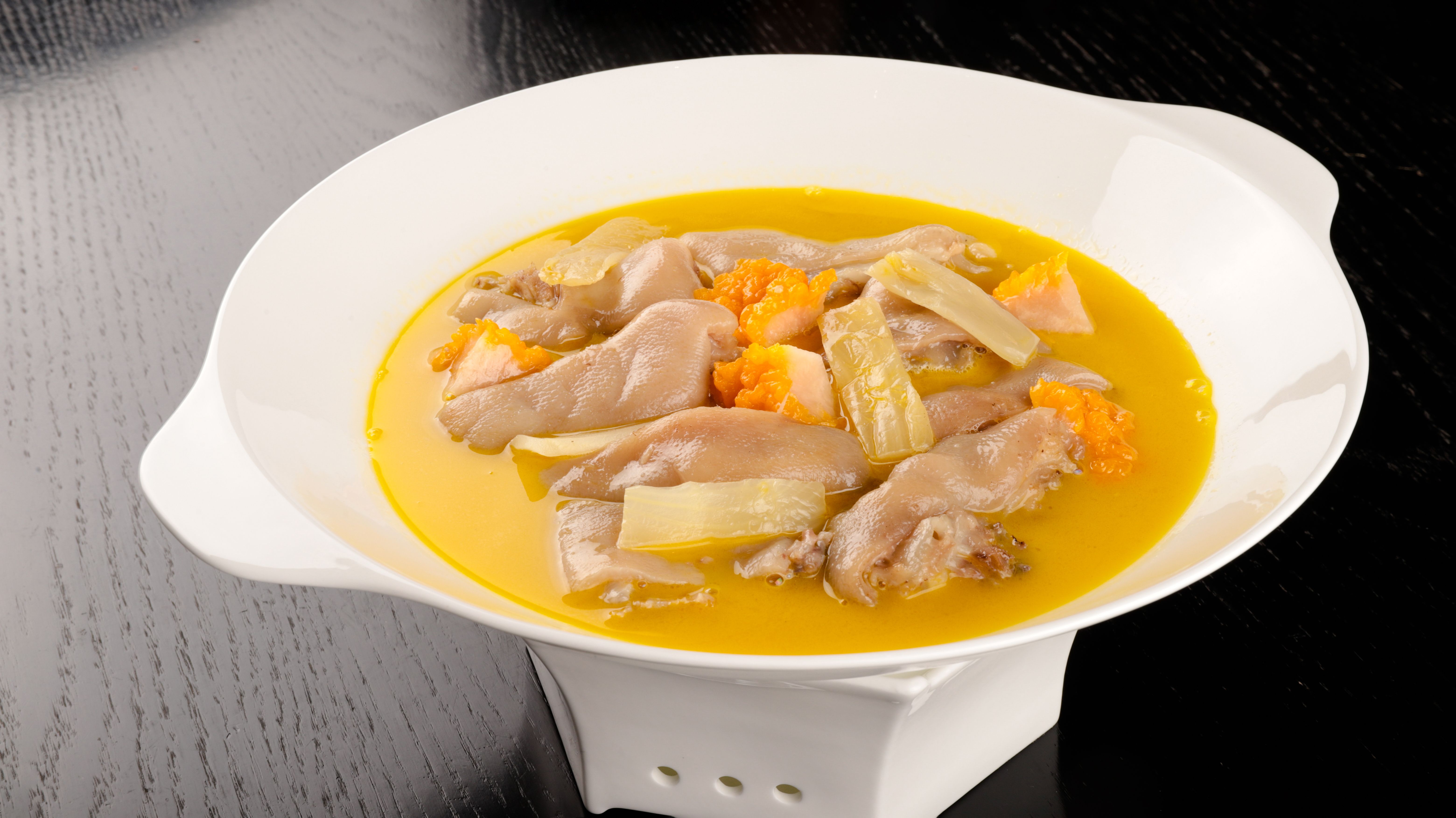
Photo: Change C.C / Pexels
Nigerian
Pepper Soup
The diets react (see scores below)
Common Ingredients
- catfish
- pepper soup spice
- scotch bonnet peppers
- scent leaf
- onion
- ginger
- garlic
- crayfish
Specific recipes may vary.
Incompatible with 3 of 11 diets
Diet Ratings
Nigerian Pepper Soup made with catfish is an excellent keto-friendly dish. Catfish is a lean, high-quality protein source with zero carbs. The broth-based soup relies on aromatic spices and vegetables — scotch bonnet peppers, onion, ginger, garlic, scent leaf, and crayfish — all of which contribute minimal net carbs in typical cooking quantities. Pepper soup spice blends are generally carb-free. Crayfish adds umami and trace healthy fats. The overall net carb count per serving is very low (estimated 3-6g net carbs), well within ketogenic limits. The dish is whole, unprocessed, and free from grains, added sugars, or starchy vegetables, making it naturally compatible with ketosis.
Some strict keto practitioners flag commercial pepper soup spice blends as a potential concern, as pre-packaged versions occasionally contain fillers, starch, or maltodextrin. Purists recommend using whole, individual spices (uziza seeds, calabash nutmeg, etc.) to guarantee zero hidden carbs.
Nigerian Pepper Soup contains multiple animal-derived ingredients that disqualify it from a vegan diet. Catfish is a fish and therefore an animal product, making it the primary disqualifying ingredient. Crayfish, commonly used in Nigerian cuisine as a flavoring agent, is a crustacean and also an animal product. Both are clear violations of vegan principles. The remaining ingredients — pepper soup spice blend, scotch bonnet peppers, scent leaf, onion, ginger, and garlic — are all plant-based, but the presence of catfish and crayfish makes this dish entirely incompatible with a vegan diet.
Nigerian Pepper Soup made with catfish is largely paleo-compliant. Catfish is an unprocessed whole fish, a core paleo protein. Scotch bonnet peppers, scent leaf (efirin/basil family), onion, ginger, and garlic are all whole vegetables, herbs, and aromatics that would have been accessible to or are analogous to wild foods consumed by hunter-gatherers. Crayfish (dried ground shrimp) is a minimally processed seafood product widely used in West African cooking and is essentially just dried crustacean — paleo-acceptable. The main uncertainty lies in 'pepper soup spice,' a pre-blended spice mix (typically including uziza seeds, ehuru/calabash nutmeg, uda/negro pepper, and other aromatic seeds). These are natural seeds and spices, but the blend may occasionally include added salt or preservatives depending on the commercial product. If homemade or from a pure-ingredient blend, this dish is excellent paleo fare. The dish contains no grains, legumes, dairy, refined sugar, or seed oils.
Strict paleo adherents following Loren Cordain's original framework would scrutinize any pre-packaged spice blend for added salt or anti-caking additives, which would push the rating toward caution. Using whole, unprocessed individual spices rather than a commercial blend would fully satisfy even the strictest interpretation.
Nigerian Pepper Soup with catfish aligns well with core Mediterranean diet principles. Fish is a primary protein strongly encouraged 2-3 times weekly, and the dish is built around whole, minimally processed ingredients: fresh fish, aromatics (onion, ginger, garlic), herbs (scent leaf), and spices. There are no refined grains, added sugars, or processed fats. The broth-based preparation is lean and nutrient-rich. The main departure from classic Mediterranean framing is the absence of olive oil and the use of West African spice blends (pepper soup spice, crayfish) rather than Mediterranean herbs, but the underlying nutritional profile is very compatible. Crayfish adds umami and is a minimally processed seafood product. The dish is essentially a light, herb-and-spice-forward fish broth, which mirrors the spirit of Mediterranean fish soups like bouillabaisse or kakavia.
Some Mediterranean diet purists may rate this lower because it lacks olive oil as a fat source and uses non-traditional spice profiles not found in Mediterranean culinary traditions. A strict interpretation might score it as 'caution' pending substitution of olive oil for any cooking fat used.
While catfish and crayfish are carnivore-approved animal proteins, Nigerian Pepper Soup is overwhelmingly plant-based in its flavoring profile. Pepper soup spice blend, scotch bonnet peppers, scent leaf (Ocimum gratissimum), onion, ginger, and garlic are all plant-derived ingredients that are entirely excluded from the carnivore diet. The dish is essentially a spiced plant broth with fish — the majority of its ingredients violate carnivore principles. Even the most lenient carnivore practitioners who allow occasional spices would find the sheer volume and variety of plant ingredients here disqualifying. This dish cannot be adapted to carnivore without fundamentally changing its identity.
Nigerian Pepper Soup with catfish is largely Whole30-compliant in its traditional form. Catfish, scotch bonnet peppers, scent leaf (efirin), onion, ginger, garlic, and crayfish are all fully allowed whole foods. The key concern is 'pepper soup spice,' which is a spice blend — typically a mix of ground spices like calabash nutmeg (ehuru), African nutmeg (ariwo), grains of selim (uda), and uziza seeds. These spices themselves are Whole30-compliant. However, commercially pre-mixed pepper soup spice blends may contain anti-caking agents, fillers, flavor enhancers, or other additives that could be non-compliant. If making the spice blend from scratch or using a verified single-ingredient compliant blend, this dish is a strong approve. The caution rating reflects the need for careful label-reading on any pre-packaged pepper soup spice mix.
Whole30 officially allows all herbs and spices, so a homemade or clean-label pepper soup spice blend would make this dish fully approvable. The community debate centers on whether commercially packaged ethnic spice blends — which rarely carry Whole30 certification — can be trusted without ingredient verification, and some practitioners recommend always making spice blends from scratch during the program.
Nigerian Pepper Soup contains several high-FODMAP ingredients that make it unsuitable during the elimination phase. The most problematic are garlic and onion, both of which are high in fructans and are among the top trigger foods in the Monash FODMAP system — even small amounts cooked into a broth can leach fructans into the liquid, making the entire dish high-FODMAP. Crayfish (dried/fermented shrimp paste) has not been well-tested by Monash but may contain concentrated GOS or other fermentable compounds. The pepper soup spice blend is a regional spice mix (typically containing calabash nutmeg, uziza seeds, and other West African spices) that has not been tested by Monash, introducing further uncertainty. Catfish itself is a plain protein and is low-FODMAP. Ginger is low-FODMAP at normal culinary doses. Scent leaf (African basil) and scotch bonnet peppers are likely low-FODMAP in small amounts but lack Monash testing data. The combination of onion and garlic cooked in a broth — where FODMAPs fully dissolve into the liquid — is the decisive factor making this dish a clear avoid during elimination.
Monash University has not specifically tested pepper soup spice blends or several regional West African ingredients used here. Some clinical FODMAP practitioners suggest that very small amounts of garlic and onion used purely as flavoring may be tolerated by some patients post-elimination, but during the strict elimination phase, any dish cooked with garlic and onion in broth form is widely considered high-FODMAP because fructans leach freely into liquid.
Nigerian Pepper Soup made with catfish aligns well with several DASH diet principles: catfish is a lean protein source low in saturated fat, and the dish incorporates DASH-friendly aromatics (onion, ginger, garlic, scent leaf) with no added oils or refined carbohydrates. The broth-based preparation avoids the saturated fat concerns of fried or creamy dishes. However, the sodium content is the key uncertainty. Crayfish (dried/fermented) is notably high in sodium, and commercial pepper soup spice blends often contain significant added salt, potentially pushing this dish into moderate-to-high sodium territory depending on quantities used. As commonly prepared, the cumulative sodium from crayfish and spice blends warrants caution. The scotch bonnet peppers and spice mix are otherwise rich in phytonutrients and do not conflict with DASH principles. If prepared with minimal added salt, low-sodium spice blends, and modest crayfish portions, this dish could easily score higher and align well with DASH's emphasis on lean fish and vegetable-rich broths.
NIH DASH guidelines do not specifically address traditional West African pepper soups, making direct application uncertain. Some DASH-oriented clinicians would approve this dish given its lean fish base, absence of saturated fat, and anti-inflammatory spice profile, arguing that sodium from whole-food sources like crayfish is more manageable than processed food sodium, and that home-prepared versions can be sodium-controlled — whereas others would flag crayfish and commercial spice blends as automatic caution triggers under the standard <2,300mg/day sodium limit.
Nigerian Pepper Soup with catfish is an excellent Zone Diet fit. Catfish is a lean protein source that provides clean protein blocks with minimal saturated fat. The dish is naturally very low in carbohydrates — the scotch bonnet peppers, onion, scent leaf, ginger, and garlic all contribute negligible net carbs and are low-glycemic vegetables. Crayfish adds a small additional protein boost. The pepper soup spice blend is purely herbal and contributes no meaningful macros. The main Zone consideration is fat: catfish is relatively low in fat, so the meal may need a small addition of monounsaturated fat (e.g., a drizzle of olive oil or a side of avocado) to hit the 30% fat target. The dish is rich in polyphenols from the spices and peppers, directly aligning with Dr. Sears' anti-inflammatory emphasis on omega-3s and polyphenols. With appropriate portioning of the catfish (roughly 3 oz cooked per meal) and a fat supplement, this soup slots easily into a Zone meal.
Nigerian Pepper Soup with catfish is a nutritionally dense, broth-based dish with a strongly anti-inflammatory ingredient profile. Catfish provides lean protein and contains omega-3 fatty acids, though at lower levels than fatty fish like salmon. The dish is built on a foundation of potent anti-inflammatory spices and aromatics: ginger and garlic are well-documented reducers of inflammatory markers (CRP, IL-6, TNF-alpha); scotch bonnet peppers deliver high concentrations of capsaicin, which has demonstrated anti-inflammatory and analgesic properties in research; scent leaf (Ocimum gratissimum) is rich in flavonoids, tannins, and eugenol — compounds with recognized antioxidant and anti-inflammatory activity in ethnobotanical and pharmacological literature. Crayfish adds umami depth and trace minerals without significant pro-inflammatory load. Onion contributes quercetin, a potent flavonoid antioxidant. The pepper soup spice blend typically includes ehuru (calabash nutmeg), uziza seeds, and other West African spices that contribute additional polyphenols. The dish is broth-based with no refined carbohydrates, no added sugars, no seed oils, and no processed ingredients — aligning well with anti-inflammatory dietary principles. The only modest consideration is that catfish, while a healthy protein, has a less favorable omega-3 to omega-6 ratio compared to cold-water fatty fish like mackerel or salmon. Overall, this dish exemplifies many anti-inflammatory ideals: whole ingredients, spice-forward, broth-based, and low in pro-inflammatory components.
Nigerian Pepper Soup made with catfish is a nutrient-dense, low-fat, high-protein dish with excellent hydration support from its broth base. Catfish provides lean protein with omega-3 fatty acids, and the aromatic ingredients (ginger, garlic, onion, crayfish) add micronutrients with minimal calories. The broth format makes it easy to digest and small-portion friendly — both strong positives for GLP-1 patients. However, the significant quantity of scotch bonnet peppers is a meaningful concern: very spicy foods can worsen nausea, reflux, and GI discomfort, which are already common GLP-1 side effects. Pepper soup spice blends also typically contain moderate heat. The dish scores well on protein, hydration, digestibility, and nutrient density, but the high spice level creates real GLP-1 side effect risk that prevents a full approve rating. Patients who tolerate spice well and are past the initial adjustment period may do fine; those on higher doses or experiencing active GI side effects should avoid or request a mild preparation.
Some GLP-1-focused dietitians consider ginger and garlic in this dish beneficial for nausea reduction, and may approve a mild version of pepper soup without reservation given its excellent protein-to-calorie ratio and broth base. Others flag scotch bonnet peppers as a consistent GI irritant in GLP-1 patients and would caution against any preparation that includes significant quantities of hot peppers, regardless of individual spice tolerance history.
*See how scores were generated at our methodology page.
Nutritional profile
Six traits that cut across every diet.
Fiber & Plants
How much whole-plant food and fiber it delivers.
Healthy Fats
The quality of its fats (unsaturated, omega-3).
Whole / Unprocessed
How close it is to its natural, unprocessed form.
Gut Gentle
How easy it is on digestion (low FODMAP, few irritants).
Low Glycemic
How little it spikes your blood sugar.
Protein Density
How much protein it packs per calorie.
Controversy Index
Higher controversy = more disagreement between diets.
Diet-Specific Tips
 Keto — 8/10
View tips
- Catfish is a zero-carb, high-quality lean protein — keto-compatible
- Broth-based preparation with no grains, starches, or added sugars
- Scotch bonnet, onion, garlic, and ginger contribute minimal net carbs in soup quantities
- Crayfish adds flavor and trace fats with negligible carbs
- Scent leaf is a low-carb herb fully compatible with keto
- Commercial pepper soup spice blends may contain trace starches — check labels
- Estimated 3-6g net carbs per serving — well within daily keto limits
 Paleo — 9/10
View tips
- Catfish is a whole, unprocessed fish — core paleo protein
- Scotch bonnet peppers, onion, ginger, garlic, and scent leaf are all whole, natural plant foods
- Crayfish (dried ground shrimp) is minimally processed seafood — paleo-acceptable
- Pepper soup spice blend is typically all-natural seeds/spices but commercial versions may contain added salt or additives
- No grains, legumes, dairy, refined sugar, or seed oils present
- Dish is naturally broth-based with no thickeners
 Mediterranean — 8/10
View tips
- Catfish is a lean fish, supporting the 2-3x weekly seafood guideline
- Broth-based, no added sugars or refined grains
- Whole aromatics: onion, garlic, ginger — all Mediterranean-compatible
- Scent leaf is an herb analogous to basil, fitting Mediterranean herb use
- Crayfish is a minimally processed seafood ingredient
- No olive oil present, a notable omission from the Mediterranean fat profile
- Pepper soup spice blend is non-traditional but not nutritionally harmful
- No red meat, processed foods, or saturated fat sources
 Whole30 — 6/10
View tips
- Catfish is a fully Whole30-compliant protein (seafood is explicitly allowed)
- Scotch bonnet peppers, onion, ginger, garlic, and scent leaf are all whole, compliant vegetables/aromatics
- Crayfish (dried/ground shrimp) is compliant as a natural seafood ingredient
- Pepper soup spice blend requires label verification — homemade or single-ingredient spices are safe; commercial blends may contain non-compliant additives
- No grains, legumes, dairy, or added sugar in the traditional recipe
- This is a traditional savory soup, fully aligned with Whole30's spirit of whole, unprocessed eating
 DASH — 6/10
View tips
- Catfish is a lean, low-saturated-fat protein consistent with DASH lean fish recommendations
- Crayfish (dried/fermented) is high in sodium and commonly used in significant quantities
- Commercial pepper soup spice blends frequently contain added salt, raising sodium concerns
- No added oils, refined grains, or added sugars — broth-based preparation is DASH-friendly
- Aromatics (garlic, ginger, onion, scent leaf) provide potassium and anti-inflammatory compounds
- Sodium content is highly preparation-dependent; home-cooked low-sodium versions score significantly better
- No saturated fat, full-fat dairy, or red meat concerns
 Zone — 8/10
View tips
- Catfish is a lean, Zone-favorable protein source with low saturated fat
- All vegetable ingredients (scotch bonnet, onion, ginger, garlic, scent leaf) are low-glycemic and Zone-favorable
- Very low net carbohydrate content — may need a low-GI carb addition (e.g., more vegetables) to balance the 40% carb target
- Fat content is low; a monounsaturated fat supplement (olive oil, avocado) is recommended to achieve the 30% fat ratio
- High polyphenol content from spices and peppers aligns with Sears' anti-inflammatory protocol
- Crayfish adds flavor and a minor protein boost without disrupting Zone balance
- No high-glycemic carbs, added sugar, seed oils, or processed ingredients
 Anti-Inflammatory — 8/10
View tips
- Catfish provides lean protein with moderate omega-3 content
- Ginger and garlic are well-researched anti-inflammatory aromatics
- Capsaicin in scotch bonnet peppers suppresses inflammatory cytokines
- Scent leaf contains eugenol and flavonoids with antioxidant properties
- Onion contributes quercetin, a potent anti-inflammatory flavonoid
- Crayfish adds minerals without pro-inflammatory burden
- Broth-based preparation with no refined carbs, oils, or added sugars
- Catfish has less favorable omega-3:omega-6 ratio than fatty cold-water fish
 GLP-1 Friendly — 5/10
View tips
- Catfish is a lean, high-protein fish with omega-3 fatty acids — strong GLP-1 positive
- Broth-based format supports hydration and is easy to digest — well suited to GLP-1 patients
- Scotch bonnet peppers are very high on the Scoville scale and may worsen nausea, reflux, and GI distress — significant GLP-1 concern
- Ginger and garlic have anti-nausea and anti-inflammatory properties — modest positive
- Crayfish adds additional protein and umami with minimal calories
- No refined grains, added sugars, or high-fat ingredients — clean nutritional profile
- Low fat content aligns well with GLP-1 dietary guidelines
- Spice tolerance is highly individual and dose-dependent — rating is preparation-sensitive