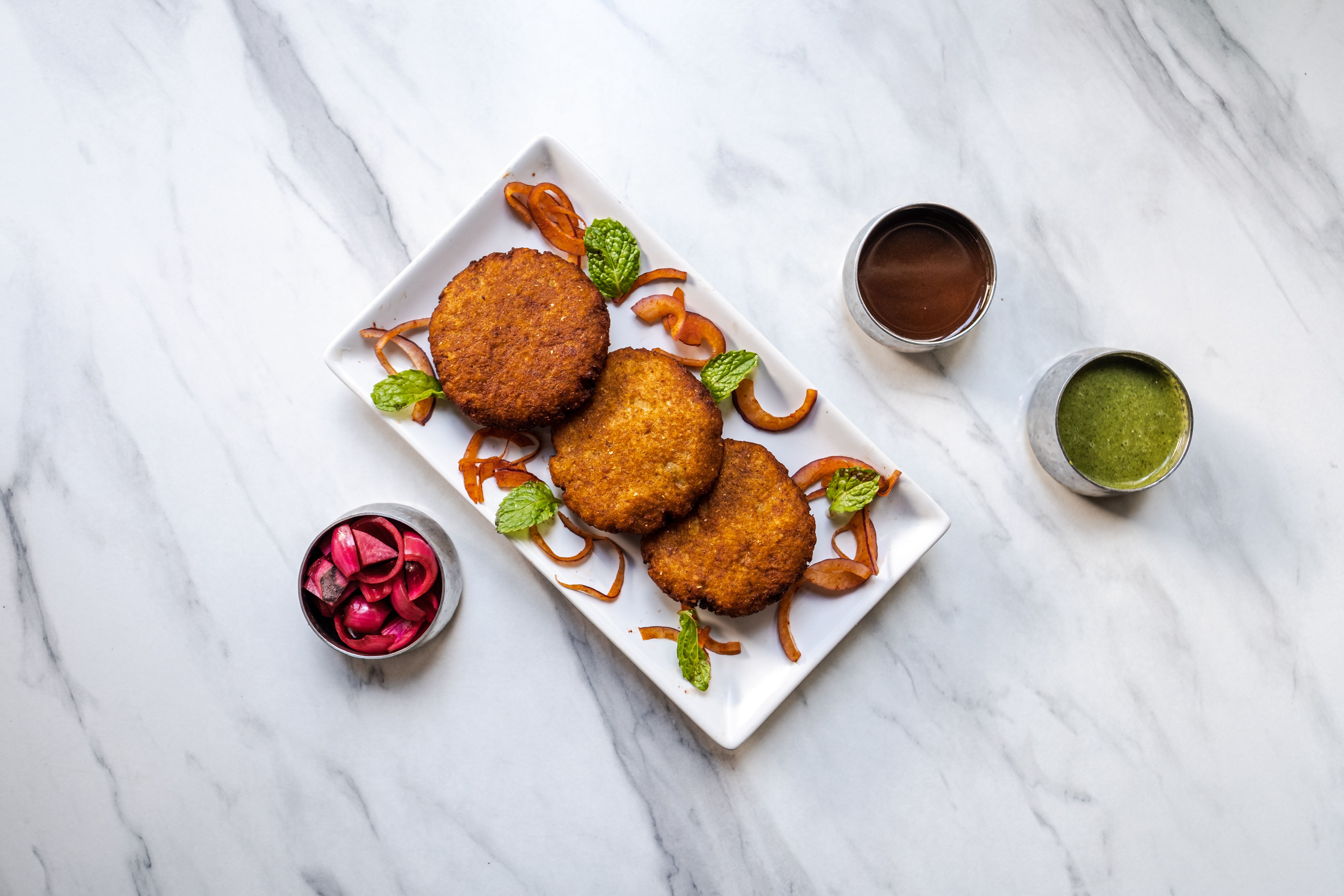
Photo: Chutney Indian / Pexels
The diets react (see scores below)
Common Ingredients
- potatoes
- green chiles
- ginger
- cumin
- coriander
- bread crumbs
- cilantro
- garam masala
Specific recipes may vary.
Incompatible with 6 of 11 diets
Diet Ratings
Aloo Tikki is fundamentally incompatible with a ketogenic diet. The primary ingredient, potatoes, are one of the highest net-carb vegetables available — a single medium potato contains roughly 30-35g of net carbs, which alone can exceed many individuals' entire daily keto carb budget. Bread crumbs add additional refined grain carbohydrates. Together, these two ingredients make this dish a high-glycemic, starch-dense food that would immediately disrupt ketosis. The spices and aromatics (cumin, coriander, garam masala, ginger, cilantro, green chiles) are keto-friendly in themselves, but they cannot offset the dominant carb load of the base ingredients.
Aloo Tikki as listed is entirely plant-based: potatoes, green chiles, ginger, cumin, coriander, bread crumbs, cilantro, and garam masala are all vegan ingredients. The dish is a whole-food-forward snack with minimal processing. The score is 8 rather than higher because bread crumbs warrant a note — commercial bread crumbs are typically vegan but occasionally contain dairy or egg, so label-checking is advisable. Confidence is medium rather than high because traditional restaurant-style Aloo Tikki is sometimes bound or enriched with yogurt or paneer, ingredients not listed here but commonly added in practice. The listed version, taken at face value, is clearly vegan.
Some ethical vegans flag that Aloo Tikki is frequently served with raita (a yogurt-based chutney) or made with ghee for frying in many traditional recipes; purists may argue the dish as typically prepared in many households or restaurants is not reliably vegan without explicit confirmation of ingredients.
Aloo Tikki contains two clear non-paleo ingredients: bread crumbs (a grain-based processed food) and white potatoes (discouraged in strict paleo, particularly by Cordain and The Paleo Diet guidelines). Bread crumbs are an unambiguous violation — wheat is explicitly excluded from paleo. White potatoes are themselves debated, but the bread crumbs alone are sufficient to place this dish firmly in 'avoid' territory. The spices (cumin, coriander, garam masala, ginger, cilantro) and green chiles are paleo-compliant, but they cannot offset the core structural violations. This dish cannot be considered paleo in its traditional form.
Aloo Tikki is a fried potato patty with aromatic spices. The ingredients are largely plant-based and whole, which aligns with Mediterranean principles. However, potatoes are a starchy vegetable rather than a nutrient-dense one, and the bread crumbs represent refined grain content. Typically shallow- or deep-fried in oil, the cooking method matters — if fried in olive oil it is more compatible, but if fried in vegetable shortening or refined oils it is less so. The spice profile (cumin, coriander, garam masala) is not traditional Mediterranean but is not problematic. Overall, this is an acceptable occasional snack but not a Mediterranean staple due to the refined starch content and frying preparation.
Some Mediterranean diet interpreters would view this more favorably, noting that traditional Mediterranean cuisines do include fried potato dishes (e.g., Spanish patatas bravas) and that the plant-based, no-meat profile is consistent with Mediterranean values. If pan-fried lightly in extra virgin olive oil, the dish could lean closer to an approval rating.
Aloo Tikki is entirely plant-based with zero animal-derived ingredients. Every component — potatoes, green chiles, ginger, cumin, coriander, bread crumbs, cilantro, and garam masala — is explicitly excluded on the carnivore diet. Potatoes are a starchy carbohydrate, bread crumbs are a grain product, and the remaining ingredients are plant-based spices and aromatics. This dish has no carnivore-compatible elements whatsoever.
Aloo Tikki contains bread crumbs, which are made from wheat — a grain explicitly excluded on the Whole30 program. Bread crumbs are a grain-based ingredient used as a binder and coating in this dish, making it non-compliant regardless of whether the other ingredients are acceptable. All other ingredients (potatoes, green chiles, ginger, cumin, coriander, cilantro, garam masala) are Whole30-compliant on their own, but the inclusion of bread crumbs disqualifies the dish as traditionally prepared.
Aloo Tikki is primarily potato-based, which is low-FODMAP at standard servings (1 medium potato). Most spices used — cumin, coriander, ginger, cilantro — are low-FODMAP at culinary quantities. Green chiles are low-FODMAP in small amounts per Monash. The main concern is the bread crumbs: standard wheat-based bread crumbs are high-FODMAP due to fructans. If gluten-free bread crumbs are substituted, the dish becomes largely low-FODMAP. Garam masala is a spice blend that typically includes low-FODMAP spices (cumin, coriander, cardamom, cinnamon, cloves, black pepper), but may occasionally include onion or garlic powder in commercial blends — this is a significant hidden FODMAP risk. The combination of wheat bread crumbs (standard) and potentially garlic/onion-containing garam masala tips this into caution territory for the elimination phase.
Monash University rates potatoes and individual spices as low-FODMAP, so if homemade garam masala (without onion/garlic) and gluten-free bread crumbs are used, clinical FODMAP practitioners would likely approve this dish. However, commercially prepared Aloo Tikki or restaurant versions almost certainly contain high-FODMAP bread crumbs and garam masala blends with onion or garlic powder, making avoidance advisable in strict elimination unless ingredients are fully verified.
Aloo Tikki is a spiced potato patty that contains mostly DASH-friendly ingredients — potatoes provide potassium, and the spices (cumin, coriander, garam masala, ginger, cilantro) are sodium-free flavor enhancers that align well with DASH's emphasis on herbs and spices over salt. However, several factors temper enthusiasm: (1) Potatoes are a starchy vegetable with a high glycemic index, and while not excluded from DASH, they are not prioritized over non-starchy vegetables. (2) Bread crumbs add refined carbohydrates and likely moderate sodium depending on brand. (3) Aloo Tikki is traditionally shallow- or deep-fried, adding significant fat — though the frying oil type matters (vegetable oil is DASH-acceptable, but the added fat load requires portion control). (4) The dish has no lean protein, fiber-rich legumes, or low-fat dairy to anchor it nutritionally within DASH targets. (5) As a snack, it provides mostly starch and fat with limited DASH-priority nutrients (calcium, magnesium, fiber). Prepared with minimal oil (pan-seared or baked), low-sodium bread crumbs, and paired with a legume-based chutney, it can fit into a DASH plan in moderation. As typically fried and served, it warrants caution.
NIH DASH guidelines do not specifically address fried starchy snacks like Aloo Tikki, but their emphasis on limiting total and saturated fat would flag standard fried preparation. However, updated clinical interpretations note that when fried in unsaturated vegetable oils (e.g., canola) and consumed in small portions, the cardiovascular impact may be modest — some DASH-aligned dietitians would conditionally approve a baked version without reservation.
Aloo Tikki is fundamentally incompatible with Zone Diet principles. Potatoes are explicitly listed by Dr. Sears as a high-glycemic 'unfavorable' carbohydrate to avoid, and they form the overwhelming bulk of this dish. Potatoes have a high glycemic index and glycemic load, causing rapid insulin spikes — the exact hormonal disruption the Zone Diet is designed to prevent. Bread crumbs add additional high-glycemic refined carbohydrates. The dish contains virtually no protein (listed as 'none'), making it impossible to construct a 40/30/30 block-balanced meal component from this food alone. The fat content is minimal and largely incidental. While the spices (cumin, coriander, garam masala, ginger, cilantro) are Zone-friendly polyphenol sources, they cannot redeem a dish that is essentially pure high-glycemic starch with no protein anchor. Even with careful portioning, the carbohydrate quality here — dominated by potatoes — is precisely what Zone categorizes as 'unfavorable' and advises eliminating. This is one of the clearest 'avoid' cases in Zone methodology.
Aloo Tikki is a popular Indian street snack made primarily from potatoes with anti-inflammatory spices. The spice blend is genuinely beneficial: ginger, cumin, coriander, green chiles, cilantro, and garam masala all contain anti-inflammatory compounds (gingerols, cuminaldehyde, capsaicin, linalool, quercetin). However, the dish has meaningful offsetting factors. Potatoes are a high-glycemic food that can spike blood sugar and promote inflammatory signaling when eaten in quantity or frequently — though they also contain resistant starch (especially when cooled) and some antioxidants like chlorogenic acid. Bread crumbs add refined carbohydrates. Critically, aloo tikki is almost always shallow- or deep-fried, typically in refined seed oils (sunflower or canola), which adds omega-6 fatty acids and oxidized fats — a significant concern under anti-inflammatory principles. The dish lacks anti-inflammatory protein, omega-3s, or significant fiber. Net assessment: a mixed profile where the excellent spice blend is undermined by the starchy base, refined carb binder, and frying method. Acceptable occasionally, especially if pan-seared in olive oil.
Nightshade concerns are relevant here: potatoes belong to the nightshade family, and autoimmune protocol (AIP) advocates like Dr. Tom O'Bryan flag solanine and lectins in nightshades as potentially inflammatory in sensitive individuals, which would push this dish further toward 'avoid' for that population. Mainstream anti-inflammatory nutrition (including Dr. Weil's framework) does not specifically restrict potatoes, however, and views the high-glycemic load as the more relevant concern for the general population.
Aloo Tikki is a pan-fried or shallow-fried potato patty with negligible protein and low fiber relative to its carbohydrate load. Potatoes are a refined-starch-dominant base that digest quickly and offer little satiety per calorie — a significant drawback for GLP-1 patients who need every bite to be nutritionally dense. The breadcrumb coating adds further refined carbohydrates and absorbs oil during cooking, increasing fat content. Green chiles and garam masala introduce mild-to-moderate spice that may worsen nausea or reflux, common GLP-1 side effects. On the positive side, the spices (cumin, coriander, ginger) have digestive benefits, the dish is not heavily greasy in its baked or air-fried form, and potatoes do provide potassium and some B vitamins. The dish is not categorically harmful, but it scores poorly on the two top priorities: protein (near zero) and fiber (low). It occupies a slot in a small-appetite patient's day that would be far better used by a protein- and fiber-rich snack. If consumed at all, it should be a very small portion paired with a high-protein dip such as Greek yogurt raita or a lentil-based chutney to partially offset the protein deficit.
Some GLP-1-focused dietitians are permissive about small portions of potato-based snacks for patients who tolerate starchy foods well and are hitting protein targets elsewhere in the day, arguing that cultural food preferences support long-term adherence, which matters more than eliminating any single item. Others are stricter, flagging refined starch snacks as particularly problematic because GLP-1 patients have so little caloric room that low-nutrient-density foods crowd out essential protein and micronutrients.
*See how scores were generated at our methodology page.
Nutritional profile
Six traits that cut across every diet.
Fiber & Plants
How much whole-plant food and fiber it delivers.
Healthy Fats
The quality of its fats (unsaturated, omega-3).
Whole / Unprocessed
How close it is to its natural, unprocessed form.
Gut Gentle
How easy it is on digestion (low FODMAP, few irritants).
Low Glycemic
How little it spikes your blood sugar.
Protein Density
How much protein it packs per calorie.
Controversy Index
Higher controversy = more disagreement between diets.
Diet-Specific Tips
 Vegan — 8/10
View tips
- All listed ingredients are plant-derived
- No meat, dairy, or eggs in the ingredient list
- Bread crumbs should be verified as dairy- and egg-free
- Traditional versions sometimes include yogurt or ghee as binders/cooking fat — not present here
- Cooking oil used for frying not specified but assumed to be plant-based
 Mediterranean — 5/10
View tips
- Plant-based ingredients with no meat or dairy
- Potatoes are starchy and not a nutrient-dense vegetable
- Bread crumbs add refined grain content
- Frying method and oil choice significantly affect compatibility
- Spices are non-traditional but nutritionally neutral
- No legumes, whole grains, or olive oil specified in ingredients
 DASH — 5/10
View tips
- Potatoes are a high-glycemic starchy vegetable, less emphasized than non-starchy vegetables in DASH
- Traditionally fried, adding significant fat; baked or pan-seared preparation improves DASH compatibility
- Bread crumbs contribute refined carbohydrates and potentially moderate sodium
- No lean protein, low-fat dairy, or legumes — missed opportunity for DASH-priority nutrients
- Spices and herbs used are sodium-free and align well with DASH flavor strategy
- Potatoes provide potassium, a key DASH mineral, which is a positive factor
- Portion control critical — as a snack, one to two small patties prepared with minimal oil is more DASH-compatible
 Anti-Inflammatory — 5/10
View tips
- Anti-inflammatory spice blend: ginger, green chiles, cumin, coriander, garam masala, cilantro
- Potatoes are high-glycemic and a nightshade — mixed anti-inflammatory profile
- Bread crumbs add refined carbohydrates with no nutritional benefit
- Typically fried in refined seed oils high in omega-6 (pro-inflammatory)
- No omega-3s, no significant fiber, no anti-inflammatory protein source
- Cooking method (frying vs. pan-searing in olive oil) significantly impacts inflammatory profile
 GLP-1 Friendly — 4/10
View tips
- Near-zero protein content — fails the #1 GLP-1 dietary priority
- Low fiber relative to carbohydrate load — refined starch dominant
- Shallow or pan-frying adds fat and worsens GI tolerance
- Green chiles and spice blend may trigger nausea or reflux in sensitive patients
- Breadcrumb coating contributes additional refined carbohydrates and oil absorption
- Small nutritional footprint per calorie — poor nutrient density for limited appetite
- Ginger and cumin offer mild digestive benefits — minor positive
- Could be partially rehabilitated by baking/air-frying and pairing with a high-protein accompaniment