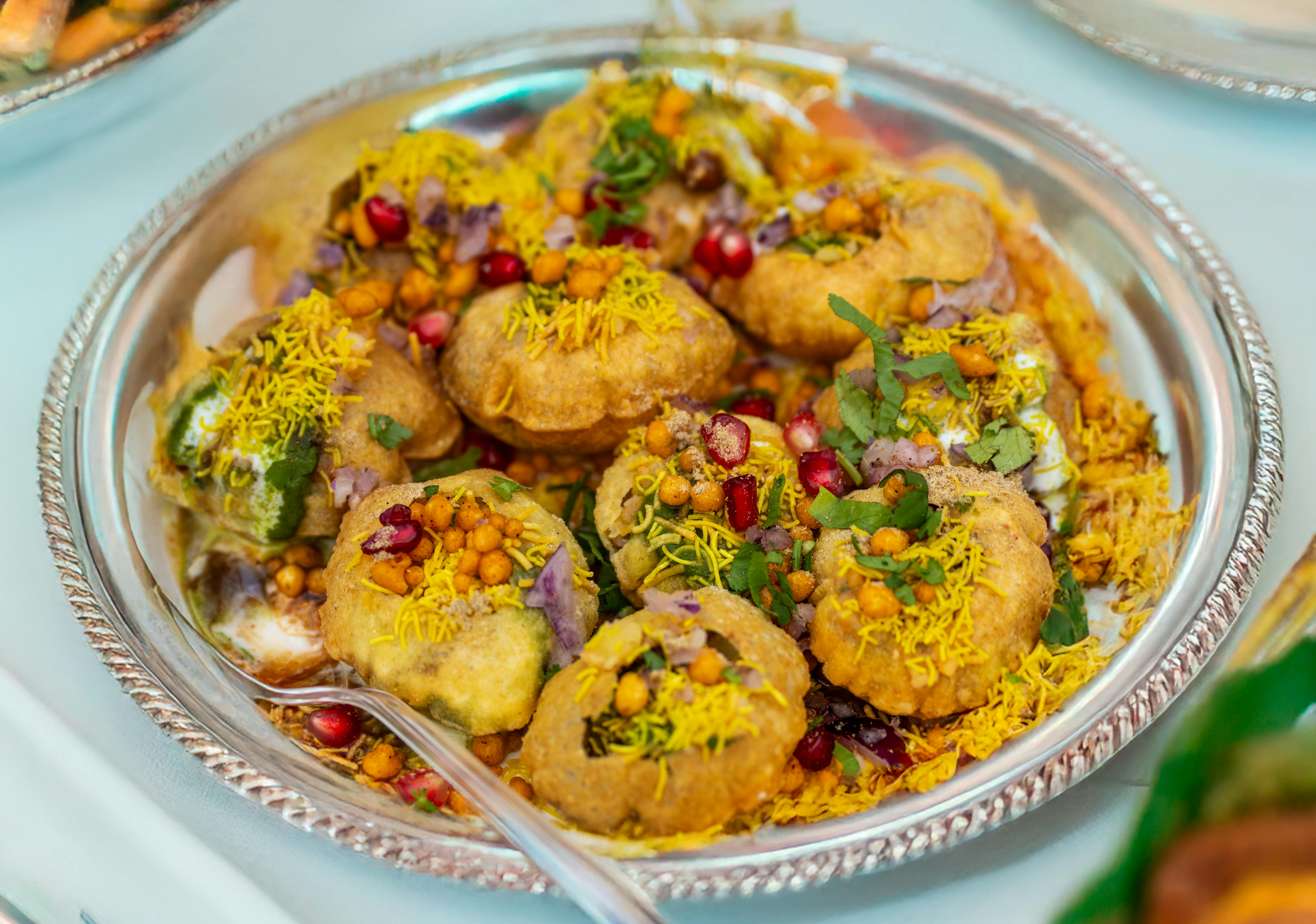
The diets react (see scores below)
Common Ingredients
- puffed rice
- fried dough
- potatoes
- tamarind chutney
- mint chutney
- yogurt
- chaat masala
- onion
Specific recipes may vary.
Incompatible with 8 of 11 diets
Diet Ratings
Chaat is fundamentally incompatible with a ketogenic diet. Nearly every core ingredient is a significant source of net carbohydrates. Puffed rice is a high-glycemic refined grain, fried dough is flour-based, and potatoes are a starchy vegetable — all three alone would blow past the daily 20-50g net carb limit in a single serving. Tamarind chutney is loaded with sugar and fruit-derived carbs, and mint chutney often contains added sugar as well. The combination of grains, starchy vegetables, and sweet chutneys makes this dish essentially a carbohydrate-dominant snack with negligible fat and protein relative to its carb load. There is no realistic portion size that makes this keto-compatible.
Chaat as listed contains yogurt, which is a dairy product derived from cow's or buffalo's milk and is strictly excluded from a vegan diet. All other ingredients — puffed rice, fried dough, potatoes, tamarind chutney, mint chutney, chaat masala, and onion — are plant-based and vegan-friendly. The single disqualifying ingredient is yogurt, a core and traditional component of most chaat preparations. A vegan version is achievable by substituting dairy yogurt with a plant-based alternative (coconut, soy, or cashew yogurt), which is an easy and increasingly common swap.
Chaat is fundamentally incompatible with the paleo diet. The dish contains multiple core paleo violations: puffed rice (a grain), fried dough (grain-based, likely wheat or chickpea flour), and yogurt (dairy). Chaat masala typically contains added salt and often legume-derived ingredients. While potatoes, onion, tamarind chutney, and mint chutney are more paleo-friendly elements, the foundational components of this dish are explicitly excluded from the paleo framework. With at least three hard 'avoid' categories present — grains, dairy, and processed/fried dough — this dish cannot be meaningfully modified without ceasing to be chaat.
Chaat as described contains several ingredients that conflict with Mediterranean diet principles. Fried dough is a refined, deep-fried carbohydrate high in unhealthy fats, puffed rice is a refined grain with minimal nutritional value, and tamarind chutney typically contains significant added sugar. The dish lacks olive oil, is not plant-forward in the Mediterranean sense, and relies on processed/fried components as its base. The yogurt and onion are Mediterranean-compatible, and the spices and chutneys do provide some antioxidant value, but they cannot offset the fried dough and refined grain foundations. The overall profile is a high-glycemic, fried snack food that the Mediterranean diet would discourage.
Some Mediterranean diet interpreters might argue that the yogurt, onion, potatoes, and herb-based mint chutney represent plant-forward, whole-food components that align partially with Mediterranean principles, and that occasional enjoyment of such a snack is consistent with the diet's flexible, culturally inclusive spirit — particularly since the dish is not red meat-based and contains no significant saturated fat beyond the fried dough.
Chaat is entirely plant-based and is one of the most carnivore-incompatible dishes imaginable. Every single ingredient violates carnivore principles: puffed rice and fried dough are grain-based carbohydrates, potatoes are a starchy vegetable, tamarind chutney and mint chutney are plant-based condiments loaded with sugar and plant compounds, yogurt is the only animal-derived ingredient but is overshadowed by the rest, chaat masala is a blend of plant spices, and onion is a vegetable. There is no meaningful animal protein present. This dish is the antithesis of the carnivore diet — high-carb, plant-dominant, heavily spiced, and processed with sugary chutneys.
Chaat contains multiple excluded ingredients that make it clearly non-compliant with Whole30. Puffed rice is a grain (rice) and is explicitly excluded. Fried dough is a grain-based product (typically wheat flour) and is also excluded. Yogurt is dairy and is excluded. Tamarind chutney commonly contains added sugar. These are not edge cases or ambiguous items — grains and dairy are foundational exclusions of the Whole30 program. The dish is built on a foundation of excluded ingredients and cannot be made compliant without fundamentally changing its nature.
Chaat contains multiple high-FODMAP ingredients that make it unsuitable during the elimination phase. Onion is one of the highest-FODMAP foods (fructans) and is a core ingredient used in meaningful quantities. Yogurt contributes lactose, which is a disaccharide FODMAP. Tamarind chutney typically contains significant amounts of tamarind paste, which is high-FODMAP due to fructans and excess fructose at normal serving sizes. Mint chutney in Indian cuisine almost always contains onion and/or garlic as base ingredients. Fried dough (sev or puri) is typically wheat-based, adding fructans. Chaat masala commonly contains amchur (dried mango powder) and can contain garlic powder — the blend may contain high-FODMAP spice combinations. Puffed rice and potatoes are individually low-FODMAP, but they cannot redeem a dish with this many problematic components. The combination of fructans from onion, wheat dough, and potentially garlic in chutneys, plus lactose from yogurt, makes this dish high-FODMAP at any realistic serving.
Chaat is a mixed dish with some DASH-friendly components (yogurt provides calcium, potatoes offer potassium, onion adds fiber and micronutrients, tamarind and mint chutneys are fruit/herb-based) alongside several problematic elements. The fried dough adds saturated fat and refined carbohydrates. More significantly, chaat masala is very high in sodium (black salt/kala namak, amchur, cumin, and other spices), and tamarind chutney typically contains added sugar. The combination of fried components, high-sodium seasoning blend, and sugary chutney pushes this dish into caution territory. It is not inherently prohibited on DASH but requires meaningful modification — reducing chaat masala, using low-sodium versions, minimizing fried dough, and controlling chutney quantities — to fit within DASH sodium limits.
NIH DASH guidelines don't specifically address chaat, but the framework would flag its sodium load from chaat masala (a single teaspoon can contain 400–600mg sodium) and fried components as concerns. However, some DASH-oriented clinicians note that homemade chaat using baked or air-fried dough, minimal chaat masala, and unsweetened chutneys can be a reasonable DASH-compatible snack given its vegetable, legume, and yogurt content — particularly when portion-controlled.
Chaat as described is a highly problematic dish from a Zone Diet perspective. The primary carbohydrate sources — puffed rice, fried dough, and potatoes — are all high-glycemic, 'unfavorable' carbs in Zone terminology that spike blood sugar rapidly. Puffed rice has one of the highest glycemic indices of any grain product, fried dough is processed and adds trans/saturated fat rather than monounsaturated fat, and potatoes are explicitly flagged by Dr. Sears as unfavorable high-glycemic carbs to avoid. The tamarind chutney typically contains significant added sugar. There is no meaningful lean protein source in this dish, making the 40/30/30 ratio essentially unachievable without radical reconstruction. The yogurt provides a small amount of protein, but not nearly enough to balance the carbohydrate load. The fat from frying adds unfavorable saturated/trans fat rather than monounsaturated fat. While the onion, mint chutney (herbs), and chaat masala are Zone-neutral or mildly positive as polyphenol sources, they cannot offset the structural problems. This dish would require replacing its foundational ingredients — not just adjusting portions — to fit Zone principles, making it a genuine 'avoid' rather than a 'caution with small portions.'
Chaat presents a mixed anti-inflammatory profile. On the positive side, tamarind contains polyphenols and antioxidants; mint chutney is rich in anti-inflammatory herbs; chaat masala typically includes cumin, coriander, amchur, and black salt — all with meaningful antioxidant and digestive properties; onions provide quercetin and flavonoids; and yogurt offers probiotics that support gut health and may reduce systemic inflammation. However, fried dough (puris or papdi) introduces refined flour and pro-inflammatory frying oils, often seed oils high in omega-6s. Puffed rice is a refined, high-glycemic carbohydrate with minimal nutritional value. Potatoes, while not inherently bad, are starchy and often contribute to glycemic load. Tamarind chutney frequently contains added sugar. The dish as a whole is high in refined carbohydrates and glycemic load, which drives insulin response and can promote inflammation. It is a snack food that combines several anti-inflammatory spice elements with a structural base of refined, fried, and starchy foods — classically a mixed profile. Acceptable occasionally rather than regularly.
Some anti-inflammatory practitioners, particularly those following whole-food or blood sugar-focused protocols, would rate chaat more harshly due to the compounded glycemic load of puffed rice, fried dough, and potatoes, as well as the pro-inflammatory seed oils used in frying. Conversely, those emphasizing the spice profile (cumin, coriander, amchur), probiotic yogurt, and tamarind polyphenols might view chaat more favorably as an herb-forward snack with functional ingredients — consistent with how Dr. Weil's framework values spice-rich, culturally traditional foods.
Chaat as described is a mixed-profile snack with several GLP-1 concerns. The fried dough (puri/papdi) adds saturated fat and is difficult to digest given slowed gastric emptying on GLP-1 medications. Puffed rice and potatoes are refined/high-glycemic carbohydrates with minimal fiber and virtually no protein — a significant drawback when every calorie needs to deliver nutritional value. The yogurt contributes a small amount of protein and probiotics, which is a genuine positive, but the quantity in a chaat serving is typically modest. Tamarind and mint chutneys add flavor with minimal calories, and chaat masala contains digestive spices (cumin, amchur) that are generally tolerable. Onion adds a small fiber contribution. The primary concerns are: (1) negligible protein — no meaningful protein source is listed, failing the #1 GLP-1 dietary priority; (2) fried dough component worsening GI side effects; (3) high-glycemic carbohydrate load from puffed rice and potatoes with little fiber to blunt the spike; (4) tamarind chutney is often high in added sugar. The dish is not inherently dangerous and the portion size is naturally small, which helps, but its nutritional profile is poorly suited to GLP-1 patients' needs.
Some GLP-1-focused dietitians may rate traditional chaat more leniently, noting that the naturally small serving size, yogurt, and spice components are not problematic, and that occasional cultural food enjoyment supports long-term dietary adherence. However, most would flag the fried component and lack of protein as meaningful concerns that make this a poor routine snack choice on GLP-1 therapy.
*See how scores were generated at our methodology page.
Nutritional profile
Six traits that cut across every diet.
Fiber & Plants
How much whole-plant food and fiber it delivers.
Healthy Fats
The quality of its fats (unsaturated, omega-3).
Whole / Unprocessed
How close it is to its natural, unprocessed form.
Gut Gentle
How easy it is on digestion (low FODMAP, few irritants).
Low Glycemic
How little it spikes your blood sugar.
Protein Density
How much protein it packs per calorie.
Controversy Index
Higher controversy = more disagreement between diets.
Diet-Specific Tips
 DASH — 4/10
View tips
- Chaat masala is high in sodium (black salt and spice blend), potentially exceeding 500mg per serving
- Fried dough (puri/papdi) adds saturated fat and refined carbohydrates, not aligned with DASH
- Tamarind chutney typically contains significant added sugar
- Yogurt is a DASH-friendly low-fat dairy component providing calcium
- Potatoes contribute potassium, a key DASH mineral
- Onion adds fiber and antioxidants consistent with DASH vegetable emphasis
- Overall sodium content of a typical serving likely exceeds DASH snack guidelines
- Homemade preparation with reduced sodium masala and baked dough would score higher
 Anti-Inflammatory — 5/10
View tips
- Fried dough (papdi/puri) adds refined flour and omega-6-heavy frying oils — pro-inflammatory
- Puffed rice is a high-glycemic refined carbohydrate with little nutritional benefit
- Chaat masala spices (cumin, coriander, black pepper) have anti-inflammatory polyphenols
- Mint chutney is herb-rich and anti-inflammatory
- Tamarind chutney provides polyphenols but often contains added sugar
- Yogurt contributes probiotics that support gut-immune axis and reduce systemic inflammation
- Onions are a good source of quercetin and flavonoids
- Overall glycemic load is high due to starchy, refined carbohydrate base
- No significant source of omega-3 fatty acids or anti-inflammatory fats
 GLP-1 Friendly — 4/10
View tips
- Negligible protein content — fails the primary GLP-1 dietary priority
- Fried dough (puri/papdi) increases fat load and worsens gastric emptying burden
- Puffed rice and potatoes are high-glycemic refined carbohydrates
- Low fiber overall — minimal benefit for constipation prevention
- Yogurt is a small positive: contributes protein and probiotics
- Tamarind chutney often contains added sugar
- Small natural portion size is a mild positive
- Chaat masala spice blend is generally well tolerated