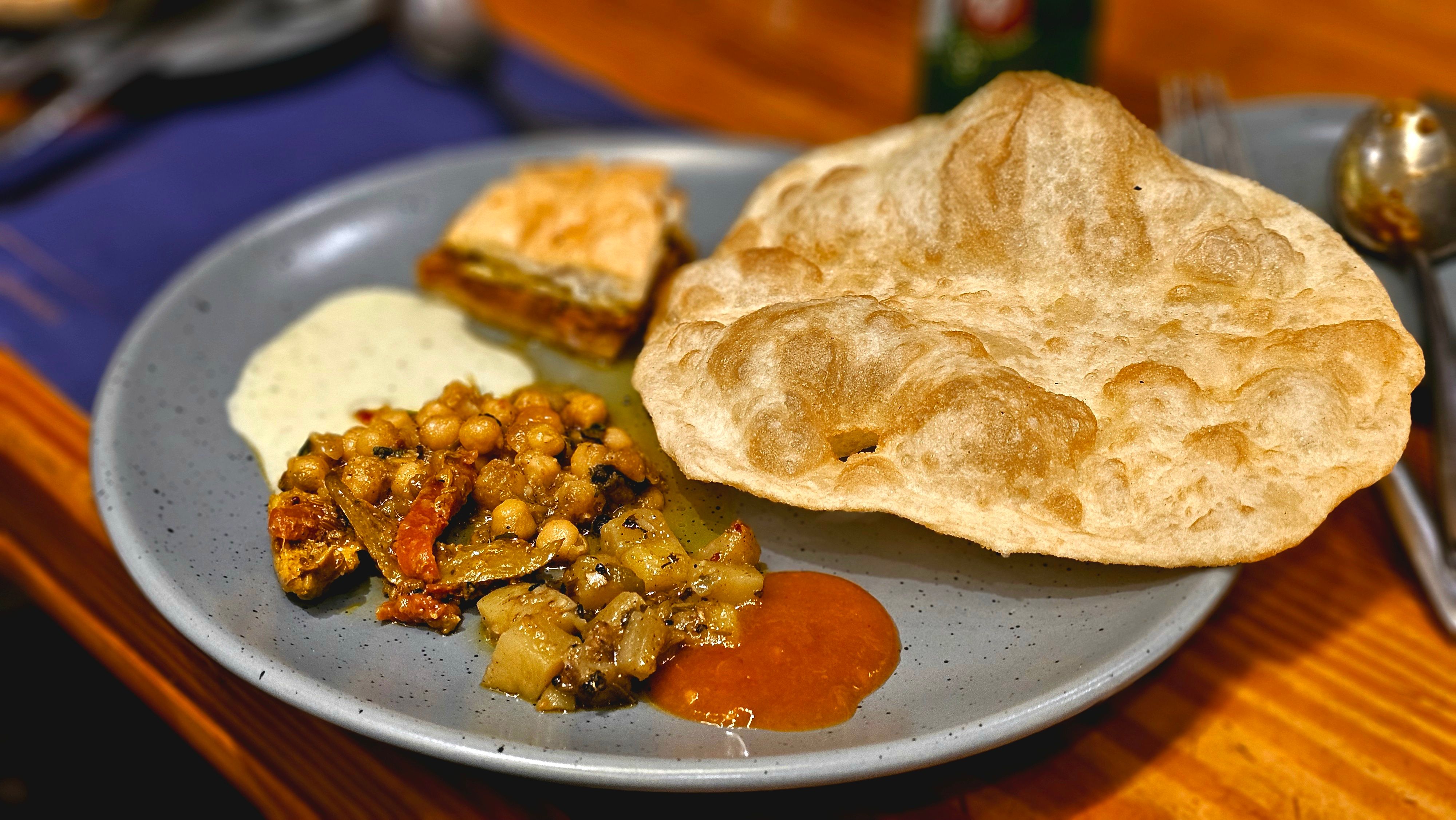
Photo: Muhammad Khawar Nazir / Pexels
Indian
Chole Bhature
The diets react (see scores below)
Common Ingredients
- chickpeas
- flour
- onion
- tomatoes
- ginger
- garlic
- garam masala
- cumin
Specific recipes may vary.
Incompatible with 7 of 11 diets
Diet Ratings
Chole Bhature is fundamentally incompatible with a ketogenic diet on two fronts. First, the 'bhature' component is a deep-fried leavened bread made from refined wheat flour (maida), which is a grain-based, high-carb food that is categorically excluded from keto. Second, 'chole' (spiced chickpeas) are legumes with very high net carbs — a single cup of cooked chickpeas contains approximately 32-35g net carbs, often exceeding an entire day's keto carb budget in one serving. Together, this dish can easily deliver 80-120g of net carbs per serving, obliterating any possibility of maintaining ketosis. The spices (garam masala, cumin, ginger, garlic) are fine in small amounts, but the two primary components — flour and chickpeas — are both individually disqualifying for keto.
Chole Bhature as listed here is entirely plant-based. The chole (spiced chickpeas) is made with chickpeas, onion, tomatoes, ginger, garlic, and spices — all whole plant foods. The bhature (fried bread) uses flour, which in its base form is vegan. All listed ingredients are unambiguously plant-derived with no animal products involved. The dish is protein-rich via chickpeas and nutritionally solid, though the deep-fried bhature component is a less whole-food preparation, keeping the score from a perfect 10. One practical note: in restaurant settings, bhature dough is sometimes enriched with yogurt or milk — but as listed, the ingredients contain no dairy.
Chole Bhature is fundamentally incompatible with the paleo diet. It contains two major paleo-excluded food groups: chickpeas (a legume) and flour/bhature (a wheat-based fried bread — a grain). Chickpeas are explicitly excluded from paleo due to their lectin, phytate, and antinutrient content, and grains like wheat are among the most clearly banned foods in all paleo frameworks. The remaining ingredients — onion, tomatoes, ginger, garlic, cumin, and garam masala — are paleo-approved, but the two core components of this dish are non-negotiable violations. There is no paleo-compliant version of this dish in its traditional form.
Chole Bhature is a mixed dish from a Mediterranean diet perspective. The chole (chickpea curry) component is excellent — chickpeas are a Mediterranean staple, and the aromatics (onion, tomato, garlic, ginger, cumin) align well with plant-forward Mediterranean principles. However, the bhature is a deep-fried refined white flour bread, which is a significant concern: refined grains and deep-frying in non-olive oil fat directly contradict core Mediterranean principles. The dish scores in the caution range because the chickpea base is genuinely strong, but the refined, fried bread component pulls it down considerably. If the bhature were replaced with a whole grain bread or the chickpeas served alone, this would be an approve.
Some modern Mediterranean diet practitioners argue that the chickpea component is so nutritionally dense and central to the dish that Chole Bhature can be eaten occasionally in moderation, particularly if portion size of the bhature is limited — similar to how some traditional Mediterranean cuisines include fried dough preparations as occasional treats.
Chole Bhature is entirely plant-based and contains no animal products whatsoever. The dish consists of chickpeas (legumes), wheat flour (grain), onion, tomatoes, ginger, garlic (all vegetables/plant foods), and garam masala and cumin (plant-based spices). Every single ingredient is explicitly excluded on the carnivore diet. Chickpeas are a legume — one of the most anti-carnivore foods due to their lectin and antinutrient content. Flour is a grain-based product. All vegetables and spices are plant-derived. This dish is completely incompatible with carnivore principles at every level, from the strictest Lion Diet to the most lenient animal-based approach.
Chole Bhature is excluded on two independent grounds. First, chickpeas are legumes, which are explicitly prohibited on the Whole30 program — and unlike green beans, sugar snap peas, or snow peas, chickpeas have no exception. Second, bhature are deep-fried leavened bread made from flour (wheat), which is a grain and therefore also excluded. Even setting aside the bread component, the dish's primary protein source (chickpeas) is a non-negotiable violation. Additionally, flour-based bread falls squarely into the 'no recreating baked goods' rule. There is no compliant version of this dish possible while retaining its identity.
Chole Bhature contains multiple high-FODMAP ingredients that make it unsuitable during the elimination phase. Chickpeas (chole) are very high in GOS (galacto-oligosaccharides) — Monash rates them as high-FODMAP at typical serving sizes (safe only at 1/4 cup canned and rinsed, which is far less than a standard chole serving). The bhature (fried bread) is made from refined wheat flour (maida), which is high in fructans and high-FODMAP. Onion is one of the highest-FODMAP foods tested by Monash, containing significant fructans at any culinary amount. Garlic is similarly a top offender for fructans. These four ingredients alone — chickpeas, wheat flour, onion, and garlic — each independently qualify this dish as high-FODMAP. The combination makes this dish unambiguously unsuitable for the elimination phase.
Chole Bhature is a mixed dish where the two components have very different DASH compatibility profiles. The chole (spiced chickpeas) component is highly DASH-compatible: chickpeas are an excellent source of plant-based protein, fiber, potassium, and magnesium — all core DASH nutrients. The aromatics (onion, tomato, ginger, garlic) and spices (garam masala, cumin) are DASH-friendly with no sodium concerns in their natural form. However, the bhature — deep-fried leavened bread made from refined (maida) flour — significantly undermines the dish's DASH rating. Refined flour provides minimal fiber, and deep-frying adds substantial fat (including potentially saturated fat depending on the oil used). The dish is also typically high in sodium when prepared commercially or with added salt. As a combination dish consumed together in traditional serving, it scores in the caution range. If the bhature were replaced with a whole-grain bread or the chole served alone, the score would rise to 7-8.
NIH DASH guidelines would flag refined flour and deep-frying as clear negatives, emphasizing whole grains and limiting added fats. However, some DASH-aligned dietitians note that the chickpea component is nutritionally dense enough that a moderate portion of chole with a smaller bhature (or substituting with whole-wheat puri) could fit within a DASH pattern, particularly for non-hypertensive individuals focused on overall dietary pattern rather than individual meals.
Chole Bhature is a challenging dish for Zone compliance due to two compounding problems. First, the bhature (deep-fried leavened bread made from refined white flour) is a high-glycemic, nutritionally empty carbohydrate that spikes insulin rapidly — exactly what Zone is designed to avoid. Second, the dish as traditionally served is almost entirely carbohydrate-dominant: the bhature contributes refined carbs, the chickpeas (chole) add additional carbohydrate along with some vegetable protein. While chickpeas themselves are a reasonably Zone-friendly legume (moderate glycemic index, decent protein and fiber), they are combined here with a large portion of fried refined flour bread, creating a heavily carb-skewed macronutrient ratio with essentially no lean protein source and significant amounts of fat from deep frying (likely in omega-6-heavy oils). The dish as a complete unit cannot be portioned into Zone balance without fundamentally dismantling it — removing the bhature eliminates the defining component of the dish. The chole portion alone could potentially be used as a Zone vegetarian carb/protein block, but the dish as presented is not Zone-compatible.
Chole Bhature is a split dish where the two components have meaningfully different anti-inflammatory profiles. The chole (spiced chickpeas) side is genuinely strong: chickpeas are an emphasized legume providing plant protein, soluble fiber, and low glycemic load; onions, tomatoes, ginger, and garlic contribute quercetin, lycopene, gingerols, and allicin — all well-documented anti-inflammatory compounds; and the spice blend (garam masala, cumin) typically contains turmeric, coriander, and other polyphenol-rich spices. If eaten alone, the chole would likely score 7–8. The bhature, however, is the limiting factor: it is a deep-fried leavened bread made from refined white flour (maida), which is high-glycemic, devoid of fiber, and typically fried in refined seed oils (often sunflower or canola) at high temperatures — a combination that introduces refined carbohydrates and potentially oxidized omega-6-heavy fats. As a combined dish eaten in the traditional presentation (bhature + chole), the refined flour and frying process drag the overall score into caution territory. The dish can be meaningfully improved by substituting whole wheat flour and using a healthier cooking fat, or by emphasizing the chickpea component and limiting the fried bread.
Some anti-inflammatory practitioners, including those following Dr. Weil's general framework, would note that occasional consumption of even refined-flour fried bread within an otherwise plant-rich, spice-forward diet is not categorically harmful — the dish's strong legume and polyphenol base from spices and aromatics could offset modest concern. Conversely, stricter AIP or low-glycemic anti-inflammatory protocols would rate the bhature component more harshly, potentially pushing the overall dish toward 'avoid' due to refined flour and high-heat seed oil frying.
Chole Bhature is a classic North Indian dish where the chickpea curry (chole) is nutritionally solid — chickpeas are high in fiber, plant-based protein, and digest reasonably well. However, the bhature component is the critical problem: it is a deep-fried, refined white flour bread that is high in fat, high in simple carbohydrates, extremely greasy, and has nearly zero fiber or protein density per calorie. For GLP-1 patients, deep-fried bread directly violates the core dietary rules — it worsens nausea, bloating, and reflux due to high fat content and slowed gastric emptying, and the refined flour provides empty calories with no nutritional payoff. The combination as a single dish cannot be separated in a standard serving context. The chole alone would score a 7-8, but the bhature pulls the overall dish into avoid territory. Garam masala and cumin at typical serving levels are acceptable, but the spice blend combined with a heavy fried component increases reflux risk further.
*See how scores were generated at our methodology page.
Nutritional profile
Six traits that cut across every diet.
Fiber & Plants
How much whole-plant food and fiber it delivers.
Healthy Fats
The quality of its fats (unsaturated, omega-3).
Whole / Unprocessed
How close it is to its natural, unprocessed form.
Gut Gentle
How easy it is on digestion (low FODMAP, few irritants).
Low Glycemic
How little it spikes your blood sugar.
Protein Density
How much protein it packs per calorie.
Controversy Index
Higher controversy = more disagreement between diets.
Diet-Specific Tips
 Vegan — 6/10
View tips
- Chickpeas are a whole-food legume and primary protein — fully vegan
- All spices and aromatics (garam masala, cumin, ginger, garlic) are plant-derived
- Flour-based bhature is vegan as listed; no dairy or eggs included
- Deep-frying the bhature reduces whole-food quality slightly but does not affect vegan status
- Restaurant versions may add yogurt to bhature dough — not present in this ingredient list
 Mediterranean — 5/10
View tips
- Chickpeas are a core Mediterranean legume and excellent plant-based protein source
- Bhature is made from refined white flour and deep-fried, contradicting Mediterranean principles
- Aromatic vegetables (onion, tomato, garlic) are strongly Mediterranean-aligned
- Spice blend (cumin, garam masala) adds flavor without nutritional concern
- Likely fried in oil that may not be extra virgin olive oil
- No animal protein or red meat, keeping it plant-forward overall
 DASH — 4/10
View tips
- Chickpeas are a DASH-core legume: high fiber, potassium, magnesium, and plant protein
- Bhature made from refined maida flour — low fiber, not a whole grain
- Deep-frying bhature adds significant fat, potentially saturated depending on oil
- Commercially prepared versions typically high in sodium
- Spices and aromatics (garlic, ginger, cumin) are DASH-neutral to positive
- Dish lacks low-fat dairy or significant calcium source
- Portion size is a key modifier — smaller bhature with larger chole portion improves DASH alignment
 Anti-Inflammatory — 5/10
View tips
- Chickpeas are an emphasized anti-inflammatory legume — high in fiber, plant protein, and low glycemic index
- Ginger, garlic, onion, and tomatoes contribute gingerols, allicin, quercetin, and lycopene
- Garam masala and cumin spice blend likely contains turmeric and other polyphenol-rich anti-inflammatory spices
- Bhature made from refined white flour (maida) — high glycemic, low fiber, pro-inflammatory at high intake
- Deep frying in seed oils introduces oxidized omega-6 fatty acids — flagged as pro-inflammatory in anti-inflammatory frameworks
- Dish profile is bifurcated: anti-inflammatory legume base undermined by refined, fried bread component