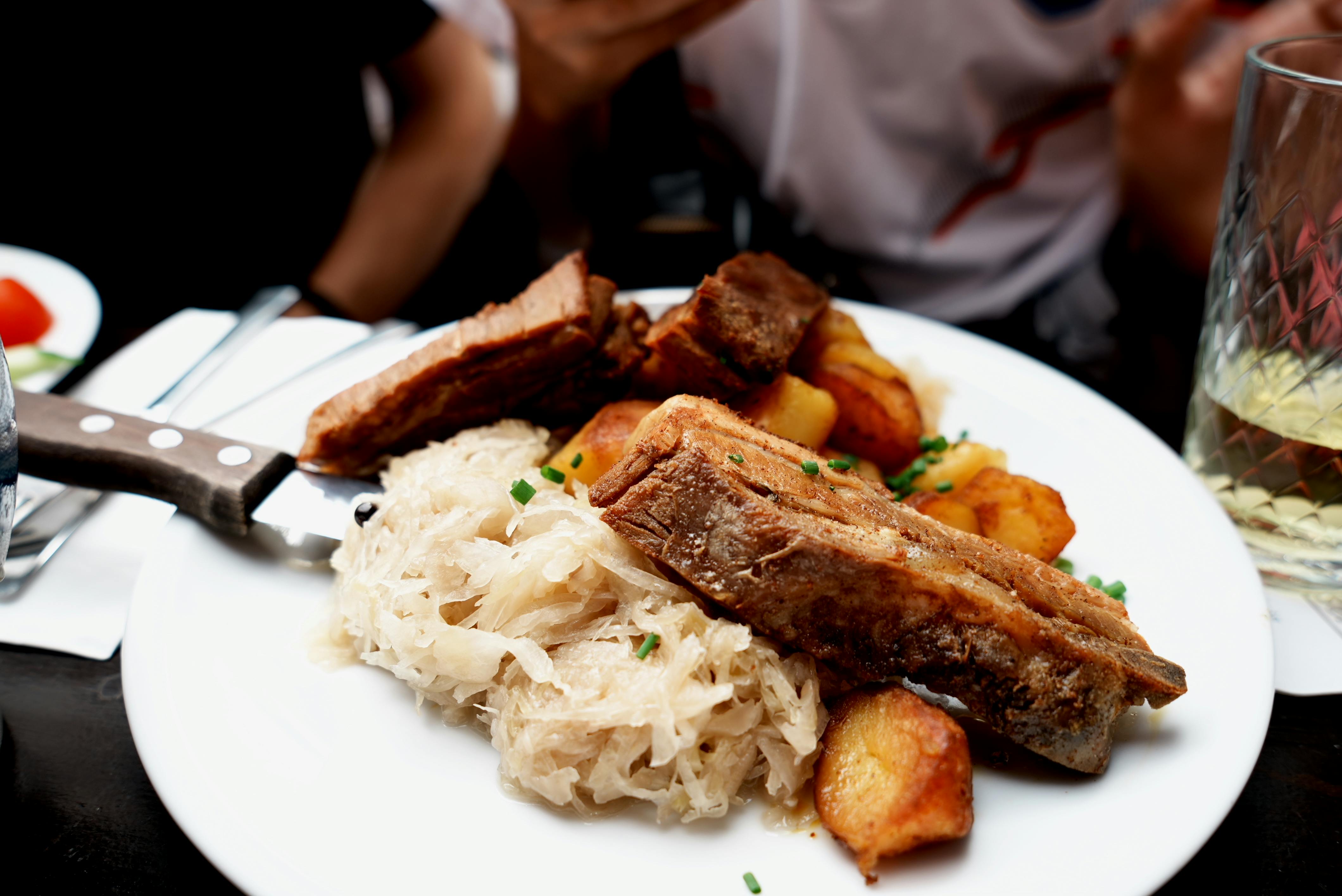
Photo: Zhang Thomas / Pexels
The diets react (see scores below)
Common Ingredients
- lamb
- cabbage
- whole peppercorns
- salt
- flour
- water
Specific recipes may vary.
Incompatible with 5 of 11 diets
Diet Ratings
Farikal is a traditional Norwegian lamb and cabbage stew. Most ingredients are keto-friendly: lamb is an excellent high-fat protein, cabbage is a low-carb vegetable, and peppercorns and salt are negligible. The problematic ingredient is flour, which is traditionally used as a thickener and introduces grain-based carbs. A standard serving likely contains a small amount of flour (the dish is not heavily thickened), keeping net carbs moderate rather than disqualifying. Cabbage in reasonable portions is fine on keto. The dish can be made fully keto-compatible by omitting the flour or substituting a keto-friendly thickener, but as traditionally prepared, the flour warrants a caution rating rather than approval.
Strict keto practitioners would flag even small amounts of wheat flour as incompatible due to its grain origin and the principle of zero tolerance for grains, arguing the dish should be avoided or only consumed after recipe modification. Conversely, lazy keto adherents may approve it outright, reasoning the flour quantity per serving is minimal and unlikely to meaningfully impact net carbs or ketosis.
Fårikål is a traditional Norwegian stew whose primary and defining ingredient is lamb, a red meat animal product. There is no ambiguity here: lamb is unequivocally excluded from a vegan diet. The dish cannot be made vegan without fundamentally changing its identity, as lamb is not an incidental or optional ingredient but the central protein and flavour base. The remaining ingredients (cabbage, whole peppercorns, salt, flour, water) are all plant-based, but the presence of lamb makes this dish entirely incompatible with vegan dietary principles.
Farikal is a traditional Norwegian lamb and cabbage stew that is mostly paleo-friendly, but it contains two clear non-paleo ingredients: flour (a grain product used as a thickener) and salt (an added/refined ingredient excluded from strict paleo). Lamb and cabbage are excellent paleo foods, and whole peppercorns are an approved spice. However, the flour alone is enough to disqualify the dish as prepared, since grains are among the most firmly excluded foods in paleo. Added salt is also excluded under strict paleo rules. The dish could easily be made paleo by omitting the flour and salt, but as traditionally prepared it cannot be approved.
Farikal is Norway's national dish — a simple lamb and cabbage stew. While the ingredients are minimally processed and cabbage is a Mediterranean-friendly vegetable, lamb is a red meat, which the Mediterranean diet limits to a few times per month. The dish is essentially a red meat-centered meal with no olive oil, no legumes, and minimal plant diversity. The small amount of flour used for thickening is negligible. The core problem is that lamb is the primary protein and caloric driver, placing this firmly in the 'limit' category. Cabbage and peppercorns are positives, but they don't offset the red meat centerpiece.
Some Mediterranean diet interpretations note that lamb is actually consumed in traditional Greek, Turkish, and Levantine Mediterranean cuisines, particularly for festive occasions. A moderate portion of lean lamb with vegetables like cabbage could be considered acceptable within a broader Mediterranean pattern that emphasizes overall dietary balance rather than strict exclusion of red meat.
Farikal is a traditional Norwegian lamb and cabbage stew that, despite featuring excellent carnivore-friendly lamb as its primary protein, is fundamentally incompatible with the carnivore diet. The dish contains multiple plant-derived ingredients: cabbage (a brassica vegetable), whole peppercorns (a plant spice), and flour (a grain-derived thickener). Cabbage and flour alone are clear disqualifiers — cabbage is a plant food entirely excluded from carnivore, and flour is a grain product, one of the most strictly avoided categories. The peppercorns, while used in small amounts and tolerated by some carnivore practitioners, add another plant compound. The lamb itself would score a 9-10 in isolation, but the dish as prepared cannot be adapted to carnivore without removing most of its defining ingredients. Salt and water are the only carnivore-compliant components beyond the lamb.
Fårikål is a traditional Norwegian lamb and cabbage stew that is nearly Whole30 compliant, but the inclusion of flour as a thickening agent disqualifies it. Flour is a grain-derived ingredient and grains are explicitly excluded on the Whole30 program. The remaining ingredients — lamb, cabbage, whole peppercorns, salt, and water — are all fully compliant. A Whole30-compatible version of this dish is easily achievable simply by omitting the flour, as the stew is naturally hearty and doesn't require thickening.
Fårikål is a simple Norwegian stew of lamb, cabbage, whole peppercorns, salt, flour, and water. Most ingredients are low-FODMAP: plain lamb is FODMAP-free, salt and water are fine, and whole peppercorns are used in small amounts posing no FODMAP concern. The two ingredients requiring scrutiny are cabbage and flour. Cabbage (common/green) is low-FODMAP at servings up to 75g per Monash, but it becomes high-FODMAP in larger portions due to fructans and GOS — and Fårikål is traditionally a cabbage-heavy dish where a standard serving often includes well over 75g of cabbage. Wheat flour is used in small amounts as a thickener (typically 1-2 tbsp per pot spread across multiple servings), which likely results in a low-FODMAP fructan load per portion, but this depends on the quantity used and number of servings. The cabbage portion size is the primary practical risk in a standard restaurant or home serving of this dish.
Monash University rates common green cabbage as low-FODMAP at 75g but high-FODMAP at larger amounts due to fructans and sorbitol. Clinical FODMAP practitioners often note that traditional Fårikål is served with generous portions of cabbage that routinely exceed this threshold, making strict elimination-phase compliance difficult without significantly reducing the cabbage portion — which changes the character of the dish considerably.
Farikal (Norwegian lamb and cabbage stew) presents a mixed DASH profile. On the positive side, cabbage is an excellent DASH vegetable providing fiber, potassium, and vitamins, and the dish is simple and minimally processed. However, lamb is classified as red meat under DASH guidelines, which recommends limiting red meat consumption. Lamb can be relatively high in saturated fat depending on the cut — traditional Farikal uses bone-in lamb with skin and fat intact, which increases saturated fat content significantly. The use of added salt is a concern for sodium intake, though the amount used at home is variable and can be controlled. Whole peppercorns and flour (used as a thickener) are not problematic. The dish could be made more DASH-compliant by trimming visible fat from lamb, using minimal salt, and emphasizing the cabbage portion. As commonly prepared, the fat content of the lamb makes this a moderate-caution dish rather than an outright avoid, since portions can be controlled and the overall ingredient list is clean and unprocessed.
NIH DASH guidelines explicitly limit red meat including lamb due to saturated fat content, recommending lean poultry and fish as primary proteins. However, some updated clinical interpretations note that lean, trimmed lamb in small portions within an otherwise DASH-compliant diet may be acceptable occasionally, particularly given emerging research suggesting the saturated fat-cardiovascular risk relationship is more nuanced than originally understood.
Farikal is a simple Norwegian lamb and cabbage stew that has some genuinely Zone-favorable elements but also some challenges. Cabbage is an excellent Zone carbohydrate — low-glycemic, high-fiber, and polyphenol-rich. The flour used as a thickener is a minor concern (higher-glycemic refined carb) but in typical stew quantities is not a major issue. The primary problem is the protein source: lamb is not a lean protein in Zone terminology. Lamb contains meaningful saturated fat, which Sears classifies as unfavorable compared to lean proteins like chicken breast, fish, or egg whites. However, lamb does provide high-quality complete protein, and leaner cuts (leg of lamb) can be workable in Zone portions. The dish also lacks fat from monounsaturated sources — there is no olive oil, avocado, or nuts. The fat profile comes entirely from lamb's natural fat, which is predominantly saturated. To Zone-balance this dish, one would need to: (1) use a leaner lamb cut and trim visible fat, (2) reduce portion size to ~3 oz cooked to hit ~25g protein, (3) increase the cabbage volume substantially for the carb block, and (4) consider a small side of monounsaturated fat. The dish is Zone-usable but requires modification and careful portioning to achieve the 40/30/30 ratio.
Some Zone practitioners, particularly those following Sears' later anti-inflammatory writings (Toxic Fat, The Mediterranean Zone), note that Sears softened his stance on saturated fat somewhat, acknowledging that whole-food saturated fat sources in controlled portions are less problematic than processed foods. Under this view, a lean lamb cut in a cabbage-dominant stew is a reasonable Zone meal that naturally provides protein and low-GI carbohydrate together, and the score could be pushed to 6-7 with appropriate portioning. Additionally, cabbage's exceptional polyphenol content aligns well with Sears' later emphasis on anti-inflammatory eating.
Fårikål is a simple Norwegian stew of lamb, cabbage, whole peppercorns, salt, a small amount of flour, and water. The dish presents a mixed anti-inflammatory profile. On the positive side, cabbage is a cruciferous vegetable rich in vitamin C, vitamin K, glucosinolates, and antioxidants with demonstrated anti-inflammatory properties. Whole peppercorns contribute piperine, which has some evidence for anti-inflammatory activity. The preparation is clean — no seed oils, no processed additives, no refined sugars, and minimal flour (used only as a light thickening agent). On the less favorable side, lamb is red meat, which anti-inflammatory frameworks generally recommend limiting due to saturated fat content and potential pro-inflammatory arachidonic acid. However, lamb is less processed than many red meats and contains some zinc and selenium with antioxidant roles. Grass-fed lamb in particular has a more favorable omega-3 to omega-6 ratio than grain-fed red meat. The overall dish is far from a deeply inflammatory preparation — no trans fats, no high-fructose corn syrup, no processed additives — but the red meat base prevents an 'approve' rating. Occasional consumption in the context of an otherwise anti-inflammatory diet is reasonable.
Some anti-inflammatory practitioners, including those following Dr. Weil's framework, would be more permissive with lamb consumed occasionally as part of a diverse diet, especially if grass-fed, noting that traditional whole-food preparations like this are far preferable to processed alternatives. Stricter interpretations, such as those aligned with plant-forward or Mediterranean anti-inflammatory models, would flag any red meat as a regular concern due to saturated fat and heme iron promoting oxidative stress.
Fårikål is a traditional Norwegian lamb and cabbage stew, slow-cooked with whole peppercorns, salt, a small amount of flour, and water. The dish has meaningful strengths for GLP-1 patients: cabbage is high in fiber and water content, the stew format is easy to digest relative to dry or fried preparations, and lamb provides complete protein. However, lamb is a moderately fatty red meat — cuts used in fårikål are typically bone-in shoulder or rib, which carry significant saturated fat. Fat content per serving will depend heavily on the cut and whether visible fat is trimmed, but a typical bowl can contain 15–25g of fat, which risks worsening GLP-1 side effects including nausea, bloating, and reflux. The flour is used in small quantities as a thickener and is not a significant concern. The stew is otherwise low in processed ingredients, refined sugar, and additives — which is a positive. Whole peppercorns are mild and unlikely to trigger reflux at normal serving levels. Protein per serving is moderate-to-good (roughly 20–28g depending on cut and portion), supporting the #1 priority. The high water content of the broth aids hydration. Overall this is a borderline dish: nutritionally honest, minimally processed, and fiber-inclusive, but the saturated fat load from lamb limits its GLP-1 friendliness unless leaner cuts are selected and fat is skimmed from the broth.
Some GLP-1-focused dietitians would consider fårikål acceptable given that the protein and fiber content are meaningful and the dish is minimally processed — a significant advantage over many convenient alternatives. Others would flag lamb as a category to limit given its saturated fat content relative to chicken or fish, particularly in patients experiencing persistent GI side effects, and would recommend substituting leaner protein sources until GI tolerance improves.
*See how scores were generated at our methodology page.
Nutritional profile
Six traits that cut across every diet.
Fiber & Plants
How much whole-plant food and fiber it delivers.
Healthy Fats
The quality of its fats (unsaturated, omega-3).
Whole / Unprocessed
How close it is to its natural, unprocessed form.
Gut Gentle
How easy it is on digestion (low FODMAP, few irritants).
Low Glycemic
How little it spikes your blood sugar.
Protein Density
How much protein it packs per calorie.
Controversy Index
Higher controversy = more disagreement between diets.
Diet-Specific Tips
 Keto — 5/10
View tips
- Lamb is a high-fat, zero-carb protein — strongly keto-positive
- Cabbage is low in net carbs and keto-friendly in standard portions
- Flour is a grain-based thickener that introduces carbs and violates strict keto grain exclusion
- Net carbs per serving are moderate — likely 5-10g depending on flour and cabbage quantity
- Easily modified to be fully keto by omitting or replacing flour
- Traditional preparation as evaluated warrants caution, not outright avoidance
 Low-FODMAP — 5/10
View tips
- Lamb is FODMAP-free and safe
- Cabbage is low-FODMAP only up to ~75g — standard Fårikål servings typically exceed this
- Wheat flour used as thickener: low-FODMAP at very small amounts, risk depends on total quantity per serving
- Whole peppercorns and salt pose no FODMAP concern
- No garlic or onion in the traditional recipe — a notable advantage
- Dish is otherwise free of high-FODMAP ingredients like onion, garlic, or legumes
 DASH — 5/10
View tips
- Lamb is red meat — DASH recommends limiting red meat consumption
- High saturated fat risk depending on lamb cut and fat trimming
- Cabbage is an excellent DASH-approved vegetable providing fiber and potassium
- Added salt is a sodium concern — can be minimized with portion control at home
- Dish is whole-food based and minimally processed — no added sugars or artificial ingredients
- No DASH-friendly lean protein substitution in traditional preparation
- Portion control of lamb and fat trimming can significantly improve DASH compatibility
 Zone — 5/10
View tips
- Lamb is a higher saturated fat protein — classified as 'unfavorable' in Zone compared to lean proteins like chicken or fish
- Cabbage is an ideal Zone carbohydrate: very low glycemic index, high fiber, high polyphenols
- No monounsaturated fat source present — fat profile is entirely from lamb's saturated fat
- Flour thickener adds refined carbohydrates but in small stew quantities is a minor concern
- Dish is naturally low in carbohydrates overall, requiring attention to ensure adequate carb blocks from cabbage
- Protein portion control is essential — lamb must be trimmed and weighed to ~3 oz cooked per Zone meal
- Simple, whole-food ingredient list with no processed additives aligns with Zone's anti-inflammatory principles
 Anti-Inflammatory — 5/10
View tips
- Lamb is red meat — anti-inflammatory frameworks recommend limiting red meat due to saturated fat and arachidonic acid content
- Cabbage is a cruciferous vegetable with antioxidants, glucosinolates, and vitamin C — a clear anti-inflammatory positive
- Whole peppercorns contribute piperine, a bioactive compound with some anti-inflammatory evidence
- No seed oils, no processed additives, no refined sugars — very clean ingredient list
- Minimal flour used only as a light thickener — negligible inflammatory concern
- Grass-fed lamb (common in Norway) has a more favorable fatty acid profile than grain-fed beef
- Simple, traditional whole-food preparation with no ultra-processed components
 GLP-1 Friendly — 5/10
View tips
- Lamb is a fatty red meat with moderate-to-high saturated fat depending on cut — primary concern for GLP-1 GI side effects
- Cabbage provides meaningful fiber and high water content — supports digestion and hydration
- Broth-based stew format is easy to digest and gentle on the stomach compared to fried or heavy preparations
- Protein content per serving is moderate-to-good (~20–28g) depending on cut and portion size
- No refined sugars, no ultra-processed ingredients, no carbonation or alcohol — clean ingredient profile
- Fat content is portion- and cut-dependent; skimming broth fat and choosing leaner cuts (leg vs. rib) significantly improves the rating
- Whole peppercorns are unlikely to worsen reflux at typical serving levels