Photo: Valeria Boltneva / Pexels
Norwegian
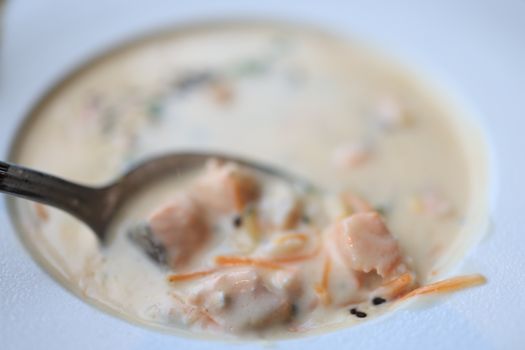
Fiskesuppe
The diets react (see scores below)
Common Ingredients
- white fish
- salmon
- cream
- fish stock
- carrot
- leek
- celery root
- dill
Specific recipes may vary.
Incompatible with 4 of 11 diets
Diet Ratings
Fiskesuppe is a Norwegian creamy fish soup with a solid keto foundation — white fish and salmon provide quality protein, cream adds healthy fat, and fish stock is low-carb. However, the vegetable trio of carrot, leek, and celery root introduces a meaningful carb load. Carrots and celery root (celeriac) are moderate-to-high carb root vegetables (celeriac ~7g net carbs/100g, carrots ~7g net carbs/100g), and leek adds additional carbs (~12g net carbs/100g). In a typical serving, these vegetables combined could push net carbs to 10-18g, which is manageable within a strict daily budget but requires careful portioning. The cream base and fatty fish are strong keto positives. The dish can fit keto if root vegetable quantities are minimized or partially substituted with lower-carb alternatives like zucchini or cauliflower, but as traditionally prepared, it warrants caution.
Some lazy keto and moderate-carb keto practitioners would approve this outright, arguing that the cream and fish dominate the macros and a normal bowl keeps net carbs well within a 50g daily limit. Conversely, strict or clinical keto adherents targeting sub-20g daily net carbs may classify this as avoid due to the carrot and celery root content, which they consider too starchy for consistent ketosis.
Fiskesuppe contains multiple animal-derived ingredients that are explicitly excluded from a vegan diet. White fish and salmon are fish (animal products), cream is a dairy product, and fish stock is made from fish bones and flesh. All four of these ingredients are non-vegan. The vegetables (carrot, leek, celery root, dill) are plant-based, but the dish as a whole is fundamentally incompatible with vegan eating.
Fiskesuppe is a traditional Norwegian fish soup with several paleo-friendly ingredients — white fish, salmon, carrot, leek, celery root, and dill are all fully approved paleo foods. Fish stock is generally acceptable if made without additives or added salt. However, the defining issue is cream, a dairy product that is explicitly excluded from the paleo diet. Cream is not a gray-area dairy item like ghee (which has casein and lactose removed); it is whole dairy and off-limits under all mainstream paleo frameworks. Because cream is a core structural ingredient of this dish rather than a minor additive, it disqualifies the dish despite its otherwise strong paleo profile.
Some primal or 'paleo-adjacent' practitioners, such as those following Mark Sisson's Primal Blueprint framework, permit high-fat dairy like heavy cream on the basis that fat is the least immunogenic dairy fraction and that lactose and casein content is relatively low. Under a strict Primal interpretation, this dish could be considered acceptable.
Fiskesuppe features excellent Mediterranean-compatible ingredients — white fish, salmon, and an array of vegetables (carrot, leek, celery root) align well with the diet's emphasis on seafood and plant foods. Fish is strongly encouraged 2-3 times weekly. However, the use of cream as a primary base fat is the key detractor: cream is a high-saturated-fat dairy product that directly displaces the preferred olive oil fat profile central to Mediterranean eating. The dish is not processed and contains no added sugars or refined grains, so it avoids the worst offenders, but the creamy broth keeps it from a full approval.
Some Mediterranean diet practitioners would note that moderate dairy, including cream in small amounts, is acceptable within a 'few servings per week' framework, and the strong fish and vegetable content could push this toward approval if the cream is used sparingly. Conversely, stricter clinical interpretations (e.g., Oldways Mediterranean Diet Pyramid) would flag cream-based soups as diverging significantly from the olive-oil-centric fat model.
Fiskesuppe contains multiple plant-based ingredients that are strictly excluded from the carnivore diet: carrot, leek, celery root, and dill are all plant foods. While the fish (white fish, salmon), cream, and fish stock are animal-derived and carnivore-compatible, the vegetable and herb components make this dish fundamentally incompatible with carnivore principles. A carnivore-adapted version would need to strip out all plant ingredients entirely, leaving just the fish and cream-based broth with salt.
Fiskesuppe contains cream, which is a dairy product explicitly excluded on the Whole30. All dairy — including heavy cream — is prohibited for the 30-day elimination period. The only dairy exception is ghee/clarified butter. All other ingredients (white fish, salmon, fish stock, carrot, leek, celery root, and dill) are fully Whole30-compliant, but the cream disqualifies the dish as traditionally prepared. A compliant version could substitute full-fat coconut milk or coconut cream for the dairy cream.
Fiskesuppe contains several low-FODMAP ingredients (white fish, salmon, fish stock, carrot, dill) alongside two problematic ones. Cream is low-FODMAP at small servings (up to 2 tablespoons per Monash) but a cream-based soup typically uses significantly more, pushing lactose levels into moderate-to-high territory. Leek is the bigger concern: the green tops of leek are low-FODMAP at 2/3 cup, but the white/light green bulb portion is high in fructans and should be avoided during elimination. Traditional fiskesuppe often uses the whole leek or the bulb end. Celery root (celeriac) is rated by Monash as low-FODMAP at 1/3 cup (75g) but becomes high-FODMAP at larger servings due to fructans and mannitol. A soup serving would realistically contain more than this threshold. The fish protein itself and carrots are safely low-FODMAP. The dish could be made low-FODMAP with careful modifications (leek greens only, reduced cream or lactose-free cream, portion-controlled celeriac), but as traditionally prepared it carries meaningful FODMAP risk from multiple ingredients.
Monash University rates leek tops (green part only) as low-FODMAP, but many clinical FODMAP dietitians advise patients to avoid leek entirely during elimination due to the difficulty of consistently separating green from white portions in home cooking. Similarly, some practitioners recommend substituting lactose-free cream or avoiding cream soups altogether during the strict elimination phase.
Fiskesuppe contains several DASH-positive elements: white fish and salmon are lean proteins rich in omega-3 fatty acids, and the vegetable base (carrot, leek, celery root) provides potassium, magnesium, and fiber aligned with DASH principles. Dill adds flavor without sodium. However, the cream is the primary concern — heavy cream is high in saturated fat and calories, which DASH explicitly limits. Traditional Norwegian fiskesuppe uses a generous amount of cream, pushing saturated fat content well above DASH targets. Fish stock can also be moderately high in sodium depending on preparation. The dish is not categorically problematic (the protein and vegetable components are excellent), but the cream base requires modification or strict portion control to fit DASH guidelines comfortably.
NIH DASH guidelines clearly restrict cream and full-fat dairy due to saturated fat content, favoring low-fat or fat-free alternatives. However, some updated clinical interpretations note that dairy fat's effect on cardiovascular outcomes is more nuanced than previously thought, and the omega-3-rich fish in this soup may partially offset cardiovascular risk — some DASH-oriented clinicians would permit this dish in moderate portions if overall daily saturated fat intake is managed.
Fiskesuppe is a Norwegian fish soup with a solid Zone-friendly foundation: white fish and salmon provide excellent lean protein with valuable omega-3 fatty acids (particularly from the salmon), and the vegetables — carrot, leek, celery root, and dill — are low-glycemic carbohydrate sources that align well with Zone principles. The macro profile is nearly balanced except for one significant issue: cream. Heavy cream adds substantial saturated fat, which disrupts the Zone's emphasis on monounsaturated fat and its anti-inflammatory framework. The fat block in this dish skews heavily saturated rather than monounsaturated, which Sears consistently flags as unfavorable. However, the dish is not disqualifying — cream can be portioned down or substituted with lower-fat options. The protein component is actually exemplary (fish, especially salmon, is ideal Zone protein with anti-inflammatory omega-3s). The carbohydrate load from the vegetables is moderate and low-glycemic. With portion control on the cream or a modest substitution (e.g., light cream or a splash rather than a cream-heavy base), this soup can fit Zone ratios reasonably well. As traditionally prepared with a generous cream base, it lands in caution territory due to the saturated fat imbalance.
In Sears' later anti-inflammatory writings (e.g., 'The OmegaRx Zone' and 'Toxic Fat'), he softened his stance on saturated fat somewhat, focusing more on the overall inflammatory balance of a meal. Given that salmon is rich in EPA/DHA omega-3s — arguably the most important anti-inflammatory nutrient in the Zone framework — some Zone practitioners would argue that the omega-3 content partially offsets the saturated fat concern from the cream, and might rate this soup more favorably, especially if cream is used in modest amounts.
Fiskesuppe is a nutrient-rich Norwegian fish soup with a genuinely mixed anti-inflammatory profile. On the positive side, the combination of salmon and white fish provides meaningful omega-3 fatty acids (EPA and DHA), which are among the most potent anti-inflammatory nutrients known. Vegetables — carrot, leek, and celery root — contribute antioxidants, fiber, and polyphenols. Dill adds modest anti-inflammatory phytochemicals including flavonoids and monoterpenes. Fish stock provides collagen precursors and minerals. However, the dish is anchored by cream as its fat base, which is a full-fat dairy product high in saturated fat — a category the anti-inflammatory framework recommends limiting. Cream does not provide the beneficial polyphenols of extra virgin olive oil and lacks omega-3 content. In a traditional recipe, cream can be quite generous, which meaningfully shifts the saturated fat load. The absence of strongly pro-inflammatory ingredients (no refined carbs, no seed oils, no processed additives, no added sugar) keeps this from a 'avoid' verdict. Swapping cream for a lighter base or reducing the cream volume would push this firmly into 'approve' territory. As prepared traditionally, it sits at the boundary of moderate/acceptable.
Some anti-inflammatory practitioners, particularly those following Dr. Weil's framework, would argue that the omega-3 richness of the salmon and white fish substantially offsets the saturated fat from cream, and that full-fat dairy in the context of a nutrient-dense, whole-food dish is far less harmful than in isolation — potentially approving this dish at a moderate 7. Conversely, stricter anti-inflammatory protocols and those managing cardiovascular inflammation would flag the cream as a meaningful concern and might score this lower, emphasizing that saturated fat from dairy elevates LDL and may upregulate NF-κB inflammatory pathways.
Fiskesuppe is a Norwegian creamy fish soup with genuine nutritional strengths but one significant drawback for GLP-1 patients: the cream base. White fish and salmon together provide good lean protein with beneficial omega-3 fatty acids, and the vegetable medley (carrot, leek, celery root) contributes fiber, micronutrients, and hydration. The broth format is easy to digest and portion-friendly, which suits slowed gastric emptying well. However, traditional fiskesuppe relies on heavy cream as a primary ingredient, raising the saturated fat content considerably per serving. High fat intake is a known trigger for GLP-1 side effects including nausea, bloating, and reflux. The dish is not fried, not spicy, and not high in refined carbohydrates, so it avoids several major red flags — but the cream prevents an approve rating without modification. A lighter version made with reduced cream or a cream-to-stock ratio adjustment (e.g., using a small amount of cream for flavor rather than as a base) would score 7-8 and qualify as approve.
Some GLP-1-focused dietitians accept moderate cream-based soups because the overall serving volume is small, fat is distributed across a broth, and the protein and omega-3 content from fish is clinically valuable — particularly for patients struggling to meet protein targets. Others flag any cream-heavy dish categorically due to fat-triggered GI side effects being among the most common reasons patients discontinue GLP-1 medications, and would recommend substituting with a milk- or stock-based version.
*See how scores were generated at our methodology page.
Nutritional profile
Six traits that cut across every diet.
Fiber & Plants
How much whole-plant food and fiber it delivers.
Healthy Fats
The quality of its fats (unsaturated, omega-3).
Whole / Unprocessed
How close it is to its natural, unprocessed form.
Gut Gentle
How easy it is on digestion (low FODMAP, few irritants).
Low Glycemic
How little it spikes your blood sugar.
Protein Density
How much protein it packs per calorie.
Controversy Index
Higher controversy = more disagreement between diets.
Diet-Specific Tips
 Keto — 5/10
View tips
- Cream provides high-fat content, strongly keto-positive
- White fish and salmon are ideal keto proteins
- Celery root (celeriac) is a moderate-carb root vegetable (~7g net carbs/100g)
- Carrots are relatively high-carb for keto (~7g net carbs/100g)
- Leek adds additional carbs and should be used sparingly
- Combined vegetable carb load per serving can reach 10-18g net carbs
- No added sugars or grains
- Dill and fish stock contribute negligible carbs
 Mediterranean — 5/10
View tips
- Salmon and white fish are strongly encouraged Mediterranean proteins
- Multiple vegetables (carrot, leek, celery root) add plant-forward nutrition
- Cream is high in saturated fat and not a Mediterranean staple fat
- No olive oil as primary fat — a core Mediterranean diet requirement is absent
- No processed ingredients, refined grains, or added sugars
- Dill and fish stock are benign flavor components
 Low-FODMAP — 5/10
View tips
- Cream is low-FODMAP only at small servings (~2 tbsp); cream soup volumes far exceed this, risking lactose overload
- Leek bulb/white portion is high in fructans — only green tops are safe, and traditional recipes often use whole leek
- Celery root (celeriac) is low-FODMAP at 75g but high-FODMAP at larger portions due to fructans and mannitol
- White fish and salmon are fully low-FODMAP — no FODMAP concerns with the protein
- Carrots and dill are low-FODMAP with no serving-size concerns
- Fish stock is generally low-FODMAP if onion/garlic-free; commercial stocks often contain these — label check required
- Dish can be made compliant with modifications: leek greens only, lactose-free cream, portion-controlled celeriac
 DASH — 5/10
View tips
- Cream is high in saturated fat, which DASH explicitly limits
- Salmon and white fish are DASH-approved lean proteins with beneficial omega-3s
- Carrot, leek, and celery root contribute potassium, magnesium, and fiber
- Fish stock may contribute moderate-to-high sodium depending on preparation
- Could be modified to DASH-compliant by substituting cream with low-fat milk or evaporated skim milk
- Portion size matters — a small serving is more compatible than a large bowl
 Zone — 6/10
View tips
- White fish and salmon are ideal Zone proteins — lean, rich in omega-3 EPA/DHA, and anti-inflammatory
- Cream is high in saturated fat, conflicting with Zone's monounsaturated fat preference and anti-inflammatory focus
- Vegetables (carrot, leek, celery root) are low-glycemic, Zone-favorable carbohydrate sources
- Fish stock adds flavor without significant macro disruption
- Dill is a polyphenol-rich herb, aligned with Sears' anti-inflammatory emphasis
- Dish can be made Zone-compliant by reducing cream quantity or substituting with a lighter alternative
- Carrot has a moderate glycemic index but is low in net carbs per serving — acceptable in Zone blocks
- Overall macronutrient ratio is skewed toward fat (saturated) unless cream is carefully portioned
 Anti-Inflammatory — 6/10
View tips
- Salmon provides EPA and DHA omega-3 fatty acids — among the most potent anti-inflammatory nutrients
- White fish adds lean protein with modest omega-3 content and minimal inflammatory load
- Cream is a full-fat dairy product high in saturated fat — limited in anti-inflammatory frameworks
- Carrot, leek, and celery root contribute antioxidants, carotenoids, and prebiotic fiber
- Dill adds flavonoids and anti-inflammatory monoterpenes
- No refined carbohydrates, seed oils, added sugars, or artificial additives
- Fish stock provides minerals and collagen-supporting compounds
- Overall profile is wholesome but the cream base prevents a full approval
 GLP-1 Friendly — 5/10
View tips
- Good protein sources: white fish and salmon provide lean protein and omega-3 fatty acids
- Cream base raises saturated fat content significantly, a known GLP-1 side effect trigger
- Soup format is easy to digest and hydrating, well-suited to slowed gastric emptying
- Vegetables (carrot, leek, celery root) contribute fiber, micronutrients, and water content
- Not fried, not spicy, not high in refined sugar — avoids several major avoid-category triggers
- Portion-friendly: small bowl delivers meaningful nutrition without large volume
- Easily modified: reducing cream or swapping for low-fat milk/extra stock would improve rating to approve