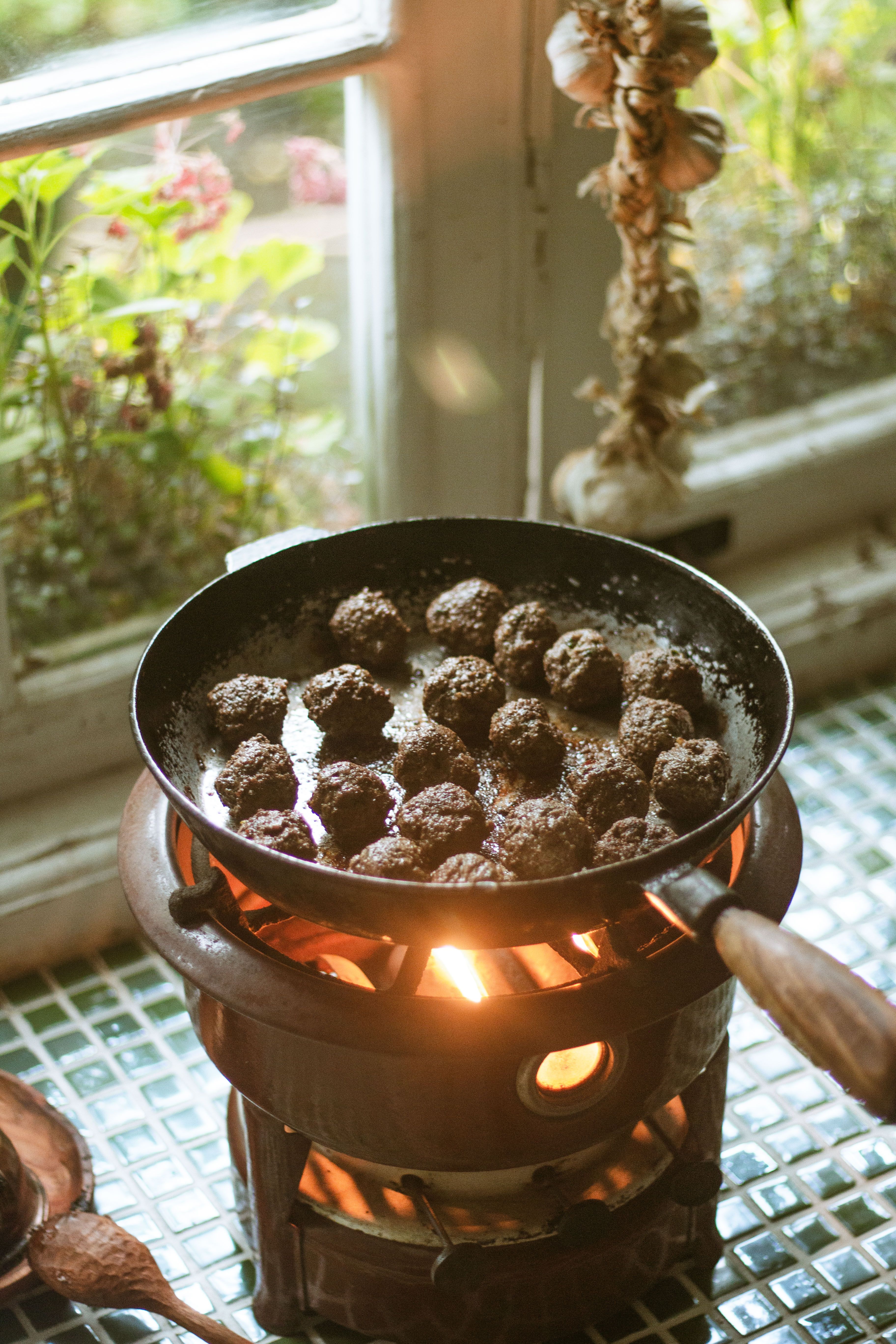
Norwegian
Kjottkaker
The diets react (see scores below)
Common Ingredients
- ground beef
- onion
- potato starch
- milk
- nutmeg
- brown gravy
- lingonberries
Specific recipes may vary.
Incompatible with 8 of 11 diets
Diet Ratings
Kjottkaker (Norwegian meatballs) contains multiple keto-incompatible ingredients. Potato starch is a high-carb binder that significantly raises net carbs. The traditional brown gravy is typically thickened with flour or starch, adding more carbs. Lingonberries, while lower in sugar than many fruits, are served sweetened as a jam/sauce accompaniment, adding notable sugar content. Milk adds additional carbs. While the ground beef base is keto-friendly, the combination of potato starch, gravy thickener, and lingonberry sauce makes this dish incompatible with ketosis in its traditional form without substantial recipe modification.
Kjottkaker are traditional Norwegian meatballs that are fundamentally incompatible with a vegan diet. The dish contains multiple animal-derived ingredients: ground beef (direct animal flesh), milk (dairy product), and brown gravy (typically made with beef stock and/or butter). These are not trace or incidental ingredients — they are core structural components of the dish. Lingonberries and potato starch are plant-based, but the presence of beef alone makes this a clear avoid, with milk and meat-based gravy compounding the violation.
Kjottkaker (Norwegian meatballs) contains multiple non-paleo ingredients that disqualify the dish. Milk is a dairy product, excluded under strict paleo rules. Brown gravy typically contains wheat flour as a thickener and often added salt and processed ingredients. While ground beef and onion are paleo-approved, and lingonberries are a paleo-friendly fruit, the combination of dairy (milk), a processed gravy (likely grain-thickened), and potato starch — which, while derived from a tuber, is a highly refined, isolated starch rather than a whole food — means this dish as traditionally prepared cannot be considered paleo-compliant. The dish would require significant modification (eliminating milk, replacing gravy with a grain-free, additive-free version, and reconsidering the potato starch binder) to approach paleo standards.
Kjottkaker is a traditional Norwegian meatball dish centered on ground beef as the primary protein, which directly conflicts with Mediterranean diet principles. Red meat is limited to only a few times per month, making it a poor fit as a main course. The dish is further complicated by brown gravy (typically made with butter and refined flour), refined potato starch as a binder, and milk — none of which are Mediterranean staples. There is no olive oil, no vegetables of substance, no legumes, and no whole grains. Lingonberries and onion are the only mildly redeeming ingredients. The overall profile is high in saturated fat, low in plant diversity, and entirely outside the Mediterranean culinary tradition.
Kjottkaker (Norwegian meatballs) are fundamentally incompatible with the carnivore diet despite having ground beef as the primary protein. The dish contains multiple plant-derived and processed ingredients: onion (plant), potato starch (plant-based binder/filler), nutmeg (plant spice), brown gravy (typically flour/starch-thickened with plant additives), and lingonberries (fruit). Milk adds a debated dairy component, but it is overwhelmed by the sheer volume of non-carnivore ingredients. The lingonberries and potato starch alone are disqualifying — fruits and starches are strictly excluded. This dish is essentially a mixed dish with animal protein as just one component among many plant ingredients, making it a clear avoid with high confidence across all carnivore camps.
Kjottkaker (Norwegian meatballs) contains multiple Whole30-excluded ingredients. Milk is dairy and explicitly excluded. Brown gravy typically contains wheat flour (a grain) and often additional dairy or other excluded additives. Lingonberries as commonly served are often sweetened with added sugar. Potato starch is itself compliant, but the combination of dairy (milk) and the almost certain grain content in brown gravy makes this dish clearly non-compliant as traditionally prepared.
Kjøttkaker contains multiple high-FODMAP ingredients that make it unsuitable during the elimination phase. Onion is one of the highest-FODMAP foods (rich in fructans) and is a core ingredient in traditional kjøttkaker — even small amounts pose a problem. Milk contributes lactose, which is high-FODMAP at standard cooking quantities (more than ~30ml). Brown gravy is typically made with wheat flour (fructans) and often onion or garlic, compounding the issue. Lingonberries contain sorbitol (a polyol) and are high-FODMAP at typical serving sizes. Ground beef and potato starch are low-FODMAP, and nutmeg in small culinary amounts is generally considered safe. However, the combination of onion, milk, brown gravy, and lingonberries creates too many high-FODMAP strikes for this dish to be considered safe during elimination without significant modification.
The FODMAP load of individual ingredients depends heavily on recipe proportions and preparation. Some clinical FODMAP practitioners allow small amounts of lingonberries (Monash has limited testing data on lingonberries specifically), and if the brown gravy is made with gluten-free flour and no onion/garlic, and lactose-free milk is substituted, a modified version of this dish could potentially reach 'caution' territory. The traditional recipe as described, however, is clearly high-FODMAP.
Kjottkaker (Norwegian meatballs) presents multiple red flags for DASH compliance. Ground beef is a red meat that DASH explicitly limits; it is typically higher in saturated fat than the lean poultry or fish DASH emphasizes. Brown gravy is characteristically high in sodium — a single serving can contribute 400–700mg sodium or more, pushing daily totals dangerously close to or over both the standard (2,300mg) and low-sodium (1,500mg) DASH thresholds. The dish is centered on red meat as the primary protein, which DASH guidelines specifically advise limiting. While lingonberries are a DASH-positive fruit and onion is a DASH-positive vegetable, these beneficial components are minor in the overall nutritional profile. The combination of red meat, high-sodium gravy, and saturated fat from full-fat milk makes this dish a poor fit for DASH principles as commonly prepared.
Kjottkaker (Norwegian meatballs) presents several Zone challenges. Ground beef is a less ideal Zone protein compared to lean options like skinless chicken or fish due to higher saturated fat content, though lean ground beef can be incorporated with careful portioning. Potato starch as a binder is a high-glycemic carbohydrate that Sears categorizes as unfavorable. Brown gravy typically contains flour or starch thickeners (more high-GI carbs) and may include saturated fat. Lingonberries are a redeeming element — they are low-sugar, polyphenol-rich berries that fit Zone carb blocks well and align with Sears' anti-inflammatory emphasis. Onion is a favorable low-GI carb. The overall dish is carb-heavy in the wrong direction (starchy binders + gravy) and protein-heavy in saturated fat. To bring this closer to Zone compliance, one would need to use very lean ground beef, minimize potato starch, use a low-GI gravy thickener (or skip it), and lean into the lingonberries as the primary carb block. As traditionally prepared, the dish skews unfavorable but is not categorically unavoidable.
Some Zone practitioners note that the lingonberries and onion provide genuinely favorable carbs, and that a small portion of kjottkaker using lean ground beef (90%+ lean) can fit within a Zone block framework if the gravy is minimized and paired with a large vegetable side. Sears' later writings are also somewhat more permissive about saturated fat in the context of an overall anti-inflammatory diet, which could modestly improve this dish's Zone standing.
Kjøttkaker (Norwegian meatballs) present a mixed anti-inflammatory profile. The primary protein — ground beef — is a red meat high in saturated fat and arachidonic acid, both associated with pro-inflammatory pathways, and is classified as a food to limit in virtually all anti-inflammatory frameworks. Brown gravy typically contains refined flour, butter or fat drippings, and sometimes sodium-heavy bouillon, adding saturated fat and refined carbohydrates. Milk contributes moderate saturated fat. Potato starch is a refined carbohydrate with minimal nutritional benefit, though it's a modest amount used as a binder. On the positive side, lingonberries are a genuine anti-inflammatory asset — rich in polyphenols, quercetin, anthocyanins, and vitamin C, with research supporting their ability to reduce inflammatory markers. Onion provides quercetin and prebiotic fiber. Nutmeg in small culinary amounts is neutral to mildly beneficial. Overall, this is a traditional comfort dish centered on red meat and fatty gravy with limited anti-inflammatory components. The lingonberry accompaniment partially offsets the pro-inflammatory core, but not enough to elevate the dish beyond caution. Acceptable as an occasional meal, especially if prepared with lean ground beef, lighter gravy, and generous lingonberries.
Kjøttkaker (Norwegian meatballs) are made from ground beef, which provides meaningful protein but also carries moderate-to-high saturated fat depending on the grind used — typically 15–20% fat content in traditional recipes. The dish is served with brown gravy (often butter- or fat-based, adding more saturated fat and calories), and lingonberries (which are frequently sweetened, adding sugar). Potato starch and milk contribute to the binder but add minimal nutritional value. The overall fat load — especially from the gravy — is the primary concern for GLP-1 patients, as high-fat meals worsen nausea, bloating, and reflux by interacting with already-slowed gastric emptying. Protein content is reasonable (roughly 20–25g per serving depending on portion), which is a genuine positive. Lingonberries in their natural form offer some antioxidants and fiber, but sweetened preparations add empty sugar calories. This dish is not ideal but is not an outright avoid — it can work in moderation if made with leaner ground beef (90%+ lean), a lighter gravy, and unsweetened lingonberries.
Some GLP-1-focused dietitians accept traditional ground beef dishes as a practical protein source when leaner cuts are used, prioritizing real-food protein over ultra-processed alternatives. Others flag all high-saturated-fat red meat preparations as problematic given how dramatically slowed gastric emptying amplifies fat-related GI side effects in this population, making tolerance highly individual.
*See how scores were generated at our methodology page.
Nutritional profile
Six traits that cut across every diet.
Fiber & Plants
How much whole-plant food and fiber it delivers.
Healthy Fats
The quality of its fats (unsaturated, omega-3).
Whole / Unprocessed
How close it is to its natural, unprocessed form.
Gut Gentle
How easy it is on digestion (low FODMAP, few irritants).
Low Glycemic
How little it spikes your blood sugar.
Protein Density
How much protein it packs per calorie.
Controversy Index
Higher controversy = more disagreement between diets.
Diet-Specific Tips
 Zone — 4/10
View tips
- Ground beef contributes saturated fat, making it a less favorable Zone protein than lean poultry or fish
- Potato starch is a high-glycemic carbohydrate classified as unfavorable in Zone methodology
- Brown gravy typically adds more starchy thickeners and saturated fat, compounding glycemic and fat concerns
- Lingonberries are a Zone-positive ingredient — low sugar, high polyphenol, anti-inflammatory
- Onion is a favorable low-GI carbohydrate
- No monounsaturated fat source present; fat profile leans saturated
- Dish can be modified toward Zone compliance but requires significant alterations from traditional preparation
 Anti-Inflammatory — 4/10
View tips
- Ground beef is a red meat high in saturated fat and arachidonic acid — a food to limit in anti-inflammatory frameworks
- Brown gravy adds saturated fat and likely refined flour, compounding the inflammatory load
- Lingonberries are a strong anti-inflammatory positive — rich in anthocyanins, quercetin, and polyphenols
- Onion contributes quercetin and prebiotic fiber
- Milk adds moderate saturated fat
- Nutmeg in culinary quantities is neutral to mildly beneficial
- Dish is traditional comfort food — not inherently harmful but pro-inflammatory overall when consumed regularly
 GLP-1 Friendly — 4/10
View tips
- Moderate-to-high saturated fat from ground beef and brown gravy is a GLP-1 side effect risk
- Protein content (~20–25g per serving) supports the #1 priority but depends on lean-to-fat ratio of beef
- Brown gravy typically adds significant fat and sodium with low nutritional density
- Sweetened lingonberries add sugar and empty calories; unsweetened are preferable
- Slowed gastric emptying makes high-fat gravies particularly likely to worsen nausea and bloating
- Dish can be modified toward a better rating with 90%+ lean beef, lighter gravy, and unsweetened lingonberries
- Low fiber content — no significant vegetable or whole grain component in the base recipe