Photo: Theodore Nguyen / Pexels
The diets react (see scores below)
Common Ingredients
- flour
- butter
- sugar
- eggs
- cream
- cardamom
- vanilla
Specific recipes may vary.
Incompatible with 11 of 11 diets
Diet Ratings
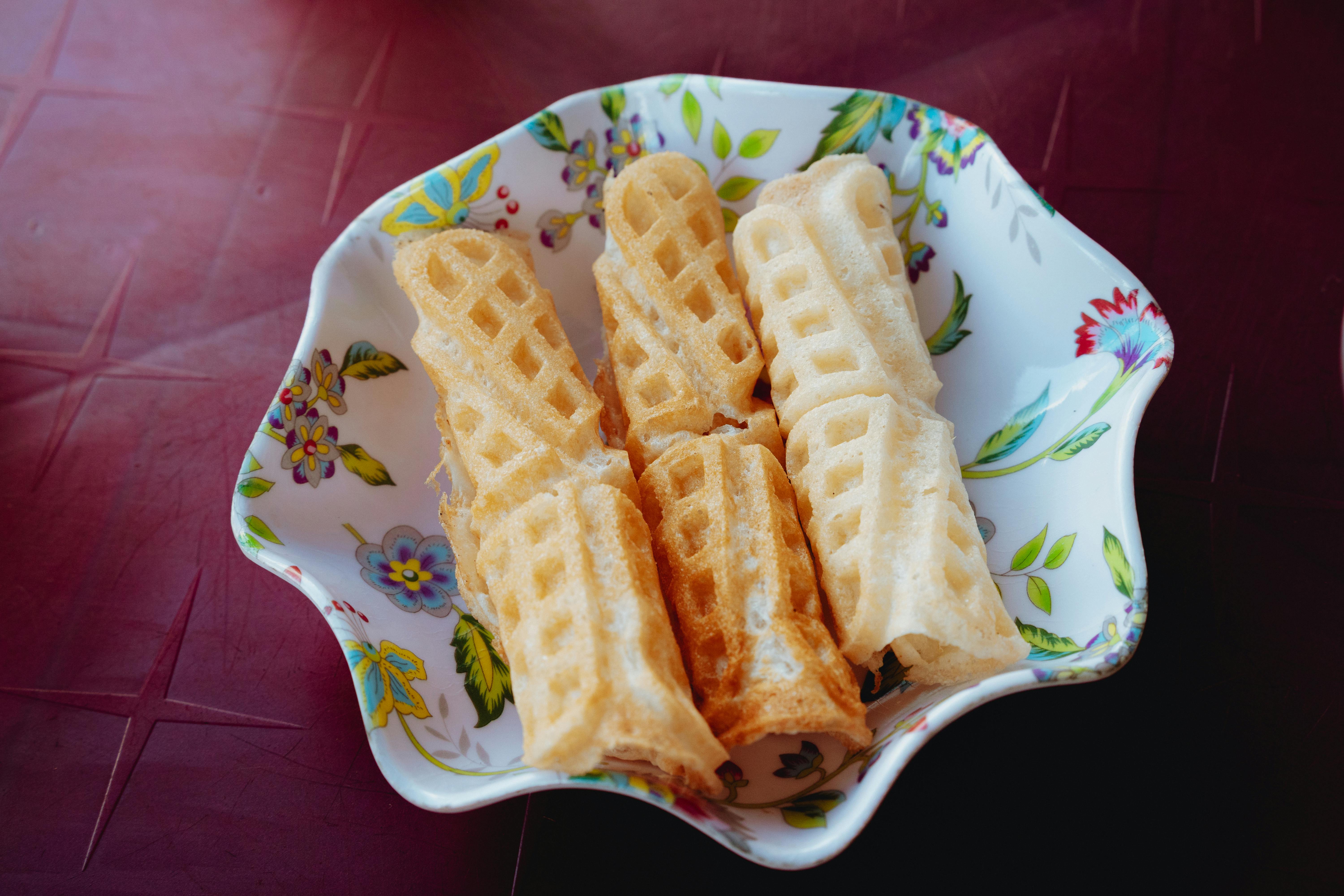
Krumkake is a traditional Norwegian waffle cookie made primarily from wheat flour and sugar — two ingredients that are fundamentally incompatible with ketogenic eating. A single krumkake contains roughly 10-15g of net carbs, meaning just 2-3 cookies could consume an entire day's carb allowance. The base is built on grain flour (high glycemic, high carb) and added sugar, both of which are zero-tolerance items on keto. While butter, eggs, and cream are keto-friendly ingredients, they are overwhelmed by the flour and sugar content. There is no realistic portion that makes this dish compatible with ketosis.
Krumkake is a traditional Norwegian waffle cookie that contains multiple animal-derived ingredients, making it entirely incompatible with a vegan diet. The recipe includes butter (dairy), eggs, and cream (dairy) — all of which are explicitly excluded under vegan dietary rules. There is no ambiguity here: these are direct, primary animal ingredients, not trace contaminants or processing aids. Flour, sugar, cardamom, and vanilla are plant-based, but they are a minority of the functional ingredients in this dish.
Krumkake is a traditional Norwegian waffle cookie that is fundamentally incompatible with the paleo diet. The recipe contains multiple non-paleo ingredients: flour (a grain product) is the primary structural ingredient and a clear paleo violation; sugar is refined and excluded; cream and butter are dairy products excluded under strict paleo guidelines; and vanilla extract may contain additives. The only paleo-compliant ingredients are eggs and cardamom. With grain-based flour and refined sugar as the foundation of this dish, there is no meaningful way to classify Krumkake as paleo-compatible in its traditional form.
Krumkake is a traditional Norwegian waffle cookie that conflicts with Mediterranean diet principles on multiple fronts. It is made primarily from refined white flour, butter (not olive oil), and added sugar — three ingredients that the Mediterranean diet either limits or discourages. Cream adds saturated fat, and the overall profile is that of a refined-grain, high-sugar, butter-based pastry with no meaningful contribution from vegetables, legumes, whole grains, or olive oil. It has no Mediterranean culinary heritage and does not align with the diet's plant-forward, olive-oil-centric framework.
Krumkake is a traditional Norwegian waffle cookie that is fundamentally incompatible with the carnivore diet. The dish is primarily composed of flour (grain), sugar, and cardamom and vanilla (plant-derived spices) — all strictly excluded plant foods. While it does contain some animal-derived ingredients (butter, eggs, cream), these are minor components in a plant-heavy recipe. No amount of egg or dairy content redeems a dish whose base is wheat flour and sugar. This is a classic baked good/dessert that has no place on any tier of the carnivore diet.
Krumkake is a traditional Norwegian waffle cookie that contains multiple excluded ingredients and also falls squarely into the 'no recreating baked goods/junk food' rule. It contains flour (a grain, excluded), butter (dairy, excluded — only ghee/clarified butter is permitted), sugar (added sugar, excluded), and cream (dairy, excluded). Even if substitutions were attempted, krumkake is essentially a cookie/wafer, a category explicitly prohibited under the Whole30 'no baked goods or junk food' rule alongside waffles, crackers, and similar items.
Krumkake is a traditional Norwegian waffle cookie made primarily with wheat flour, which is the dominant ingredient and a major source of fructans — one of the most problematic FODMAPs. Even a single krumkake contains enough wheat flour to push well beyond the low-FODMAP threshold for fructans. Butter, eggs, cardamom, and vanilla are low-FODMAP. Cream is low-FODMAP in small amounts. Sugar is low-FODMAP. However, none of these low-FODMAP ingredients can offset the fructan load from the wheat flour base. This dish should be avoided during the elimination phase. A gluten-free flour substitute (such as a low-FODMAP GF flour blend) could make a compliant version.
Krumkake is a traditional Norwegian waffle cookie made with butter, cream, sugar, eggs, and flour — a combination that is directly at odds with core DASH diet principles. The dish is high in saturated fat from both butter and cream, contains significant added sugar, and is made with refined (non-whole-grain) flour. DASH explicitly limits saturated fat, added sugars, and refined grains while emphasizing whole grains, low-fat dairy, fruits, and vegetables. Krumkake provides minimal potassium, magnesium, calcium, or dietary fiber — the key nutrients DASH is designed to maximize. It functions essentially as a dessert/sweet snack and falls squarely into the 'sweets' category that DASH recommends limiting to 5 or fewer servings per week, with each serving being a very small amount. Even occasional consumption should be tightly portion-controlled.
Krumkake is a Norwegian waffle cookie made primarily from white flour, sugar, butter, and cream — a combination that is deeply problematic for Zone Diet adherence. The macronutrient profile is skewed heavily toward high-glycemic carbohydrates (white flour + sugar) and saturated fat (butter + cream), with virtually no lean protein and negligible fiber to slow glucose absorption. This creates a rapid insulin spike, the precise hormonal response Dr. Sears designed the Zone to prevent. There is no meaningful lean protein source to balance the blocks, and the fat profile is dominated by saturated fat rather than the preferred monounsaturated fats. As a snack, it provides no path to a balanced 40/30/30 block structure — it is essentially pure unfavorable carbs and saturated fat. While eggs contribute marginally to the protein content, the quantity is far too small relative to the carbohydrate and fat load to bring this anywhere near Zone ratios. This is one of the clearer 'avoid' cases in Zone methodology.
Krumkake is a traditional Norwegian waffle cookie made from refined white flour, butter, sugar, eggs, and cream — a combination that checks nearly every box for pro-inflammatory ingredients. Refined flour and added sugar drive rapid blood glucose spikes and are consistently linked to elevated inflammatory markers (CRP, IL-6) in research. Butter and cream are high in saturated fat, which anti-inflammatory frameworks recommend limiting. There is no meaningful source of omega-3s, antioxidants, polyphenols, or fiber. The only mildly redeeming element is cardamom, which contains small amounts of anti-inflammatory compounds, but its presence at spice-level quantities in a dessert cookie is nutritionally negligible against the backdrop of the other ingredients. Eggs contribute some choline and selenium, but their benefit is overwhelmed by the overall profile. This is essentially a butter-sugar-refined flour confection, which anti-inflammatory nutrition consistently categorizes as pro-inflammatory. Occasional consumption as a cultural treat is a reasonable human choice, but from a strict anti-inflammatory assessment, this dish warrants an 'avoid' rating.
Krumkake is a traditional Norwegian waffle cookie made primarily from refined flour, butter, sugar, and cream — a combination that is essentially the opposite of what GLP-1 patients need. It provides negligible protein, no meaningful fiber, and is high in saturated fat and sugar. The caloric density is high while nutritional value per calorie is extremely low. With slowed gastric emptying already a feature of GLP-1 medications, a rich, buttery, sugar-heavy treat like this is likely to worsen nausea and digestive discomfort. It offers no satiety benefit in a small serving and contributes empty calories at a time when every bite needs to count nutritionally. There is no redeeming macro profile here for a GLP-1 patient.
*See how scores were generated at our methodology page.
Nutritional profile
Six traits that cut across every diet.
Fiber & Plants
How much whole-plant food and fiber it delivers.
Healthy Fats
The quality of its fats (unsaturated, omega-3).
Whole / Unprocessed
How close it is to its natural, unprocessed form.
Gut Gentle
How easy it is on digestion (low FODMAP, few irritants).
Low Glycemic
How little it spikes your blood sugar.
Protein Density
How much protein it packs per calorie.
Controversy Index
Higher controversy = more disagreement between diets.