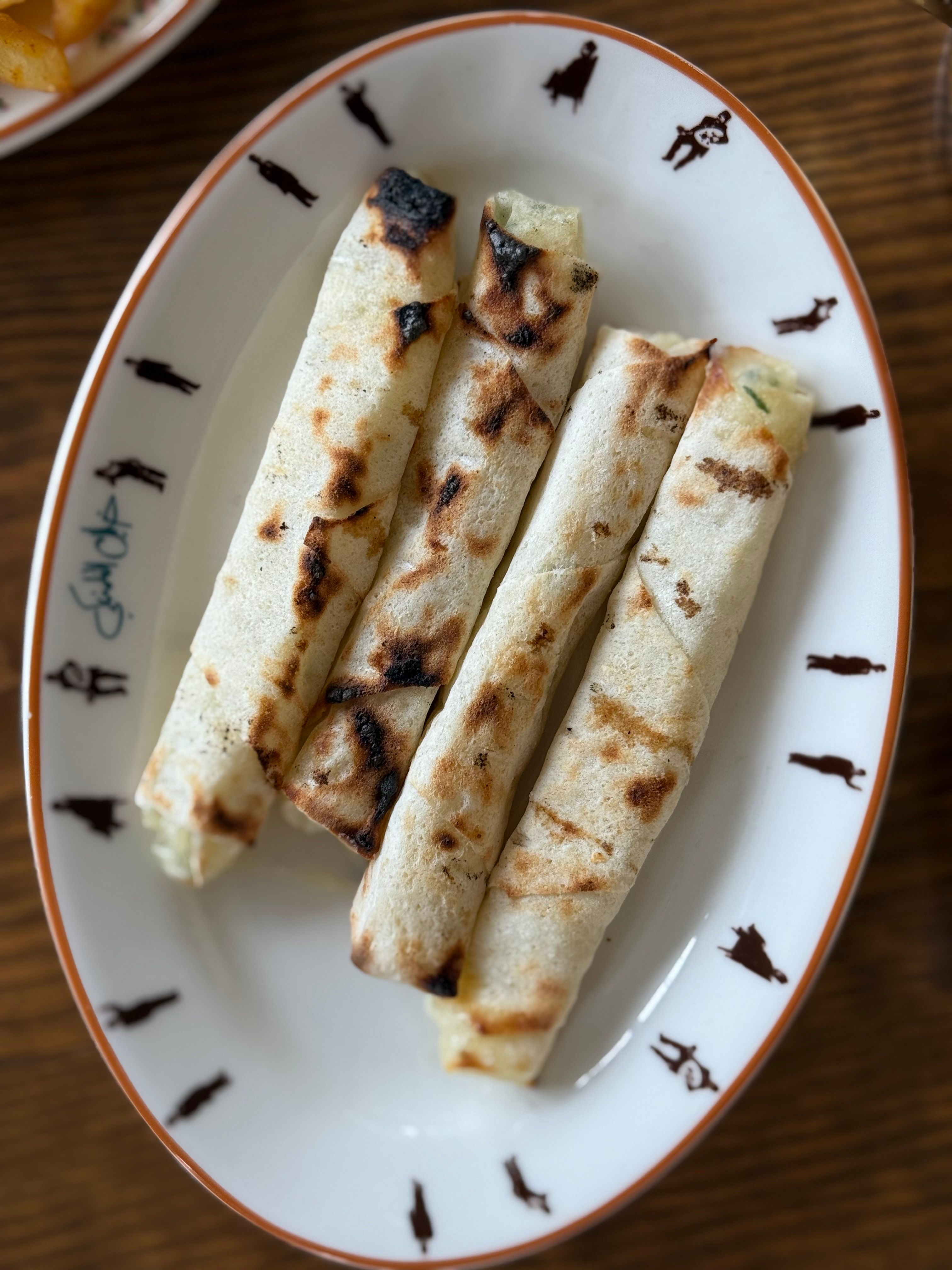
Photo: Anthony Rahayel / Pexels
The diets react (see scores below)
Common Ingredients
- potatoes
- flour
- butter
- cream
- sugar
- salt
Specific recipes may vary.
Incompatible with 8 of 11 diets
Diet Ratings
Lefse is a traditional Norwegian flatbread made primarily from potatoes and flour — two of the highest net-carb ingredients on a ketogenic diet. Potatoes are a starchy vegetable with roughly 15-17g net carbs per 100g, and wheat flour adds additional high-glycemic carbohydrates. Combined with added sugar, a single piece of lefse could easily contain 20-30g+ net carbs, which alone could exceed or meet an entire day's keto carb allowance. Butter and cream are keto-friendly, but they cannot offset the overwhelming carbohydrate load from the other ingredients. This dish is fundamentally incompatible with ketosis.
Traditional lefse contains butter and cream, both of which are dairy products derived from animals. These are clear animal-derived ingredients that disqualify lefse from being vegan-compliant. While the base of potatoes and flour is fully plant-based, the dairy components are integral to the traditional recipe and not incidental traces. Vegan versions of lefse can be made by substituting plant-based butter (e.g., vegan margarine or coconut oil) and plant-based cream (e.g., oat or cashew cream), but the dish as described here is not vegan.
Lefse is a traditional Norwegian flatbread that is fundamentally incompatible with the paleo diet. While potatoes alone occupy a debated gray area in paleo, the dish combines them with flour (a grain product), butter and cream (dairy), sugar (refined sweetener), and salt — all of which are explicitly excluded from the paleo framework. Flour is a grain derivative and one of the clearest 'avoid' ingredients in all paleo traditions. Dairy (butter, cream) is excluded. Refined sugar and added salt are also off-limits. Even setting aside the potato debate, the presence of multiple core non-paleo ingredients makes this dish wholly incompatible. There is no meaningful paleo modification that would preserve this dish's identity.
Lefse is a Norwegian flatbread made primarily from potatoes, refined white flour, butter, cream, and sugar — a combination that runs counter to Mediterranean diet principles on multiple fronts. The primary fat is butter (saturated animal fat) rather than extra virgin olive oil. The flour used is typically refined (not whole grain), placing it in the refined grains category the Mediterranean diet discourages. The addition of sugar, even if small, adds unnecessary refined sugar. Dairy (butter and cream) in this quantity and as the primary fat source goes well beyond the moderate, incidental dairy that the Mediterranean diet permits. This is not a plant-forward dish in the Mediterranean sense — it is a starch-heavy, saturated-fat-rich northern European staple with no alignment to Mediterranean dietary patterns.
Lefse is a traditional Norwegian flatbread made almost entirely from plant-based ingredients: potatoes, flour, butter, cream, sugar, and salt. The overwhelming majority of this dish is plant-derived — potatoes are a starchy tuber, flour is a grain product, and sugar is a plant-derived sweetener. While butter and cream are animal-derived dairy products, they are minor components in a dish that is fundamentally a carbohydrate-based bread. There is no meaningful animal protein present. This dish violates nearly every core carnivore diet principle simultaneously: it contains plant foods (potatoes), grains (flour), and sugar. It is completely incompatible with the carnivore diet in any tier or variation.
Lefse is a traditional Norwegian flatbread made from potatoes, flour, butter, cream, sugar, and salt. It contains multiple excluded ingredients: flour (grain — wheat), butter (dairy), and sugar (added sugar). Even if these were substituted with compliant alternatives, lefse is a flatbread/wrap category item explicitly prohibited under Whole30's 'no recreating baked goods/junk food' rule, which specifically calls out tortillas, wraps, and similar items. This dish fails on multiple counts.
Lefse is a traditional Norwegian flatbread made primarily from potatoes, flour, butter, cream, sugar, and salt. The critical FODMAP concern is the wheat flour, which contains fructans — a key high-FODMAP oligosaccharide. While potatoes are low-FODMAP at standard servings (1 medium potato), butter is low-FODMAP, cream is low-FODMAP at small amounts (lactose content is low), salt is FODMAP-free, and small amounts of sugar are fine, the wheat flour is the dealbreaker during elimination. Traditional lefse recipes use significant amounts of all-purpose wheat flour, making each piece a meaningful source of fructans. The FODMAP load per piece depends on the flour-to-potato ratio and serving size — some recipes use relatively less flour than others. If made with gluten-free flour (e.g., rice flour), lefse could be low-FODMAP, but traditional recipes call for wheat flour. At a typical serving of 1-2 pieces, the fructan content from wheat flour is likely to be problematic during strict elimination.
Monash University has not specifically tested lefse as a dish; the verdict is derived from its wheat flour content. Some FODMAP practitioners note that the potato-heavy nature of lefse dilutes the wheat flour proportion significantly compared to regular bread, and a small serving (1 piece) might fall below fructan threshold — but most elimination-phase dietitians would advise avoiding wheat-containing products entirely to eliminate ambiguity.
Lefse is a traditional Norwegian flatbread made primarily from potatoes, flour, butter, cream, sugar, and salt. While potatoes themselves are a DASH-friendly food (rich in potassium and fiber), the traditional lefse recipe incorporates butter and cream (sources of saturated fat) and added sugar, which DASH guidelines advise limiting. The refined white flour contributes minimal fiber compared to whole-grain alternatives. Salt is added directly to the dough, contributing to sodium load. The dish is not heavily processed and contains no extreme red flags, but the combination of saturated fat from butter and cream, added sugar, and refined flour places it in the 'caution' category — acceptable occasionally and in small portions, but not a DASH staple. Homemade versions with reduced butter, substituted low-fat milk or fat-free dairy, and minimal salt could improve the profile meaningfully.
NIH DASH guidelines clearly limit saturated fat and added sugars, which traditional lefse contains via butter, cream, and sugar. However, some updated clinical interpretations note that full-fat dairy in modest amounts may not significantly worsen cardiovascular outcomes per recent meta-analyses, and that the potassium content from potatoes offers partial offsetting benefit — a DASH-oriented dietitian might allow small portions of homemade lefse with modified ingredients rather than categorically restricting it.
Lefse is a Norwegian flatbread made primarily from potatoes and white flour — two of the most explicitly 'unfavorable' carbohydrate sources in Zone Diet terminology. Potatoes are high-glycemic and specifically called out by Dr. Sears as foods to avoid, ranking among the worst Zone carbohydrate choices. White flour compounds the problem with another high-glycemic, low-fiber refined carb. The addition of butter and cream adds saturated fat rather than the preferred monounsaturated fats. Sugar, while a minor ingredient, further tilts the glycemic load upward. There is no protein source whatsoever, making this a pure high-glycemic carbohydrate-and-saturated-fat vehicle with zero Zone block balance. Even in very small portions, lefse offers no Zone-favorable macronutrient contribution — it would require pairing with significant lean protein and monounsaturated fat just to approach a usable block, while the high-GI carb load would still spike insulin well beyond Zone targets. This is as close to a categorically avoid food as the Zone system produces.
Lefse is a traditional Norwegian flatbread made primarily from potatoes, white flour, butter, cream, sugar, and salt. From an anti-inflammatory perspective, this dish is largely neutral-to-negative. Potatoes themselves are a whole food with some antioxidants (vitamin C, potassium) and are generally acceptable in the anti-inflammatory framework, though they are high-glycemic. However, the remaining ingredients are problematic: white flour is a refined carbohydrate that can spike blood sugar and promote inflammatory pathways; butter and cream are sources of saturated fat, which anti-inflammatory guidelines recommend limiting; and added sugar, even in small amounts, nudges the profile further toward pro-inflammatory. The dish contains no omega-3 fatty acids, no meaningful polyphenols or antioxidants, no fiber-rich whole grains, and no anti-inflammatory herbs or spices. It is not a 'processed food' in the industrial sense, and it lacks trans fats or artificial additives, which keeps it out of the 'avoid' category. Consumed occasionally as a side dish in small portions, lefse is a relatively benign indulgence, but it offers no meaningful anti-inflammatory benefit and its refined carbohydrate and saturated fat content give it a mildly pro-inflammatory profile. A 'caution' rating reflects its status as an acceptable-but-non-beneficial food in moderation.
Lefse is a traditional Norwegian flatbread made primarily from potatoes, refined flour, butter, and cream. It offers negligible protein, minimal fiber, and derives a significant portion of its calories from refined carbohydrates and saturated fat. For GLP-1 patients eating substantially fewer calories overall, this dish contributes little nutritional value per bite — no meaningful protein to protect muscle mass, no appreciable fiber to support digestion or prevent constipation, and a fat profile dominated by butter and cream that can worsen nausea, bloating, and reflux. The refined flour and potato base create a high-glycemic load that works against blood sugar stabilization. As a side dish with no primary protein, it displaces far more beneficial foods in an already limited caloric budget. It is a classic example of empty-calorie, low-nutrient-density food that is especially counterproductive for GLP-1 patients.
*See how scores were generated at our methodology page.
Nutritional profile
Six traits that cut across every diet.
Fiber & Plants
How much whole-plant food and fiber it delivers.
Healthy Fats
The quality of its fats (unsaturated, omega-3).
Whole / Unprocessed
How close it is to its natural, unprocessed form.
Gut Gentle
How easy it is on digestion (low FODMAP, few irritants).
Low Glycemic
How little it spikes your blood sugar.
Protein Density
How much protein it packs per calorie.
Controversy Index
Higher controversy = more disagreement between diets.
Diet-Specific Tips
 Low-FODMAP — 4/10
View tips
- Wheat flour is a high-FODMAP ingredient due to fructans
- Potatoes are low-FODMAP at standard servings
- Butter and small amounts of cream are low-FODMAP
- Sugar and salt are FODMAP-free
- FODMAP burden is dose-dependent on flour quantity per piece
- No specific Monash University testing of lefse as a dish
- Gluten-free flour substitution would make lefse low-FODMAP
 DASH — 4/10
View tips
- Butter and cream contribute saturated fat, which DASH limits
- Added sugar is discouraged on DASH
- Refined white flour offers little fiber compared to whole grains
- Potatoes provide potassium, a key DASH nutrient
- Salt added to dough increases sodium content
- Small portions or modified recipes (low-fat dairy, less butter) would improve DASH compatibility
- No lean protein, legumes, or vegetables to offset nutritional concerns
 Anti-Inflammatory — 4/10
View tips
- Refined white flour — high-glycemic, pro-inflammatory at regular consumption
- Butter and cream — saturated fat sources, limited in anti-inflammatory guidelines
- Added sugar — further pro-inflammatory nudge
- Potatoes — whole food with modest nutrients but high glycemic index
- No omega-3s, antioxidants, polyphenols, or fiber-rich ingredients
- No industrial processing, trans fats, or artificial additives — mitigates worst-case scenario