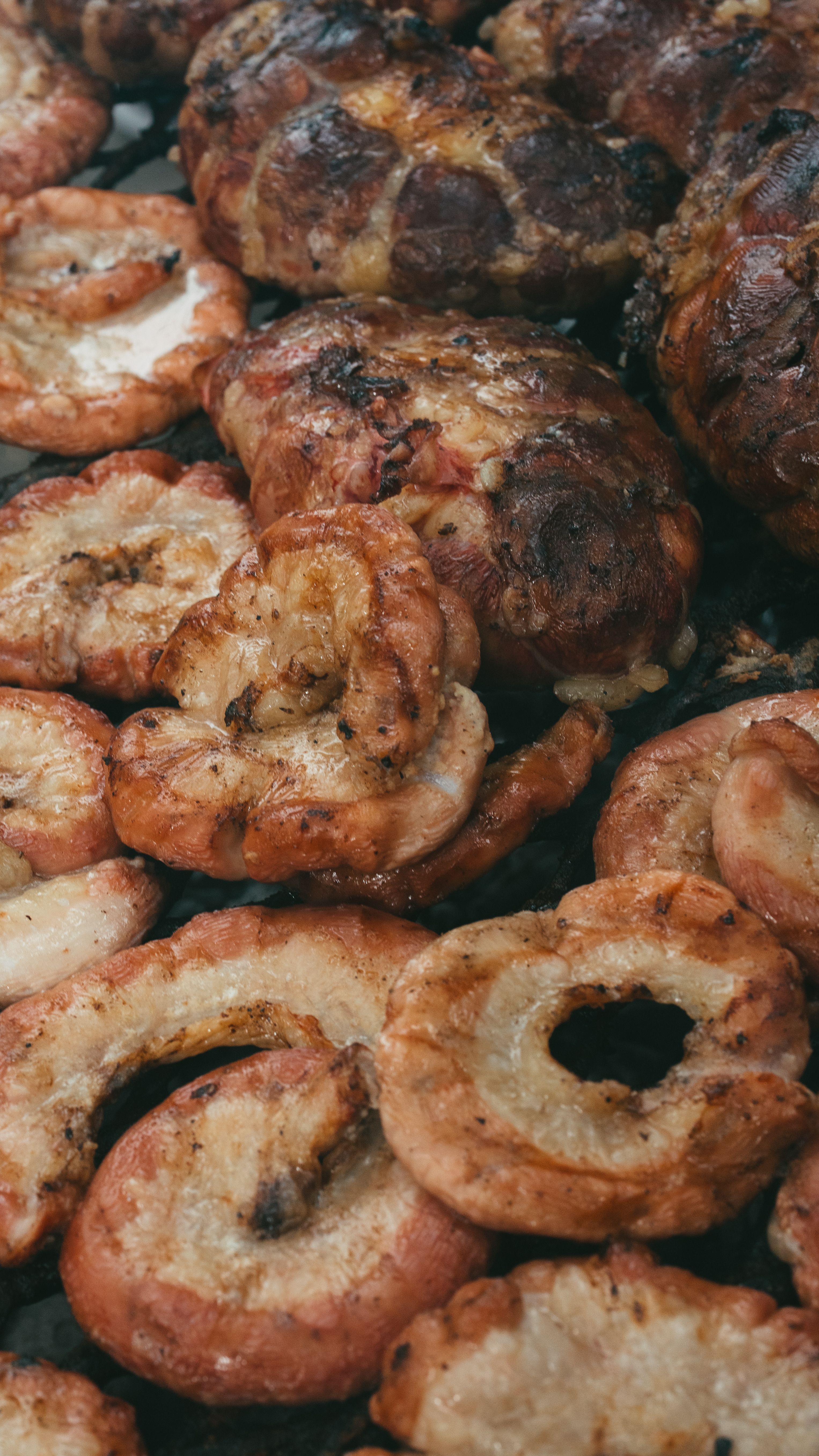
Photo: Guillermo Berlin / Pexels
The diets react (see scores below)
Common Ingredients
- sheep head
- salt
- rutabaga
- potatoes
- butter
Specific recipes may vary.
Incompatible with 8 of 11 diets
Diet Ratings
Smalahove as traditionally served is incompatible with ketogenic eating due to its mandatory side dishes. The sheep head itself (brain, meat, skin, fat) is actually an excellent keto food — very high in fat and protein with near-zero carbs. However, the dish is inseparable from its traditional accompaniments: rutabaga and potatoes. Potatoes are a high-starch vegetable (~17g net carbs per 100g) and a major keto disqualifier. Rutabaga, while lower carb than potatoes, still contains ~7g net carbs per 100g and in typical Smalahove portions contributes significantly. Together, a standard serving of Smalahove with its sides can easily deliver 40-80g of net carbs, pushing most individuals well out of ketosis. The butter addition is keto-friendly, but cannot offset the carbohydrate load from the starchy sides that define this dish.
Smalahove is a traditional Norwegian dish consisting of a whole sheep's head — a direct animal product and one of the clearest possible violations of vegan principles. The dish also contains butter, another animal-derived ingredient (dairy). Both the primary protein source (sheep head) and a secondary ingredient (butter) are firmly excluded under any definition of veganism. There is no ambiguity here.
Smalahove is a traditional Norwegian dish of cured/salted sheep's head served with rutabaga, potatoes, and butter. While the sheep head itself (including organ meat and fat) is an exemplary paleo protein source, the dish fails on multiple counts. Salt is explicitly excluded from strict paleo (added salt is a processed/non-paleo ingredient), and butter is a dairy product — both disqualifying under core paleo rules. Potatoes are a debated ingredient, and rutabaga (a root vegetable) is generally paleo-acceptable, but the overall preparation involves curing with salt, which is a preservation/processing method inconsistent with paleo philosophy. The combination of disqualifying ingredients (salt, butter, and the debated potatoes) pulls this dish into avoid territory despite the quality protein source.
Some modern paleo practitioners, particularly those following Mark Sisson's Primal Blueprint, would accept butter and potatoes, and may be lenient on minimal added salt for preservation/flavor — in which case only the curing process itself would be a concern, potentially rating this as caution rather than avoid.
Smalahove is a traditional Norwegian dish centered on sheep's head, which classifies as red meat — specifically an organ/offal cut. The Mediterranean diet limits red meat to a few times per month, and fatty cuts of lamb or sheep head are high in saturated fat. The dish is also prepared with butter as the primary fat rather than olive oil, directly contradicting the Mediterranean principle of extra virgin olive oil as the primary fat source. While rutabaga and potatoes are acceptable vegetables, they are modest accompaniments to a dish dominated by fatty red meat and butter. The overall profile — red meat centerpiece, butter-based, no olive oil, no legumes, no whole grains — is poorly aligned with Mediterranean dietary principles.
Smalahove is a traditional Norwegian dish featuring sheep head — an excellent carnivore-friendly organ-rich protein source — but the traditional preparation includes rutabaga (swede) and potatoes as core components of the meal, both of which are strictly excluded plant foods on the carnivore diet. Rutabaga is a root vegetable and potatoes are a starchy tuber; both are prohibited. Butter is acceptable (debated in strict circles), and salt is fine, but the dish as traditionally served cannot be considered carnivore-compatible due to the mandatory plant-based sides. The sheep head itself, eaten in isolation with just salt and butter, would rate very highly — it is a nutrient-dense organ meat source including brain, eye, and cheek meat — but the dish as a whole must be rated on its full ingredient list.
Smalahove contains butter, which is a dairy product explicitly excluded on the Whole30 program. Regular butter is not permitted — only ghee or clarified butter is allowed as the sole dairy exception. The sheep head, salt, rutabaga, and potatoes are all Whole30-compliant ingredients, but the inclusion of regular butter disqualifies this dish as prepared. If butter were replaced with ghee or a compliant fat (e.g., olive oil, coconut oil), the dish could be made compliant.
Smalahove (cured/smoked sheep head) is a traditional Norwegian dish. Breaking down the ingredients: sheep head (plain meat, brain, and skin) is protein/fat with no FODMAPs — low-FODMAP approved. Salt is FODMAP-free. Butter is low-FODMAP at standard servings (fat, minimal lactose). Potatoes are low-FODMAP at a standard serving (150g). The main concern is rutabaga (swede/kålrot), which Monash University has tested and found to be high-FODMAP at servings above approximately 75g due to fructans and GOS. A typical serving of rutabaga as a side dish in Smalahove is well above this threshold (often 100-200g mashed or boiled). The dish itself is otherwise very low-FODMAP, but the rutabaga is a traditional and integral component served in generous portions, making the overall dish a caution rather than an approve.
Monash University rates rutabaga (swede) as low-FODMAP only at portions of approximately 75g or less. Many clinical FODMAP practitioners would note that the standard serving of rutabaga in Smalahove exceeds this threshold, and some would advise avoiding it entirely during elimination. However, if rutabaga is strictly limited to a small portion or substituted with another low-FODMAP vegetable (e.g., carrot or parsnip at safe servings), the dish could be approved.
Smalahove (Norwegian salted sheep's head) is fundamentally incompatible with DASH diet principles. The dish is heavily salt-cured, resulting in extremely high sodium content — a direct violation of DASH's core sodium restriction (<2,300mg/day standard, <1,500mg/day low-sodium). Beyond sodium, sheep's head is rich in saturated fat and cholesterol from skin, fatty tissue, and brain matter, all of which DASH explicitly limits. Butter adds additional saturated fat. While rutabaga and potatoes are DASH-friendly vegetables, they cannot offset the high sodium and saturated fat load of the primary ingredients. The curing/salting process is the critical disqualifier, as it saturates the meat with sodium throughout. Even removing the skin would not adequately reduce the sodium content given how deeply the salt penetrates during curing.
Smalahove is a traditional Norwegian dish consisting of a whole sheep head (brain, eye, cheek, tongue) served with rutabaga and potatoes, finished with butter. From a Zone Diet perspective, this dish presents multiple challenges. The sheep head is a high-fat protein source — far from the lean proteins Dr. Sears recommends. It contains significant saturated fat from the brain, cheek, and skin tissues, making it difficult to hit the 30% fat-from-monounsaturated-sources target. The carbohydrate side is problematic: potatoes are explicitly flagged as 'unfavorable' high-glycemic carbs in Zone methodology, and while rutabaga is a better vegetable choice (lower GI than potato), the traditional preparation typically features potatoes prominently. Butter adds saturated fat rather than preferred monounsaturated fat. The dish lacks the colorful, polyphenol-rich vegetables Zone emphasizes. To adapt this toward Zone compliance, one would need to dramatically reduce potato portions, substitute with more rutabaga or other low-GI vegetables, skip butter in favor of olive oil, and limit the fattier parts of the head (brain, skin) while focusing on leaner cuts like the cheek muscle. Given the traditional preparation makes these substitutions impractical, and the dish fundamentally conflicts with Zone's lean protein and low-GI carb priorities, a score of 3 is appropriate — technically caution rather than avoid because lamb protein and rutabaga have Zone-usable components, but the overall profile is very poorly aligned.
Some Zone practitioners in Sears' later anti-inflammatory framework (Toxic Fat, The Mediterranean Zone) might argue that organ meats from pasture-raised sheep contain omega-3 fatty acids, zinc, and B12, and that small portions of saturated fat are acceptable in context. Rutabaga is a genuinely favorable Zone carb. If one were to reconstruct the dish — focusing on cheek meat, emphasizing rutabaga, eliminating potatoes, and replacing butter with olive oil — a modified Smalahove could reach a caution score of 5-6. The traditional preparation as served, however, is difficult to defend in Zone terms.
Smalahove is a traditional Norwegian dish of cured and smoked sheep's head, served with rutabaga (swede) and potatoes, typically finished with butter. From an anti-inflammatory perspective, this dish presents a mixed profile. The sheep head includes a variety of cuts — cheek meat, brain, tongue, skin — meaning the fat composition is heterogeneous. Lamb in general is a red meat with moderate saturated fat content, placing it in the 'limit' category rather than outright avoidance; it does contain some conjugated linoleic acid (CLA) and zinc, which have mild anti-inflammatory properties. The curing and smoking process introduces added salt and potentially nitrites/smoke compounds, which are associated with pro-inflammatory effects and oxidative stress at regular consumption. Rutabaga is a cruciferous vegetable with glucosinolates and antioxidants — a genuine anti-inflammatory positive. Potatoes are a moderate-glycemic whole food with potassium and vitamin C, broadly acceptable. Butter adds saturated fat, which anti-inflammatory guidelines recommend limiting. The dish lacks any omega-3 sources, anti-inflammatory herbs, or olive oil. Eaten occasionally as a cultural/traditional dish, it is not catastrophically pro-inflammatory, but its regular consumption would not align with anti-inflammatory principles due to the red meat base, saturated fat from butter, and curing-related additives.
Some anti-inflammatory researchers and ancestral diet proponents (e.g., Paul Saladino, nose-to-tail advocates) argue that organ-rich whole-animal eating provides highly bioavailable nutrients — including B12, choline, zinc, and selenium — that support cellular anti-inflammatory pathways, and that traditional curing without synthetic additives is minimally harmful. Mainstream anti-inflammatory frameworks (Dr. Weil, IF Rating system) would counter that red meat and saturated fat intake should be limited regardless of sourcing, and that processed/cured meats carry additional inflammatory risk.
Smalahove is a traditional Norwegian dish consisting of a salted, smoked, and boiled sheep's head, served with rutabaga and potatoes cooked in butter. While lamb does provide protein, the specific cuts present in a sheep's head — brain, skin, fatty cheek meat, and eye — are extremely high in saturated fat and cholesterol, with poor protein density relative to fat content. The preparation (salting, smoking, boiling) does not reduce the inherent fat load, and the skin and subcutaneous fat make this a very high-fat serving. The butter-enriched potatoes and rutabaga add additional saturated fat with minimal protein return. High sodium content from salting is a secondary concern, as GLP-1 patients already have reduced intake and should prioritize nutrient-dense calories. The fatty, rich composition is likely to worsen GLP-1 side effects including nausea, bloating, and reflux due to slowed gastric emptying interacting poorly with high-fat content. The dish is also not small-portion friendly — it is traditionally served as a whole head, making portion control difficult. Rutabaga does offer some fiber value, but this does not offset the core problems.
Some GLP-1-aware clinicians note that organ and head meats contain micronutrients (B12, zinc, iron) that are difficult to obtain on a calorie-restricted diet, and a small portion of lean cheek meat specifically could contribute meaningful protein; however, most RDs working with GLP-1 patients would still steer away from this dish due to the difficulty of isolating lean portions and the high saturated fat burden of the dish as typically served.
*See how scores were generated at our methodology page.
Nutritional profile
Six traits that cut across every diet.
Fiber & Plants
How much whole-plant food and fiber it delivers.
Healthy Fats
The quality of its fats (unsaturated, omega-3).
Whole / Unprocessed
How close it is to its natural, unprocessed form.
Gut Gentle
How easy it is on digestion (low FODMAP, few irritants).
Low Glycemic
How little it spikes your blood sugar.
Protein Density
How much protein it packs per calorie.
Controversy Index
Higher controversy = more disagreement between diets.
Diet-Specific Tips
 Low-FODMAP — 5/10
View tips
- Sheep head (meat, skin, brain) is pure protein/fat — fully low-FODMAP
- Rutabaga (swede) is high-FODMAP above ~75g per Monash University testing due to fructans/GOS
- Typical Smalahove serving of rutabaga exceeds the safe Monash threshold
- Potatoes are low-FODMAP at standard 150g serving
- Butter is low-FODMAP (minimal lactose in fat-dominant dairy)
- Salt is FODMAP-free
- Dish is otherwise very IBS-friendly if rutabaga portion is strictly controlled
 Zone — 5/10
View tips
- Sheep head is a high-fat, high-saturated-fat protein — far from Zone's lean protein ideal (skinless chicken, fish, egg whites)
- Potatoes are explicitly 'unfavorable' high-glycemic carbs in Zone methodology and should be avoided or minimized
- Rutabaga is a favorable low-GI carb and partially redeems the carbohydrate profile
- Butter adds saturated fat instead of preferred monounsaturated fat (olive oil, avocado, almonds)
- Brain tissue is extremely high in fat and cholesterol, difficult to portion into Zone blocks
- Dish lacks polyphenol-rich colorful vegetables that Zone emphasizes for anti-inflammatory benefit
- No omega-3-rich components; traditional preparation may skew omega-6:omega-3 ratio unfavorably
 Anti-Inflammatory — 4/10
View tips
- Sheep head (red meat) — 'limit' category in anti-inflammatory guidelines due to saturated fat
- Cured/smoked preparation adds salt and potentially pro-inflammatory compounds
- Butter contributes additional saturated fat — anti-inflammatory guidelines recommend limiting
- Rutabaga is a cruciferous vegetable with antioxidant and anti-inflammatory glucosinolates
- Potatoes are a neutral whole food — moderate glycemic impact
- No omega-3 sources, anti-inflammatory herbs, spices, or olive oil present
- Organ meats (brain, tongue) provide dense micronutrients but also cholesterol and arachidonic acid
- Acceptable as an occasional traditional dish; not suitable for regular anti-inflammatory eating patterns