Photo: Terrance Barksdale / Pexels
American
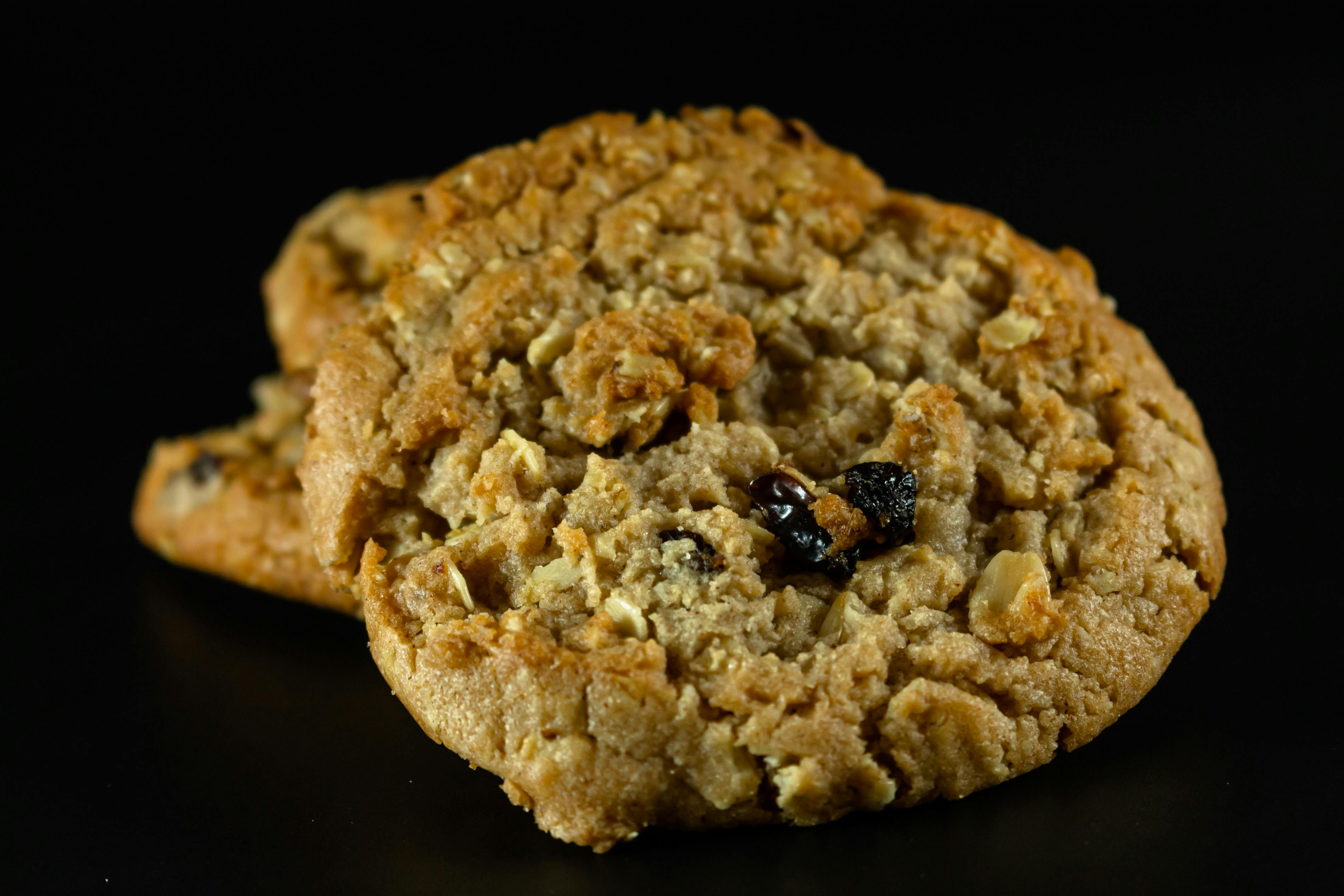
Oatmeal Raisin Cookie
The diets react (see scores below)
Common Ingredients
- rolled oats
- raisins
- butter
- brown sugar
- egg
- flour
- baking soda
- cinnamon
- salt
- vanilla
Specific recipes may vary.
Incompatible with 9 of 11 diets
Diet Ratings
Oatmeal raisin cookies are fundamentally incompatible with ketogenic diets. Every primary ingredient is a keto disqualifier: rolled oats are a grain with high net carbs (~27g per 1/4 cup), flour adds more grain-based carbohydrates, brown sugar is pure added sugar, and raisins are a concentrated source of sugar (~29g net carbs per 1/4 cup). A single standard cookie could easily contain 20-30g of net carbs, which alone may exceed an entire day's keto carb allowance. Butter and egg are keto-friendly, but they cannot offset the overwhelming carbohydrate load from the other ingredients. This is a triple threat of grains, added sugar, and high-glycemic dried fruit.
This oatmeal raisin cookie contains two clear animal-derived ingredients: butter (dairy) and egg. Both are unambiguously excluded under vegan dietary rules. The base ingredients — rolled oats, raisins, flour, brown sugar, baking soda, cinnamon, salt, and vanilla — are all plant-based, meaning the cookie could be made vegan with substitutions (e.g., vegan butter or coconut oil, flax egg or applesauce). However, as listed, this recipe is not vegan-compliant.
Oatmeal raisin cookies are fundamentally incompatible with the paleo diet. The recipe contains multiple core non-paleo ingredients: rolled oats (a grain), wheat flour (a grain), butter (dairy), brown sugar (refined sugar), baking soda (processed leavening agent), and added salt. Nearly every ingredient except raisins, egg, cinnamon, and vanilla violates paleo principles. Grains and dairy are among the most clearly excluded food groups in all paleo frameworks, and refined sugar is universally rejected. This dish represents the antithesis of paleo eating — a heavily processed baked good built on a foundation of grains and dairy.
Oatmeal raisin cookies are a processed sweet snack that fundamentally conflicts with Mediterranean diet principles. While rolled oats are a whole grain and raisins are a fruit, the combination is dominated by added sugar (brown sugar), refined flour, and butter as the primary fat — all of which contradict core Mediterranean diet guidelines. The substantial added sugar content places this firmly in the 'avoid' category, and butter replaces the canonical extra virgin olive oil. The refined flour further undermines the whole-grain principle. This is an American-style baked good, not a Mediterranean staple, and the net nutritional profile is high in saturated fat and added sugars.
Some Mediterranean diet practitioners acknowledge that oats and dried fruit like raisins are individually wholesome ingredients, and a small, occasional homemade cookie made with minimal sugar and substituting olive oil for butter could be considered an infrequent indulgence consistent with the diet's flexibility around sweets eaten rarely. Traditional Mediterranean cultures do include honey- or fruit-sweetened baked goods on occasion.
Oatmeal raisin cookies are almost entirely plant-based and processed, containing no animal protein as the primary ingredient. The ingredient list is dominated by plant foods: rolled oats (grain), raisins (fruit), flour (grain), brown sugar (processed sugar), cinnamon (plant spice), and vanilla (plant extract). While butter and egg are present, they are minor components in a heavily plant-based, sugar-laden baked good. This dish violates virtually every core principle of the carnivore diet — it contains grains, fruit, sugar, plant oils/spices, and processed carbohydrates. There is zero ambiguity in the carnivore community about cookies being off-limits.
Oatmeal Raisin Cookies contain multiple excluded ingredients and violate the program's 'no recreating baked goods' rule. Rolled oats are a grain (excluded). Flour (wheat) is a grain (excluded). Butter is dairy (excluded — only ghee/clarified butter is allowed). Brown sugar is added sugar (excluded). Even if all ingredients were somehow swapped for compliant versions, the Whole30 program explicitly prohibits recreating cookies, baked goods, and junk food regardless of ingredient compliance. This dish fails on virtually every axis of the Whole30 program.
Oatmeal Raisin Cookies contain multiple high-FODMAP ingredients that make them unsuitable during the elimination phase. Wheat flour is high in fructans and is a primary ingredient. Raisins are very high-FODMAP due to excess fructose and fructans — Monash rates them as high-FODMAP at just 13g (about 1 tablespoon), and a cookie would contain significantly more per serving. Brown sugar in larger quantities can also contribute excess fructose. Rolled oats themselves are low-FODMAP at 52g (½ cup), but the combination with flour and raisins makes the overall cookie clearly high-FODMAP. Butter, egg, cinnamon, salt, baking soda, and vanilla are all low-FODMAP. However, the wheat flour and raisins alone are sufficient to classify this as a food to avoid during elimination.
Oatmeal raisin cookies contain some DASH-friendly components — rolled oats provide whole grains and fiber, and raisins contribute potassium and natural sweetness. However, the overall profile is problematic for DASH adherence. Butter is a significant source of saturated fat, which DASH explicitly limits. Brown sugar adds substantial amounts of added sugar, and the cookie format concentrates calories and sugar in a small portion. White flour (likely all-purpose) rather than whole grain flour further reduces nutritional value. Salt is added on top of baking soda, increasing sodium. As a packaged or homemade treat, this falls squarely into the 'sweets' category that DASH limits to 5 or fewer servings per week (with servings being small, e.g., 1 tablespoon of sugar). A single cookie is acceptable occasionally within DASH guidelines, but regular consumption is discouraged. It is preferable to commercial cookies or candy bars due to the oats and raisins, but it remains a discretionary treat rather than a DASH staple.
An oatmeal raisin cookie is essentially a high-glycemic sugar bomb with almost no Zone-compatible redeeming qualities as a standalone snack. The dominant ingredients — brown sugar, raisins, white flour, and butter — represent exactly what the Zone Diet discourages: high-glycemic carbohydrates, refined grains, and saturated fat. There is no lean protein present whatsoever, making any 40/30/30 block structure impossible without a radical dietary addition on the side. Raisins are explicitly flagged as 'unfavorable' in Dr. Sears' published Zone materials due to their very high sugar density and glycemic load. Brown sugar and white flour are similarly categorized as carbohydrates to avoid. Butter contributes saturated fat rather than the preferred monounsaturated fat. While rolled oats do have some fiber and a moderate glycemic index on their own, in cookie form they are diluted by sugar and butter into a net-unfavorable package. The egg provides a small amount of protein, but it is far too little to balance the carbohydrate and fat load. As a snack, the Zone targets a mini-meal with balanced blocks — this food cannot fulfill that role without essentially restructuring it into something entirely different.
Oatmeal raisin cookies present a mixed anti-inflammatory profile. On the positive side, rolled oats provide beta-glucan fiber and have shown modest anti-inflammatory effects in research, raisins contribute polyphenols and antioxidants, cinnamon is a recognized anti-inflammatory spice, and the egg provides some beneficial nutrients. However, the overall formulation is a cookie — a processed sweet baked good — with meaningful amounts of butter (saturated fat, a pro-inflammatory concern) and brown sugar (added sugar drives inflammatory cytokine release and raises insulin), plus refined white flour (high glycemic, low fiber). The combination of saturated fat and added sugar is consistently flagged across anti-inflammatory frameworks as promoting inflammation. Compared to a more overtly processed snack, the oats and raisins provide some nutritional redemption, but the butter-sugar-flour base positions this firmly as an occasional treat rather than a regular part of an anti-inflammatory diet. The cinnamon is a genuine positive but too small in quantity to meaningfully offset the pro-inflammatory components.
Oatmeal raisin cookies are a poor fit for GLP-1 patients. Despite containing oats (which have some fiber) and raisins (natural fruit), the overall nutritional profile is dominated by refined carbohydrates, added sugar (brown sugar, raisins contribute concentrated sugar), and saturated fat (butter). Protein content is negligible — one egg spread across an entire batch yields less than 1g of protein per cookie. The high sugar load can spike blood glucose, which is counterproductive for patients often managing insulin resistance or type 2 diabetes. Butter adds saturated fat that can worsen GLP-1 side effects including nausea and bloating. Refined flour further reduces fiber and nutrient density. As a snack, it delivers almost no protein, moderate fat, and significant sugar — the opposite of what GLP-1 patients need from their limited caloric intake. The small serving size does not redeem it; the caloric payload per cookie still delivers empty calories relative to its negligible nutritional contribution.
*See how scores were generated at our methodology page.
Nutritional profile
Six traits that cut across every diet.
Fiber & Plants
How much whole-plant food and fiber it delivers.
Healthy Fats
The quality of its fats (unsaturated, omega-3).
Whole / Unprocessed
How close it is to its natural, unprocessed form.
Gut Gentle
How easy it is on digestion (low FODMAP, few irritants).
Low Glycemic
How little it spikes your blood sugar.
Protein Density
How much protein it packs per calorie.
Controversy Index
Higher controversy = more disagreement between diets.
Diet-Specific Tips
 DASH — 4/10
View tips
- Rolled oats provide whole grain fiber — a DASH positive
- Raisins add natural potassium and sweetness without refined sugar
- Butter contributes saturated fat, which DASH explicitly limits
- Brown sugar and overall added sugar content categorize this as a 'sweet' under DASH — limited to ≤5 small servings/week
- White flour reduces whole grain benefit compared to a 100% whole wheat version
- Salt plus baking soda adds unnecessary sodium
- Portion size is critical — one small cookie occasionally is acceptable; multiple cookies is not
- Homemade versions with less butter/sugar, whole wheat flour, and no added salt would score higher
 Anti-Inflammatory — 4/10
View tips
- Rolled oats provide beta-glucan fiber with some anti-inflammatory evidence
- Butter is a saturated fat source, flagged as pro-inflammatory in most anti-inflammatory frameworks
- Brown sugar adds significant refined sugar, a key driver of inflammatory markers like CRP
- Refined white flour is high-glycemic with minimal fiber or nutrient value
- Raisins contribute polyphenols and antioxidants
- Cinnamon is a recognized anti-inflammatory spice
- Overall product is a baked good with a pro-inflammatory sugar-fat-refined grain base