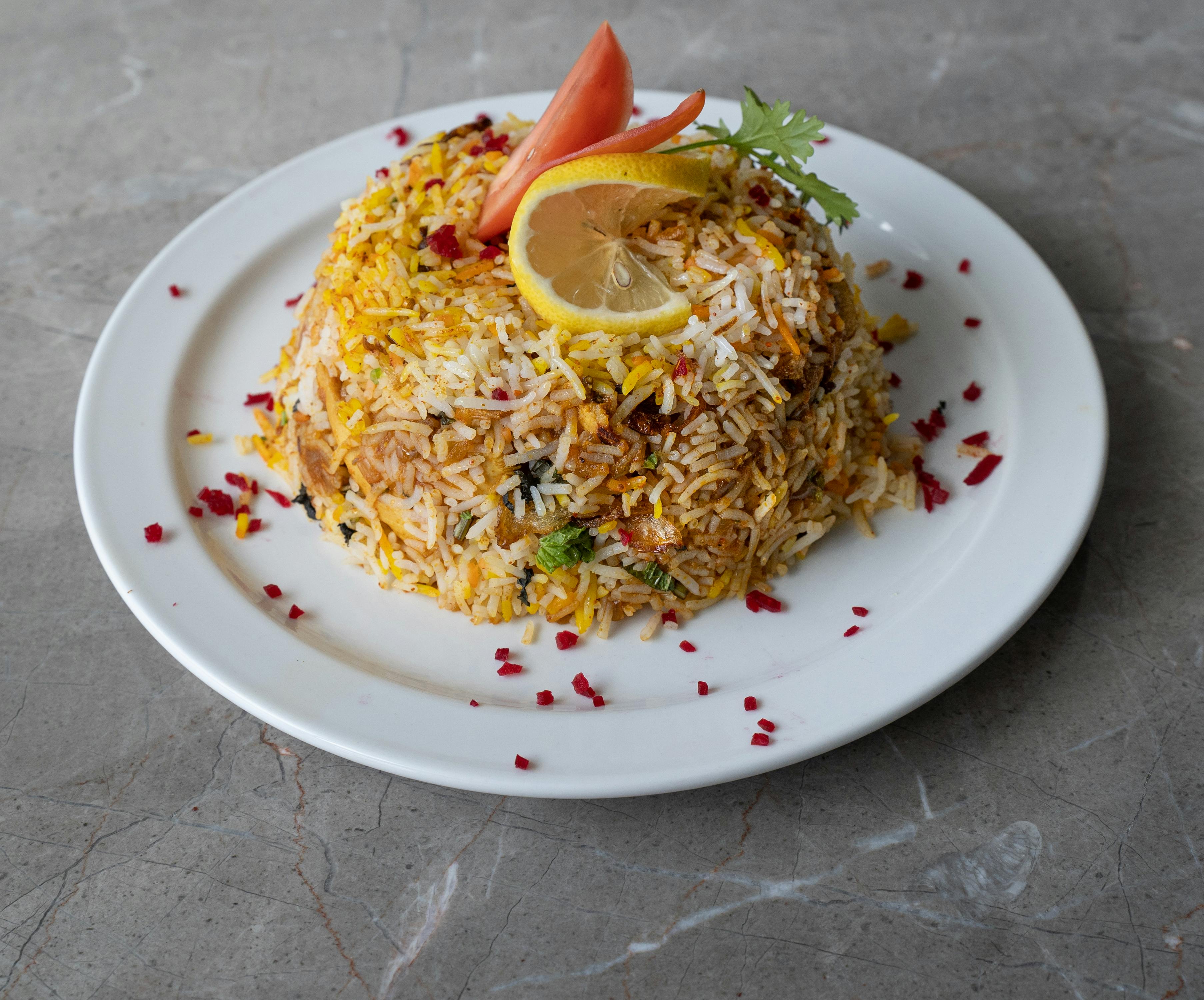
Photo: Alberta Studios / Pexels
The diets react (see scores below)
Common Ingredients
- basmati rice
- chicken
- yogurt
- fried onions
- saffron
- ginger
- garlic
- garam masala
- mint
- ghee
Specific recipes may vary.
Incompatible with 6 of 11 diets
Diet Ratings
Biryani is built on basmati rice, which is the dominant ingredient and a high-glycemic grain containing approximately 45g of net carbs per half-cup cooked serving. A standard biryani portion would contain well over 60-80g of net carbs from rice alone, instantly breaking ketosis. While several individual ingredients are keto-friendly — chicken, ghee, yogurt, saffron, ginger, garlic, and spices are all compatible — the foundational grain component makes the dish entirely incompatible with a ketogenic diet in its standard form. Fried onions also add moderate carbs. No reasonable portion reduction of a rice-based dish can make biryani fit within a 20-50g daily net carb budget while still constituting a meaningful meal.
Pakistani chicken biryani contains multiple animal-derived ingredients that are strictly excluded from a vegan diet. Chicken is poultry (direct animal flesh), yogurt is a dairy product (made from animal milk), and ghee is clarified butter (also dairy-derived). These three ingredients alone make this dish fundamentally incompatible with veganism. There is no ambiguity here — this dish is built around animal products at its core.
Biryani is fundamentally incompatible with the paleo diet. The dish is built on basmati rice, a grain that is strictly excluded from paleo. Yogurt is a dairy product, also excluded. Fried onions are typically cooked in seed oils (such as sunflower or vegetable oil), adding another non-paleo element. Ghee occupies a debated position within the paleo community but is a minor concern compared to the core violations. The remaining ingredients — chicken, saffron, ginger, garlic, garam masala, and mint — are paleo-compliant, but the foundational components of this dish (rice and yogurt) make it a clear avoid.
Biryani contains several Mediterranean-compatible elements—chicken (acceptable in moderation), yogurt (moderate dairy), aromatic herbs, and spices—but also presents notable concerns. Basmati rice is a refined/white grain rather than a whole grain, falling short of Mediterranean ideals. Ghee (clarified butter) replaces olive oil as the primary fat, which directly conflicts with the Mediterranean principle of extra virgin olive oil as the central fat source. Fried onions add extra saturated fat from the frying process. The dish is not inherently processed or high in added sugar, and chicken as the protein is acceptable a few times per week. Overall, it is a moderately acceptable dish that can fit into a Mediterranean-leaning diet occasionally, but the ghee-based cooking fat and refined rice are meaningful drawbacks.
Some Mediterranean diet practitioners, particularly those who emphasize flexibility and cultural inclusion, might note that aromatic rice dishes cooked with fermented dairy (yogurt) and lean poultry have parallels in Eastern Mediterranean and Middle Eastern culinary traditions (e.g., Lebanese or Persian rice dishes). From this perspective, substituting olive oil for ghee and using brown basmati would make it quite compatible, and even as-is it may be viewed as a reasonable occasional meal rather than something to avoid.
Biryani is fundamentally incompatible with the carnivore diet. The dish is built on basmati rice, a grain that is entirely excluded from carnivore. Beyond the rice, it contains multiple plant-derived ingredients: fried onions, saffron, ginger, garlic, garam masala (a blend of plant spices), and mint. Yogurt and ghee are dairy derivatives that sit in the caution/debated zone, and the chicken itself would be acceptable, but the overall dish is dominated by plant foods and grains. No amount of modification can make this dish carnivore-compliant without essentially deconstructing it entirely — you would be left with only the chicken, and possibly the ghee and yogurt.
Biryani contains two clearly excluded ingredients: basmati rice (a grain, explicitly excluded on Whole30) and yogurt (dairy, explicitly excluded). These are core, non-negotiable components of the dish — not optional garnishes. Even if all other ingredients are compliant (chicken, ghee, saffron, ginger, garlic, garam masala, mint, fried onions), the presence of rice and yogurt makes this dish firmly off-limits. Ghee is the one dairy exception on Whole30, and it is used here compliantly, but that does not offset the excluded ingredients.
Pakistani Biryani as traditionally prepared contains multiple high-FODMAP ingredients that make it unsuitable during the elimination phase. Garlic is one of the highest FODMAP foods tested by Monash (very high in fructans even in tiny amounts). Fried onions are a major fructan source and are used in significant quantity as a core flavoring component of biryani — they cannot be omitted without fundamentally changing the dish. Yogurt contains lactose and is typically used in a marinade quantity (100–200g) well exceeding the low-FODMAP threshold of ~42g. Garam masala blends often contain garlic and onion powder, adding further fructan load. While basmati rice, chicken, saffron, ginger, mint, and ghee are individually low-FODMAP, the combination of garlic, fried onions, and yogurt in standard biryani proportions makes this dish a high-FODMAP meal overall.
Pakistani chicken biryani contains several DASH-friendly components — basmati rice, lean chicken, yogurt, aromatic spices, and herbs like mint — but is significantly moderated by ghee (a saturated fat source DASH limits), fried onions (adding oil and potentially sodium), and the overall caloric density of the dish. Ghee is a clarified butter rich in saturated fat, which DASH explicitly restricts. Fried onions add additional oil and may introduce excess fat. Garam masala and other seasonings typically do not add meaningful sodium in home cooking, which is a relative positive. Basmati rice, while not a whole grain, has a lower glycemic index than many refined grains and is acceptable in moderation. The yogurt contributes calcium and probiotics aligned with DASH dairy goals, though the quantity used as a marinade is modest. The primary concerns are the ghee content and frying method for onions, which raise saturated fat intake. With portion control and modifications (replacing ghee with canola or olive oil, baking rather than frying onions, using low-fat yogurt), this dish can move closer to DASH compliance. As traditionally prepared, it falls into the caution category.
NIH DASH guidelines explicitly limit saturated fat and recommend against full-fat dairy fats like ghee, placing traditional biryani in the caution zone. However, some updated DASH-oriented clinicians note that the overall dietary pattern matters more than any single ingredient, and that moderate ghee use within an otherwise vegetable- and spice-rich dish — particularly when portion sizes are controlled — may not meaningfully undermine cardiovascular outcomes for non-hypertensive individuals following DASH broadly.
Biryani presents a mixed Zone Diet picture. The chicken provides lean protein that aligns well with Zone principles, and the spices (ginger, garlic, garam masala, saffron, mint) are polyphenol-rich and anti-inflammatory — a genuine Zone positive. However, the dish is fundamentally rice-forward, and basmati rice, while lower-GI than white rice, is still a grain that Zone treats as 'unfavorable' and limits to 0-1 servings. A typical biryani serving is heavily carb-skewed with the majority of carbohydrates coming from basmati rice, making it difficult to hit the 40/30/30 macro ratio without significant portion manipulation. Ghee (clarified butter) is a saturated fat, which early Zone strictly limits, though Sears' later writings are more permissive. Fried onions add additional fat of uncertain type. The yogurt is a positive element — a Zone-friendly protein and fat source. To fit Zone, one would need to radically reduce the rice portion, increase the chicken-to-rice ratio substantially, and be mindful of ghee quantity — essentially eating a very atypical biryani serving. The dish can be incorporated with careful portioning but requires significant adjustment from traditional serving sizes.
Some Zone practitioners note that basmati rice has a relatively lower glycemic index (~50-58) compared to other white rices, and Sears' later anti-inflammatory work emphasizes overall dietary patterns over rigid block counting. In this context, a small portion of biryani with extra chicken and a side salad could be made Zone-compatible. Additionally, the anti-inflammatory spice profile (ginger, garlic, saffron) aligns with Sears' polyphenol emphasis in later books like 'The Zone Diet' updates, which might elevate this dish's standing somewhat.
Pakistani chicken biryani presents a genuinely mixed anti-inflammatory profile. On the positive side, the dish is rich in potent anti-inflammatory spices: garlic and ginger are well-established anti-inflammatory agents, saffron contains the antioxidant crocin, and garam masala typically includes turmeric, cinnamon, cloves, and cardamom — all with meaningful anti-inflammatory properties. Mint adds additional polyphenols. Lean chicken (depending on cuts used) is an acceptable moderate protein under anti-inflammatory guidelines. Yogurt, used as a marinade, is a low-fat fermented dairy product that is permissible in moderation and may support gut health. However, several ingredients create concern. Ghee is clarified butter — a saturated fat that anti-inflammatory guidelines recommend limiting. Fried onions, while onions themselves are anti-inflammatory (quercetin), are typically deep-fried in oil of uncertain quality, adding oxidized fats and extra calories. Basmati rice is a refined or semi-refined carbohydrate with a relatively high glycemic index, though it is lower GI than most white rice varieties. The overall dish is not processed or additive-laden, and the spice density is genuinely beneficial — but the ghee content and fried onion preparation method, combined with white rice as the base, prevent this from being an 'approve.' Occasional consumption as part of a varied anti-inflammatory diet is reasonable; it should not be a daily staple.
Some anti-inflammatory practitioners (particularly those influenced by Ayurvedic and traditional food frameworks) would view ghee more favorably, noting its short-chain and medium-chain saturated fat profile and potential gut-protective properties — and would likely score this dish higher given its exceptional spice complexity. Conversely, stricter anti-inflammatory protocols focused on glycemic load and saturated fat would flag the white rice and ghee more strongly and push the score lower.
Pakistani chicken biryani offers a meaningful protein source from chicken, but the overall dish profile presents several concerns for GLP-1 patients. The basmati rice base is a refined carbohydrate with minimal fiber, making it low in nutrient density per calorie. Ghee and fried onions add significant saturated fat, which can worsen GLP-1 side effects including nausea, bloating, and reflux — particularly problematic given that GLP-1 medications already slow gastric emptying, meaning a heavy, fat-laden rice dish will sit in the stomach longer. Garam masala and ginger are generally well-tolerated, but the spice blend can trigger GI discomfort in sensitive patients. Yogurt in the marinade contributes modest protein and is a positive element. The dish is also portion-sensitive: a small serving centered on chicken with minimal rice is more acceptable than a standard restaurant portion, which tends to be rice-dominant. Fiber content is low. Overall, biryani is not an ideal GLP-1 meal but is not categorically off-limits if portion-controlled, prepared with minimal ghee, and eaten with a lean-protein-forward ratio of chicken to rice.
Some GLP-1-focused dietitians would rate biryani more leniently, noting that chicken-forward portions with basmati rice (which has a lower glycemic index than many other white rices) can fit into a calorie-reduced eating pattern, and that the spice profile is generally milder than dishes using chili-heavy preparations. Others take a stricter view, flagging the ghee and fried onion fat load as a meaningful nausea and reflux trigger that makes this dish poorly suited even in small amounts, particularly in the first weeks of GLP-1 therapy or after a dose increase.
*See how scores were generated at our methodology page.
Nutritional profile
Six traits that cut across every diet.
Fiber & Plants
How much whole-plant food and fiber it delivers.
Healthy Fats
The quality of its fats (unsaturated, omega-3).
Whole / Unprocessed
How close it is to its natural, unprocessed form.
Gut Gentle
How easy it is on digestion (low FODMAP, few irritants).
Low Glycemic
How little it spikes your blood sugar.
Protein Density
How much protein it packs per calorie.
Controversy Index
Higher controversy = more disagreement between diets.
Diet-Specific Tips
 Mediterranean — 5/10
View tips
- Chicken is an acceptable Mediterranean protein in moderate amounts
- Ghee replaces olive oil as the primary fat, adding saturated fat and deviating from core Mediterranean principles
- Basmati rice is a refined white grain, not a whole grain preferred by Mediterranean guidelines
- Yogurt is a compatible dairy ingredient in moderate amounts
- Fried onions contribute additional saturated fat from frying
- No added sugars or heavily processed ingredients
- Herbs and spices (mint, ginger, garlic, saffron) are Mediterranean-friendly
- Dish is culturally South Asian, not Mediterranean, but some ingredients overlap
 DASH — 4/10
View tips
- Ghee is high in saturated fat, which DASH explicitly limits
- Fried onions add excess oil and saturated/unsaturated fat
- Lean chicken is a DASH-approved protein source
- Yogurt contributes calcium aligned with DASH dairy goals
- Basmati rice is refined (not whole grain) but has a lower glycemic index than many alternatives
- Aromatic spices and herbs add flavor without meaningful sodium — DASH-positive
- Dish is calorie-dense and requires strict portion control on DASH
- Modifications (olive oil instead of ghee, baked onions, low-fat yogurt) would improve DASH compatibility significantly
 Zone — 4/10
View tips
- Basmati rice is the primary ingredient — high carbohydrate load that is difficult to balance into Zone ratios
- Chicken provides lean Zone-favorable protein
- Ghee is saturated fat, which Zone limits — especially in earlier Sears writings
- Yogurt is a Zone-friendly ingredient providing balanced protein and fat
- Rich anti-inflammatory spice profile (ginger, garlic, saffron, mint) aligns with Zone's polyphenol focus
- Traditional serving sizes are heavily rice-skewed, making 40/30/30 ratio very difficult to achieve without unconventional portioning
- Fried onions add additional carbohydrate and potentially unfavorable seed oils
 Anti-Inflammatory — 5/10
View tips
- Anti-inflammatory spice blend (ginger, garlic, saffron, garam masala with turmeric/cloves/cinnamon, mint) is a significant positive
- Ghee is a saturated fat — a 'limit' ingredient under anti-inflammatory guidelines
- Fried onions likely cooked in omega-6 rich or oxidized oil, adding pro-inflammatory potential
- Basmati rice is a refined carbohydrate with moderate-high glycemic index (lower than most white rice, but still a concern)
- Chicken is an acceptable lean protein under anti-inflammatory guidelines
- Yogurt as marinade provides fermented dairy — permissible in moderation
- No processed ingredients, trans fats, artificial additives, or high-fructose corn syrup
 GLP-1 Friendly — 5/10
View tips
- Chicken provides meaningful protein but protein-to-rice ratio in a standard serving is unfavorable
- Ghee and fried onions add saturated fat that may worsen nausea and bloating on GLP-1 medications
- Basmati rice is low in fiber and contributes empty carbohydrate calories
- Slowed gastric emptying makes this heavy, fat-containing dish harder to tolerate
- Spice blend is moderate — generally tolerable but individual sensitivity varies
- Yogurt marinade is a modest positive for protein and digestibility
- Highly portion-sensitive — small, chicken-dominant servings are significantly more acceptable
- Not suitable for early GLP-1 therapy or post-dose-increase periods when GI side effects peak