Photo: Golboo Maghooli / Pexels
Pakistani
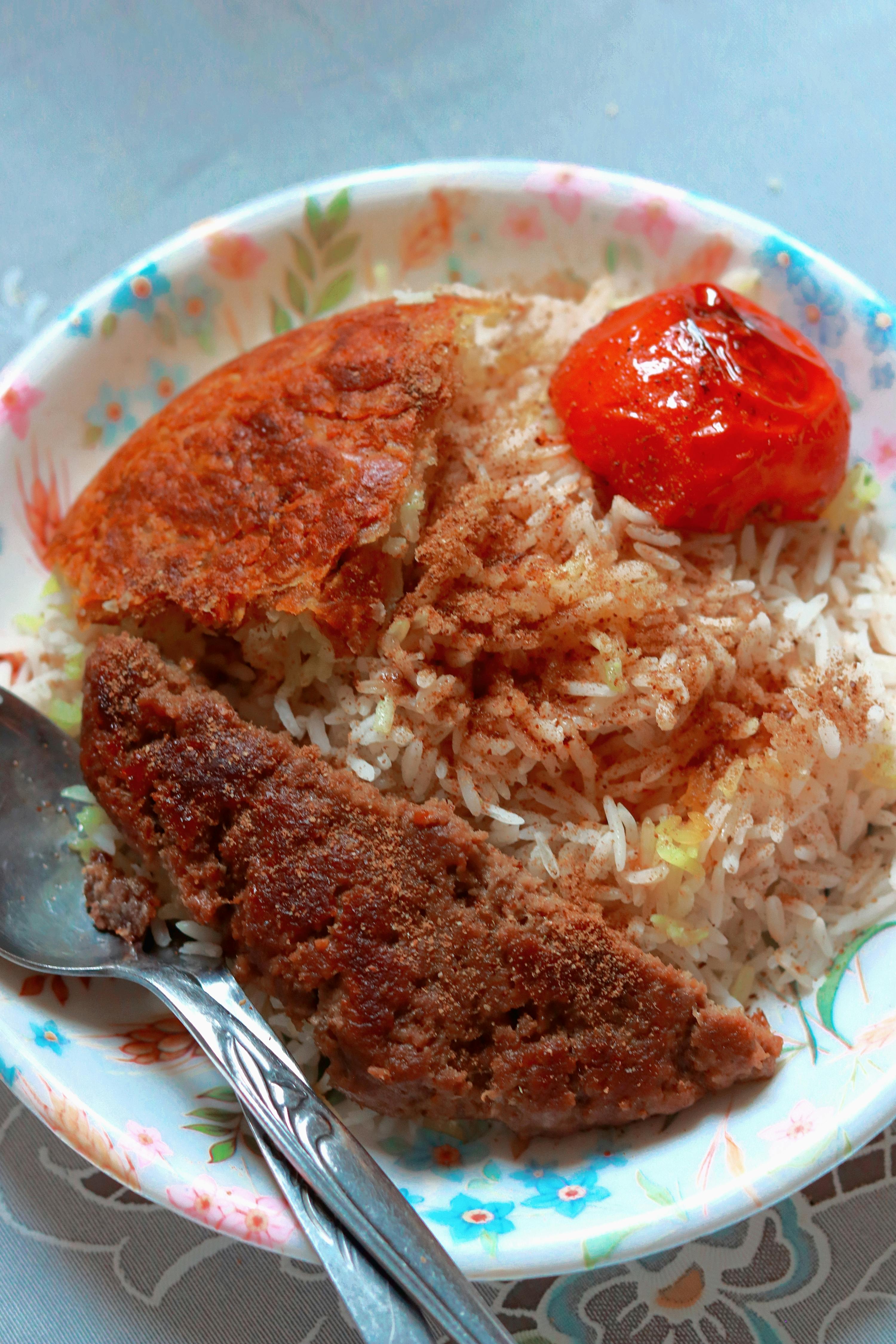
Chapli Kebab
The diets react (see scores below)
Common Ingredients
- ground beef
- tomato
- onion
- pomegranate seeds
- green chiles
- coriander seeds
- cornmeal
- egg
- cilantro
Specific recipes may vary.
Incompatible with 7 of 11 diets
Diet Ratings
Chapli Kebab is primarily ground beef, which is excellent for keto, but the traditional recipe includes two problematic ingredients: cornmeal (a grain-based binder with significant net carbs) and pomegranate seeds (which contain natural sugars). A standard serving of 2-3 kebabs could contain 8-15g net carbs depending on the amount of cornmeal and pomegranate seeds used. The tomato, onion, and green chiles add minor carb loads but are manageable in typical quantities. The high fat and protein content from ground beef is keto-favorable. With modifications — omitting or replacing cornmeal with almond flour or psyllium husk, and reducing or eliminating pomegranate seeds — this dish becomes highly keto-compatible. As traditionally prepared, it requires portion control and awareness.
Some lazy keto or flexible keto practitioners may approve this outright, arguing that the cornmeal quantity per patty is small and the overall carb load per serving fits within a 50g daily limit. Conversely, strict keto adherents would avoid it entirely due to the cornmeal (a grain) and pomegranate seeds, both of which are categorically excluded under zero-tolerance grain and sugar rules.
Chapli Kebab contains multiple animal products that are strictly excluded from a vegan diet. Ground beef is the primary protein and a direct animal flesh product. Egg is also listed as an ingredient, serving as a binder, and is an animal-derived product. These two ingredients alone make this dish entirely incompatible with vegan dietary standards. There is no ambiguity here — this is a meat-based dish by definition.
Chapli Kebab contains cornmeal, which is a grain and a clear paleo exclusion. Corn and corn-derived products (cornmeal, cornstarch, corn flour) are explicitly off-limits under all mainstream paleo frameworks. The remaining ingredients — ground beef, tomato, onion, pomegranate seeds, green chiles, coriander seeds, egg, and cilantro — are all paleo-approved on their own. However, the presence of cornmeal as a binding agent disqualifies the dish as traditionally prepared. To make this paleo-compatible, the cornmeal would need to be replaced with an approved binder such as almond flour or egg alone.
Chapli Kebab is centered on ground beef as its primary protein, which directly conflicts with Mediterranean diet principles that limit red meat to a few times per month. Ground beef is typically higher in saturated fat than leaner cuts, making it even less compatible. While several ingredients are Mediterranean-friendly — tomatoes, onion, green chiles, cilantro, egg, and pomegranate seeds are all plant-forward additions — they cannot offset the core problem: a beef-dominant dish consumed as a snack implies frequent or casual consumption, which is the opposite of the 'rare treat' framing the Mediterranean diet requires for red meat. Cornmeal is a refined grain with minimal fiber compared to whole grain alternatives. The dish is also typically pan-fried in oil (often non-olive), adding further concern. The vegetable and spice components are genuinely positive, but the foundational ingredient remains a red flag.
Chapli Kebab is fundamentally incompatible with the carnivore diet. While the base is ground beef and egg — both approved carnivore foods — the dish contains numerous plant-derived ingredients that are explicitly excluded: tomato, onion, pomegranate seeds, green chiles, coriander seeds, cornmeal, and cilantro. Cornmeal is a grain and a particularly problematic addition, functioning as a binder/filler. Pomegranate seeds are fruit. The remaining plant ingredients (tomato, onion, chiles, coriander, cilantro) are vegetables, spices, and herbs — all banned on carnivore. The animal-derived components (beef, egg) are overwhelmed by the volume and variety of plant ingredients, making this dish a clear avoid with high confidence.
Chapli Kebab contains cornmeal, which is a grain-based ingredient and explicitly excluded on the Whole30 program (corn and corn-derived products are prohibited). All other ingredients — ground beef, tomato, onion, pomegranate seeds, green chiles, coriander seeds, egg, and cilantro — are fully Whole30 compliant. However, the presence of cornmeal as a binding/coating agent disqualifies the dish as traditionally prepared. A compliant version could substitute cornmeal with a Whole30-approved alternative (e.g., no binder, or almond flour used minimally), but as the recipe stands with cornmeal, it must be avoided.
Chapli Kebab contains onion as a primary ingredient, which is high-FODMAP due to fructans and is problematic even in small amounts when cooked into a dish. Onion is one of the most significant FODMAP triggers and cannot be reduced to a safe serving size when incorporated throughout the kebab mixture. Additionally, pomegranate seeds are high-FODMAP at typical servings (Monash rates them as high-FODMAP beyond about 45g due to excess fructose and fructans), and they are a defining ingredient in chapli kebab. Green chiles in larger quantities may also contribute FODMAPs. The remaining ingredients — ground beef, egg, cornmeal (in small amounts), coriander seeds, tomato (in limited quantities), and cilantro — are individually low-FODMAP, but the combination of onion and pomegranate seeds makes this dish unsuitable for the elimination phase without significant reformulation.
Chapli Kebab is centered on ground beef, which DASH guidelines explicitly categorize as red meat to be limited due to its saturated fat and cholesterol content. Traditional chapli kebabs are pan-fried or shallow-fried in oil (often beef tallow or ghee), dramatically increasing total and saturated fat content. Ground beef, especially at the typical 70-80% lean ratios used in this dish, carries significant saturated fat that directly conflicts with DASH's core directives to limit saturated fat and red meat. While several ingredients are DASH-friendly — tomatoes, onions, pomegranate seeds, green chiles, coriander, cilantro, and egg all align well with DASH principles — they cannot offset the primary protein's impact. The frying method adds additional fat load. DASH guidelines recommend replacing red meat with lean poultry, fish, beans, or legumes. Sodium content depends on added salt, but the structural issue is the red meat and frying fat, not sodium alone.
Chapli Kebab presents a mixed Zone Diet profile. The primary protein — ground beef — is the main concern, as it is typically made with higher-fat content (70-80% lean), which introduces significant saturated fat and makes it harder to keep fat in Zone-favorable ranges. The Zone ideally calls for lean beef (90%+ lean) to stay within the 30% fat calorie target. On the positive side, the dish contains several Zone-favorable ingredients: tomato and onion are low-glycemic vegetables, pomegranate seeds provide polyphenols aligned with Sears' anti-inflammatory emphasis, green chiles add flavor without glycemic burden, and egg functions as a lean protein binder. Coriander and cilantro are negligible macronutrient contributors but are polyphenol-positive. Cornmeal is the carbohydrate binder and represents a moderately high-glycemic grain, making it an 'unfavorable' Zone carb — its quantity in kebabs is small (as a binder), which limits its glycemic impact, but it is not ideal. Overall, with lean ground beef substituted and portion controlled (~85-100g patty as a snack), Chapli Kebab can fit Zone blocks, but the traditional preparation with fattier beef and the cornmeal binder keeps it in 'caution' territory. Fat source is primarily saturated rather than monounsaturated, which conflicts with Zone's anti-inflammatory fat preferences.
Some Zone practitioners and later Sears writings (Toxic Fat, The Zone Diet cookbook era) take a more permissive view of saturated fat when it comes alongside high polyphenol loads — pomegranate seeds and colorful vegetables here provide meaningful anti-inflammatory offset. If prepared with 90%+ lean beef, this kebab could be argued as a moderate approve (6-7) since the vegetal ingredients are genuinely Zone-favorable and the cornmeal quantity as a binder is small. The snack category also means portion size is naturally smaller, making ratio correction easier.
Chapli Kebab presents a genuinely mixed anti-inflammatory profile. The primary protein — ground beef — is the central concern. Red meat is in the 'limit' category under anti-inflammatory principles, particularly due to saturated fat content and arachidonic acid, which is a precursor to pro-inflammatory eicosanoids. Ground beef can vary considerably in fat content, but is typically higher in saturated fat than lean poultry or fish. However, the dish also contains a meaningful array of anti-inflammatory supporting ingredients: tomato provides lycopene and antioxidants; onion and cilantro offer quercetin and polyphenols; green chiles contain capsaicin, a well-documented anti-inflammatory compound; coriander seeds are modestly anti-inflammatory; pomegranate seeds are notably high in punicalagins and anthocyanins, which have strong anti-inflammatory research behind them. Egg provides choline and selenium. Cornmeal is a whole grain used in a relatively small binding quantity. The dish is traditionally pan-fried, often in oil — if cooked in a seed oil with high omega-6 content (e.g., sunflower or corn oil), that would worsen its profile; if cooked in olive oil or even ghee in modest amounts, the impact is more neutral. Overall, the beneficial spices and produce partially offset the pro-inflammatory load of red meat, but ground beef as the dominant ingredient keeps this firmly in 'caution' territory rather than 'approve.'
Some anti-inflammatory practitioners, particularly those following ancestral or carnivore-adjacent frameworks, argue that grass-fed beef's CLA content and omega-3 ratio make it a defensible protein in an anti-inflammatory diet — Dr. Cate Shanahan and Weston A. Price-aligned thinkers would view this kebab more favorably, especially given its whole-food ingredient list. Conversely, strict anti-inflammatory and plant-forward practitioners (aligned with Dr. Weil's pyramid and the IF Rating system) would emphasize that red meat should be genuinely limited — not a regular snack protein — and would flag the typical high-fat ground beef used in this dish.
Chapli kebab is a pan-fried or shallow-fried ground beef patty, which creates several concerns for GLP-1 patients. Ground beef is a moderate-to-high saturated fat protein source (typically 15-20g fat per 100g for standard ground beef), and the traditional preparation involves frying in oil or tallow, further increasing fat content and making it harder to digest given slowed gastric emptying. High fat per serving is a known trigger for GLP-1 side effects including nausea, bloating, and reflux. On the positive side, it does deliver meaningful protein per serving (roughly 15-20g per patty), and the inclusion of tomato, onion, pomegranate seeds, and fresh herbs adds micronutrients and modest fiber. Green chiles may worsen nausea or reflux in sensitive GLP-1 patients. Cornmeal contributes minimal fiber. As a snack category item, portion size is somewhat manageable. The dish is not an ideal GLP-1 food due to its fatty red meat base and fried preparation, but it is not a zero-protein empty-calorie food either — hence caution rather than avoid.
Some GLP-1-focused dietitians allow lean red meat in moderation as a protein source, arguing that complete amino acid profiles and iron content justify inclusion when portion-controlled; others flag all fried ground beef preparations as too high in saturated fat and gastric burden to recommend, particularly in the early months of GLP-1 therapy when GI side effects are most pronounced.
*See how scores were generated at our methodology page.
Nutritional profile
Six traits that cut across every diet.
Fiber & Plants
How much whole-plant food and fiber it delivers.
Healthy Fats
The quality of its fats (unsaturated, omega-3).
Whole / Unprocessed
How close it is to its natural, unprocessed form.
Gut Gentle
How easy it is on digestion (low FODMAP, few irritants).
Low Glycemic
How little it spikes your blood sugar.
Protein Density
How much protein it packs per calorie.
Controversy Index
Higher controversy = more disagreement between diets.
Diet-Specific Tips
 Keto — 5/10
View tips
- Cornmeal is a grain-based binder adding meaningful net carbs and is typically excluded on strict keto
- Pomegranate seeds contain natural sugars, adding to carb load
- Ground beef provides excellent fat and protein profile aligned with keto macros
- Tomato and onion are borderline but manageable in small quantities
- Dish can be made keto-friendly with almond flour substitution and omission of pomegranate seeds
- Standard serving carb content is portion-sensitive and could disrupt ketosis if multiple kebabs consumed
 Zone — 5/10
View tips
- Ground beef is typically high in saturated fat — Zone prefers lean protein sources; 90%+ lean beef would significantly improve Zone compatibility
- Cornmeal binder is a moderately high-glycemic, 'unfavorable' Zone carbohydrate, though quantity used as a binder is small
- Tomato, onion, and green chiles are low-glycemic Zone-favorable vegetables
- Pomegranate seeds provide polyphenols aligned with Sears' anti-inflammatory framework, a genuine positive
- Egg contributes lean protein, a Zone-favorable addition
- Fat profile is primarily saturated (from beef) rather than monounsaturated, conflicting with Zone's preferred fat type
- As a snack, portion size is smaller, making it easier to control block ratios, but a complementary carb source would still be needed to balance the meal
 Anti-Inflammatory — 4/10
View tips
- Ground beef is a red meat flagged for limitation under anti-inflammatory guidelines due to saturated fat and arachidonic acid
- Pomegranate seeds are a standout anti-inflammatory ingredient — rich in punicalagins and anthocyanins
- Green chiles provide capsaicin, a well-researched anti-inflammatory phytochemical
- Coriander seeds, onion, cilantro, and tomato all contribute polyphenols and antioxidants
- Cooking fat not specified — traditional pan-frying in high-omega-6 seed oil would worsen the profile
- Egg is a neutral-to-moderate ingredient in this context
- Cornmeal in small binding quantities is relatively neutral as a whole grain
 GLP-1 Friendly — 4/10
View tips
- Ground beef is high in saturated fat, worsening GLP-1 GI side effects
- Traditional preparation is pan-fried or shallow-fried, adding additional fat load
- Green chiles may trigger nausea or reflux in GLP-1 patients
- Provides meaningful protein (~15-20g per patty) which is a positive
- Tomato, onion, pomegranate seeds, and herbs add micronutrients but fiber contribution is modest
- Not a nutrient-dense-per-calorie food compared to leaner protein options
- Portion control is feasible as a snack-sized item