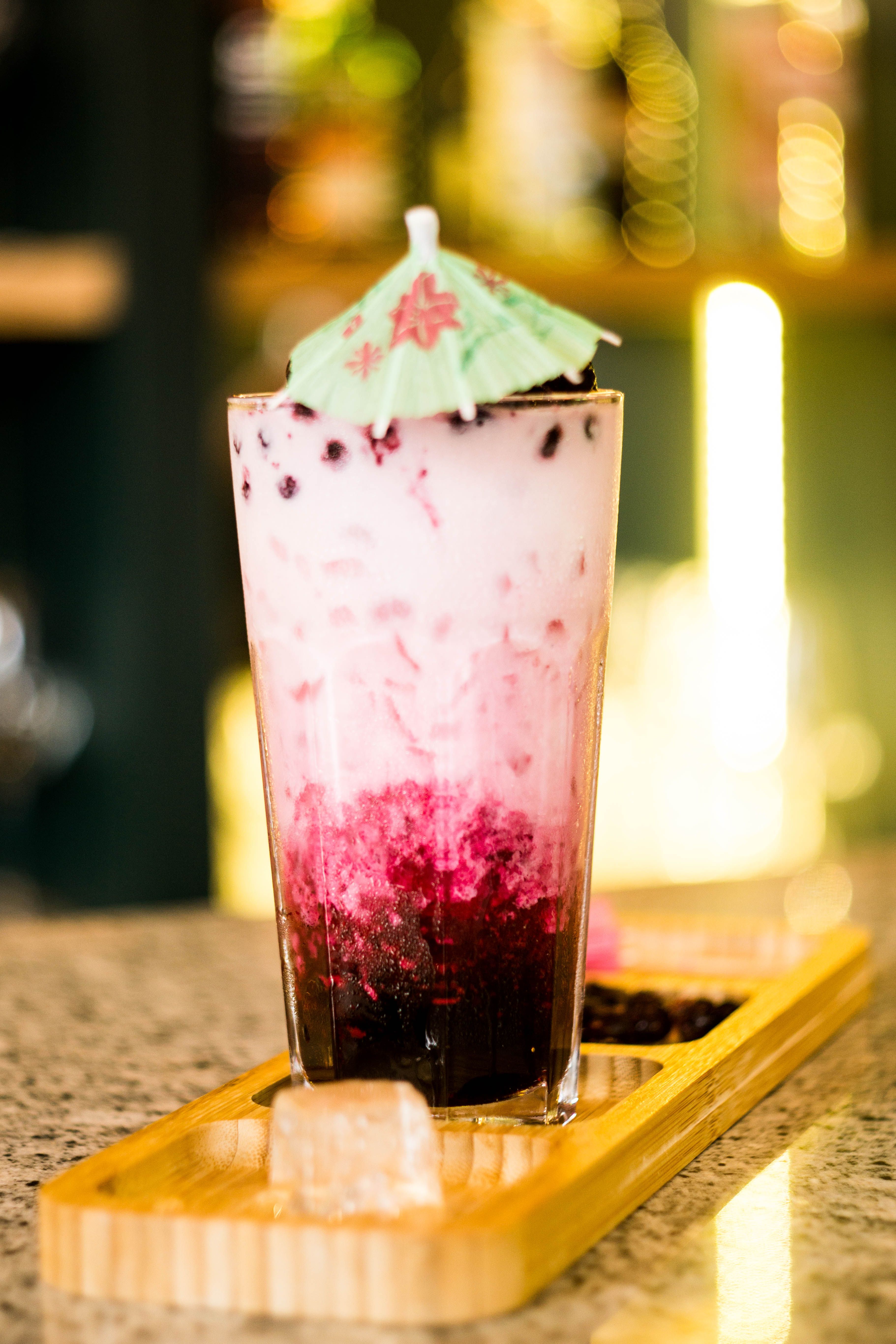
Photo: George Shervashidze / Pexels
The diets react (see scores below)
Common Ingredients
- vermicelli
- basil seeds
- rose syrup
- milk
- ice cream
- sugar
- pistachios
- jelly
Specific recipes may vary.
Incompatible with 11 of 11 diets
Diet Ratings
Falooda is one of the most keto-incompatible dishes possible, containing multiple high-carb ingredients stacked together. Vermicelli is a refined wheat/rice noodle with extremely high net carbs. Rose syrup is essentially pure sugar dissolved in water. Added sugar is present explicitly. Ice cream contributes additional sugar and carbs. Jelly (typically sugar-based gelatin dessert) adds more sugar. Together, a single serving of falooda likely delivers well over 80-100g of net carbs, which is 2-5x the entire daily keto limit. Even the milk contributes lactose sugars. There is absolutely no pathway to making traditional falooda keto-compatible without replacing virtually every core ingredient.
Traditional Falooda contains multiple animal-derived ingredients that disqualify it from a vegan diet. Milk is a dairy product, and ice cream is typically made with dairy milk and cream. These two ingredients alone are sufficient to classify this dish as non-vegan. The jelly component may also contain gelatin (an animal-derived ingredient from collagen), though plant-based jellies using agar-agar do exist. The remaining ingredients — vermicelli, basil seeds (sabja), rose syrup, sugar, and pistachios — are all plant-based and vegan-compliant. A fully vegan version of Falooda is achievable by substituting plant-based milk (oat, almond, coconut), dairy-free ice cream, and agar-based jelly, but the traditional preparation as listed is not vegan.
Falooda is almost entirely incompatible with the Paleolithic diet. Vermicelli is a wheat-based grain product — strictly excluded. Milk and ice cream are dairy — excluded. Rose syrup and added sugar are refined sweeteners — excluded. Jelly (gelatin-based dessert) typically contains refined sugar and artificial additives — excluded. The dish is a heavily processed, grain-and-dairy-laden dessert with virtually no paleo-compliant foundation. The only ingredients with any paleo relevance are basil seeds (generally accepted) and pistachios (approved nut), but these are minor components in an otherwise entirely non-paleo dish.
Falooda is a heavily sweetened dessert drink combining refined vermicelli, rose syrup (high added sugar), ice cream, sugar, and jelly — nearly all of which contradict core Mediterranean diet principles. The dish is high in added sugars, refined grains, and saturated fat from ice cream, with minimal nutritional redeeming qualities from a Mediterranean perspective. While basil seeds and pistachios are plant-based positives, they are minor components overwhelmed by the sugar and processed ingredients. Milk is acceptable in moderation on a Mediterranean diet, but here it serves as a vehicle for an otherwise non-compliant dish.
Falooda is almost entirely plant-based and heavily processed, making it completely incompatible with the carnivore diet. The dish is built on vermicelli (wheat-based noodles), basil seeds (plant seeds), rose syrup (plant-derived sugar syrup), sugar, pistachios (nuts), and jelly (typically plant-based gelatin or agar). The only potentially animal-derived ingredients are milk and ice cream, but these are minor components swimming in a sea of plant foods, sugar, and additives. Even the most liberal 'animal-based' carnivore practitioners would exclude this dish due to the grain-based noodles, plant seeds, refined sugar, and processed syrup. This is essentially a dessert drink built entirely around foods that are explicitly excluded from any tier of the carnivore diet.
Falooda contains multiple excluded ingredients that make it entirely incompatible with the Whole30 program. Vermicelli is a grain-based pasta (wheat), which is excluded. Rose syrup contains added sugar. Milk is dairy. Ice cream is dairy and contains added sugar. Sugar itself is explicitly excluded. Jelly typically contains added sugar. This dish is essentially a dessert drink built almost entirely on excluded ingredients — grains, dairy, and added sugar — with no path to a compliant version that would resemble the original dish.
Falooda is a highly problematic dish for the low-FODMAP elimination phase due to multiple high-FODMAP ingredients. Milk is high in lactose and is used in significant quantities as the base liquid. Ice cream also contains lactose and is typically high-FODMAP at standard serving sizes. Rose syrup is typically made with sugar and rose water but many commercial versions contain high-fructose corn syrup or excess fructose. Vermicelli in Pakistani falooda is traditionally wheat-based, making it high in fructans — unless specifically rice vermicelli is used. Pistachios are high-FODMAP above ~10 nuts (about 15g), and falooda is typically garnished with a notable quantity. Basil seeds (sabja/tukmaria) have limited Monash testing but are related to chia seeds and appear to be low-FODMAP at small amounts. Jelly (gelatin-based) is generally low-FODMAP. The combination of lactose from milk and ice cream, likely fructans from wheat vermicelli, and potential excess fructose from rose syrup makes this dish very difficult to consume safely during elimination. Even with lactose-free dairy substitutions, the wheat vermicelli and pistachio load remain problematic.
Monash University has not specifically tested falooda as a composite dish, and the FODMAP burden of individual ingredients varies by brand and preparation — for instance, rice vermicelli instead of wheat, lactose-free milk, and a controlled pistachio portion could theoretically reduce the FODMAP load, but clinical FODMAP practitioners would generally advise avoiding this dish entirely during the strict elimination phase due to the stacking of multiple high-FODMAP components.
Falooda is a dessert-style beverage loaded with added sugars from rose syrup, sugar, and ice cream — three distinct sources of refined sugar in a single serving. Ice cream contributes saturated fat and additional sugar, both of which DASH guidelines explicitly limit. The refined vermicelli (typically white/refined starch) adds little nutritional value. While basil seeds offer modest fiber and pistachios provide beneficial healthy fats and magnesium, these positives are overwhelmed by the high sugar and saturated fat content. Milk is DASH-friendly in principle, but here it is paired with full-fat ice cream rather than serving as a standalone low-fat dairy source. Rose syrup and added sugar together can easily push a single serving to 40–60g of added sugar, far exceeding the DASH limit of under 5 servings of sweets per week (and each serving defined as just 1 tbsp sugar). Jelly (typically sweetened gelatin) adds further sugar. This dish is essentially a dessert-confection and does not align with DASH dietary principles.
Falooda is a dessert drink composed almost entirely of high-glycemic, sugar-heavy ingredients: rose syrup (concentrated sugar), ice cream, sugar, and white vermicelli (refined starch). There is virtually no lean protein present, negligible favorable fat (the pistachios are a minor component), and all carbohydrate sources are high-glycemic or added sugar. This dish would cause a dramatic insulin spike — the exact hormonal response Dr. Sears' Zone Diet is designed to prevent. Even with careful portioning, there is no practical way to balance this into a Zone-compliant meal because the ratio is overwhelmingly carbohydrate-and-sugar-dominant with minimal protein or monounsaturated fat to offset it. Basil seeds provide minor fiber benefit, but this does not meaningfully alter the glycemic impact. Falooda falls into the rare category of foods that are genuinely incompatible with Zone principles regardless of portion size, because the macronutrient profile cannot be corrected without fundamentally changing the dish.
Falooda is a dessert drink that presents a heavily pro-inflammatory profile across multiple ingredients. Rose syrup and added sugar represent a significant refined/added sugar load, which is one of the clearest drivers of inflammatory markers (CRP, IL-6) in nutrition research. Ice cream contributes saturated fat, added sugar, and full-fat dairy — all flagged as 'limit' or 'avoid' under anti-inflammatory principles. Jelly (gelatin-based confection) typically adds more sugar and artificial colorings/flavorings. Refined vermicelli (generally wheat-based starch with minimal fiber) is a refined carbohydrate with a high glycemic impact. Milk is a neutral-to-moderate dairy component and the least problematic ingredient here. Basil seeds (sabja) are a genuine bright spot — they contain alpha-linolenic acid (ALA, an omega-3), fiber, and have anti-inflammatory properties comparable to chia seeds. Pistachios also contribute healthy fats, polyphenols, and antioxidants. However, these two beneficial ingredients are minor components overwhelmed by the dessert's dominant profile: high added sugar, refined carbohydrates, saturated fat, and processed elements. As a sweet snack/dessert, Falooda is essentially a sugar-forward indulgence with negligible anti-inflammatory benefit on net.
Falooda is a high-sugar, low-protein dessert drink that is poorly suited for GLP-1 patients on almost every relevant criterion. The dominant ingredients — rose syrup, sugar, ice cream, and sweetened jelly — deliver a large sugar load with negligible protein and minimal fiber. Milk contributes a small amount of protein, but not enough to meaningfully offset the nutritional profile. The ice cream and milk together add saturated fat. While basil seeds (sabja) do provide a small fiber benefit and are actually hydration-friendly, they cannot redeem the overall composition. The dish is calorie-dense in a small volume primarily from sugar and fat, representing the definition of empty calories for a GLP-1 patient eating significantly less overall. The high sugar content risks spiking blood glucose rapidly, and the fat from ice cream combined with slowed gastric emptying increases risk of nausea, bloating, and reflux. Pistachios offer a minor redeeming nutrient contribution but are a garnish-level presence. This dish checks nearly every box on the avoid list: high sugar, high saturated fat, no meaningful protein, and significant GI side-effect risk.
*See how scores were generated at our methodology page.
Nutritional profile
Six traits that cut across every diet.
Fiber & Plants
How much whole-plant food and fiber it delivers.
Healthy Fats
The quality of its fats (unsaturated, omega-3).
Whole / Unprocessed
How close it is to its natural, unprocessed form.
Gut Gentle
How easy it is on digestion (low FODMAP, few irritants).
Low Glycemic
How little it spikes your blood sugar.
Protein Density
How much protein it packs per calorie.
Controversy Index
Higher controversy = more disagreement between diets.