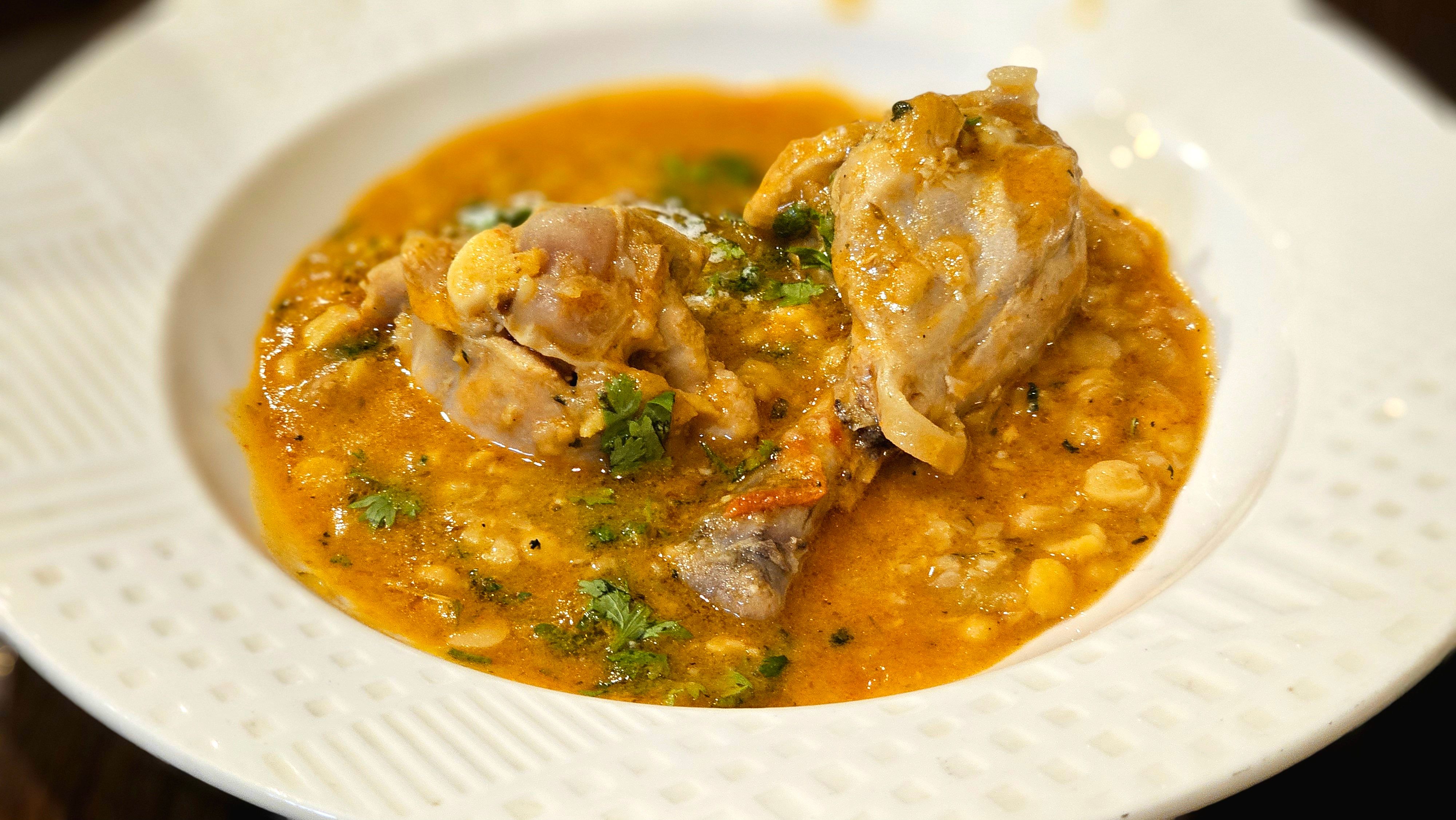
Photo: Muhammad Khawar Nazir / Pexels
The diets react (see scores below)
Common Ingredients
- beef
- wheat
- barley
- lentils
- ginger
- garlic
- garam masala
- fried onions
- ghee
- cilantro
Specific recipes may vary.
Incompatible with 7 of 11 diets
Diet Ratings
Haleem is fundamentally incompatible with a ketogenic diet. The dish's core ingredients — wheat, barley, and lentils — are all high-carbohydrate foods that would collectively deliver well over 50g of net carbs per serving. Wheat and barley are grains explicitly excluded from keto, and lentils are legumes with significant net carb content (roughly 12-16g net carbs per half cup cooked). While the beef and ghee are keto-friendly, and the spices are fine in small amounts, the grain and legume base cannot be removed without fundamentally changing the dish. Haleem is defined by its slow-cooked, porridge-like texture achieved by blending these starches together, making a keto-adapted version a completely different dish.
Haleem contains beef and ghee, both of which are animal-derived products. Beef is animal flesh, directly excluded by all vegan definitions. Ghee is clarified butter, a dairy product also strictly excluded. These are not trace or incidental ingredients — they are primary, defining components of the dish. No meaningful debate exists within the vegan community about the status of beef or ghee.
Haleem is fundamentally incompatible with the Paleo diet. The dish contains multiple core non-Paleo ingredients: wheat (a grain, explicitly excluded), barley (a grain, explicitly excluded), and lentils (a legume, explicitly excluded). These are not minor or trace ingredients — they form the structural base of the dish and constitute the majority of its volume. Wheat and barley contain gluten and anti-nutrients (phytates, lectins) that Paleo explicitly rejects, while lentils are a legume category that is categorically off-limits. The beef, ginger, garlic, garam masala, cilantro, and ghee are individually Paleo-compatible or debated, but they cannot redeem a dish whose foundational ingredients are three major Paleo exclusions. Fried onions may also introduce seed oils depending on preparation. There is no meaningful Paleo modification possible for Haleem without completely deconstructing and rebuilding it — at that point it would no longer be Haleem.
Haleem is a slow-cooked stew combining beef, wheat, barley, and lentils. While barley, lentils, and aromatic spices are genuinely Mediterranean-compatible ingredients, the dish is anchored by beef as the primary protein — a red meat that Mediterranean diet guidelines restrict to a few times per month. Compounding this, ghee (clarified butter) replaces olive oil as the primary fat, introducing saturated fat in a form not consistent with Mediterranean principles. Fried onions add further processed/high-heat fat content. The legume and whole grain components (lentils, barley) are positives, but they do not offset the dual concerns of red meat as the primary protein and ghee as the cooking fat. This dish as prepared contradicts core Mediterranean diet principles.
Some Mediterranean diet interpreters might view Haleem more charitably given its substantial legume and whole grain content — lentils and barley are Mediterranean staples, and the dish's low-and-slow preparation maximizes nutrient retention. If beef were reduced to a flavoring rather than the primary protein, and ghee substituted with olive oil, a modified version could approach 'caution' territory.
Haleem is fundamentally incompatible with the carnivore diet. While it does contain beef and ghee (animal-derived ingredients), the dish is overwhelmingly plant-based in its composition. Wheat and barley are grains — strictly prohibited on carnivore. Lentils are legumes — strictly prohibited. Ginger, garlic, garam masala, fried onions, and cilantro are all plant-derived ingredients. The dish is essentially a grain-and-legume porridge with beef added, making it a avoid regardless of the animal protein present. No version of carnivore — not even the more lenient 'animal-based' approach advocated by Paul Saladino — would permit wheat, barley, or lentils.
Haleem contains multiple excluded ingredients that make it clearly non-compliant with Whole30. Wheat and barley are grains, both explicitly excluded from the program. Lentils are legumes, also explicitly excluded. These are foundational ingredients of haleem — not optional additions — so there is no way to make a traditional haleem Whole30-compliant without fundamentally changing the dish. The remaining ingredients (beef, ginger, garlic, garam masala, ghee, cilantro) are all compliant, but the core grain and legume components render the dish off-limits.
Haleem is a dish that contains multiple high-FODMAP ingredients simultaneously, making it unsuitable during the elimination phase of the low-FODMAP diet. Wheat is high in fructans at any standard serving size. Barley is also high in fructans. Lentils contain significant amounts of GOS (galacto-oligosaccharides), a major FODMAP category. Garlic is one of the highest-FODMAP foods known, rich in fructans. Fried onions are also extremely high in fructans. These five ingredients alone would each individually trigger a verdict of 'avoid,' and this dish combines all of them as core structural components — not optional garnishes. Ginger, ghee, cilantro, and beef are low-FODMAP, and garam masala in small amounts is generally acceptable, but they cannot offset the multiple high-FODMAP staples that define this dish. There is no realistic portion size at which a standard serving of haleem would be low-FODMAP.
Haleem presents a mixed nutritional profile from a DASH perspective. On the positive side, it contains whole grains (wheat, barley), lentils, and legumes — all of which are core DASH foods rich in fiber, potassium, and plant protein. Ginger and garlic are DASH-compatible aromatics. However, several ingredients raise concerns: beef is a red meat that DASH recommends limiting (DASH favors lean poultry and fish over red meat), ghee is a clarified butter high in saturated fat and cholesterol which DASH explicitly discourages, and fried onions add additional fat from the frying process. Traditional Pakistani Haleem preparations also tend to be higher in sodium through seasoning and cooking practices. Garam masala itself is fine, but the overall dish as commonly prepared combines red meat, ghee, and fried elements that conflict with DASH principles. The lentil-grain base is a genuine DASH strength, but the preparation method and protein choice pull the score down. A modified version using lean chicken or turkey, swapping ghee for a small amount of canola oil, eliminating fried onions, and controlling sodium would align much better with DASH guidelines.
NIH DASH guidelines explicitly limit red meat and saturated fats like ghee, which would push this dish toward 'avoid.' However, updated clinical interpretations note that Haleem's dominant macronutrient base — lentils, barley, and wheat — is nutritionally aligned with DASH's emphasis on fiber, plant protein, and whole grains, and some DASH practitioners would allow a small, portion-controlled serving as an acceptable mixed dish if the ghee quantity is modest.
Haleem is a slow-cooked porridge-like dish combining beef, grains (wheat, barley), and lentils with aromatic spices. From a Zone perspective, it has a mixed macro profile. The protein source (beef) is moderate — leaner cuts are Zone-acceptable but beef is not the preferred lean protein like chicken or fish. Lentils and barley are favorable lower-glycemic carbs that Sears generally approves of. However, wheat adds a higher-glycemic carbohydrate load, and the dish is heavily grain-forward, making the carbohydrate portion relatively high-glycemic and dense compared to Zone-preferred vegetables. The fat profile is concerning: ghee (clarified butter) is a saturated fat source that early Zone methodology strictly limits, and fried onions add additional fat of uncertain quality. The dish is typically served in portions where the carb-to-protein ratio is skewed heavily toward carbs (grains dominate over beef). Ginger, garlic, and garam masala are actually Zone-positive due to polyphenol content. With careful portioning — a smaller serving paired with additional lean protein and leafy vegetables on the side — Haleem can fit into a Zone meal, but its natural serving ratios make it difficult to hit the 40/30/30 target without adjustment. The ghee and fried onions push the saturated fat content above Zone recommendations.
Later Zone writings (e.g., The Zone Diet's anti-inflammatory emphasis) acknowledge that traditional whole-food dishes like Haleem — with lentils, barley, and aromatic polyphenol-rich spices — carry meaningful anti-inflammatory benefits that partially offset the saturated fat from ghee. Some Zone practitioners following Sears' updated anti-inflammatory framework would rate lentil-and-grain combos more favorably than the original 'favorable/unfavorable' carb list suggests, particularly when wheat content is modest and the dish is eaten in smaller portions.
Haleem is a nutritionally complex dish with a genuinely mixed anti-inflammatory profile. On the positive side, it features several strongly anti-inflammatory ingredients: ginger and garlic are well-established anti-inflammatory spices with research supporting their ability to reduce CRP and NF-κB signaling; lentils provide fiber, polyphenols, and plant protein that support gut health and reduce inflammatory markers; barley is a whole grain rich in beta-glucan with documented anti-inflammatory effects; and garam masala typically contains cumin, coriander, cardamom, cinnamon, and cloves — all of which carry anti-inflammatory phytochemicals. However, the dish has two meaningful concerns. First, beef is a red meat high in saturated fat and arachidonic acid, which anti-inflammatory guidelines consistently recommend limiting. Second, ghee is clarified butter — a saturated fat that anti-inflammatory protocols flag as pro-inflammatory when used regularly. The fried onions, depending on preparation, may also be cooked in inflammatory oils. The wheat component is a whole grain in traditional haleem but still contributes gluten, which is relevant for sensitive individuals. Balancing out: the lentil-to-beef ratio in haleem is typically favorable, the spice profile is genuinely impressive from an anti-inflammatory standpoint, and the slow-cooking method may enhance bioavailability of spice compounds. Overall, this is a dish with real anti-inflammatory strengths undermined by red meat and ghee — a classic 'caution' scenario best consumed occasionally rather than regularly.
A more permissive reading of anti-inflammatory principles (aligned with Dr. Weil's emphasis on overall dietary patterns over individual foods) would note that the dominant ingredients by volume are lentils, barley, and wheat — all anti-inflammatory — and that the spice density is exceptional, potentially outweighing the modest amount of beef and ghee in a single serving. Conversely, stricter anti-inflammatory and autoimmune protocols (AIP, functional medicine practitioners like Dr. Tom O'Bryan) would flag both the gluten-containing grains and the red meat more strongly, potentially pushing this toward 'avoid' for inflammatory conditions.
Haleem is a slow-cooked, blended dish with a genuinely mixed nutritional profile for GLP-1 patients. On the positive side, it delivers meaningful protein from beef and lentils, substantial fiber from wheat, barley, and lentils combined, and its slow-cooked, soft, porridge-like texture makes it easy to digest — a real advantage given GLP-1-related slowed gastric emptying. The spice blend (garam masala, ginger, garlic) is generally mild and well-tolerated. However, the primary protein is beef, which carries higher saturated fat than lean alternatives like chicken breast or fish. The bigger concern is ghee and fried onions: ghee is a concentrated saturated fat, and fried onions add additional oil — both of which can worsen GLP-1 side effects including nausea, bloating, and reflux. The fat load per serving is highly preparation-dependent; restaurant or home versions made with generous ghee could push this dish firmly toward avoid territory, while a lighter home preparation with ghee minimized would bring it closer to approve. Rated as a typical traditional preparation.
Some GLP-1-focused dietitians would view haleem more favorably, citing its high fiber-protein combination, soft texture, and small-portion satiety as genuinely well-suited to GLP-1 patients — particularly those struggling to meet fiber and protein targets simultaneously. Others would flag the beef-plus-ghee saturated fat load as a meaningful concern given the heightened sensitivity to dietary fat among GLP-1 users, and would recommend substituting chicken or turkey and reducing or eliminating the ghee before approving it.
*See how scores were generated at our methodology page.
Nutritional profile
Six traits that cut across every diet.
Fiber & Plants
How much whole-plant food and fiber it delivers.
Healthy Fats
The quality of its fats (unsaturated, omega-3).
Whole / Unprocessed
How close it is to its natural, unprocessed form.
Gut Gentle
How easy it is on digestion (low FODMAP, few irritants).
Low Glycemic
How little it spikes your blood sugar.
Protein Density
How much protein it packs per calorie.
Controversy Index
Higher controversy = more disagreement between diets.
Diet-Specific Tips
 DASH — 4/10
View tips
- Red meat (beef) is a DASH-limited food; DASH recommends lean poultry or fish as primary protein
- Ghee is high in saturated fat, directly conflicting with DASH fat guidelines
- Fried onions add excess fat from preparation
- Lentils and barley are core DASH foods — high in fiber, potassium, and plant protein
- Whole wheat content supports DASH whole grain goals
- Sodium content likely elevated in traditional preparation
- Portion control critical — dish has beneficial components but problematic preparation elements
- Modification potential: substituting chicken, using canola oil instead of ghee, and skipping fried onions would significantly improve DASH compatibility
 Zone — 5/10
View tips
- High grain content (wheat + barley) skews carbohydrate load higher-glycemic and grain-heavy compared to Zone-preferred vegetables
- Lentils and barley are relatively low-glycemic and Zone-acceptable carbohydrate sources
- Beef is an acceptable but not ideal Zone protein; fatty cuts add saturated fat
- Ghee (clarified butter) is a saturated fat — limited in Zone methodology, especially early Sears protocols
- Fried onions add additional saturated or omega-6 fat depending on frying oil
- Ginger, garlic, and garam masala are polyphenol-rich and anti-inflammatory — Zone-positive
- Natural serving portions are carb-heavy relative to protein, making 40/30/30 ratio difficult without adjustment
- Can be portioned into a Zone meal if served in small quantity alongside additional lean protein and non-starchy vegetables
 Anti-Inflammatory — 5/10
View tips
- Beef (red meat): pro-inflammatory — saturated fat and arachidonic acid; anti-inflammatory guidelines recommend limiting
- Ghee: saturated fat source, flagged as pro-inflammatory by most anti-inflammatory frameworks
- Lentils: strongly anti-inflammatory — fiber, polyphenols, plant protein
- Barley: whole grain with beta-glucan, associated with reduced inflammatory markers
- Ginger and garlic: well-researched anti-inflammatory spices (gingerols, allicin, alliin)
- Garam masala blend: contains cinnamon, cloves, cardamom, cumin — all carry anti-inflammatory phytochemicals
- Wheat: whole grain fiber is beneficial, but gluten is a concern for autoimmune or sensitive individuals
- Fried onions: quercetin content is anti-inflammatory, but frying method matters depending on oil used
- Cilantro: mild anti-inflammatory herb with antioxidant properties
 GLP-1 Friendly — 5/10
View tips
- Beef as primary protein adds saturated fat; lean protein alternatives would significantly improve the rating
- Ghee is a concentrated saturated fat that can worsen nausea, bloating, and reflux on GLP-1 medications
- Fried onions add additional fat and may contribute to GI discomfort
- Lentils, barley, and wheat provide meaningful combined fiber supporting the 25-30g daily target
- Soft, blended texture is easy to digest — a genuine advantage for slowed gastric emptying
- Protein contribution from beef and lentils combined is solid but overall protein density per calorie is moderated by carbohydrate and fat content
- Ginger in the spice blend may actively help with GLP-1-related nausea
- Fat content is highly preparation-dependent — ghee quantity is the primary variable driving score up or down