Photo: Sabhyata Sahu / Pexels
Pakistani
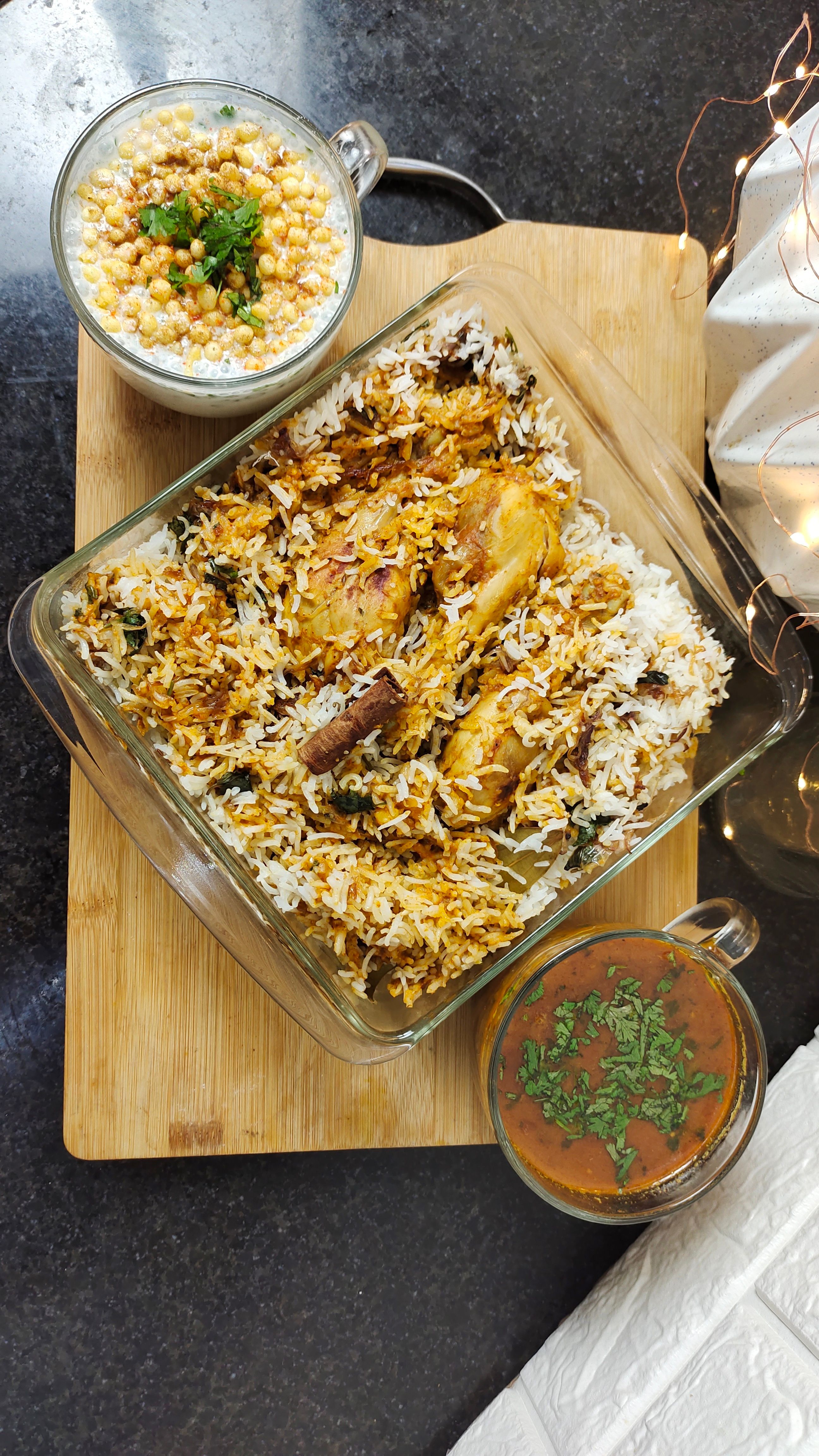
Sindhi Biryani
The diets react (see scores below)
Common Ingredients
- basmati rice
- chicken
- potatoes
- dried plums
- yogurt
- fried onions
- green chiles
- garam masala
- mint
- tomato
Specific recipes may vary.
Incompatible with 6 of 11 diets
Diet Ratings
Sindhi Biryani is fundamentally incompatible with a ketogenic diet. The dish is built on basmati rice, which is a high-carb grain delivering roughly 45g of net carbs per cooked cup — a single serving would blow past the entire daily keto carb limit. Potatoes add another significant source of starch, and dried plums contribute natural sugars. Combined, the carbohydrate load from rice and potatoes alone makes this dish impossible to fit into ketosis at any reasonable serving size. The chicken, yogurt, and spices are keto-friendly components, but they are overwhelmed by the dominant high-carb ingredients that form the structural base of the dish.
Sindhi Biryani contains two direct animal products: chicken (poultry) and yogurt (dairy). Both are unambiguously excluded from a vegan diet. There is no version of this dish as described that could be considered vegan without substituting or removing these core ingredients.
Sindhi Biryani is fundamentally incompatible with the Paleo diet. The dish's base is basmati rice, a grain that is explicitly excluded under all mainstream paleo frameworks. Yogurt is a dairy product, also prohibited. Fried onions are typically prepared in seed oils (often canola or vegetable oil), adding another non-paleo element. The remaining ingredients — chicken, potatoes, dried plums, green chiles, garam masala, mint, and tomato — are individually paleo-compatible or at least debated (potatoes), but the core structural components of rice, yogurt, and fried onions in seed oil make this dish a clear avoid. There is no meaningful way to call this dish paleo-compliant without fundamentally reconstructing it into something unrecognizable as Sindhi Biryani.
Sindhi Biryani contains several Mediterranean-compatible elements — chicken (acceptable in moderation), yogurt (moderate dairy), tomato, mint, green chiles, and spices — but is built around white basmati rice, which is a refined grain not emphasized in Mediterranean guidelines. The fried onions suggest deep-frying in unspecified oil (likely not olive oil), and the dish is rich and calorie-dense by nature. Potatoes and dried plums add some plant variety, which is a positive. Overall, the dish is not antithetical to Mediterranean principles but doesn't align closely with them either: the white rice base and frying method are the primary concerns, while the chicken and vegetable/herb components are acceptable in moderation.
Some Mediterranean diet scholars note that white rice has long been consumed in parts of Southern Europe (e.g., Spain's arroz dishes, Italian risotto traditions) and that the broader dietary pattern matters more than any single ingredient. Under this more permissive interpretation, a chicken-and-vegetable rice dish with yogurt and herbs could be viewed as broadly compatible, especially if prepared with healthful fats.
Sindhi Biryani is fundamentally incompatible with the carnivore diet. The dish is built around basmati rice, a grain that is entirely excluded from carnivore eating. Beyond the rice, nearly every other ingredient is plant-derived or plant-based: potatoes, dried plums, fried onions, green chiles, garam masala (a spice blend), mint, and tomato. The yogurt is the only dairy component that some carnivore practitioners might consider, and the chicken is the sole animal protein. However, with the vast majority of ingredients being plant foods, grains, and spices, this dish is essentially the opposite of a carnivore meal. There is no version or modification of Sindhi Biryani that could be made carnivore-compatible without completely deconstructing and reimagining the dish — at which point it would no longer be biryani at all.
Sindhi Biryani contains basmati rice, which is a grain and explicitly excluded on the Whole30 program. Additionally, yogurt is a dairy product, which is also excluded. These are two clear, non-negotiable violations of Whole30 rules. The remaining ingredients — chicken, potatoes, dried plums, fried onions, green chiles, garam masala, mint, and tomato — are generally Whole30-compatible (with label-checking on fried onions for seed oils and garam masala for anti-compliant additives), but the rice and yogurt make this dish impossible to consume on Whole30 as traditionally prepared.
Sindhi Biryani contains multiple high-FODMAP ingredients that make it unsuitable during the elimination phase. Fried onions are a major fructan source and a primary flavoring component — they cannot be simply removed or reduced to a safe threshold in this dish. Yogurt contributes lactose (high-FODMAP unless lactose-free). Dried plums (prunes) are high in polyols (sorbitol), and even small amounts are problematic. Garlic is almost certainly present in the garam masala blend or as a standard base ingredient in this dish even if not explicitly listed. While basmati rice, chicken, potatoes (in moderate portions), green chiles, mint, tomatoes, and garam masala spices themselves are generally low-FODMAP, the combination of fried onions, yogurt, and dried plums makes this dish clearly high-FODMAP at any realistic serving size.
Sindhi Biryani contains several DASH-friendly components — basmati rice (whole grain if brown, refined if white), lean chicken, tomatoes, yogurt, mint, green chiles, and dried plums (a source of potassium and fiber). However, the dish as traditionally prepared raises several DASH concerns. Fried onions add significant saturated fat and calories. The overall sodium load from garam masala, salt used in layering, and other spices typically elevates the dish well above DASH-recommended levels per serving. Potatoes add starchy carbohydrates with minimal fiber in this context. Yogurt is a positive DASH element if low-fat, but full-fat yogurt is commonly used. Portion size is critical — a modest serving (1 cup) of a home-prepared, lower-sodium version can fit within DASH guidelines, but restaurant or traditional preparations are often high in sodium, fat, and serving size. The dish is not inherently DASH-hostile but requires significant modification to qualify as DASH-appropriate.
NIH DASH guidelines would flag the fried onions, potential high sodium from spice mixes, and refined white basmati rice as concerns requiring moderation or substitution. However, updated clinical interpretations note that home-prepared versions with low-fat yogurt, minimal added salt, air-fried or caramelized onions, and lean chicken can align reasonably well with DASH principles, especially given the potassium-rich ingredients like tomatoes, dried plums, and potatoes.
Sindhi Biryani presents significant Zone Diet challenges primarily due to its carbohydrate profile and structural composition. Basmati rice, while lower-glycemic than white rice, is still a high-starch grain carbohydrate that Zone classifies as 'unfavorable.' More problematically, potatoes are explicitly called out by Dr. Sears as a high-glycemic carbohydrate to avoid. The combination of rice AND potatoes in one dish creates a double high-glycemic carb load that makes achieving the 40/30/30 ratio extremely difficult without radical portion reduction. On the positive side, chicken is a lean, favorable Zone protein. Yogurt adds both protein and some fat in a balanced way. Dried plums (prunes) are high in sugar and fiber — unfavorable but not catastrophic in small amounts. Fried onions add some saturated/omega-6 fat depending on frying oil. The spice profile (garam masala, mint, green chiles, tomato) is actually Zone-positive due to polyphenol content. The dish is salvageable only by dramatically reducing the rice portion, removing or minimizing potatoes, loading up the chicken, and ensuring the fat source is olive oil or similar. In a restaurant or traditional serving, the rice-to-chicken ratio will almost certainly be Zone-imbalanced, with carbohydrates dominating well beyond 40% of calories.
Sindhi Biryani is a mixed profile from an anti-inflammatory standpoint. On the positive side, it contains several genuinely beneficial components: green chiles and garam masala spices (cumin, coriander, cardamom, cloves, cinnamon) offer anti-inflammatory polyphenols and bioactive compounds; mint provides antioxidants and rosmarinic acid; tomatoes supply lycopene; yogurt contributes probiotics that support gut health and may reduce systemic inflammation; dried plums (prunes) are rich in antioxidants and fiber. Chicken is a lean protein and a neutral-to-favorable choice in anti-inflammatory frameworks. The concern areas are significant, however: basmati rice, while lower-glycemic than most white rices, is still a refined carbohydrate with modest fiber, and a biryani typically uses it in large quantities. Fried onions are prepared in oil — if seed/vegetable oils with high omega-6 content are used for frying (common in South Asian cooking), this introduces a meaningful inflammatory load. Potatoes are a neutral starchy vegetable. The dish overall is calorie-dense, carbohydrate-heavy, and likely high in refined starch and fried-food content depending on preparation. The spice profile is one of the most anti-inflammatory elements of this dish. As consumed in practice, the rice-to-vegetable/protein ratio typically skews this meal toward the 'caution' category rather than a clear approval.
Some anti-inflammatory practitioners following Autoimmune Protocol (AIP) guidelines would flag the nightshade ingredients (tomatoes, green chiles, potatoes) as potentially pro-inflammatory for individuals with autoimmune or gut-permeability issues due to lectins and solanine — though mainstream anti-inflammatory nutrition including Dr. Weil's framework considers these vegetables beneficial for the general population due to their antioxidant content. Additionally, the fried onion preparation is highly preparation-dependent: if made with extra virgin olive oil or ghee in moderation, the inflammatory concern decreases significantly compared to seed oil frying.
Sindhi Biryani presents a mixed nutritional profile for GLP-1 patients. The chicken provides meaningful protein, and yogurt adds both protein and probiotics. However, several factors reduce its suitability: fried onions contribute saturated fat and are a common GLP-1 GI trigger; the dish is rice-heavy relative to protein, meaning a standard serving may deliver more refined carbohydrates than protein per portion; potatoes add additional starchy carbohydrate with limited protein or fiber payoff; and the combination of garam masala, green chiles, and dried plums (tamarind-adjacent acidity) creates a rich, spiced, slightly acidic profile that can worsen nausea, reflux, or gastric discomfort in GLP-1 patients whose gastric emptying is already slowed. The dish is not fried overall and does contain some beneficial ingredients (yogurt, mint, tomato), but its typical caloric density per protein gram and spice intensity make it a caution rather than an approve. A modified version — extra chicken, less rice, fewer chiles, skipping the fried onions — could score higher.
Some GLP-1-focused dietitians would rate a chicken biryani more favorably, noting that the chicken and yogurt together can deliver 20–25g protein in a moderate serving and that spice tolerance varies widely among patients — many tolerate garam masala without GI distress. Others flag the rice-to-protein ratio and fried onion fat content as meaningful drawbacks that make it a poor fit for patients with limited appetite who need every bite to be nutrient-dense.
*See how scores were generated at our methodology page.
Nutritional profile
Six traits that cut across every diet.
Fiber & Plants
How much whole-plant food and fiber it delivers.
Healthy Fats
The quality of its fats (unsaturated, omega-3).
Whole / Unprocessed
How close it is to its natural, unprocessed form.
Gut Gentle
How easy it is on digestion (low FODMAP, few irritants).
Low Glycemic
How little it spikes your blood sugar.
Protein Density
How much protein it packs per calorie.
Controversy Index
Higher controversy = more disagreement between diets.
Diet-Specific Tips
 Mediterranean — 5/10
View tips
- White basmati rice is a refined grain, less preferred than whole grains in Mediterranean guidelines
- Chicken is an acceptable moderate protein source
- Yogurt aligns with moderate dairy consumption
- Tomato, mint, green chiles, and spices are Mediterranean-friendly ingredients
- Fried onions imply cooking oil that is likely not extra virgin olive oil
- Potatoes and dried plums add plant diversity
- Dish is rich and calorie-dense, not a typical Mediterranean preparation
 DASH — 5/10
View tips
- Fried onions add saturated fat — a DASH-limited ingredient
- Sodium content is highly variable but often elevated in traditional preparations
- Chicken is a lean protein aligned with DASH guidelines
- Yogurt is DASH-friendly if low-fat; full-fat yogurt is commonly used in this dish
- Dried plums and tomatoes contribute beneficial potassium and fiber
- White basmati rice is refined; DASH prefers whole grains
- Garam masala and cumulative salt from layering can significantly raise sodium per serving
- Portion control is essential — large servings common in biryani preparations
 Zone — 4/10
View tips
- Basmati rice is an unfavorable Zone carbohydrate — high starch, though lower GI than white rice
- Potatoes are explicitly listed by Dr. Sears as a high-glycemic carbohydrate to avoid
- Double starch (rice + potatoes) makes 40/30/30 ratio nearly impossible at typical serving sizes
- Chicken is a favorable lean Zone protein source
- Yogurt provides balanced protein and fat, Zone-friendly
- Dried plums add sugar load; fried onions may introduce omega-6-heavy oils
- Anti-inflammatory spices and tomato add polyphenol value
- Dish can only approach Zone compliance with heavily modified portions and potato removal
 Anti-Inflammatory — 5/10
View tips
- Anti-inflammatory spice blend (garam masala: cinnamon, cloves, cardamom, cumin) is a strong positive
- Green chiles provide capsaicin, a known anti-inflammatory compound
- Tomatoes and dried plums contribute antioxidants (lycopene, polyphenols)
- Yogurt offers probiotics supporting gut health and reduced inflammation
- Chicken is a lean, anti-inflammatory-friendly protein source
- Mint adds antioxidants and rosmarinic acid
- Basmati rice is a refined carbohydrate — consumed in large quantity in biryani, raising glycemic load
- Fried onions may introduce high omega-6 seed oils depending on preparation method
- Overall dish is calorie-dense and carbohydrate-heavy, limiting its anti-inflammatory ceiling
 GLP-1 Friendly — 5/10
View tips
- Chicken provides protein but rice-heavy ratio dilutes protein density per serving
- Fried onions add saturated fat and are a common GLP-1 GI irritant
- Green chiles and spice blend may worsen nausea or reflux in GLP-1 patients
- Yogurt is a GLP-1-friendly ingredient adding protein and digestive support
- Potatoes add caloric bulk without meaningful protein or fiber benefit
- Dried plums add acidity that may aggravate reflux in sensitive patients
- Overall dish is not fried but is calorie-dense relative to protein content
- Spice and fat combination is a known GLP-1 side effect risk factor