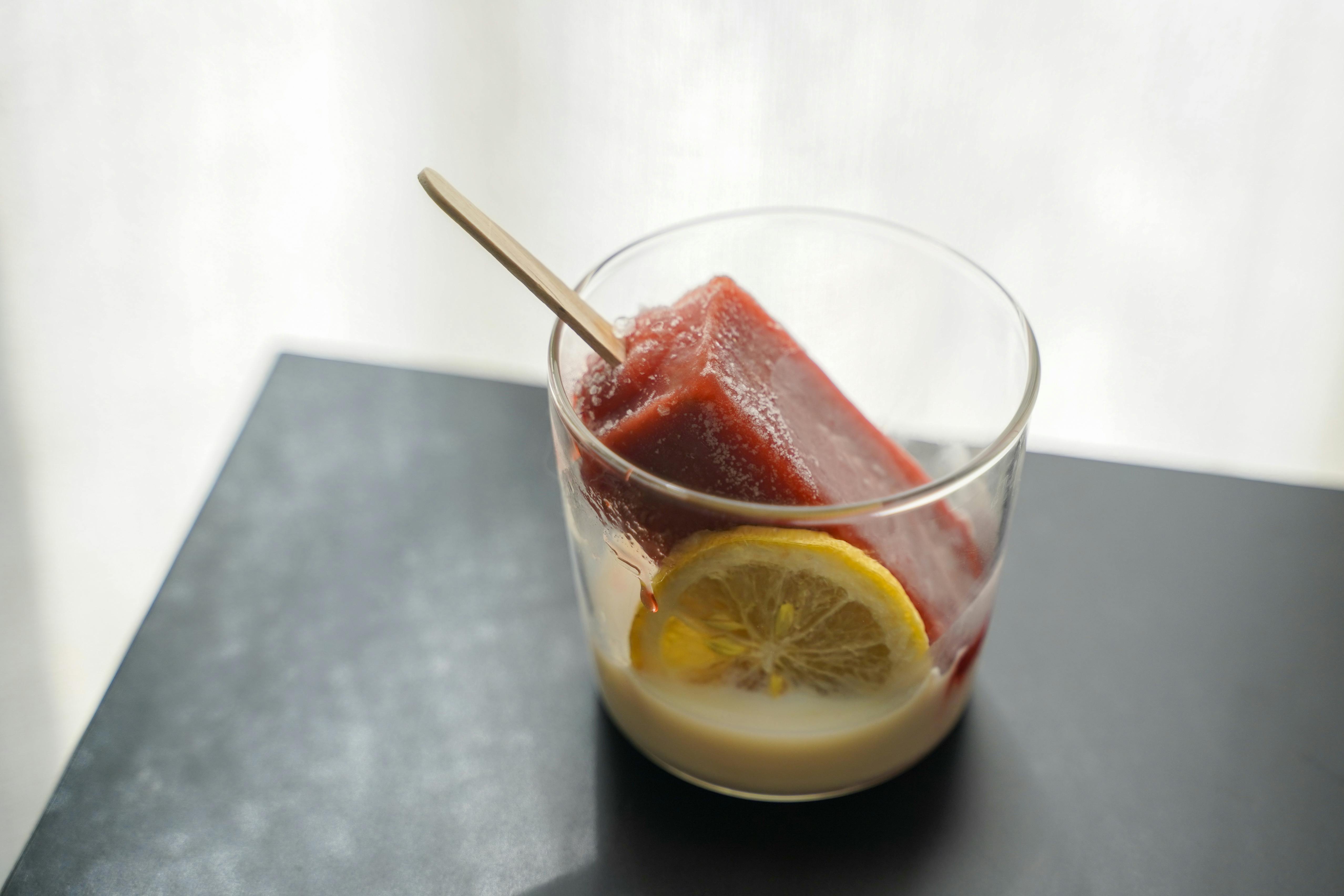
Photo: Cats Coming / Pexels
The diets react (see scores below)
Common Ingredients
- fruit juice or puree
- sugar
- water
- lime juice
- salt
Specific recipes may vary.
Incompatible with 7 of 11 diets
Diet Ratings
A paleta is a Mexican frozen fruit bar made primarily from fruit juice or puree, added sugar, and water. This combination is extremely high in net carbs and added sugars, making it fundamentally incompatible with ketosis. A standard paleta contains roughly 20-35g of net carbs per serving, primarily from sucrose and natural fruit sugars, which alone can meet or exceed an entire day's keto carb allowance. There is no meaningful fat content, no protein, and the explicit addition of sugar is a zero-tolerance violation of ketogenic principles.
This paleta (Mexican ice pop) is made entirely from plant-based ingredients: fruit juice or puree, sugar, water, lime juice, and salt. All components are fully vegan with no animal-derived ingredients. This represents the agua fresca-style fruit paleta, as opposed to a cream-based paleta de leche which would contain dairy. The ingredients listed are whole-food adjacent — real fruit, minimal processing — making this a high-scoring approval. Sugar is noted as an ingredient; while some refined white sugars are processed with bone char, this is a manufacturing concern rather than an ingredient concern and does not affect the vegan status of the food itself.
Paleta contains multiple non-paleo ingredients that disqualify it. Refined sugar is explicitly excluded from the paleo diet as a processed food with no place in a hunter-gatherer diet. Added salt is also excluded under paleo rules. While fruit juice or puree and lime juice are paleo-compatible in isolation, the combination with refined sugar and added salt makes this a processed frozen treat that conflicts with core paleo principles. Even if sugar were substituted with a natural sweetener, this would still be a manufactured product rather than a whole food.
Paletas are fruit-based frozen bars that contain added sugar as a primary ingredient, which contradicts Mediterranean diet principles of minimizing added sugars. While the fruit juice or puree component aligns with the diet's emphasis on whole fruits, the added sugar content pushes this into 'avoid' territory under strict interpretation. The lime juice and salt are negligible concerns, but sugar-sweetened frozen treats are not a Mediterranean diet staple.
Some Mediterranean diet practitioners argue that a fruit-forward frozen treat with modest added sugar is acceptable as an occasional indulgence, especially compared to processed candy or pastries. Traditional Mediterranean cultures do consume fruit-based sweets and sorbets in moderation, and a paleta made with high fruit content and minimal sugar could approach acceptability as a rare treat.
Paleta is a Mexican frozen treat made entirely from plant-derived ingredients: fruit juice or puree, sugar, water, lime juice, and salt. There are zero animal products present. Every single ingredient violates carnivore diet principles — fruit juice/puree is plant-derived, sugar is a processed plant carbohydrate, and lime juice is plant-derived. This is essentially a fruit popsicle, which is incompatible with any tier of the carnivore diet, including the most liberal 'animal-based' approaches. Even Paul Saladino, who controversially includes honey and fruit in his 'animal-based' protocol, would not classify a sugar-added, fruit-juice-based frozen snack as a core part of his framework. There is no meaningful animal-derived component to evaluate.
Paletas contain added sugar, which is explicitly excluded on the Whole30 program. Sugar is listed as a primary ingredient alongside fruit juice/puree. Even though fruit juice itself is Whole30-compatible, the addition of refined sugar disqualifies this frozen treat entirely. There is no ambiguity here — added sugar (real or artificial) is a core exclusion.
A paleta is a Mexican fruit ice pop made from fruit juice or puree, sugar, water, lime juice, and salt. The FODMAP status depends critically on which fruit is used. Low-FODMAP fruits like strawberry, watermelon (small serve), pineapple, or citrus would make this safe during elimination. However, high-FODMAP fruits like mango, peach, apple, or mixed tropical fruits (common paleta flavors) contain excess fructose or polyols and would make the paleta a high-FODMAP food. Since the ingredient is listed generically as 'fruit juice or puree,' a blanket approval is not possible. The base ingredients (sugar, water, lime juice, salt) are all low-FODMAP, so the fruit choice is the determining factor. A caution rating reflects this fruit-dependent variability. Lime juice and salt are both clearly low-FODMAP. Sugar (sucrose) is low-FODMAP at normal serving amounts.
Monash University has tested individual fruits with clear guidance, but paletas as a composite product are not independently tested. Clinical FODMAP practitioners would advise patients to identify the specific fruit used — strawberry or citrus paletas are generally considered safe, while mango, apple, or stone-fruit paletas should be avoided during elimination phase.
A paleta (Mexican fruit popsicle) is made primarily from fruit juice or puree, water, lime juice, sugar, and a pinch of salt. The fruit base provides some natural vitamins, potassium, and beneficial phytonutrients aligned with DASH principles. However, added sugar is a concern — DASH limits sweets and added sugars, and commercial or homemade paletas can contain significant amounts of sugar (often 15–25g per serving), pushing them into the 'treat' category. The small amount of salt is minimal and unlikely to be a meaningful sodium concern. DASH does not explicitly prohibit fruit-based frozen treats, but the added sugar content means this is acceptable only in moderation and as an occasional snack rather than a regular dietary staple. A paleta made with whole fruit puree and minimal added sugar would score closer to 6–7; a heavily sweetened version scores lower.
NIH DASH guidelines restrict added sugars and sweets to ≤5 servings per week, placing paletas firmly in the 'occasional treat' category. However, some DASH-oriented clinicians note that fruit-based paletas — especially those made predominantly with whole fruit puree and minimal added sugar — can serve as a preferable substitute for higher-fat, higher-calorie desserts like ice cream, and may support fruit intake goals when portion-controlled.
A paleta is essentially a fruit ice pop — a frozen treat made primarily from fruit juice or puree combined with added sugar and water. From a Zone Diet perspective, this is a highly problematic snack. It contains zero protein, zero fat, and is composed almost entirely of carbohydrates — primarily simple sugars (added sugar plus the natural sugars in fruit juice/puree). This completely destroys the 40/30/30 macronutrient ratio that is the foundation of the Zone Diet. The added sugar is explicitly categorized as an 'unfavorable' carbohydrate that spikes insulin and promotes inflammation, which is the opposite of the Zone's anti-inflammatory goals. Fruit juice (lacking fiber) also has a much higher glycemic impact than whole fruit, making it a poor carbohydrate choice even before the added sugar is considered. While theoretically one could eat a tiny portion and pair it with large quantities of protein and fat to approximate Zone ratios, the food itself has no protein or fat building blocks, making it structurally incompatible with Zone meal architecture. As a snack, the Zone requires a mini-meal with all three macronutrients in roughly the same ratio — a paleta fails this entirely.
A paleta (Mexican fruit ice pop) is made primarily from fruit juice or puree, sugar, water, lime juice, and salt. The fruit component provides genuine anti-inflammatory benefit — real fruit contains antioxidants, polyphenols, vitamin C, and flavonoids that support an anti-inflammatory profile. Lime juice adds vitamin C and polyphenols. However, the added sugar is the key concern: anti-inflammatory principles consistently flag added sugars as pro-inflammatory, as they can raise blood glucose, contribute to elevated CRP, and promote an inflammatory cascade. The sugar content here is moderate to significant depending on the recipe — a traditional paleta may use 2–4 tablespoons of sugar per serving. Salt is negligible from an inflammation standpoint. Critically, paletas differ meaningfully from candy or soda: the fruit base is real, not synthetic, and the overall ingredient list is clean with no trans fats, artificial additives, high-fructose corn syrup, or seed oils. This makes paletas significantly better than most frozen snack options. Rating: a mildly pro-inflammatory food due to added sugar, partially offset by real fruit benefits. Acceptable occasionally, but the added sugar prevents a full approval. Homemade versions with reduced sugar or naturally sweet fruit (mango, watermelon) would score higher.
Some anti-inflammatory practitioners would score this higher (approve territory) on the grounds that the fruit base provides genuine polyphenol and antioxidant value and the ingredient list is clean — closer to Dr. Weil's principle of emphasizing colorful fruits — especially compared to processed sweets. Others following stricter low-sugar anti-inflammatory protocols (e.g., functional medicine practitioners focused on glycemic load) would score it lower, arguing that any added sugar in a snack format is unnecessary and counterproductive.
A paleta (Mexican fruit ice pop) made from fruit juice or puree, sugar, water, lime juice, and salt offers minimal nutritional value for GLP-1 patients. It contains no meaningful protein or fiber, and its primary caloric contribution comes from added sugar — making it a near-empty-calorie snack that fails the nutrient density requirement. On the positive side, it is low in fat, easy to digest, and the high water content does support hydration, which is a genuine benefit for GLP-1 patients who experience reduced thirst. The cold temperature and light texture also tend to be well-tolerated when nausea is present. A small paleta made primarily from whole fruit puree with minimal added sugar is borderline acceptable as an occasional treat but should not be a regular snack. A sugar-heavy version made predominantly from juice and added sugar scores lower and edges toward avoid. Rated cautiously at the lower end of the caution range given sugar content and lack of protein or fiber.
*See how scores were generated at our methodology page.
Nutritional profile
Six traits that cut across every diet.
Fiber & Plants
How much whole-plant food and fiber it delivers.
Healthy Fats
The quality of its fats (unsaturated, omega-3).
Whole / Unprocessed
How close it is to its natural, unprocessed form.
Gut Gentle
How easy it is on digestion (low FODMAP, few irritants).
Low Glycemic
How little it spikes your blood sugar.
Protein Density
How much protein it packs per calorie.
Controversy Index
Higher controversy = more disagreement between diets.
Diet-Specific Tips
 Vegan — 9/10
View tips
- All ingredients are plant-derived: fruit, sugar, water, lime juice, salt
- No dairy, eggs, honey, or animal-derived additives present
- Fruit-based paleta (not cream-based paleta de leche)
- Minimal processing — close to whole-food ingredients
- Sugar bone char processing is not an ingredient-level concern and does not disqualify the food under standard vegan criteria
 DASH — 5/10
View tips
- Fruit juice or puree base provides potassium and some beneficial nutrients, aligning with DASH fruit emphasis
- Added sugar is a limiting factor — DASH restricts sweets and added sugars to ≤5 servings/week
- Minimal salt content poses negligible sodium concern
- No saturated fat, tropical oils, or animal products — positives for DASH
- Not explicitly addressed by NIH/NHLBI DASH guidelines; categorized by analogy to fruit and sweets guidelines
- Sugar content varies widely — minimal-sugar, whole-fruit versions are more DASH-compatible than heavily sweetened commercial versions
 Anti-Inflammatory — 5/10
View tips
- Real fruit juice or puree provides antioxidants, polyphenols, and vitamin C — genuinely anti-inflammatory
- Added sugar is a consistent anti-inflammatory concern; raises CRP and promotes inflammatory signaling
- No artificial additives, trans fats, seed oils, or HFCS — clean ingredient profile
- Lime juice contributes additional vitamin C and flavonoids
- Salt is anti-inflammatory-neutral at normal culinary quantities
- Portion size and sugar quantity matter significantly; a lightly sweetened version is meaningfully better
- Superior to most frozen snack foods but not a health-forward choice due to sugar load
 GLP-1 Friendly — 4/10
View tips
- No protein — fails the #1 GLP-1 dietary priority
- No meaningful fiber — does not support digestion or GLP-1 side effect mitigation
- Contains added sugar — counterproductive for weight loss and blood sugar stability
- High water content is a genuine benefit given reduced thirst on GLP-1 medications
- Low fat and easy to digest — unlikely to worsen nausea or reflux
- Very low nutrient density per calorie — poor use of reduced appetite
- Cold temperature and light texture may be tolerable during GI side effect flares
- Portion size is naturally small — a relative advantage over other sugary snacks