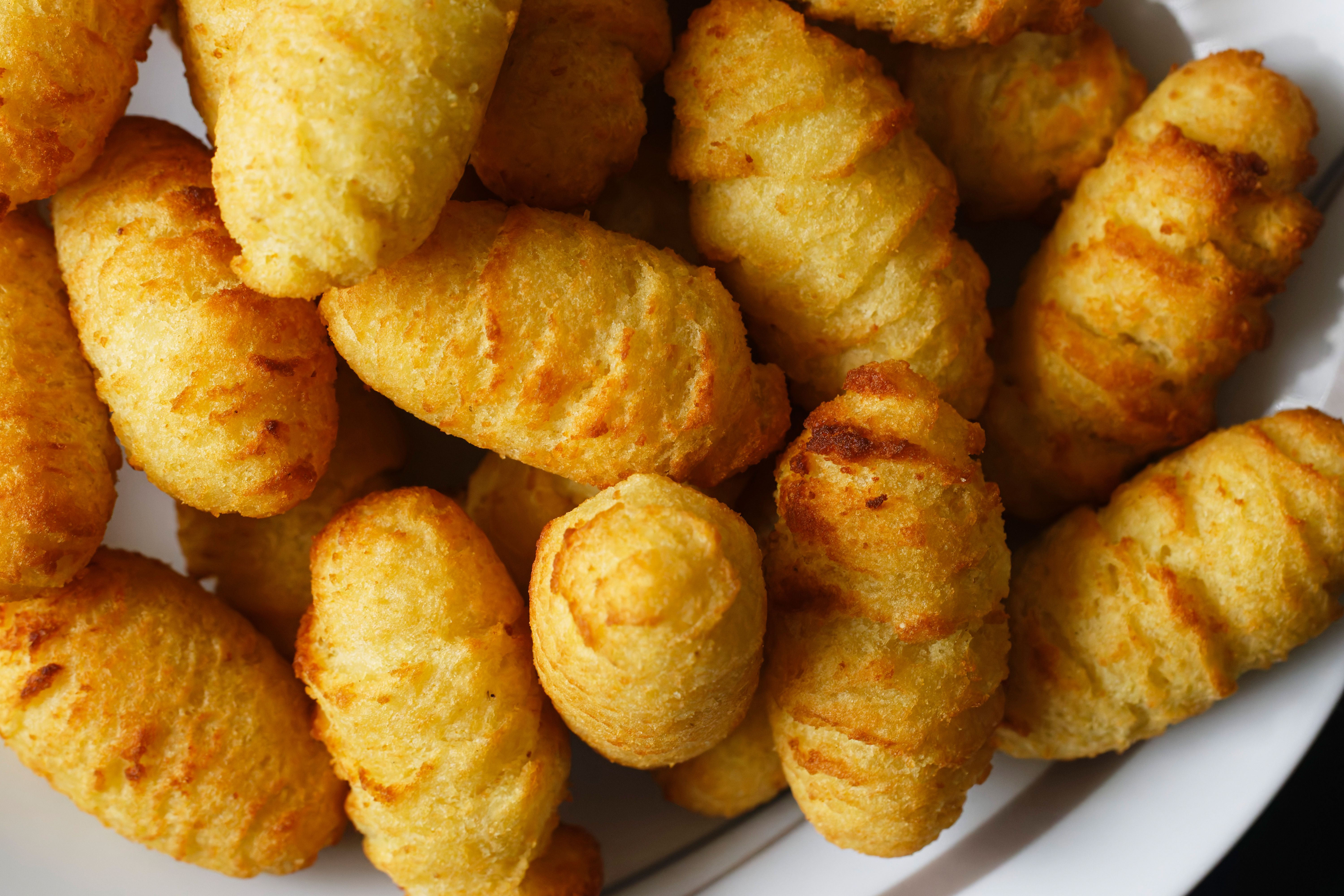
Panamanian
Carimañolas
The diets react (see scores below)
Common Ingredients
- cassava
- ground beef
- onion
- garlic
- tomatoes
- hard-boiled eggs
- oil
Specific recipes may vary.
Incompatible with 7 of 11 diets
Diet Ratings
Carimañolas are deep-fried cassava (yuca) fritters stuffed with seasoned ground beef, eggs, and vegetables. The primary and disqualifying ingredient is cassava, which is an extremely high-carb starchy root vegetable. A single carimañola typically weighs 80-120g, with cassava providing approximately 35-40g of net carbs per 100g. Even one fritter can exceed an entire day's keto carb budget. The filling ingredients (ground beef, egg, onion, garlic, tomatoes) are relatively keto-friendly, but they are entirely encased in cassava dough, making it impossible to separate or reduce the carb load meaningfully. This dish is fundamentally built around a starchy base and is structurally incompatible with ketosis.
Carimañolas contain multiple animal-derived ingredients that are strictly excluded from a vegan diet. Ground beef is a direct animal product (mammalian flesh), and hard-boiled eggs are an animal product excluded by all major vegan organizations. These two ingredients alone make the dish entirely incompatible with veganism, regardless of the plant-based components (cassava, onion, garlic, tomatoes) also present.
Carimañolas are Panamanian cassava fritters stuffed with seasoned ground beef, eggs, onion, garlic, and tomatoes. The filling ingredients — ground beef, hard-boiled eggs, onion, garlic, and tomatoes — are fully paleo-approved. Cassava (yuca) is a starchy tuber generally accepted in the paleo framework. The major concern is the 'oil' used for frying. Traditional carimañolas are deep-fried, and if a seed oil (canola, soybean, vegetable, sunflower) is used — which is the default in most commercial and home preparations — that directly violates paleo guidelines. If fried in coconut oil, avocado oil, or an animal fat, the dish becomes largely paleo-compliant. This oil ambiguity, combined with the high-starch nature of the cassava base and the deep-frying method, places the dish in caution territory.
Some paleo practitioners, particularly those following a more permissive or ancestral approach (e.g., Paul Jaminet's Perfect Health Diet or Robb Wolf's later writings), embrace cassava as a clean starch and would approve this dish if fried in a compliant fat, arguing the whole-food, grain-free profile is fully in the spirit of paleo eating.
Carimañolas are deep-fried cassava fritters stuffed with ground beef, which conflicts with Mediterranean diet principles on multiple fronts. Ground beef is a red meat that the Mediterranean diet limits to a few times per month, and deep-frying (likely in refined oils rather than olive oil) introduces significant amounts of unhealthy fats. While cassava, onion, garlic, and tomatoes are plant-based ingredients, cassava is a refined, starchy carbohydrate with little fiber compared to whole grains recommended by the Mediterranean diet. The cooking method (deep-frying) and the primary protein (red meat) together make this dish a poor fit. The hard-boiled eggs and aromatics are acceptable components, but they are secondary to the problematic elements.
Carimañolas are a Panamanian snack consisting of fried cassava (yuca) dough stuffed with seasoned ground beef. The primary base ingredient is cassava, a starchy root vegetable — a plant food that is entirely incompatible with the carnivore diet. Additional plant-based ingredients include onion, garlic, and tomatoes used in the beef filling, as well as oil (likely plant-derived). While the ground beef and hard-boiled eggs are carnivore-approved animal products, they are encased in and seasoned with multiple plant foods, making the dish as a whole fundamentally incompatible with carnivore principles. There is no version of this dish that qualifies as carnivore-compliant without being completely reconstructed.
Carimañolas are traditional Panamanian cassava fritters stuffed with seasoned ground beef and hard-boiled eggs. All listed ingredients — cassava, ground beef, onion, garlic, tomatoes, hard-boiled eggs, and oil — are individually Whole30-compliant. However, carimañolas are a fried, stuffed fritter that closely mimics the form of excluded 'junk food' snack categories (think: empanadas, croquettes, or fried dough snacks). The Whole30 program's Rule 4 explicitly prohibits recreating baked goods and junk food even with compliant ingredients, and lists 'tots,' 'chips,' and 'crackers' as examples of the spirit being violated. A deep-fried cassava shell stuffed and shaped into a snack food sits in a gray zone — cassava itself is a whole food (unlike, say, cassava flour used to make wraps), and the dish is a traditional cultural preparation rather than a deliberate Whole30 hack. The spirit-of-the-program concern is real but debatable given the whole-food nature of cassava used here.
Official Whole30 guidelines (Melissa Urban) prohibit recreating fried snack foods even with compliant ingredients, which could place carimañolas in 'avoid' territory alongside tots or chips. However, community practitioners often distinguish between culturally traditional preparations using whole-food ingredients (like mashed cassava) and deliberate Whole30 'hacks' using processed flours — the latter being the primary target of Rule 4.
Carimañolas contain two high-FODMAP ingredients that are problematic at any reasonable serving size: garlic and onion. Both are high in fructans and are among the most reliably high-FODMAP foods identified by Monash University. Garlic is high-FODMAP at any culinary amount, and onion is high-FODMAP even at small doses. These ingredients are cooked into the beef filling, meaning the fructans leach into the entire mixture and cannot be removed or avoided. The cassava (yuca) dough itself is low-FODMAP at moderate servings (~100g), ground beef is low-FODMAP, tomatoes are low-FODMAP at standard servings, hard-boiled eggs are low-FODMAP, and oil is low-FODMAP. However, the presence of garlic and onion in the filling makes the dish unsuitable during the elimination phase regardless of portion size, as these FODMAPs are distributed throughout the filling.
Carimañolas are deep-fried cassava fritters stuffed with seasoned ground beef and hard-boiled eggs — a traditional Panamanian snack. While several individual ingredients align with DASH principles (cassava provides fiber and potassium; onion, garlic, and tomatoes are DASH-friendly vegetables; eggs are acceptable in moderation under updated guidance), the overall dish presents notable concerns. The deep-frying method significantly increases total fat content, and the use of oil for both frying the shell and cooking the beef filling raises saturated fat concerns depending on oil type. Ground beef is a red meat, which DASH limits. The combination of red meat and deep-frying pushes this dish toward the caution zone. However, it is not categorically off-limits — the cassava base offers some nutritional value, and the dish lacks the extreme sodium levels of processed foods. Portion control is critical. If baked rather than fried, and made with lean ground beef or a leaner protein substitute, the score would improve.
NIH DASH guidelines limit red meat and fried foods due to saturated fat concerns; however, some updated DASH-oriented clinicians note that cassava's resistant starch and potassium content, combined with moderate egg inclusion now supported by the 2020-2025 Dietary Guidelines, allow occasional consumption of dishes like carimañolas within an otherwise DASH-compliant eating pattern — particularly if baked and portion-controlled.
Carimañolas are deep-fried cassava fritters stuffed with seasoned ground beef and egg — a traditional Panamanian snack that poses significant Zone Diet challenges. Cassava (yuca) is the primary structural ingredient and is a high-glycemic, starchy root vegetable with a very high carbohydrate load and minimal fiber, making it an 'unfavorable' Zone carbohydrate. A single carimañola uses a substantial amount of cassava (typically 80-120g per piece), delivering 25-35g of net carbs — nearly 3-4 carb blocks — with a high glycemic impact. The deep-frying in oil (likely omega-6-heavy vegetable oil, not monounsaturated) adds significant fat that is uncontrolled in type and quantity, disrupting the 30% fat target while introducing pro-inflammatory fats. The ground beef filling provides protein but may be higher in saturated fat depending on the cut. Positive elements include onion, garlic, and tomatoes (favorable Zone vegetables providing polyphenols) and eggs (decent protein source). However, the cassava base and frying method make this extremely difficult to fit into a Zone-balanced meal without consuming a small fraction of one fritter, which defeats the purpose of the snack. The macro ratio skews heavily carb-dominant with inflammatory fat — essentially the opposite of Zone targets.
Carimañolas are deep-fried cassava fritters stuffed with seasoned ground beef and hard-boiled eggs — a traditional Panamanian street snack. The ingredient profile presents a mixed anti-inflammatory picture. On the positive side, garlic, onion, and tomatoes contribute meaningful polyphenols, allicin, quercetin, and lycopene — all with documented anti-inflammatory activity. Cassava (yuca) is a whole-food starch with modest fiber and a lower glycemic index than refined wheat, though it is a high-carbohydrate, low-micronutrient base. Hard-boiled eggs are a moderate food in the anti-inflammatory framework, providing choline and selenium. Ground beef is flagged under anti-inflammatory guidelines as a food to limit due to saturated fat content and potential arachidonic acid load. The most significant concern is the deep-frying method: cassava is typically fried in high-heat refined seed oils (often corn or vegetable oil), introducing substantial omega-6 fatty acids and oxidation byproducts — both pro-inflammatory. The combination of red meat, deep-frying, and a refined-oil cooking medium pushes this dish into 'caution' territory despite the beneficial aromatics. If baked or air-fried and made with lean beef or a plant-based substitute, the score would improve meaningfully.
Some anti-inflammatory practitioners (particularly those following Mediterranean or whole-foods frameworks) would note that the aromatic base of garlic, onion, and tomatoes provides real phytonutrient benefit, and that cassava is a traditional whole-food starch with better nutrient density than refined grains. However, strict anti-inflammatory protocols — and the IF Rating system — consistently flag deep-frying in refined seed oils and regular red meat consumption as pro-inflammatory, making the 'caution' verdict appropriate for most mainstream anti-inflammatory guidance.
Carimañolas are deep-fried cassava fritters stuffed with seasoned ground beef and hard-boiled egg — a preparation method that makes them poorly suited for GLP-1 patients on nearly every relevant criterion. The outer shell is cassava (yuca), a starchy root vegetable that is very low in protein and fiber relative to its calorie load, and becomes a dense, greasy casing when deep-fried. Frying dramatically increases fat content and introduces the kind of heavy, greasy texture that is directly associated with worsening GLP-1 side effects: nausea, bloating, reflux, and prolonged gastric discomfort due to already-slowed gastric emptying. While the ground beef and hard-boiled egg filling do contribute some protein, the overall protein density per calorie of the finished dish is low because cassava dominates the volume and calorie count. Ground beef also carries meaningful saturated fat. The dish is portion-sensitive in the wrong direction — a single fritter provides significant fat and starch but insufficient protein to justify the caloric cost. There is no meaningful fiber contribution. As a fried, starchy, high-fat snack with low protein density, this dish conflicts with the top three GLP-1 dietary priorities simultaneously.
*See how scores were generated at our methodology page.
Nutritional profile
Six traits that cut across every diet.
Fiber & Plants
How much whole-plant food and fiber it delivers.
Healthy Fats
The quality of its fats (unsaturated, omega-3).
Whole / Unprocessed
How close it is to its natural, unprocessed form.
Gut Gentle
How easy it is on digestion (low FODMAP, few irritants).
Low Glycemic
How little it spikes your blood sugar.
Protein Density
How much protein it packs per calorie.
Controversy Index
Higher controversy = more disagreement between diets.
Diet-Specific Tips
 Paleo — 5/10
View tips
- Cassava is a paleo-accepted tuber, though high in starch
- Ground beef, eggs, onion, garlic, and tomatoes are all fully paleo-approved
- Frying oil is unspecified — seed oils are a paleo violation; coconut or avocado oil would be compliant
- Deep-frying method itself is not paleo-prohibited but common oils used are
- No grains, legumes, dairy, or refined sugar present
- Dish is minimally processed with whole-food ingredients
 DASH — 4/10
View tips
- Deep-fried preparation significantly increases total fat content — a major DASH concern
- Ground beef is a red meat; DASH recommends limiting red meat to ≤6 oz/day and favoring lean poultry or fish
- Cassava provides fiber, potassium, and complex carbohydrates — DASH-positive contribution
- Onion, garlic, and tomatoes are DASH-approved vegetables adding micronutrients
- Hard-boiled eggs are acceptable in moderation under current dietary guidance but add cholesterol
- Sodium content depends on seasoning; traditional preparations may add significant salt
- Baking instead of frying would substantially improve DASH compatibility
- Portion control is essential — high caloric density from frying limits serving size
 Zone — 5/10
View tips
- Cassava is a high-glycemic, high-net-carb starchy root — explicitly 'unfavorable' in Zone terminology
- Deep-frying dramatically increases fat content with likely omega-6-heavy oil, creating pro-inflammatory fat profile
- Macro ratio is heavily carb-dominant, far from the 40/30/30 Zone target
- Ground beef provides protein but may contribute excess saturated fat
- Favorable elements (onion, garlic, tomatoes, egg) are overwhelmed by the cassava-and-fry combination
- Portion control nearly impossible — even one fritter blows carb and fat blocks for a snack
 Anti-Inflammatory — 4/10
View tips
- Deep-frying in refined seed oils introduces high omega-6 load and lipid oxidation byproducts
- Ground beef (red meat) should be limited on anti-inflammatory diets due to saturated fat and arachidonic acid
- Garlic, onion, and tomatoes provide beneficial polyphenols, allicin, quercetin, and lycopene
- Cassava is a whole-food starch — preferable to refined flour but nutritionally modest
- Hard-boiled eggs are a moderate/neutral food in the anti-inflammatory framework
- Cooking method (deep-frying) is the primary driver of the inflammatory concern