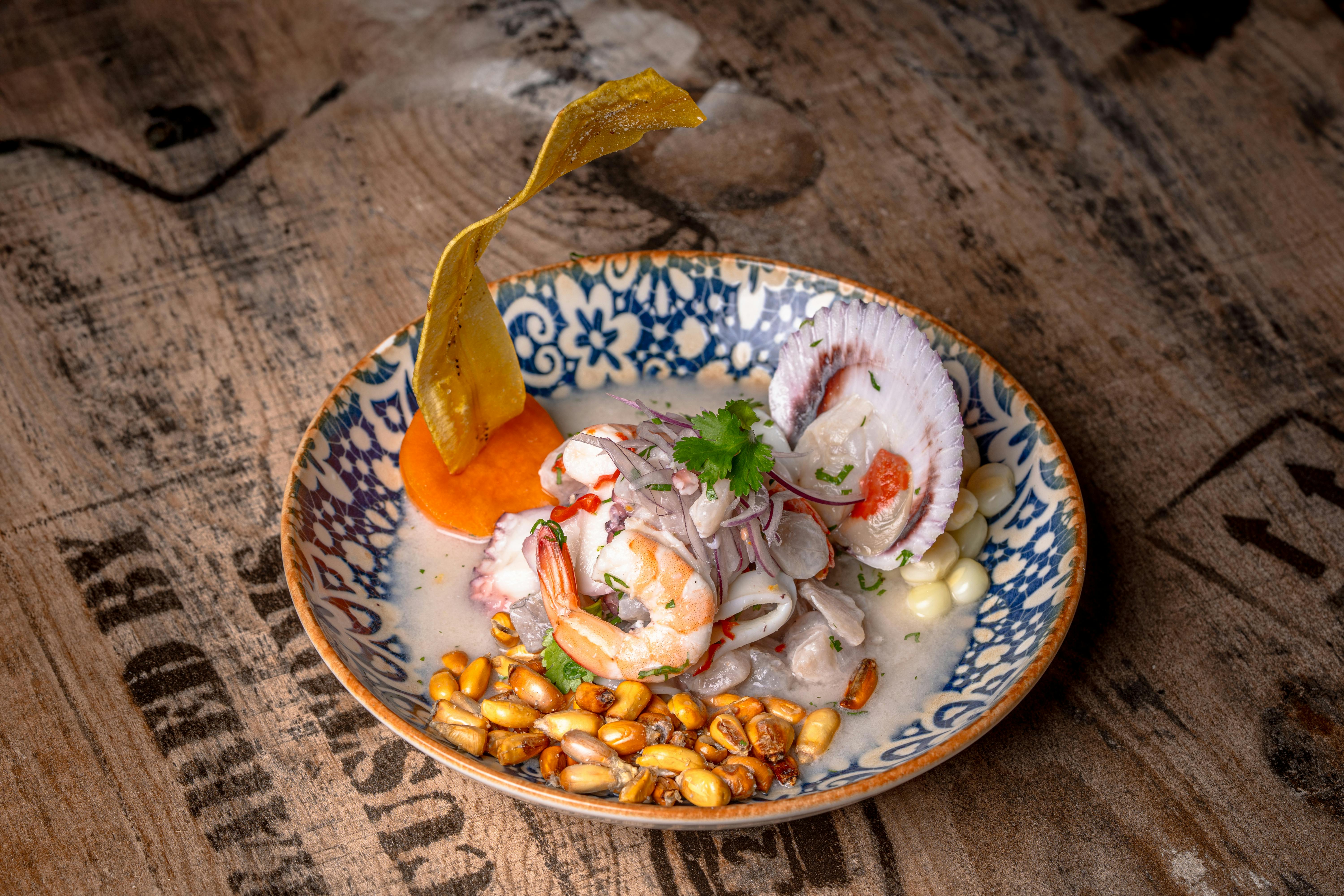
Photo: Nano Erdozain / Pexels
Panamanian
Ceviche de Corvina
The diets react (see scores below)
Common Ingredients
- sea bass
- lime juice
- onion
- celery
- culantro
- habanero
- garlic
Specific recipes may vary.
Incompatible with 3 of 11 diets
Diet Ratings
Ceviche de Corvina is composed almost entirely of keto-friendly ingredients. Sea bass is a lean, high-quality protein with zero carbs. Lime juice contributes some carbs (roughly 5-8g net carbs per 1/4 cup), but a standard ceviche serving uses a moderate amount primarily as a marinade/cooking acid, not consumed in large quantities. Onion and celery add minimal net carbs in typical portions. Culantro, habanero, and garlic contribute negligible carbs in the small amounts used as aromatics. The dish is unprocessed, whole-food based, and sugar-free. A standard serving should fall well within the 20-50g daily net carb limit, making this a solid keto-compatible main course. The primary consideration is portion size of lime juice and onion.
Strict keto practitioners who track meticulously may flag the lime juice and onion combination as borderline, particularly if large portions are consumed or if the dish is made with extra lime juice soaked into the fish — in that case, total net carbs could creep up noticeably and some strict protocols prefer to minimize any fruit-derived acids counting toward the carb budget.
Ceviche de Corvina is centered on sea bass (corvina), a fish and therefore an animal product. Fish is unambiguously excluded from all vegan diets. The remaining ingredients — lime juice, onion, celery, culantro, habanero, and garlic — are entirely plant-based, but the primary protein renders the dish incompatible with veganism. There is no version of this dish that retains its identity without the fish.
Ceviche de Corvina is an excellent paleo dish. Sea bass (corvina) is a whole, unprocessed fish — a cornerstone of the Paleolithic diet. Lime juice acts as the 'cooking' acid and is a natural fruit juice with no processing concerns. Onion, celery, culantro (a herb closely related to cilantro), habanero pepper, and garlic are all whole vegetables, herbs, and spices that would have been available in natural form to ancestral humans. There are no grains, legumes, dairy, refined sugars, seed oils, or processed ingredients in this dish. The preparation method — acid-marinating raw fish — requires no industrial processing. This dish scores very high as a clean, whole-food paleo meal.
Ceviche de Corvina is an excellent fit for the Mediterranean diet framework. Sea bass (corvina) is a lean, high-quality white fish that aligns directly with the Mediterranean emphasis on fish and seafood consumption at least 2-3 times per week. The dish is built entirely on whole, minimally processed ingredients: fresh fish, citrus juice, vegetables (onion, celery), and herbs (culantro, garlic, habanero). There are no refined grains, added sugars, unhealthy fats, or processed components. The acid-marination technique (lime juice) requires no added oils or cooking fats, keeping the dish exceptionally clean. This is a plant-forward, fish-centered preparation that mirrors the spirit of Mediterranean coastal cuisine.
Ceviche de Corvina is primarily incompatible with the carnivore diet despite containing sea bass, which is an approved animal protein. The dish is heavily plant-laden: lime juice (fruit), onion (vegetable), celery (vegetable), culantro (herb/plant), habanero (plant), and garlic (plant) are all strictly excluded on a carnivore diet. The fish itself would be approved, but as prepared, the majority of the dish's ingredients violate carnivore principles. The lime juice also serves as the 'cooking' medium (acid denaturation), making it structurally central to the dish, not merely a garnish. This is not a dish that can be easily modified — it would need to be entirely reconstructed to qualify.
Ceviche de Corvina consists entirely of Whole30-compliant ingredients. Sea bass (corvina) is a whole fish and fully allowed. Lime juice is a natural citrus juice with no added sugars or sweeteners. Onion, celery, culantro (a herb related to cilantro), habanero pepper, and garlic are all fresh vegetables, herbs, and aromatics explicitly permitted on Whole30. There are no grains, legumes, dairy, added sugars, alcohol, or any other excluded ingredients in this dish. The preparation method — acid 'cooking' via citrus — does not affect compliance. This is a clean, whole-food dish that aligns perfectly with the spirit and rules of the Whole30 program.
Ceviche de Corvina contains two high-FODMAP ingredients that are problematic at any standard serving size: onion and garlic. Onion is one of the highest-fructan foods tested by Monash University and is a major trigger for IBS symptoms — there is no safe portion during elimination. Garlic is similarly rated as high-FODMAP due to fructans and must be avoided entirely in the elimination phase. Sea bass (corvina) is a plain fish and fully low-FODMAP. Lime juice is low-FODMAP. Celery is low-FODMAP at small servings (up to 1 stalk per Monash). Culantro (long coriander/recao) is an herb used in small amounts and is expected to be low-FODMAP like similar herbs. Habanero pepper is low-FODMAP in small quantities per Monash (chili is generally safe in small amounts). Despite several safe ingredients, the structural presence of both onion and garlic as core flavoring components — not trace amounts — makes this dish a clear avoid during the elimination phase. Substituting garlic-infused oil and omitting onion (or using green onion tops only) would be required to make this dish compliant.
Ceviche de Corvina is an excellent fit for the DASH diet. Sea bass (corvina) is a lean, white fish high in protein and low in saturated fat, aligning well with DASH's emphasis on fish as a preferred protein. The dish is prepared with lime juice (acid-'cooked'), which adds no sodium or fat. All remaining ingredients — onion, celery, culantro, habanero, and garlic — are vegetables and herbs that are core DASH foods, contributing potassium, fiber, and beneficial phytonutrients with negligible sodium. Critically, this dish contains no added salt in the traditional recipe, keeping sodium very low. The main caution is portion size (sea bass can be moderate in mercury with regular consumption) and that restaurant or packaged versions may add significant salt. As traditionally prepared at home, this dish is nutrient-dense, low in sodium, low in saturated fat, and high in lean protein — a strong DASH choice.
NIH DASH guidelines broadly endorse fish as a preferred lean protein without specific guidance on ceviche preparation; most DASH-aligned clinicians would approve this dish enthusiastically. However, some conservative practitioners note that restaurant ceviche often includes added salt or sodium-containing condiments, which would lower the score, and that frequent consumption of large predatory fish raises mercury concerns not addressed by DASH guidelines specifically.
Ceviche de Corvina is an excellent Zone Diet dish. Sea bass (corvina) is a lean, white fish that provides high-quality protein with minimal saturated fat — a near-ideal Zone protein source. The acid-denaturing process (lime juice) does not alter the macronutrient profile meaningfully. All other ingredients — lime juice, onion, celery, culantro (a low-glycemic herb), habanero, and garlic — are low-glycemic, polyphenol-rich vegetables and aromatics that count as favorable Zone carbohydrate blocks. The dish is naturally low in fat, which means a Zone-compliant meal would need a small side of monounsaturated fat (e.g., a few olives, avocado slices, or a drizzle of olive oil) to complete the 30% fat target. Habanero and culantro also provide anti-inflammatory compounds consistent with Sears' polyphenol emphasis. With the addition of a fat source, this dish slots cleanly into a Zone meal with minimal adjustment.
Ceviche de Corvina is an exceptionally clean, anti-inflammatory dish. Sea bass (corvina) is a lean white fish rich in protein and selenium, with a favorable omega-6 to omega-3 ratio compared to land-based proteins. Lime juice provides vitamin C and citric acid, which support antioxidant activity. Onion and garlic are well-established anti-inflammatory foods rich in quercetin, allicin, and organosulfur compounds that suppress NF-κB inflammatory pathways. Celery contains apigenin and luteolin, both documented anti-inflammatory flavonoids. Culantro (Eryngium foetidum), the long-leafed herb common in Panamanian cuisine, shares anti-inflammatory properties with cilantro and contains flavonoids and terpenoids with demonstrated antioxidant capacity. Habanero pepper delivers a substantial dose of capsaicin, one of the most well-researched natural anti-inflammatory compounds, shown to reduce substance P and inhibit inflammatory cytokines. The dish uses no added oils, no refined carbohydrates, no sugar, no dairy, and no processed ingredients. The 'cooking' method is acid-denaturation rather than heat, preserving heat-sensitive nutrients. This is one of the most ingredient-clean preparations a main dish can achieve — essentially a collection of anti-inflammatory all-stars with no offsetting negatives.
Ceviche de Corvina is built on sea bass, a lean white fish that is an excellent protein source with very low fat — strongly aligned with GLP-1 priorities. The acid-based preparation (lime juice) requires no cooking oil, keeping fat minimal. Vegetables (onion, celery, culantro) add modest fiber and micronutrients. However, the inclusion of habanero is a meaningful concern: habanero is among the hottest commonly used chilies and GLP-1 medications slow gastric emptying, meaning capsaicin sits in contact with the stomach lining longer than usual, increasing the risk of reflux, nausea, and GI irritation — side effects already common on these medications. This single ingredient drops the score from the approve tier into caution. The dish is also relatively low in fiber for a main course and would benefit from pairing with a high-fiber side. Portion size is naturally small-serving friendly. The lime juice base also contributes to hydration support.
Some GLP-1-focused dietitians would approve this dish outright, arguing that habanero quantity in a single ceviche serving is small enough that capsaicin load is clinically insignificant, and that the lean protein profile of sea bass makes this one of the better Panamanian main course options available. Others maintain a firm caution on any habanero-containing dish given how unpredictably GLP-1 patients respond to spicy food, particularly in the first months of dose escalation when GI side effects peak.
*See how scores were generated at our methodology page.
Nutritional profile
Six traits that cut across every diet.
Fiber & Plants
How much whole-plant food and fiber it delivers.
Healthy Fats
The quality of its fats (unsaturated, omega-3).
Whole / Unprocessed
How close it is to its natural, unprocessed form.
Gut Gentle
How easy it is on digestion (low FODMAP, few irritants).
Low Glycemic
How little it spikes your blood sugar.
Protein Density
How much protein it packs per calorie.
Controversy Index
Higher controversy = more disagreement between diets.
Diet-Specific Tips
 Keto — 8/10
View tips
- Sea bass is zero-carb, high-quality lean protein — excellent keto base
- Lime juice is the primary carb source; moderation in quantity is key
- Onion adds ~4-5g net carbs per 1/4 cup — use sparingly
- Celery, culantro, habanero, and garlic are negligible carb contributors
- No added sugars, grains, or processed ingredients
- Whole, unprocessed Panamanian dish — aligns with clean keto principles
- Standard serving likely 5-10g net carbs total — within keto limits
 Paleo — 9/10
View tips
- Sea bass is a clean, unprocessed whole fish and a paleo staple
- Lime juice is a natural acid with no additives — fully paleo compliant
- Onion, celery, garlic, and habanero are all whole vegetables approved on paleo
- Culantro is a natural herb, functionally equivalent to cilantro — fully approved
- No grains, legumes, dairy, seed oils, refined sugar, or processed ingredients present
- Preparation is minimal and non-industrial — acid-marination aligns with ancestral food preparation
 Mediterranean — 9/10
View tips
- Lean white fish (corvina/sea bass) as primary protein — strongly encouraged in Mediterranean diet
- All ingredients are whole and unprocessed: vegetables, citrus, fresh herbs
- No added sugars, refined grains, or unhealthy fats
- No olive oil present, but its absence is offset by the extremely clean ingredient profile
- Habanero and culantro are non-Mediterranean but do not contradict any dietary principles
- Preparation method (acid marination) requires no cooking fats
 Whole30 — 9/10
View tips
- Sea bass is a compliant whole protein
- Lime juice is a natural citrus with no added sugar
- Culantro is a compliant fresh herb
- Habanero, onion, celery, and garlic are all compliant vegetables/aromatics
- No excluded ingredients present
- Preparation method (citrus curing) is fully compliant
 DASH — 8/10
View tips
- Sea bass is a lean, low-saturated-fat fish aligned with DASH protein recommendations
- No added salt in traditional preparation — very low sodium profile
- All vegetables and herbs (onion, celery, culantro, habanero, garlic) are core DASH foods
- Lime juice provides flavor without sodium, fat, or added sugar
- Rich in potassium and protein; low in calories and saturated fat
- Caution: restaurant versions may contain added salt — home preparation preferred
- Moderate mercury consideration for frequent large fish consumption
 Zone — 9/10
View tips
- Sea bass is a lean white fish — ideal Zone protein block
- All aromatics and vegetables (onion, celery, garlic, culantro, habanero) are low-glycemic favorable Zone carbs
- Lime juice adds negligible carbohydrate load
- Naturally low in fat — a monounsaturated fat addition (avocado, olive oil) is needed to complete the Zone ratio
- Rich in omega-3 fatty acids, supporting Sears' anti-inflammatory protocol
- No processed ingredients, added sugars, or high-glycemic carbohydrates
- Polyphenol-rich ingredients (habanero, culantro, garlic) align with Zone's anti-inflammatory focus
 Anti-Inflammatory — 9/10
View tips
- Sea bass provides lean protein with favorable omega-3 profile relative to red meat
- Garlic and onion supply allicin and quercetin — potent NF-κB inhibitors
- Habanero pepper is high in capsaicin, a well-documented anti-inflammatory compound
- Culantro contributes flavonoids and terpenoids with antioxidant activity
- Lime juice adds vitamin C supporting antioxidant defense
- Celery contributes apigenin and luteolin, anti-inflammatory flavonoids
- No added oils, refined carbs, sugars, or processed ingredients
- Raw/acid-cured preparation preserves heat-sensitive phytonutrients
 GLP-1 Friendly — 6/10
View tips
- Sea bass is a lean, high-protein, low-fat fish — well suited to GLP-1 dietary needs
- No added fat or oil in preparation — acid-marinated cooking method is GLP-1 friendly
- Habanero is a high-capsaicin chili; slowed gastric emptying increases exposure time and risk of reflux and nausea
- Fiber content is low for a main course — pairing with beans or a vegetable side is recommended
- Small-serving friendly by nature — portion size aligns well with reduced appetite on GLP-1 medications
- Lime juice and high water-content vegetables (celery, onion) provide modest hydration support